PEEK Filament
The pinnacle of printable thermoplastics. PEEK is a semi-crystalline high-performance polymer with extreme heat resistance (continuous use ~250 °C), outstanding chemical and wear resistance, and metal-rivaling strength-to-weight — aerospace, medical, and oil-and-gas grade.

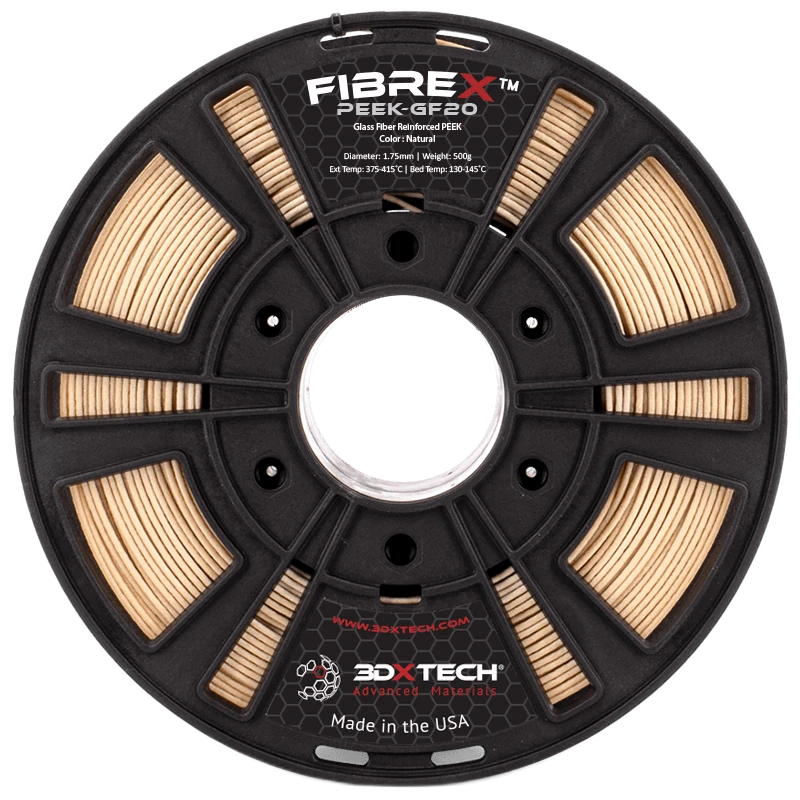

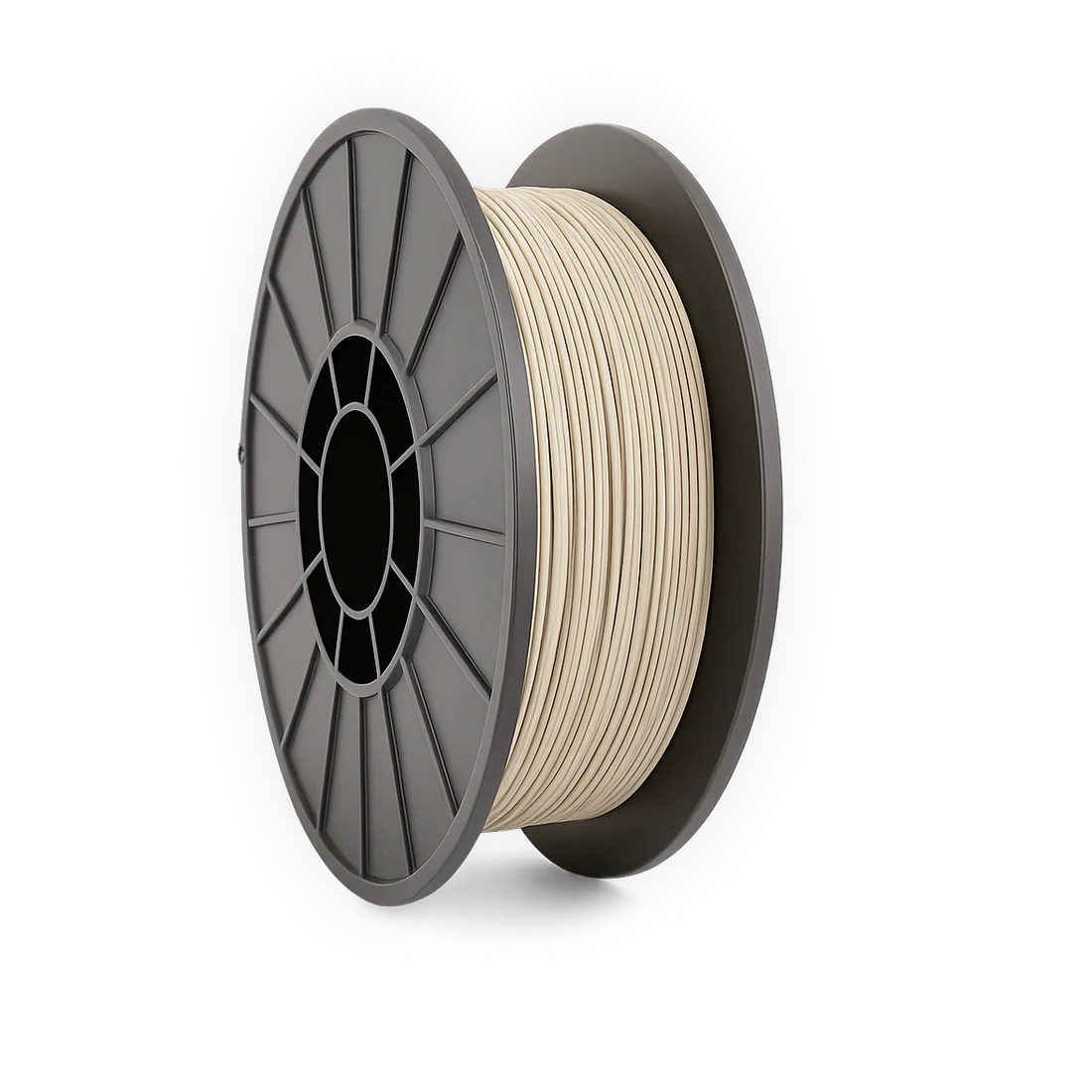
What is PEEK filament?
PEEK (Polyether ether ketone) is one of the highest-performance thermoplastics available, a semi-crystalline polymer with a glass transition near 143 °C and a melting point around 343 °C. It offers continuous-use temperatures near 250 °C, excellent chemical and wear resistance, inherent flame retardancy, and strength that lets it replace metal in demanding parts.
Printing PEEK requires specialized hardware: a high-temp hotend (400 °C+), a heated chamber, and a high-temperature bed, plus careful thermal management to achieve proper crystallization and mechanical performance. It's used in aerospace brackets, medical implants and instruments, and chemical/oil-and-gas components.
PEEK vs PEI (ULTEM) vs PC — how to choose
All three are high-performance; they differ in ceiling and printability:
Not sure PEEK is warranted? Call (248) 707-2950 — PEI or PC often meets the spec at a fraction of the difficulty.
Printing PEEK successfully
- High-temp printer required — 400 °C+ hotend, heated chamber (~90 °C+), and high-temp bed.
- Dry rigorously — PEEK must be very dry; even small moisture degrades results.
- Manage crystallization — chamber temperature and cooling determine whether parts reach full strength (amorphous vs crystalline).
- Anneal if specified to develop crystallinity and maximize heat/chemical resistance.
- Consult the datasheet — profiles are grade-specific and unforgiving.
What printer do you need for PEEK?
PEEK will not print on a typical desktop machine. You need an all-metal hotend that runs above 400 °C, an actively heated chamber and a high-temperature bed. Most consumer and prosumer printers, including Bambu Lab models, top out well below that.
Rev1 sells printers built for it: the CreatBot PEEK-250 and CreatBot PEEK-300. Compare every high-temperature and large-format machine on our industrial 3D printers page, or send us a part and we will print a free sample in PEEK.
PEEK vs PEKK — which should you print?
PEEK, PEEK-CF or PEEK-GF?
- Neat PEEK: the toughest and most chemically resistant option, and the choice for parts that must stay unfilled (medical, food-contact or electrical insulation).
- PEEK-CF (carbon fiber): stiffer and lighter with better dimensional stability and less warping. It needs a hardened or ruby nozzle.
- PEEK-GF (glass fiber): stiff and dimensionally stable like CF, but electrically insulating. It also needs a hardened nozzle.
Annealing PEEK parts
Annealing heats a finished part in an oven to finish crystallizing it, which raises its heat, chemical and wear resistance. Cycles are grade-specific, so follow the manufacturer's datasheet. See the ThermaX PEEK technical data sheet and the CarbonX PEEK+CF10 data sheet. Expect slight shrinkage, so fixture thin or flat parts while annealing.
PEEK brands stocked at Rev1
Rev1 Technologies stocks PEEK filament from multiple brands, all shipped from Auburn Hills, Michigan with real phone support. PEEK is grade- and printer-specific — Use the brand filter below to narrow the range, or call (248) 707-2950 for spec, bulk, and color-match help.