KUKA AMR Fleet One brain for every robot on the floor.
No-code fleet management for KUKA AMRs, third-party vehicles and the doors, lifts and conveyors around them
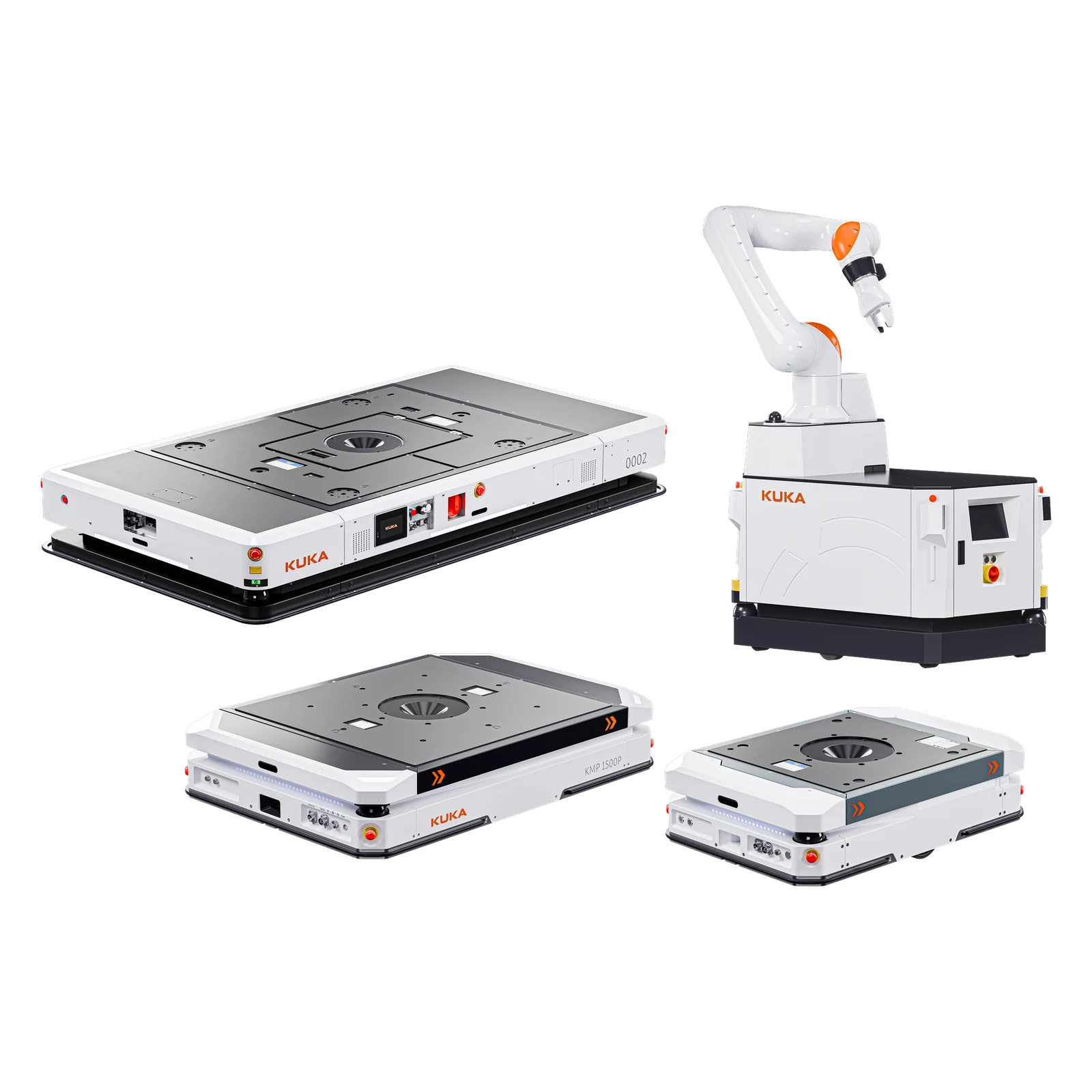
KUKA.AMR Fleet is KUKA’s management system for mobile robots. It dispatches jobs, regulates all fleet traffic, reschedules around obstacles in real time and controls the peripherals your robots depend on — doors, hoists, elevators and conveyors. Routes and workflows are configured in the browser instead of programmed, and KUKA states predefined configurations cover more than 90 % of industrial scenarios for delivery within 48 hours. Full specifications →
Rev1 scopes the fleet, workflows and system interfaces with you before purchase. Authorized KUKA partner for autonomous mobile robotics in the USA — call (248) 707-2950.
KUKA Fleet Intelligence. US-Supported by Rev1.
KUKA.AMR Fleet is developed by KUKA, one of the world’s leading robotics and automation companies. Rev1 Technologies handles fleet scoping, workflow design, system integration planning and commissioning support for US customers.

WHAT IT DOES
From a Few Robots to a Material-Flow System
A single AMR is a transport. A fleet becomes a system only when something assigns the jobs, manages the traffic and talks to the rest of the plant. That is KUKA.AMR Fleet’s job.
Plan Every Workflow in One Environment
KUKA.AMR Fleet is an expert management system for KUKA mobile robots. Built on complex scheduling algorithms, flexible process choreography and full coverage of peripherals, it coordinates task execution across many different mobile-robot types. Regardless of vehicle type, the traffic and job management of every AMR runs in a single environment.
No-Code Start-Up With KUKA.AMR Suite
Configuration of the fleet and organization of all jobs and maintenance work happen in KUKA.AMR Suite, the start-up tool that pairs with KUKA.AMR Fleet. Drag-and-drop and a comprehensive function library mean no programming is needed — routes and settings are set by cursor in the browser. KUKA states predefined configurations cover more than 90 % of industrial scenarios, enabling delivery within 48 hours.
ONE PLATFORM, THREE SYSTEMS
Workflows, Robots and Equipment — Each With Its Own Controller
KUKA splits fleet intelligence into three cooperating systems, so upstream orders, robot traffic and plant equipment are each handled by a dedicated layer.
Takes tasks from your upstream system, schedules them flexibly, monitors full-process execution in real time and reports back — with a simple recovery function when a task goes wrong.
Coordinates different AMR types in the same area: lock-free traffic control, global and resource-optimal path planning, and multi-model mixed-field scheduling.
Manages hardware beyond the AMRs — electric doors, hoists, elevators, conveyor lines and robot arms — with graphical control rules and live device status.
Traffic Control That Prevents the Bottleneck
The RCS fully regulates fleet traffic and automatically reschedules when obstacles appear. Its intelligent planning assigns tasks efficiently and manages right-of-way between robots, preventing bottlenecks and keeping operation smooth with minimal manual intervention. KUKA’s AI-based fleet manager reacts to obstacles in real time, using data from each vehicle to adapt routes and avoid collisions.
PERIPHERAL INTEGRATION
Doors Open, Lifts Arrive, Conveyors Hand Over
A route is only autonomous if the building cooperates. KUKA.AMR Fleet masters production environments with dynamic obstacles, people, door openings and elevators.
Manages the Whole Periphery, Not Just the Robots
The Equipment Control System gives the fleet access to device signals from electric doors, hoists, elevators, conveyor lines and robot arms, and completes the docking hand-offs between them. Via VDA 5050, KUKA.AMR Fleet also connects to PLC controllers of industrial machinery, fire alarm systems, building systems and other peripheral equipment.
Device Control and Communication Management
ECS rules are configured graphically, with a real-time view of every device’s operating status and an execution-process log. When a robot reaches a station, the fleet already knows whether the machine, door or conveyor it needs is ready — the step from a group of robots to what KUKA calls a truly smart factory.
Watch KUKA.AMR Fleet
Location, Direction, Speed — Every Robot Tracked
AI-POWERED WORKFLOW MANAGEMENT
Fewer Robots Doing More Work
KUKA’s fleet software analyzes current transport jobs, robot positions and charge levels in real time and distributes jobs to minimize the number of AMRs required — lowering both procurement and operating cost.
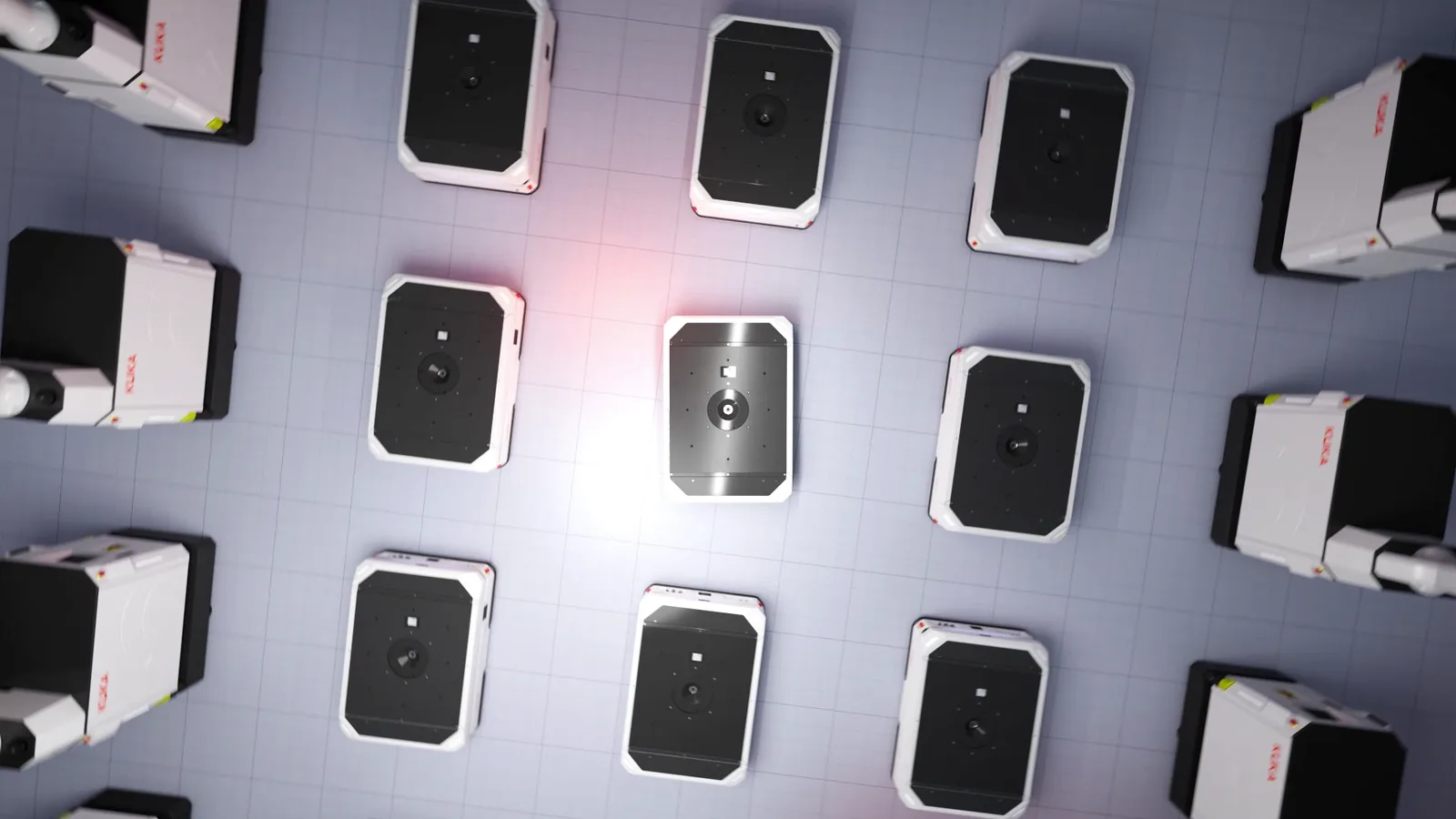
Collective Intelligence Across the Whole Fleet
Instead of each robot deciding alone, KUKA.AMR Fleet weighs every open job against every robot’s position and battery state, then hands out work so the fleet finishes more transports with fewer vehicles. Various AMRs — including conventional AGV systems — are managed by the AI to create an optimal workflow.
Transport jobs are distributed intelligently across the fleet, weighing position and charge level of every robot.
The whole operation is monitored in real time; abnormal information is flagged, the cause located and a solution proposed.
Robots react to obstacles in real time. During conversions or maintenance, simply disable an area in the fleet map and AMRs find alternative routes automatically.
FULL SYSTEM INTEGRATION
Vendor-Independent, Connected to Your Systems
Thanks to a standard API platform, KUKA.AMR Fleet integrates into existing IT and automation systems — and it is not limited to KUKA vehicles.
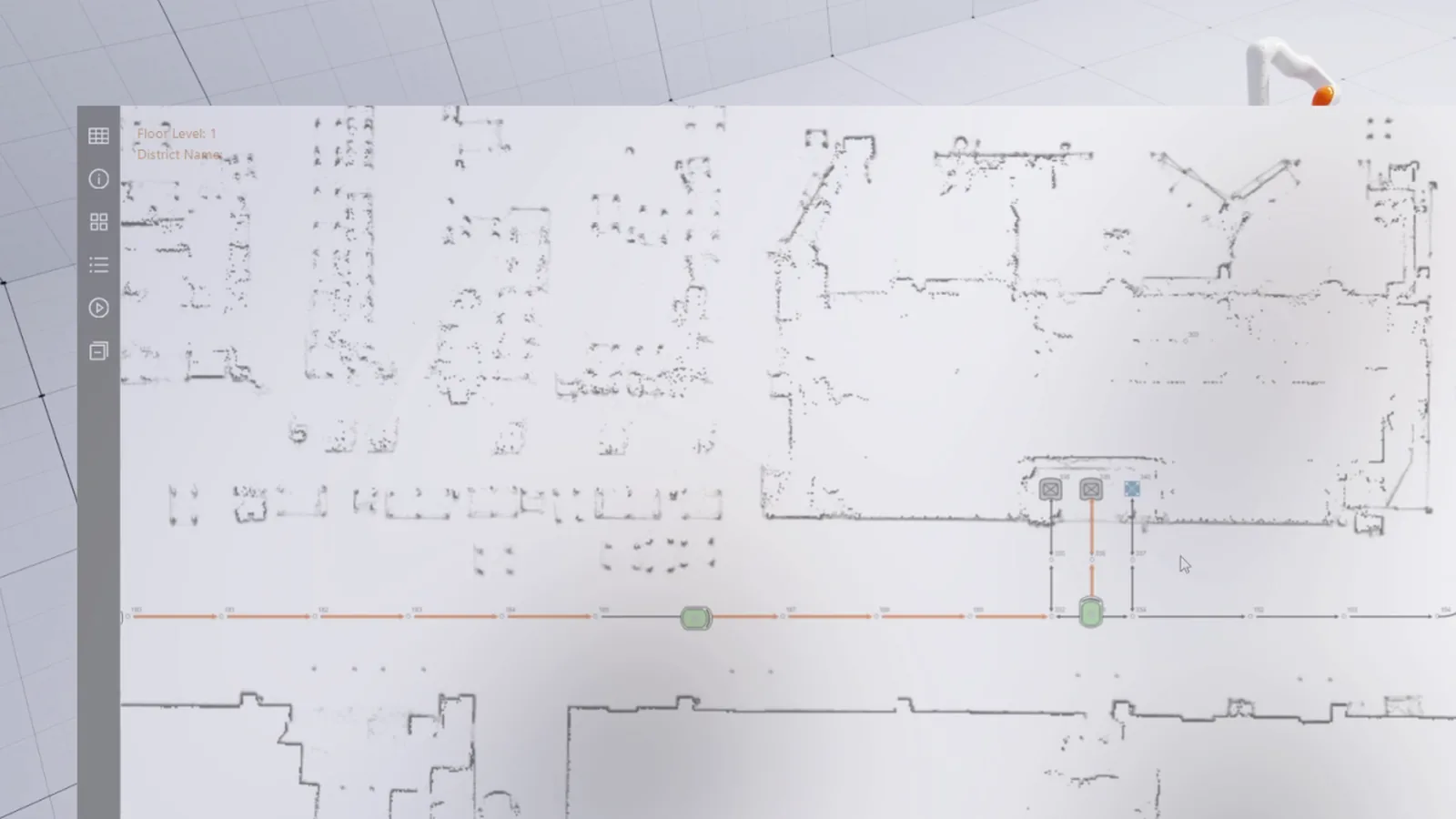
One Map for Your Complete Multi-Brand Fleet
KUKA.AMR Fleet is fleet-management software independent of vehicle manufacturer. Alongside KUKA’s own robots it controls third-party vehicles integrated via the VDA 5050 interface, so every robot’s routes, stations and jobs live on one facility map instead of in separate vendor tools.
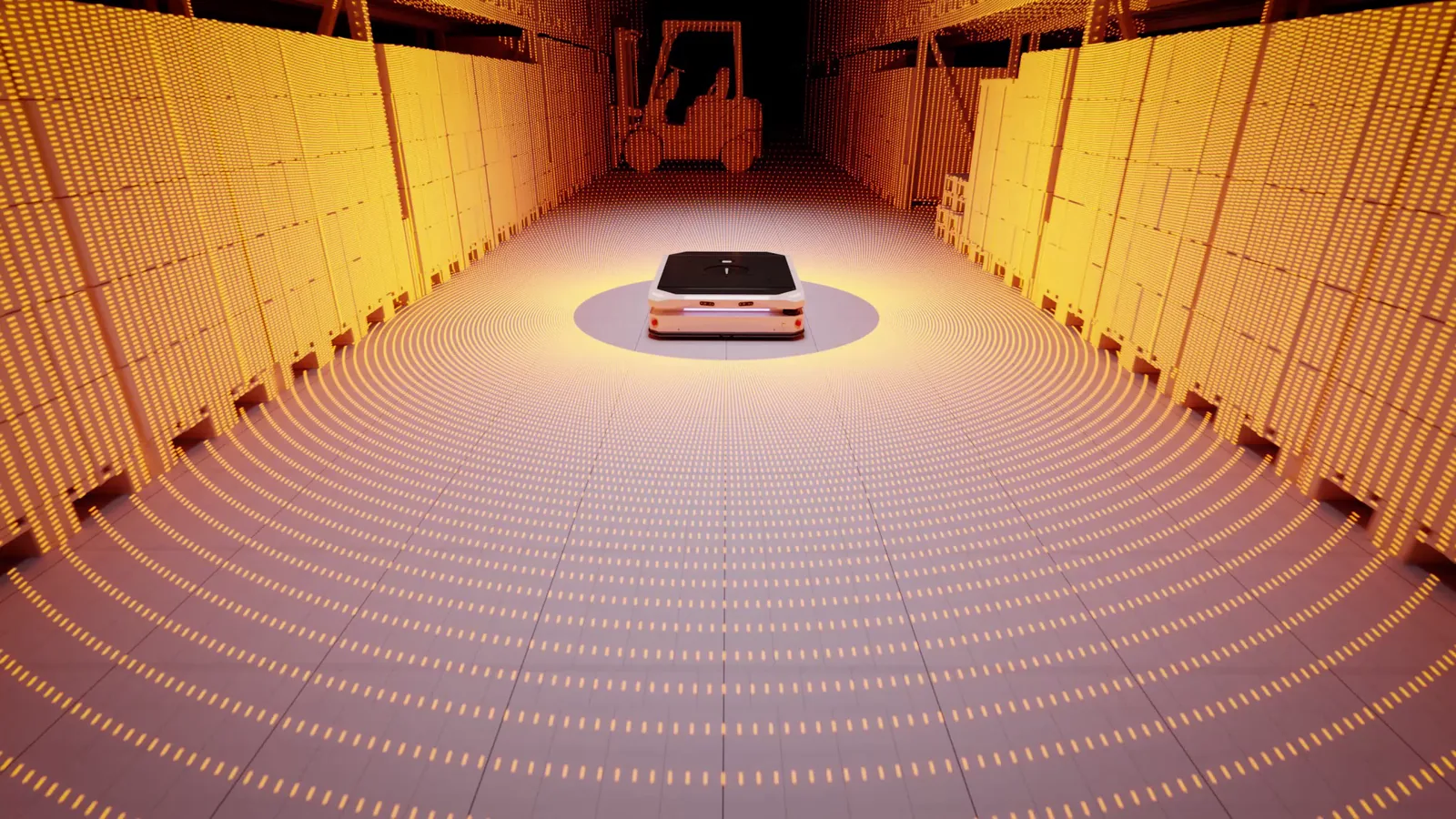
AMRs, AGVs and Industrial Trucks in One System
KUKA states that the VDA 5050 interface lets KUKA.AMR Fleet integrate a heterogeneous fleet: KUKA AMRs, conventional automated guided vehicles and conventional industrial trucks. In a plant that already runs AGVs or tuggers, the fleet manager becomes the single traffic authority instead of one more silo.
Integrates KUKA AMRs alongside third-party AMRs, conventional AGVs and industrial trucks through the VDA 5050 interface.
Smoothly integrated into the surrounding warehouse and ERP/MES systems via KUKA’s standard API platform.
SECS/GEM interfaces give full AMR interoperability in semiconductor, photovoltaic and electronics production.
HIGH-PRECISION NAVIGATION
Hybrid Navigation Built Into the Fleet
KUKA.AMR Fleet supports the positioning systems your robots use and keeps them on track in dynamically changing environments.
Supports laser SLAM, QR codes and other positioning systems, plus lane-line detection with lane keeping and deviation warning.
Navigation and positioning precise to within a few millimeters, according to KUKA.
Stable operation in changing environments, with autonomous planning of operating paths and avoidance of obstacles.
ADVANTAGES
Why KUKA Built It This Way
The four advantages KUKA lists for KUKA.AMR Fleet in its AMR portfolio brochure.
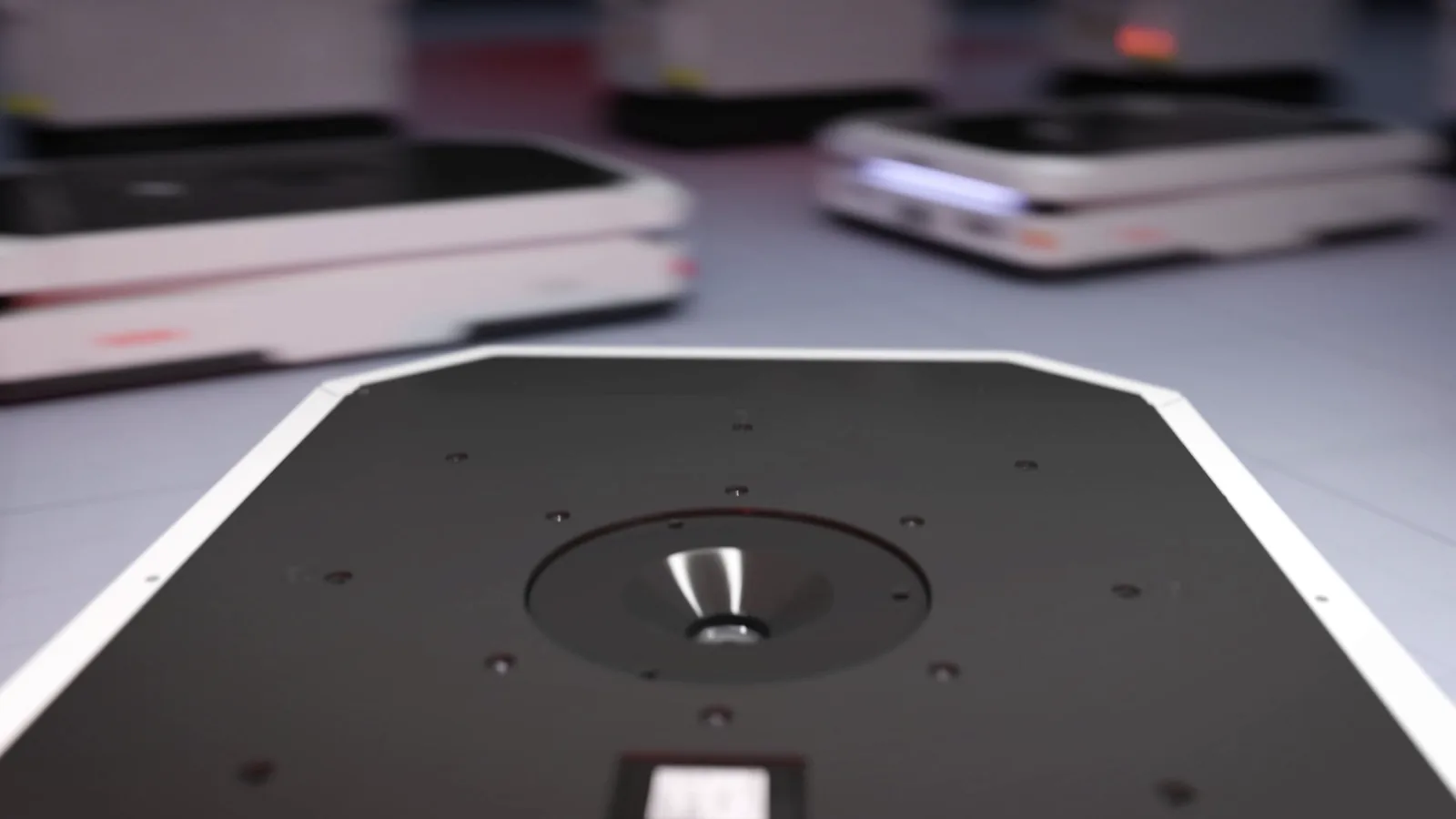
Smart Functions That Speed Up Integration
KUKA highlights comfort functions such as automatic rack recognition, which increase efficiency during integration: the fleet knows which rack a platform is carrying without manual bookkeeping. Combined with no-code configuration, that is what keeps a new route or a re-planned workflow measured in hours rather than weeks.
No-code platform software with an easy-to-use interface configuration for countless industrial scenarios.
Predefined configurations cover more than 90 % of industrial scenarios, for rapid delivery within 48 hours.
Real-time monitoring of the whole operation, with prompts on abnormal information and fast root-cause location.
The RCS dispatches multiple robots of different models and types at the same time.
ONE FLEET, MANY ROBOTS
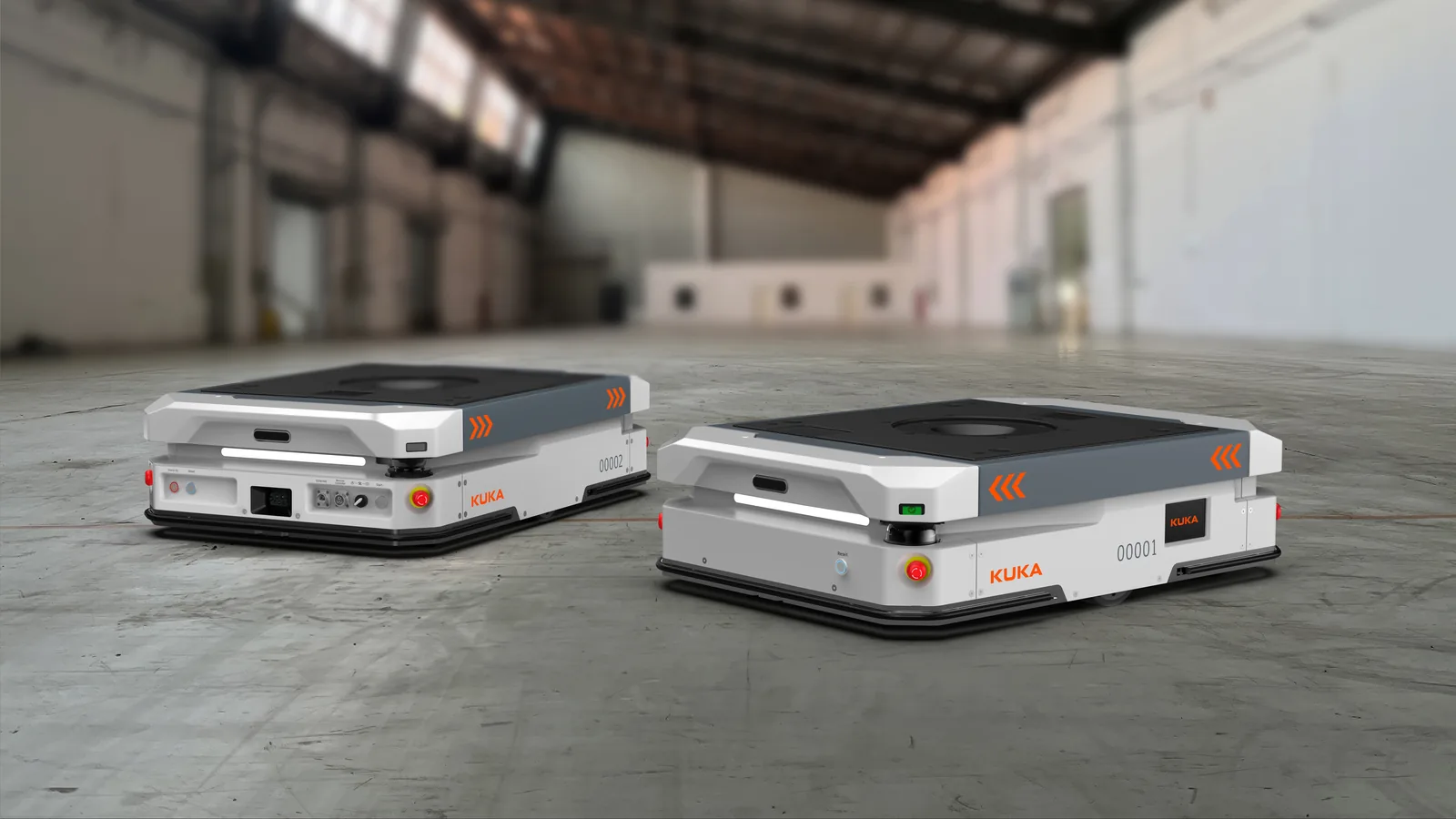
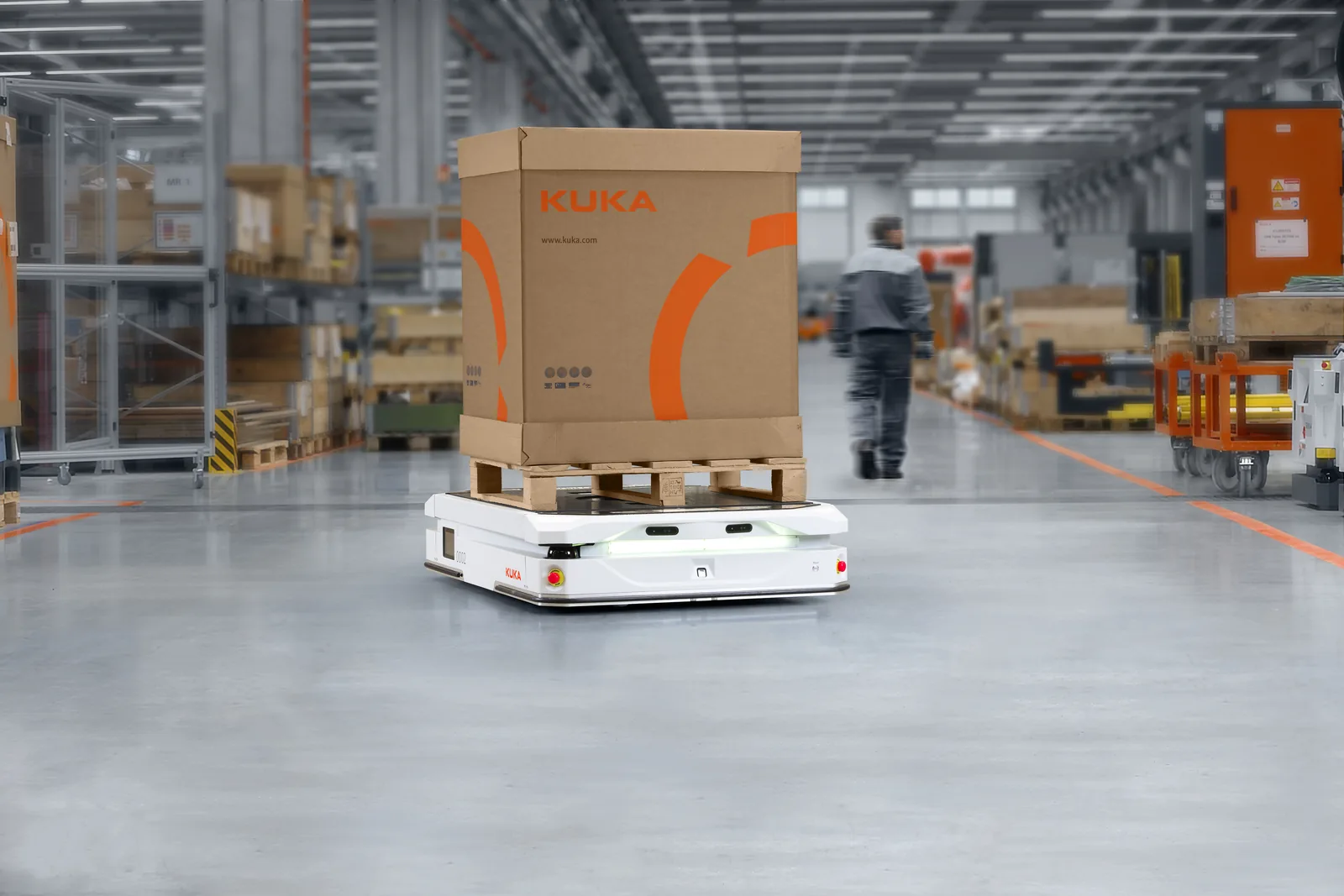
The KUKA Robots KUKA.AMR Fleet Orchestrates
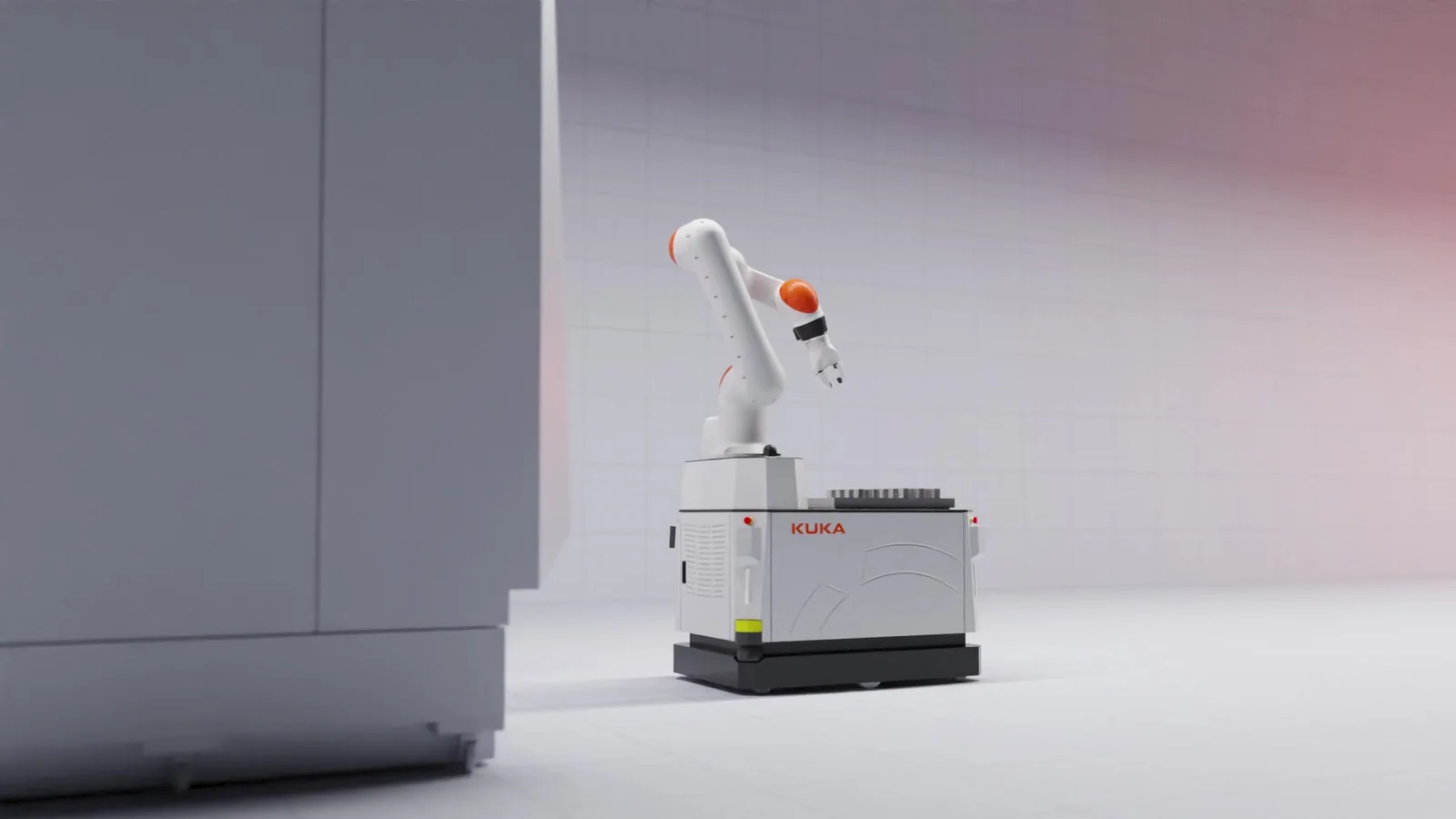
Every KUKA platform and mobile manipulator Rev1 offers runs under KUKA.AMR Fleet — mix them freely as your loads and tasks vary.
HOW IT FITS TOGETHER
WCS vs RCS vs ECS at a Glance
What each part of KUKA.AMR Fleet is responsible for, from KUKA’s AMR portfolio brochure.
| System | WCS — Workflow | RCS — Robots | ECS — Equipment |
|---|---|---|---|
| Role | Intermediate layer between your upstream system and internal scheduling | Coordinates AMR types in the same area | Controls hardware other than AMRs |
| Key functions | Flexible workflow scheduling; customized system interfacing | Lock-free traffic control; global, resource-optimal path planning | Graphical device control rules; docking hand-offs |
| Monitoring | Full-process job execution in real time, with feedback upstream | Task assignment, traffic and obstacle avoidance | Real-time device status; execution process log |
| Fault handling | Simple recovery function for task abnormalities | Automatic rescheduling around obstacles | Device signal access for coordinated recovery |
| Connects to | WMS, ERP, MES | KUKA AMRs; third-party AMRs/AGVs via VDA 5050 | Doors, hoists, elevators, conveyors, robot arms |
KUKA.AMR Fleet Technical Overview
RESOURCES
Downloads & Technical Support
Everything you need to scope a KUKA.AMR Fleet deployment with confidence.
WHY REV1 TECH
Authorized KUKA Partner. Automation & Integration Specialists.
Rev1 Technologies is headquartered in Auburn Hills, MI, supporting US manufacturers across industrial automation, 3D scanning and additive manufacturing.
QUESTIONS
KUKA.AMR Fleet FAQ
The questions buyers ask most before choosing an AMR fleet manager.
READY TO AUTOMATE
Plan Your KUKA.AMR Fleet With Rev1
Authorized KUKA Partner — Auburn Hills, MI — (248) 707-2950