Choose the right technology before you spend the capital.
Rev1 Technologies advises manufacturers on which 3D scanning, metrology, and additive manufacturing hardware, software, and materials actually fit the application — and how to fold them into the way you already work.
We sell and support this equipment every day, so the advice is grounded in real deployments rather than spec sheets. Start with the application, prove it out, then buy — not the other way around.
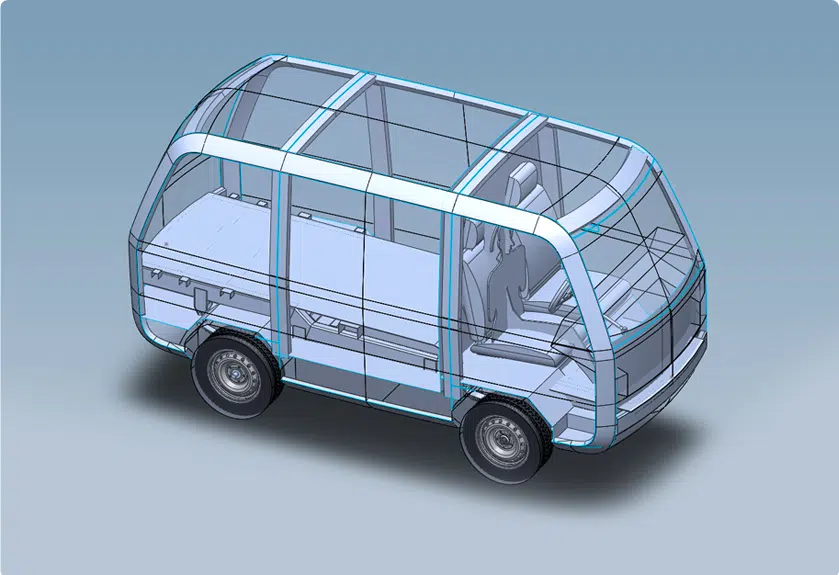
Not sure which system you actually need?
Send us the part, the tolerance, and the throughput you're chasing. We'll tell you what the application demands — including when the honest answer is that you don't need to buy anything yet.
Consulting scoped to the technology, not to your org chart.
This is not general management consulting. Rev1's consulting practice covers one thing well: helping manufacturing and quality teams decide which metrology and additive technology to adopt, whether it will do the job, what it will cost to run, and how it will fit into the process you already have.
Because we supply and support this equipment, we see how it behaves after the demo — where scanners struggle on shiny or deep-featured geometry, which printers hold dimensional repeatability across a full plate, where software licensing and training quietly become the real cost. That operating knowledge is what you're engaging.
- Technology selection — matching hardware and software to the application, not to a brochure.
- Feasibility assessment — an honest read on whether the technology can hit your requirement.
- Business case — build-vs-buy, run-cost, and payback modelled on your own volumes.
- Integration planning — how the system lands inside your existing quality or production workflow.
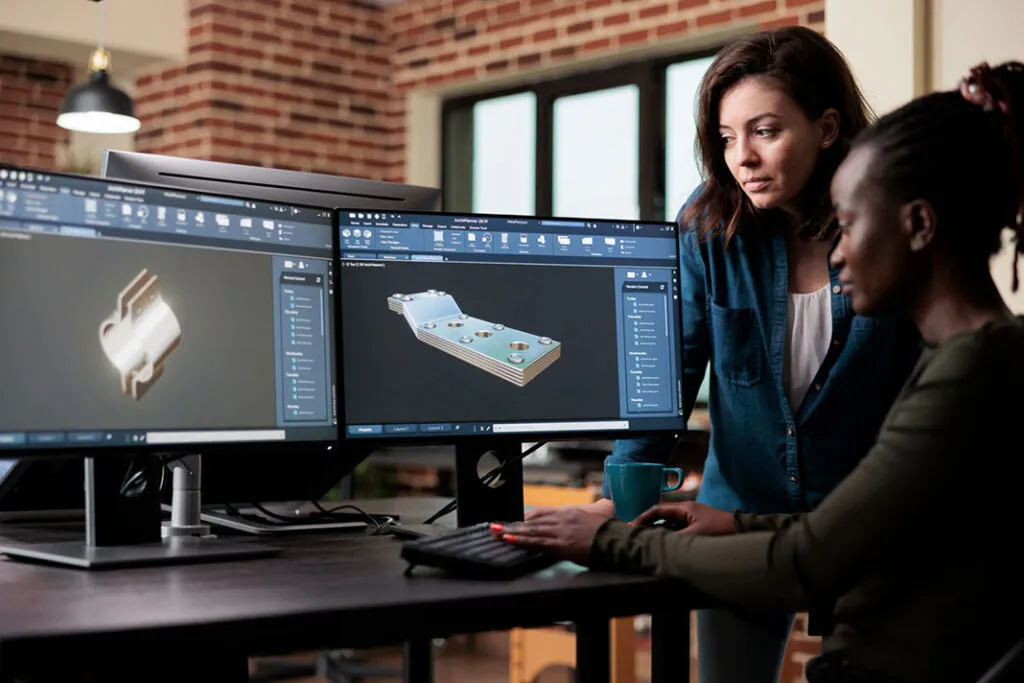
Where we can help.
Engage us for a single question or for the full path from application study to installed, qualified capability. Each area stands alone and feeds the next.
Technology selection
Which scanner, printer, or software platform actually fits the work.
- Structured-light vs. laser vs. photogrammetry
- FDM, resin, and polymer powder trade-offs
- Inspection, reverse-engineering & slicing software
Equipment specification
Turning a requirement into a defensible spec you can buy against.
- Accuracy, volume & throughput requirements
- Environment, power & facility constraints
- Accessories, software and consumables scoped in
Feasibility & application assessment
Will the technology do this part, at this tolerance, at this rate?
- Part geometry & feature accessibility review
- Tolerance vs. system capability reality check
- Benchmark parts scanned or printed on real hardware
Build vs. buy & ROI analysis
Own it, outsource it, or hold off — decided on your numbers.
- In-house capability vs. service-bureau cost
- Utilization, run-cost & payback modelling
- Phased adoption and capital-staging options
Workflow & process integration
Fitting new capability into the quality and production flow you run today.
- Where inspection sits in the process
- CAD, PLM & inspection data hand-offs
- Roles, training and day-to-day ownership
Material selection guidance
Choosing the polymer or resin that survives the real service condition.
- Mechanical, thermal & chemical requirements
- Engineering polymers vs. standard filaments
- Printability, drying & handling implications
Process qualification & validation planning
A plan to prove the new process does what you say it does.
- Qualification approach & acceptance criteria
- Repeatability and measurement-study planning
- Documentation structure for internal audits
Lab & cell layout planning
Designing the physical space the equipment will live in.
- Bench, fixture & workstation arrangement
- Ventilation, power & environmental needs
- Part flow from receiving to report
Adoption & scale-up roadmap
A staged plan from first system to a working, repeatable capability.
- Pilot scope and success criteria
- Training and internal ownership plan
- What to add next, and when it's justified
Start with the part, end with the spec.
Most bad equipment decisions start with a demo instead of a part. We work the other direction: what are you measuring or making, to what tolerance, how many times a week, and who is going to operate it? Those four answers eliminate most of the market before a single quote gets written.
From there we narrow it to the systems that genuinely satisfy the requirement and lay out where they differ — capture speed against accuracy, working volume against portability, software depth against how much training your team can realistically absorb.
- Scanning — structured-light, laser and handheld approaches weighed against part size, surface finish and feature depth.
- Additive — process and machine class matched to part function, material, and required repeatability.
- Software — inspection, reverse-engineering and preparation platforms chosen for the workflow, not the feature list.
- Fit-check — where possible, your benchmark part run on real hardware before you commit.
If the work turns out to be better bought as a service than owned outright, we'll say so — our 3D scanning & metrology and 3D printing services exist precisely for that case.
Advice from the people who support the equipment afterwards.
We supply, install, and support metrology and additive equipment. When we recommend something, we're the ones who answer the phone about it later.
We work across a range of scanner, printer, and software brands, so the recommendation can follow the application instead of a single manufacturer's catalog.
Every recommendation traces back to a part, a tolerance, and a throughput target you gave us — not to a spec sheet's best-case number.
Sometimes the right answer is outsourcing, a different process, or waiting. We'd rather tell you that than sell you a machine that sits idle.
Our own scanning, printing and inspection work means we can test an assumption on a real part instead of theorising about it.
NDAs are standard. Your parts, drawings, volumes, and cost data stay yours.
The business case, built on your numbers.
Capital equipment is easy to justify with enthusiasm and hard to justify with arithmetic. We help you do the arithmetic before the request goes up the chain — and we do it with the operating costs people usually forget.
- True cost of ownership — hardware, software licensing, consumables, service, and the operator time it actually takes.
- Realistic utilization — what the system will run in a normal week, not a best week.
- Outsource comparison — the same work priced as a service, so the two paths sit side by side.
- Phasing — where a smaller first step de-risks the decision and defers capital.
The deliverable is a decision you can defend internally, with the assumptions written down so anyone reviewing it can see exactly what the case depends on.
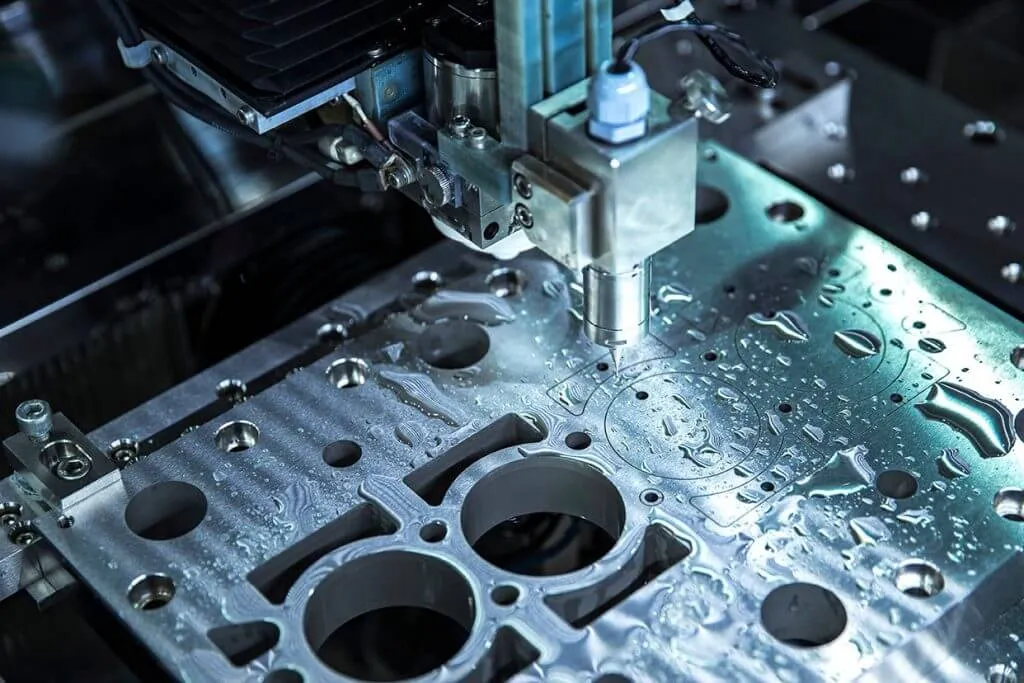
Written output you can act on.
Engagements are scoped to produce something concrete — not a conversation you have to reconstruct from memory afterwards. Exact deliverables depend on the scope we agree.
Requirements summary
The application written down properly: parts, tolerances, volumes, environment, and who operates the system.
Technology recommendation
The recommended approach and the shortlist behind it, with the trade-offs that decided it stated plainly.
Equipment specification
A purchasable spec — hardware, software, accessories, and consumables — you can quote against with confidence.
Feasibility findings
What the assessment or benchmark showed, including the limitations we hit and what they mean for you.
Cost & ROI model
Ownership cost against outsourced cost, with the assumptions exposed so they can be challenged.
Integration plan
Where the capability sits in your workflow, what data moves between systems, and what changes for the operators.
Qualification & validation plan
The approach for proving the process is capable and repeatable, with acceptance criteria and documentation structure.
Adoption roadmap
A staged plan — pilot, training, ownership, and the conditions that would justify expanding.

New capability has to survive contact with your existing process.
Equipment that technically works but doesn't fit the way a team operates ends up under a dust cover. Integration planning is about the unglamorous part: who runs it, when in the process it runs, where the data goes, and what happens when the person who was trained on it is on holiday.
- Process placement — incoming inspection, in-process check, first-article, or final — and what each choice implies.
- Data flow — how CAD, scan data, and inspection reports move between systems and who consumes them.
- Ownership & training — realistic operator skill requirements and a plan so knowledge isn't held by one person.
- Fixturing & repeatability — how parts get held and presented so results are consistent operator to operator.
Where a program needs the design and build work as well as the technology decision, it connects directly to our turnkey product development service.
What these engagements typically look like.
Qualitative examples of the kinds of questions we're brought in on. Scope, findings and outcomes vary by application — these describe the shape of the work, not guaranteed results.
A quality team weighing its first scanner
The question is usually accuracy, but the real question is workflow.
A team inspecting complex machined or moulded parts wants to move off hand tools and a CMM queue. We work through part geometry, the features that actually drive acceptance, and how many parts per week need measuring — then map that to scanner class and inspection software, and to whether the reporting burden justifies the system at all.
A plant deciding whether to print fixtures in-house
Build-vs-buy, with materials as the hidden variable.
Jigs, gauges, and line-side fixtures are a common first additive application. The analysis covers how many are needed, whether the service condition (heat, chemical exposure, load) rules out easy materials, what printer class holds the needed dimensional consistency, and how the cost compares against machining or outsourcing them.
An engineering group standing up a small lab
Layout, qualification, and ownership planned before delivery.
When several systems arrive at once, the constraint becomes the room and the people. We plan bench and workstation arrangement, environmental and power needs, part flow from receiving through report, the training plan, and a qualification approach so the new process can be shown to be capable and repeatable.
From first question to a decision you can defend.
Discovery call
We learn the application, the constraint that triggered the question, and what a good outcome looks like for you.
Requirements
Parts, tolerances, volumes, environment, and operators get written down so everything after is measured against them.
Assessment
Feasibility review and, where it's useful, a benchmark part run on real hardware to test the assumptions.
Options & trade-offs
A shortlist with the differences that matter spelled out — including the option of not buying.
Business case
Ownership cost, outsourced cost, utilization, and payback modelled on your numbers with assumptions exposed.
Plan & hand-off
Specification, integration plan, qualification approach and adoption roadmap — ready to execute with or without us.
The material decision usually outlives the machine decision.
Teams often settle the printer question and then discover the material is what governs whether the part survives. We work the requirement first — load, temperature, chemical exposure, UV, dimensional stability — and then look at what's printable on the class of machine under consideration.
Qualification planning follows the same logic. Once the process is chosen, you need a defensible way to show it's capable and repeatable — acceptance criteria, repeatability studies, measurement-system considerations, and documentation structured so an internal audit can follow it.
- Material shortlist tied to the actual service condition, not to what's popular.
- Handling realities — drying, storage, and enclosure requirements that affect day-to-day operation.
- Qualification approach — how you will demonstrate the process does what you claim.
- Documentation structure — records organised so they hold up under review.
B2B manufacturing, broadly.
The technology questions rhyme across sectors — what changes is the tolerance, the documentation burden, and the service condition.
Automotive & mobility
Prototype and fixture applications, dimensional inspection, and reverse engineering of existing components.
Aerospace
Tight-tolerance inspection and lightweight prototype parts where documentation expectations are high.
Medical
Accuracy-driven applications where material choice and process repeatability carry real weight.
Industrial manufacturing
Tooling, jigs, gauges, and line-side parts — usually the first practical additive application.
Quality & inspection teams
Groups moving from hand tools and CMM queues toward scanning-based dimensional inspection.
Engineering & R&D groups
Teams standing up internal prototyping or measurement capability for the first time.
Get the decision right before the purchase order.
Bring us the application and the constraint. We'll tell you what the technology can and can't do — and what it will genuinely cost to run.
Consulting connects to the work itself.
A recommendation is more useful when the same team can also run the parts, prove the process, or build the product.
3D scanning & metrology
Dimensional inspection and scanning delivered as a service — useful for benchmarking before you buy, or instead of buying.
Explore scanning & metrology →3D printing
Additive parts produced on our equipment — the practical way to test a material or application before committing capital.
Explore 3D printing →Turnkey product development
When the question is bigger than equipment — design, engineering, prototyping and production under one partner.
Explore turnkey development →Technology consulting — common questions.
What kind of consulting is this, exactly?
Technology consulting for metrology and additive manufacturing — selection, specification, feasibility, business case, integration, materials, qualification planning, and lab layout. It is not general business or management consulting.
You sell equipment. Is the advice objective?
We're upfront about it: we sell and support metrology and additive systems, and we work across multiple brands. That's also why we know how these systems behave in service. If the right answer is outsourcing or waiting, we'll tell you — a system that sits idle helps neither of us.
Do I have to buy anything to engage you?
No. You can engage the consulting on its own, and plenty of engagements conclude that the work is better handled as an outsourced service than as a capital purchase.
Can you test my part before I commit?
Where it's practical, yes. Running a representative benchmark part on real hardware is often the fastest way to settle a feasibility question that a spec sheet can't.
What do you need from me to start?
The part or a description of it, the tolerance or performance requirement, roughly how many you deal with, the environment it lives in, and who would operate the equipment. That's usually enough for a productive first call.
Do you help with material selection too?
Yes. Material choice frequently decides whether an additive part survives its service condition, so we work the requirement — load, temperature, chemical exposure, stability — before narrowing the material.
Can you help with process qualification?
We help plan it: acceptance criteria, repeatability and measurement studies, and a documentation structure that holds up under internal review. The qualification itself is executed by your team, with our support.
Do you work on-site?
Yes, on-site visits are part of many engagements — particularly for lab and cell layout planning and workflow integration, where seeing the actual floor matters. Remote engagements are also common.
Is my information confidential?
Yes. NDAs are standard and confidentiality is the default. Parts, drawings, volumes, and cost data remain yours.
What does it cost?
It depends entirely on scope — a single feasibility question is very different from a full lab plan. Tell us what you're trying to decide and we'll scope it before any work starts.
For immediate assistance:
(248) 707-2950