ESD-Safe Filament
Static-dissipative engineering plastic for the electronics world. ESD-safe filaments carry a controlled surface resistivity that safely bleeds off static charge, protecting sensitive components in jigs, fixtures, trays, and enclosures on the manufacturing floor.
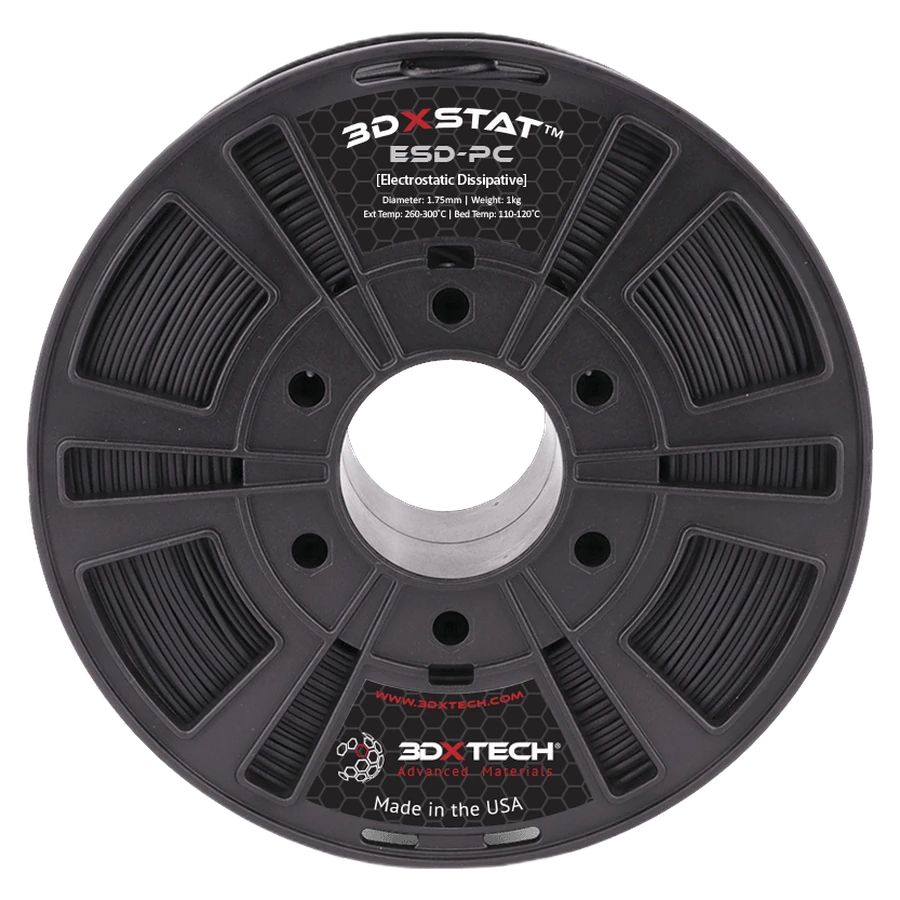
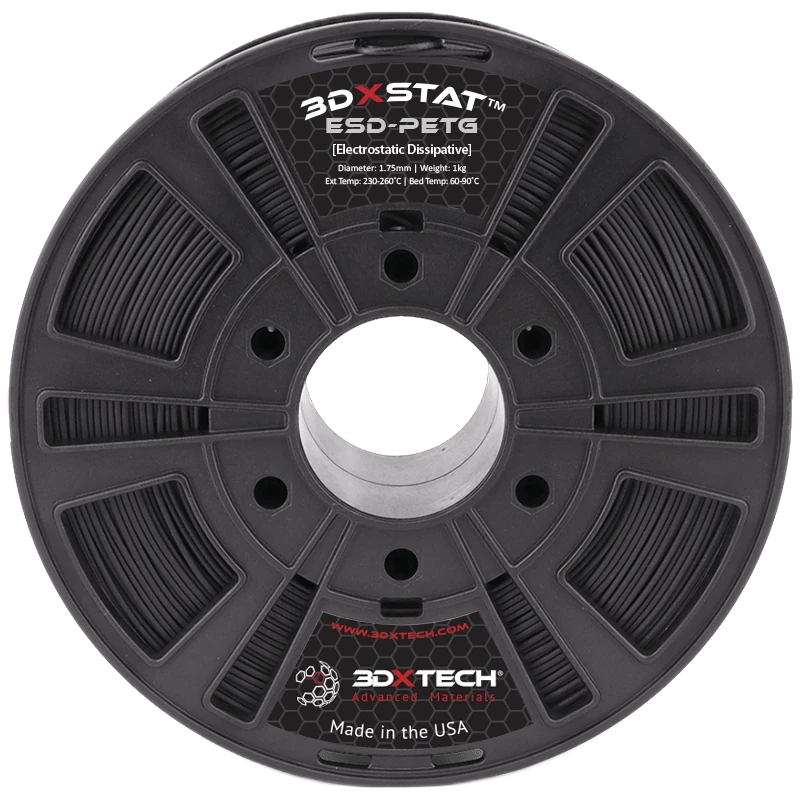
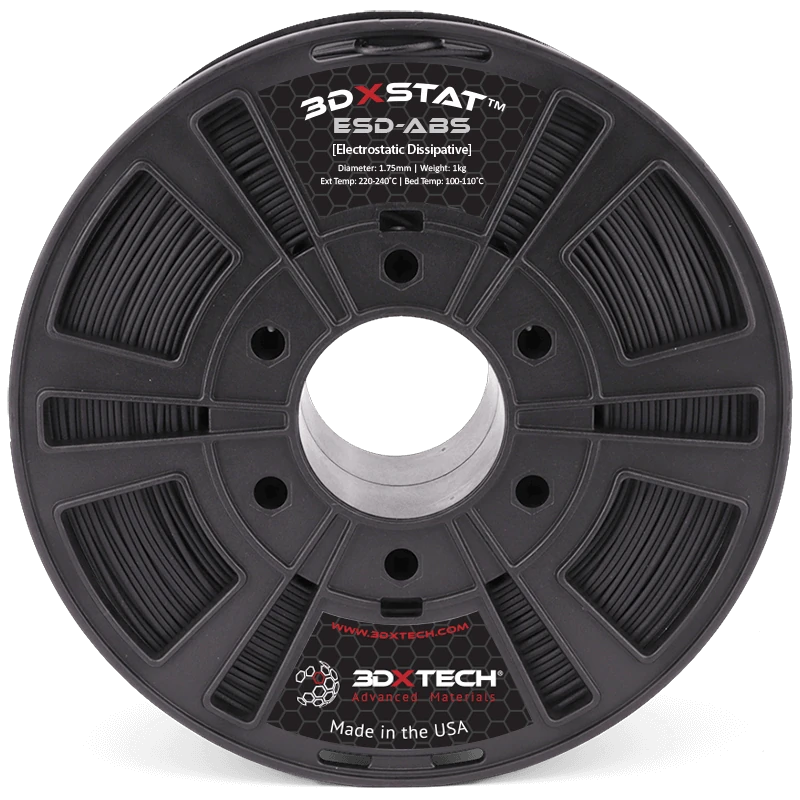
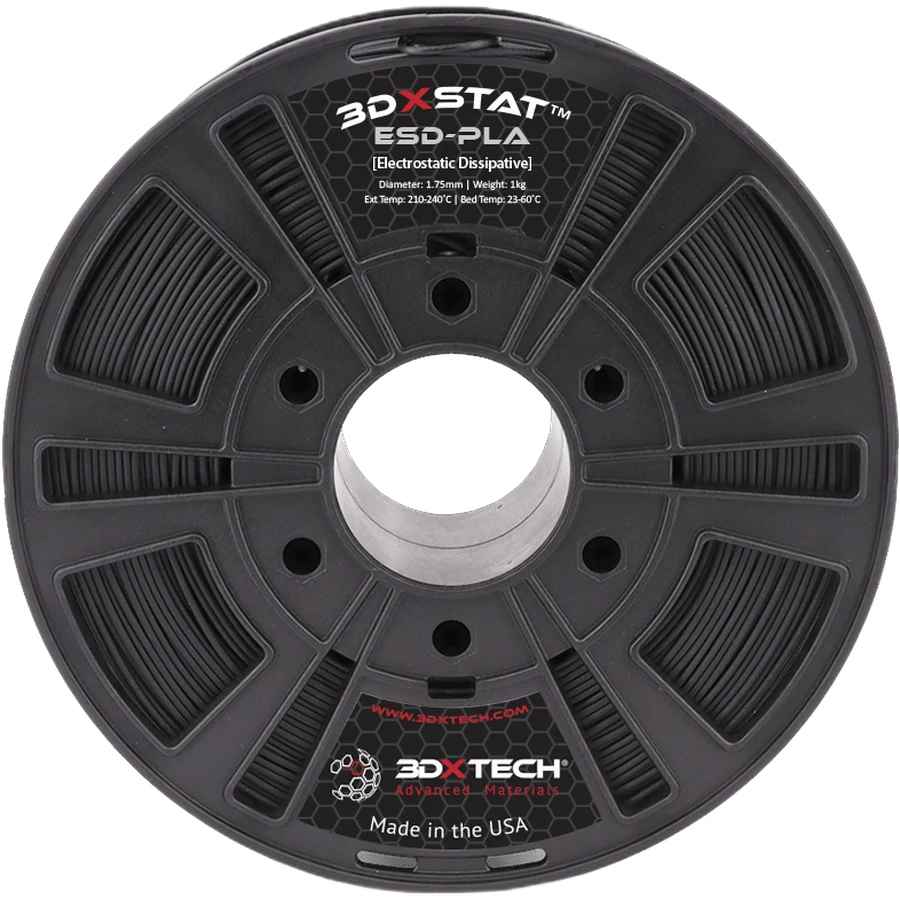
What is ESD-safe filament?
ESD-safe (electrostatic discharge) filament is an engineering base resin — commonly ABS, PETG, PC, or nylon — compounded with conductive additives (carbon nanotubes or carbon black) to give a controlled surface resistivity, typically in the static-dissipative range (roughly 106–109 ohms).
That controlled resistivity lets a part bleed static charge to ground gradually rather than holding it or discharging in a damaging spark. It's essential wherever parts touch sensitive electronics — component trays, assembly jigs, fixtures, and enclosures in EPA (electrostatic protected area) workflows.
ESD-safe vs standard filament — how to choose
Choose by whether the part contacts static-sensitive electronics:
If a datasheet or process spec calls for a surface-resistivity range, use a rated ESD-safe material — don't approximate.
Printing ESD-safe filament successfully
- Follow the base resin's profile — temps and enclosure needs come from the ABS/PETG/PC/nylon base.
- Dry thoroughly — most ESD bases are hygroscopic and print poorly wet.
- Hardened nozzle recommended — conductive carbon additives can be mildly abrasive.
- Solid, dense walls help maintain a continuous conductive path through the part.
- Verify resistivity on a printed sample if the application is safety-critical — process affects final surface resistance.
ESD-safe brands stocked at Rev1
Rev1 Technologies stocks ESD-safe filament from multiple brands, all shipped from Auburn Hills, Michigan with real phone support. Use the brand filter below to narrow the range, or call (248) 707-2950 for spec, bulk, and color-match help.