3DXTech 3DXSTAT™ ESD-PC Static-Dissipative Polycarbonate — High-Heat ESD Protection, USA-Made
Static-Dissipative Polycarbonate — High-Heat ESD Protection, USA-Made
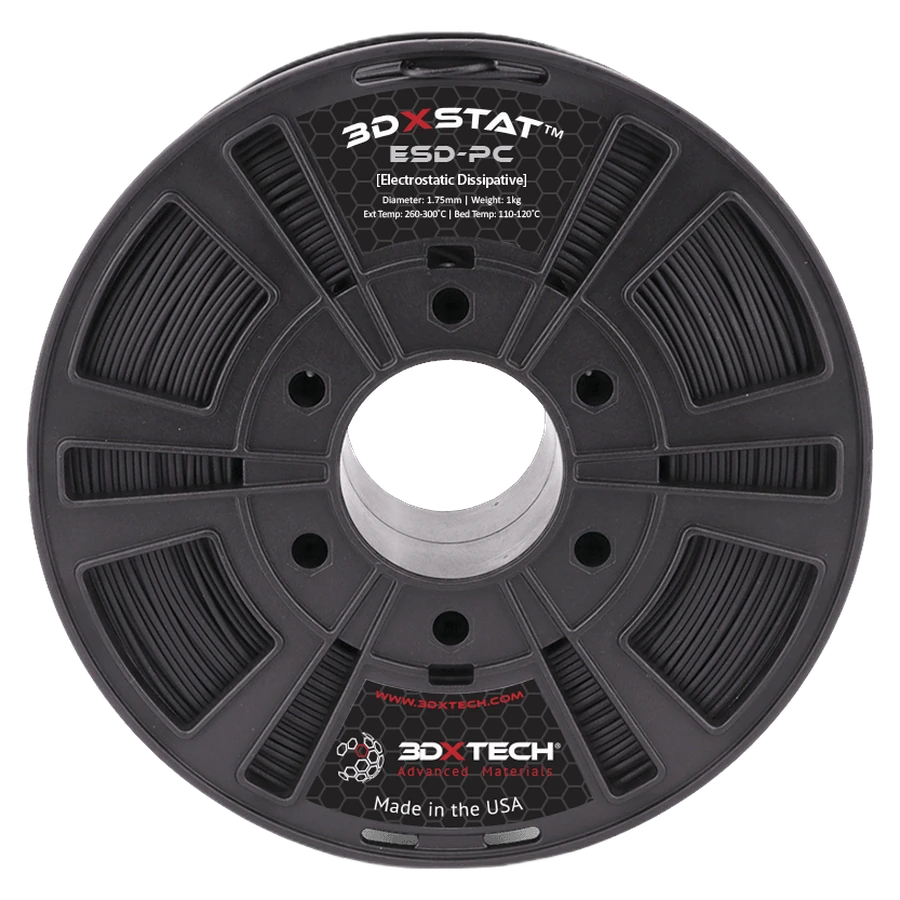
3DXSTAT™ ESD-PC is an advanced ESD-safe compound built on a polycarbonate base for critical applications that demand both structural strength and electrostatic-discharge protection. It uses 3DXTech's multi-wall carbon-nanotube (MWCNT) technology to hold a consistent, repeatable surface resistance in the static-dissipative range — without the sloughing and hot-spots of carbon-black additives. Compounded in 3DXTech's 68,000 sq-ft Grand Rapids, Michigan facility. Full specifications →
Made in the USA — ships from Rev1. Need bulk, a standing order, or engineering support qualifying ESD-PC for your part? Call (248) 707-2950.
ESD-safe polycarbonate, with a published datasheet behind it.
3DXTech compounds 3DXSTAT™ ESD-PC in Grand Rapids, Michigan with published print, mechanical, and electrical data — no mystery filament, no guesswork on the resistance range. Rev1 Technologies is your authorized 3DXTech reseller and US support partner, Auburn Hills, Michigan.


Structural polycarbonate that also protects your electronics.
Most 3D-printed enclosures make you choose: a tough, heat-resistant engineering plastic that can build static, or a soft ESD-safe filament that can't take a load. 3DXSTAT™ ESD-PC refuses the trade-off. It is a genuine polycarbonate — strong, stiff, and dimensionally stable to a 143°C glass transition — that has been compounded with multi-wall carbon nanotubes to hold a controlled, static-dissipative surface resistance of 107–109 Ohm. The result is a single material you can print jigs, fixtures, trays, and housings from and trust around sensitive electronics.
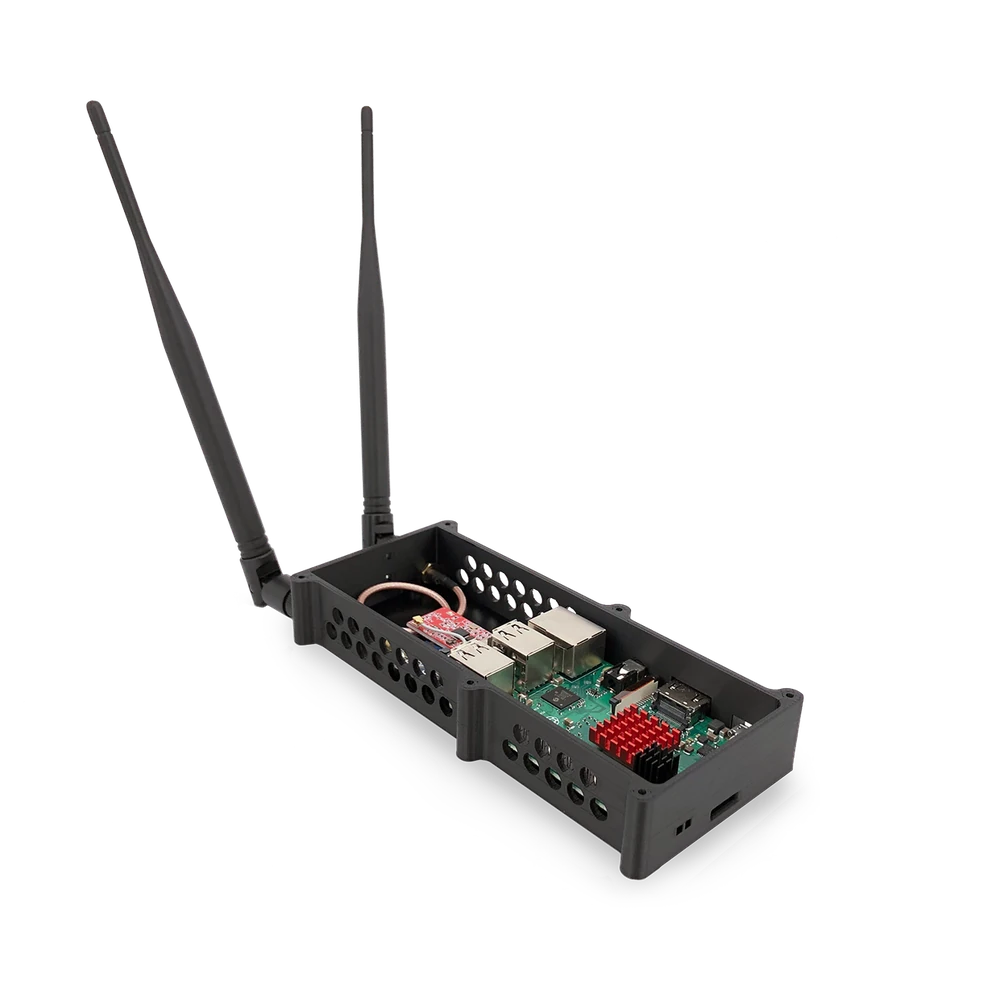
Enclosures and tooling that live next to circuit boards.
ESD-safe housings, benchtop fixtures, and handling trays — in a material rated for the heat.
Because ESD-PC combines strength, heat resistance, and electrostatic protection, it is a natural fit for aerospace and defense tooling, electronics-manufacturing fixtures, and enclosures where a part has to survive both mechanical stress and static-sensitive environments. Print a housing that shields the board inside it, a fixture that won't zap a component during assembly, or a tray that carries chips across the floor — all off a printer you already own, with a published resistance spec you can qualify against.
Polycarbonate strength and heat — from a published TDS.
These are 3DXTech's published values (TDS Rev 3.0), tested on an open-source FDM/FFF machine — 0.4 mm nozzle, 0.25 mm layer, 100% infill, XY-flat specimens, ISO methods.
Strength at break (ISO 527) — true polycarbonate load capacity, not a filled commodity blend.
Stiffness under load (ISO 527) — rigid parts that hold tolerance in a fixture.
Strong in bending (ISO 178) with a 2310 MPa flexural modulus — resists deflection.
Ductility (ISO 527) — PC-grade impact resistance, so parts absorb a knock instead of shattering.
DSC-measured Tg — parts stay stable far above the reach of PLA, PETG, or ABS.
Deflection temp at 0.45 MPa (ISO 75, 66 psi) — usable in genuinely hot environments.
Static-dissipative, not just “anti-static.”
ESD-safe parts have to bleed static charge away in a controlled way — fast enough to prevent a damaging build-up, slow enough that they never deliver a sudden discharge into a sensitive component. 3DXSTAT™ ESD-PC is engineered to sit squarely in the static-dissipative window.
Measured per ASTM D257 — the classic static-dissipative range that protects electronics without insulating or fully conducting.
Multi-wall carbon nanotubes give consistent, repeatable resistance across the part — no carbon-black hot-spots or sloughing.
A compounded, published resistance range means you can qualify ESD-PC once and trust it across reels and print jobs.
One optimized black formulation — the pigment and nanotube loading are dialed in for stable ESD performance.
A true amorphous polycarbonate carrier — the ESD network stays put through the part's service life, not a surface coating that rubs off.
Very low odor while printing — comfortable for benchtop and lab environments running dissipative parts.
Protect the board, not just the part.
Dissipative housings and fixtures keep static from reaching what you're building.
A charge that builds on an insulating plastic enclosure can dump into a circuit the instant a technician touches it — and modern components fail from discharges too small to feel. A static-dissipative housing continuously bleeds that charge to ground through a controlled resistance, so it never accumulates and never arcs. With ESD-PC you get that protection in a part that also survives the heat and mechanical load of real production tooling.
A high-temp polycarbonate profile — run it hot, keep it dry.
3DXTech's recommended starting conditions. ESD-PC is a high-temperature engineering polymer, so plan on an all-metal, high-temp hotend and an enclosed, heated chamber for best results on larger parts.
Polycarbonate print range — an all-metal high-temp hotend is required (295°C used for TDS specimens).
A hot bed with a suitable adhesive gives reliable first-layer grip and reduces warp on PC.
An enclosed, heated chamber keeps large PC parts from warping or delaminating as they cool.
PC is hygroscopic — dry at 120°C for 4 hours for clean surfaces and consistent extrusion.
The amorphous structure gives low, near-isotropic shrinkage — predictable, dimensionally stable parts.
No special layer-height concerns; a 0.4 mm nozzle and standard layer heights print cleanly.
Built for electronics, aerospace, and defense tooling.
ESD-PC earns its place anywhere a part must be strong, heat-tolerant, and static-safe at the same time — the combination that rules out most single-purpose filaments.
Check the reel fits your printer.
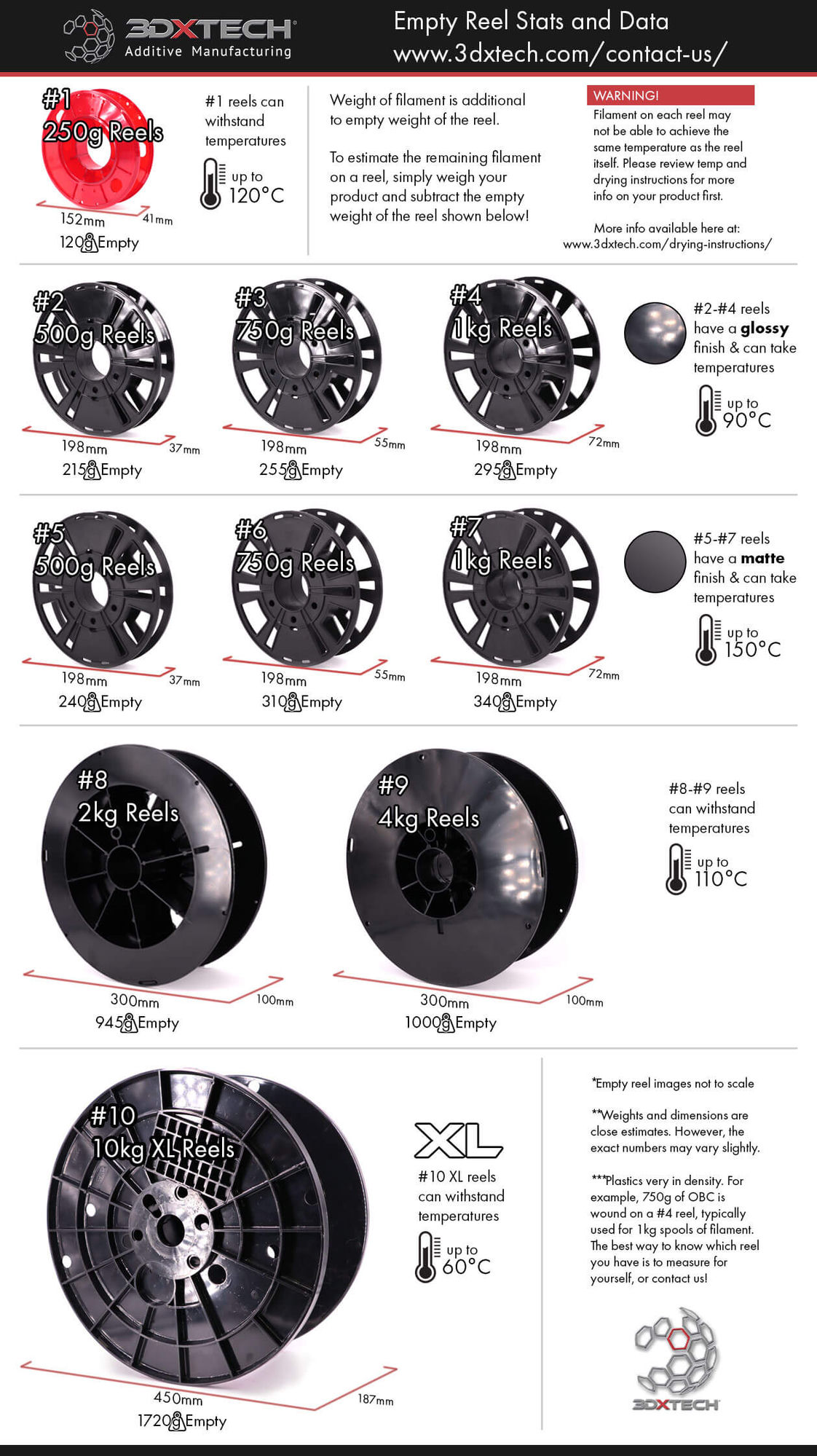
Standard spool dimensions — and the 750 g reel fits your AMS.
3DXTech ships ESD-PC on consistent, standard reels.
Before you buy, check the outer diameter, width, and center bore against your printer's spool holder, automated material system, or drybox. The 750 g reel is sized to fit popular automated material systems including the Bambu AMS, Creality CFS, and Anycubic ACE Pro. Open the full 3DXTech reel infographic for exact spool dimensions.
View reel dimensions →ESD-PC vs. ESD-PETG vs. ESD-ABS — choosing the right ESD-safe filament.
Approximate positioning among 3DXTech's ESD-safe filament family — confirm exact figures against each technical data sheet.
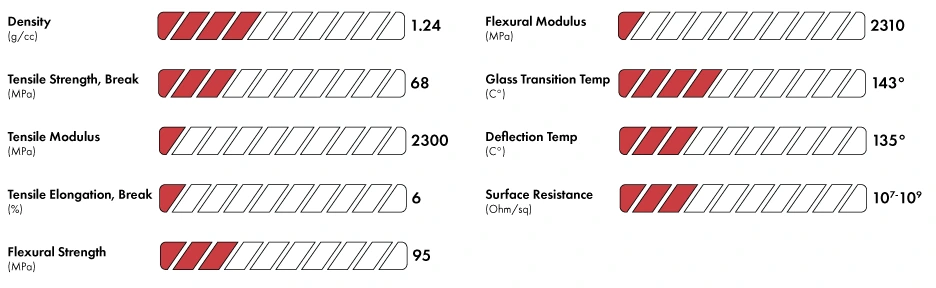
3DXTech's published property chart.
The quick-reference numbers, straight from the manufacturer — click the chart to enlarge it.
3DXTech publishes a property chart for 3DXSTAT™ ESD-PC so you can size it up fast. It's small on the page — click it to read the full-size version — and the same figures are in the readable specifications table below, with the complete mechanical, thermal, and electrical data.
| 3DXTech ESD-PC | ESD-PETG | ESD-ABS | |
|---|---|---|---|
| Base polymer | Polycarbonate | PETG | ABS |
| Heat resistance | High (Tg 143°C) | Moderate | Moderate |
| Stiffness / strength | High (68 MPa, 2300 MPa) | Moderate | Moderate |
| Surface resistance | 107–109 Ohm | Dissipative | Dissipative |
| Print difficulty | Higher (high-temp PC) | Easy | Moderate |
| Printer needs | 300°C hotend + heated chamber | Heated bed | Heated bed + enclosure |
| Best for | Hot, load-bearing ESD tooling & housings | Easy everyday ESD parts | Tougher ESD parts, mid heat |
Qualitative comparison among common ESD-safe filaments; confirm exact properties against each TDS. Prices vary by reel size and date.
3DXTech 3DXSTAT ESD-PC Technical Data
RESOURCES
Datasheet & Print Support
Everything you need to qualify and print 3DXSTAT ESD-PC.
WHY REV1 TECH
Authorized 3DXTech Reseller. Engineering-Materials Specialists.
Rev1 Technologies is an authorized 3DXTech reseller in Auburn Hills, MI, supplying genuine USA-made filament with real print support.
We help you pick the right polymer, dial in the profile, and keep production running.
FAQ
3DXTech ESD-PC — Common Questions
What is ESD-PC and who is it for?
3DXSTAT™ ESD-PC is a static-dissipative polycarbonate filament. It's for engineers who need a part that is strong and heat-resistant like PC, but that also safely bleeds off static charge — ESD-safe enclosures, electronics-assembly fixtures, handling trays, and aerospace or defense tooling.
What is the surface resistance?
3DXTech publishes a surface resistance of 107–109 Ohm per ASTM D257 — the static-dissipative range that protects sensitive electronics without insulating or fully conducting. The ESD performance comes from multi-wall carbon-nanotube (MWCNT) technology for consistent, repeatable resistance.
Do I need a special printer?
Yes — ESD-PC is a high-temperature polycarbonate. You'll want an all-metal hotend that reaches 260–300°C, a heated bed at 110–120°C, and ideally an enclosed, heated chamber to keep larger parts from warping.
Do I need to dry it before printing?
Yes. Polycarbonate is hygroscopic, so dry ESD-PC at 120°C for about 4 hours before printing. Dry filament gives cleaner surfaces, more consistent extrusion, and better mechanical and ESD performance.
What sizes and colors are available?
ESD-PC ships in 1.75 mm, in Black, on 750 g and 2 kg reels. The 750 g reel is sized to fit popular automated material systems like the Bambu AMS, Creality CFS, and Anycubic ACE Pro. Ask us about bulk and standing orders.
How does ESD-PC compare to ESD-PETG or ESD-ABS?
All three are static-dissipative, but ESD-PC is the high-heat, high-strength option: a 143°C glass transition and 68 MPa tensile strength versus the more moderate heat and strength of ESD-PETG and ESD-ABS. Choose ESD-PC when the part has to stay rigid and stable in a hot or demanding environment; choose ESD-PETG or ESD-ABS when printing is the priority and service conditions are milder.
Will the reel fit my Bambu or Creality AMS?
The 750 g reel is sized to fit popular automated material systems — the Bambu AMS, Creality CFS, and Anycubic ACE Pro. For exact spool outer diameter, width, and bore, open the 3DXTech reel infographic linked in the Spool & Reel Specs section above and check it against your system.
Does the ESD performance wear off over time?
No. The dissipative behavior comes from a multi-wall carbon-nanotube network compounded throughout the polycarbonate, not a surface spray or coating. Because the ESD is built into the bulk material, the resistance stays in range through handling and service — it doesn't rub off or wash away.
Is it made in the USA?
Yes — 3DXTech manufactures and compounds 3DXSTAT ESD-PC in its 68,000 sq-ft facility in Grand Rapids, Michigan, with published data and lot traceability.