XGRIDSPortalCamStandard Kit
Handheld 3D Gaussian Splatting Scanner for Photorealistic Spatial Capture
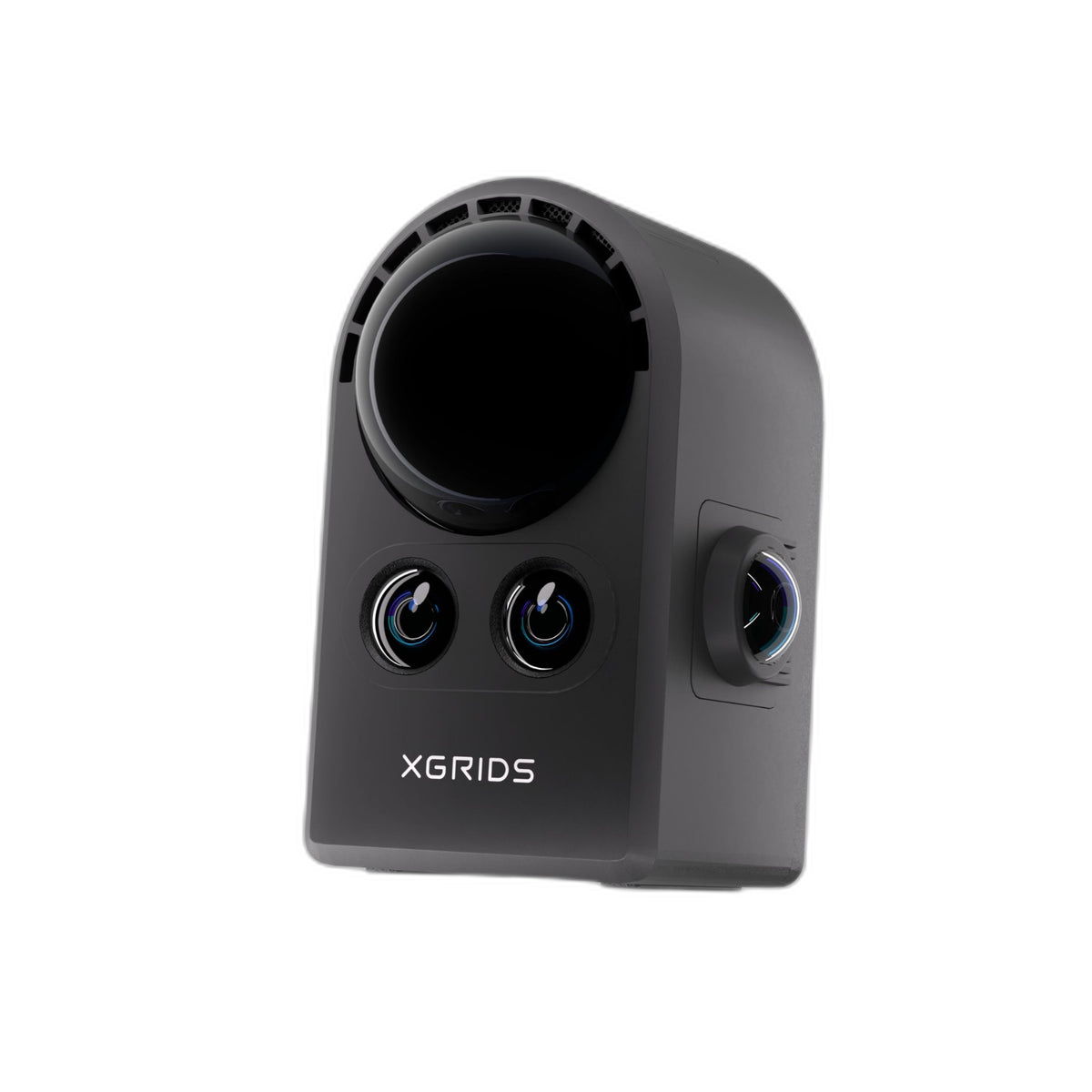
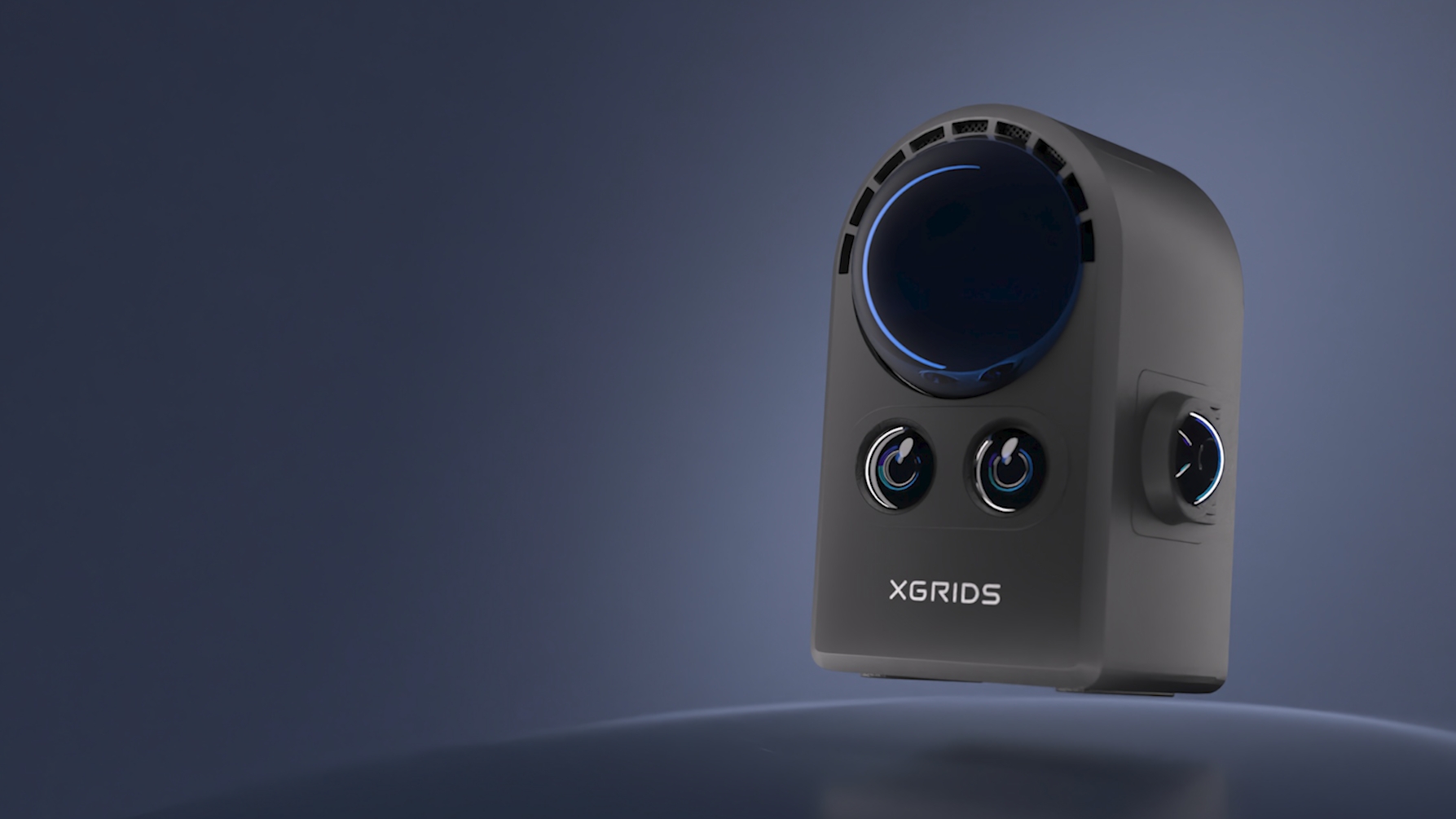
The XGRIDS PortalCam is a sub-900g handheld 3D Gaussian Splatting scanner that turns a one-button walk-through into a photorealistic, explorable 3D world — shareable by link, viewable on any device. It fuses 856,000 pts/sec eye-safe LiDAR with a four-camera array and runs SLAM on-device to produce native 3D Gaussian Splatting output. Full specifications →
Rev1 validates application fit, the LCC software workflow, and your processing-workstation readiness before you buy. Authorized XGRIDS partner in the USA — Auburn Hills, MI. Questions before you buy? Call Rev1 at (248) 707-2950.
Factory-Built Precision. US-Supported by Rev1.
PortalCam is genuine XGRIDS hardware, sold and supported in the United States by Rev1 Technologies. A handheld 3DGS device is a workflow decision, not just a hardware purchase — Rev1 validates the application, software pipeline, and processing setup before deployment, and supports it after.

Photorealistic 3D — Not Just a Point Cloud
3D Gaussian Splatting represents a scene as millions of view-dependent volumetric primitives that reproduce lighting, transparency, reflections, and fine geometry. Foliage, glass, glossy floors, and fabric all render with their original photographic quality — the surfaces traditional photogrammetry struggles with.
Native 3DGS, straight from the device
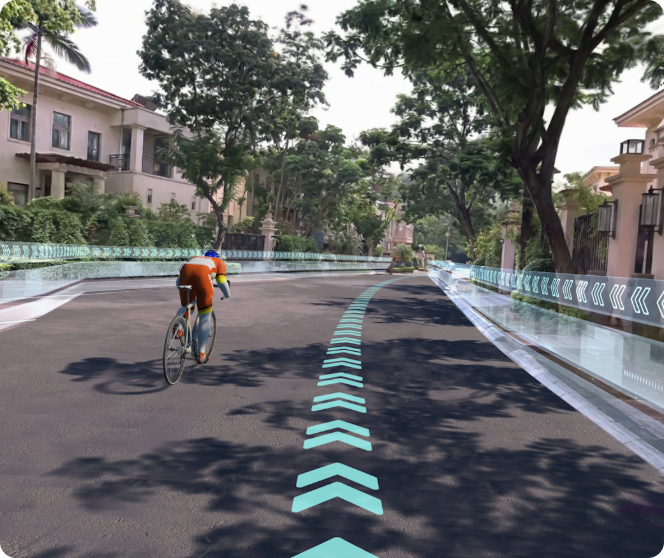
PortalCam was purpose-built for Gaussian Splatting. Its fused LiDAR + four-camera + IMU + on-device SLAM pipeline captures the dense geometry and photographic color the 3DGS format needs, so output quality is consistent shoot-to-shoot instead of dependent on operator framing skill. The result is a true-to-life, walkable scene rather than a flattened, fixed-resolution texture.
Explore it anywhere. Share by link.
Finished captures open in a browser-only Web 3DGS Viewer — no plugin to install, WebXR-ready for VR headsets, and embeddable on any website via iframe. Recipients click a link and walk the space on any device. That shareability is why 3DGS has displaced fixed virtual-tour output for high-end real estate and film previs.
Walk Through. Press One Button.
The whole point of PortalCam is that capture is mobile and intuitive. There is no laptop tether, no markers, and no stop-and-shoot tripod cycle — you walk the space one-handed and the scan is ready the moment you stop.
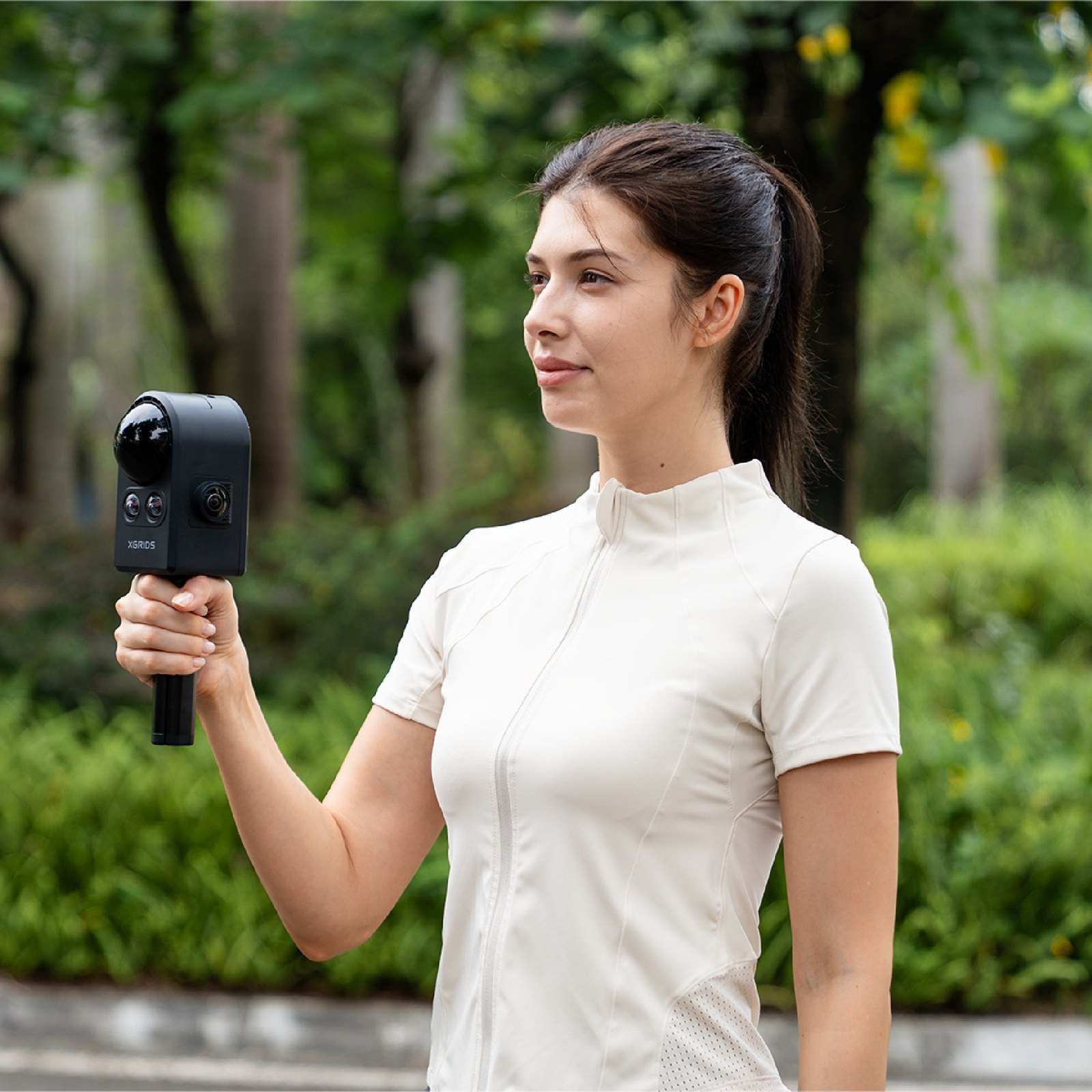
One-handed walk-through capture
At under 900g, PortalCam is carried like a flashlight. One continuous walk captures full geometry without repointing, gap-filling passes, or framing decisions, so a job that used to mean dozens of tripod set-ups becomes a few minutes of walking — indoors or out. Compact enough for residential, hospitality, and retail interiors, and just as at home capturing building exteriors and outdoor sites — or mount it on the included tripod for static, controlled-environment scans. Because there are no markers to place and no targets to register, an operator can be productive on their first day rather than after a week of training.

On-device SLAM, with live coverage preview
On-device AI fuses LiDAR and camera imagery in real time. The companion LCC Scan app shows point-cloud coverage as you walk, so you see gaps before you leave the site — no reshoots. All sensing, IMU integration, AI processing, and SLAM run on the device itself, so the capture file is finished when you stop walking.
856K-Point LiDAR Meets a Four-Camera Array
Every sensor was chosen to feed the 3DGS pipeline. Dense LiDAR geometry plus photographic-resolution color is the combination that lets the software reconstruct reflective, transparent, and fine-detail surfaces consistently.
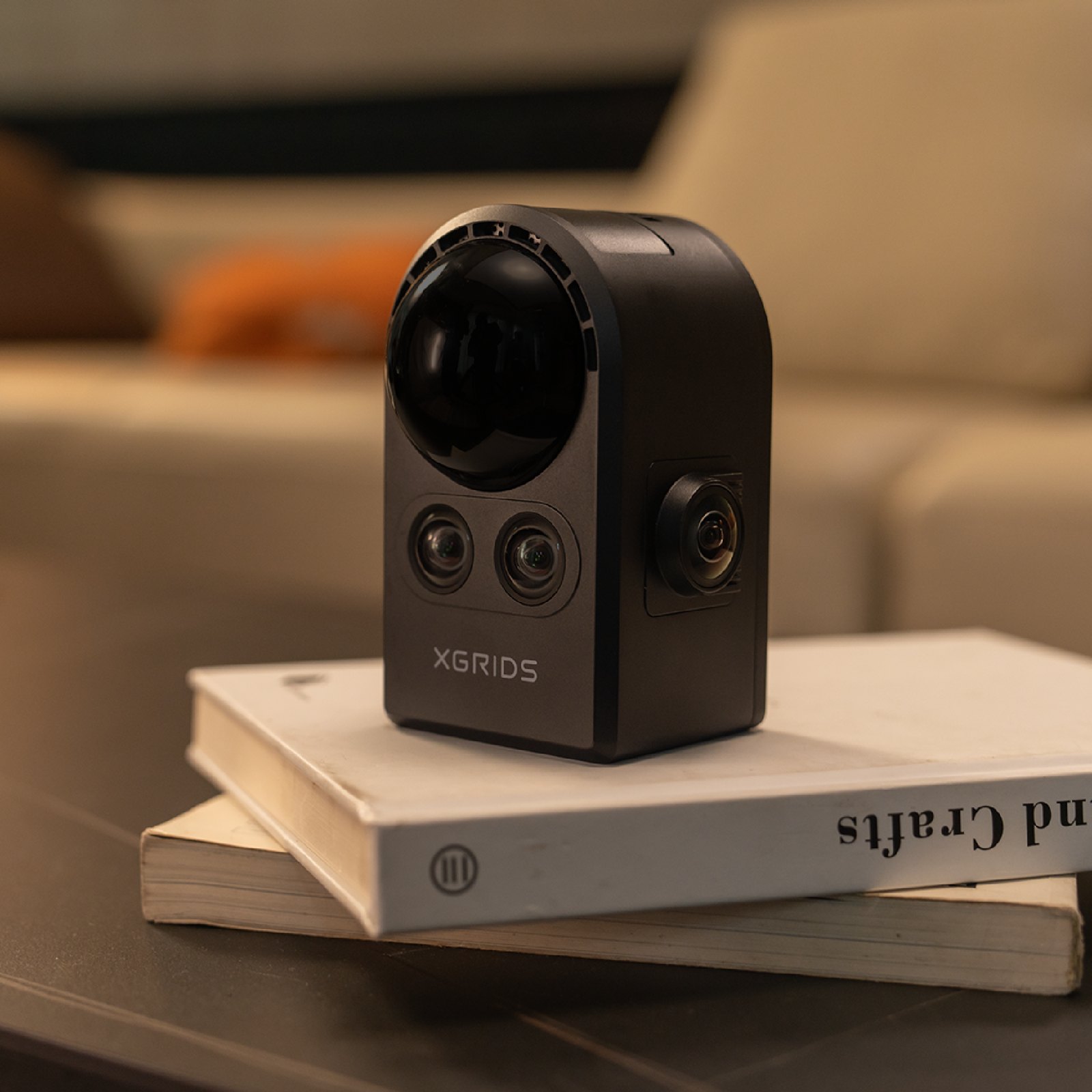
Eye-safe LiDAR + four 12 MP cameras
A Class 1 eye-safe 940nm LiDAR streams 856,000 points per second across a 180°×180° field of view — reaching 30 m at 10% reflectivity and up to 60 m at 90% — while four 12-megapixel (4000×3000 px) cameras, two 200°×200° fisheye and two 100°×85° front, capture the color. An onboard IMU and GPU fuse it all live.
Sub-900g body, 60-minute battery
An aerospace-grade aluminum-alloy body keeps the device to 870g (1.9 lbs) without tripod — light enough to carry through a full day of captures without fatigue, rigid enough to survive the back of a work van. The removable 23.04Wh Li-ion pack delivers 60 minutes of continuous capture; USB-C charging brings it from 0–90% in 70 minutes and 0–100% in about 90 minutes, so a spare battery and a field charger keep you scanning all day. A 512GB internal drive holds the captures, and the device operates from -20°C to 45°C — cold warehouses, hot rooftops, and everything between.
From Job Sites to Wedding Aisles
PortalCam shipped 300 units in its first 24 hours to professionals across real estate, film, AEC, and content creation. One device covers a remarkably wide span of capture work.

Real estate & AEC
Capture a full property in a single walk-through and deliver a photoreal, measurable, shareable space — far richer than a fixed virtual tour. Listings stand out when buyers can walk every room remotely, and agents reuse one capture for the MLS, social, and print floor plans. For AEC teams, the Premium Kit’s LCC for Revit plugin turns captures into as-built BIM handover — the only Gaussian-Splat-to-BIM path on the market — so renovation and retrofit projects start from measured reality instead of outdated drawings.
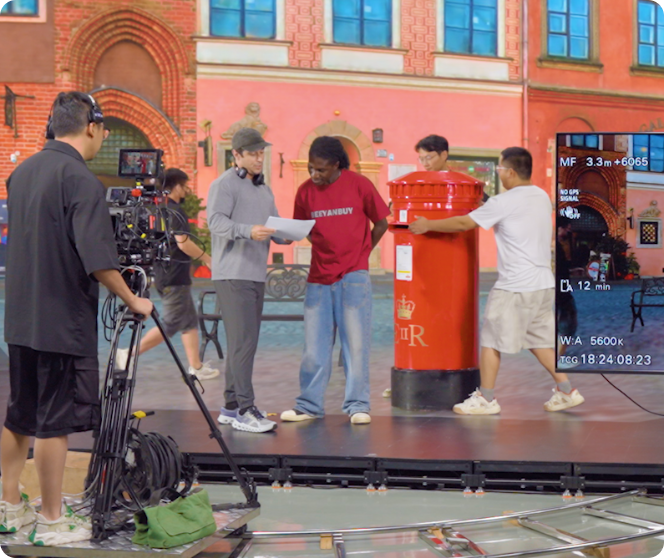
Film & content production
Scout and digitize locations in minutes, then drop native 3DGS assets straight into Unreal Engine or Unity with the included SDK — lighting, animation, and composition intact for previs, virtual production, and VFX. Directors can block shots in a real location before the crew ever arrives, and set designers iterate against true geometry rather than rough proxies. Because the splat preserves real reflections and translucency, digital doubles of a space hold up under the camera moves traditional photogrammetry meshes break on.
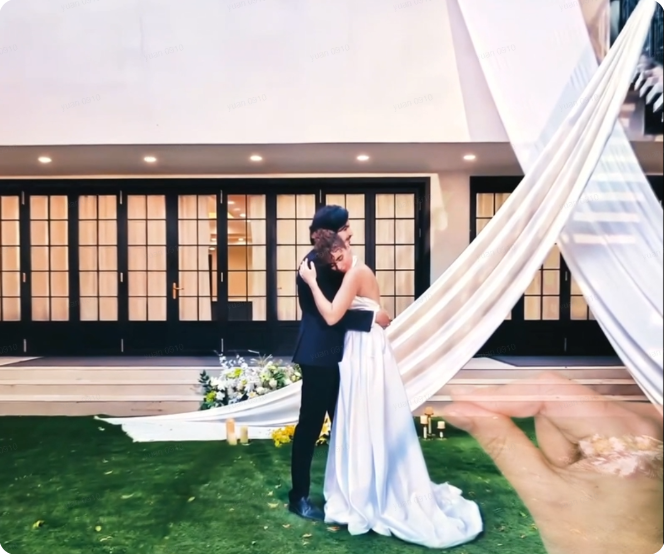
Events & personal memories
Preserve a venue, an event, or a meaningful space as an explorable 3D world that anyone can revisit by link — a new category of keepsake that flat photo and video can’t deliver. Event studios and content creators are building a fresh service line around it: capture the space once, deliver an interactive memory clients can step back into from any device, years later.
Lixel CyberColor: Capture to Shareable World
PortalCam is paired with the Lixel CyberColor (LCC) ecosystem — the production pipeline that turns raw capture into deliverable 3DGS. The Standard Kit includes a 1-year LCC Basic subscription; the device carries no mandatory ongoing subscription to keep working.

Process on your workstation
Lixel CyberColor Studio is a Windows desktop application that imports PortalCam captures and produces native 3DGS, .ply, .glTF, .usdz, mesh, floor plans, and measurements through a one-click pipeline. You are not stitching scans by hand or babysitting a render queue — load the capture, choose your output, and the GPU does the work. The free LCC Scan app (iOS / Android) pairs to the device over Wi-Fi for live preview, walk-path guidance, and wireless transfer, so the field operator and the processing operator can be two different people on two different schedules.

Export anywhere it needs to go
Deliver to a browser-only Web 3DGS Viewer, embed via iframe, or export to Unreal and Unity with the native SDK. The Premium Kit ships with LCC Premium — adding Map Fusion, HD Enhancement, AI Dynamic Object Removal, and the LCC for Revit BIM plugin. Already on a Standard Kit? The same LCC Premium tier is available later as a $1,000 upgrade, so the software path is never a dead end.
The PortalCam Standard Kit
Everything needed to capture from day one: PortalCam body, battery, battery charger, tripod, phone mount module, protective cover, cleaning cloth, quick-start guide, warranty card, hard protective case, and an LCC Basic license. The Premium Kit adds a second battery, an LCC Premium license, and a 1-year warranty extension.
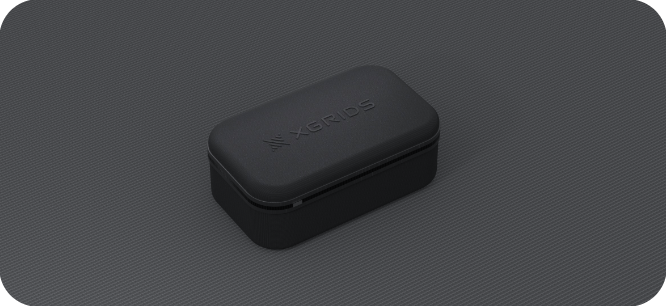
Rugged carry case
A protective hard case holds the scanner, battery, and accessories for transport between job sites — the device travels safely from your vehicle to the field and back.
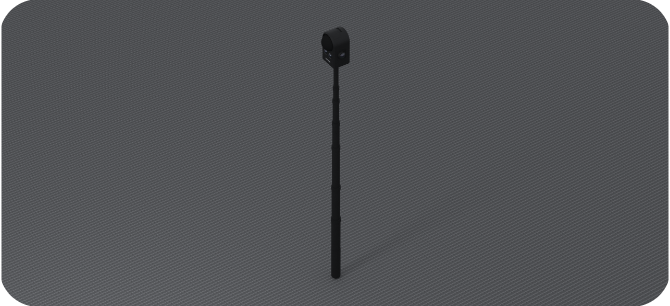
Extension pole & tripod
The included pole reaches over obstructions and into stairwells and high ceilings, while the tripod handles static, controlled-environment scans in commercial and retail settings.
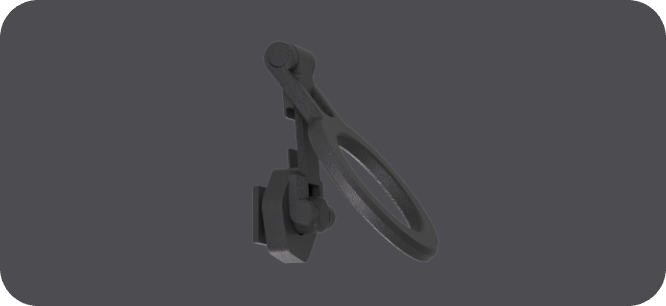
Phone mount for live preview
Clip your phone to the device and run the LCC Scan app alongside the scanner for live coverage preview and walk-path guidance as you capture.
PortalCam vs. the Spatial-Capture Field
Buyers cross-shop PortalCam against tripod virtual-tour platforms and survey-grade handheld SLAM scanners. Here is where native 3DGS output, capture speed, and price separate them — street prices shown honestly (~).
| Capability | XGRIDS PortalCam Standard | Matterport Pro3 | Leica BLK2GO |
|---|---|---|---|
| Capture method | Handheld walk-through, on-device SLAM | Stop-and-shoot tripod cycle | Handheld walk-through, SLAM |
| Native 3D Gaussian Splatting | Yes — purpose-built | No | No |
| Output formats | .splat, .ply, .glTF, .usdz, mesh, web | Proprietary tour format | Point cloud (.e57, .las) |
| Camera color | 4 × 12 MP, fused photoreal | Built-in 3D camera | Optional / panoramic |
| Engine / web sharing | Web viewer + Unreal/Unity SDK | Web tour (subscription) | Third-party CAD/BIM |
| Mandatory subscription | None (LCC Basic 1yr incl.) | $69–309/mo to share | No |
| Street price (~) | $4,999 | ~$5,995 | ~$28,000 |
| Best fit | Photoreal walkable 3DGS — the value play | Indoor virtual tours | Survey-grade as-built point clouds |
XGRIDS PortalCam Technical Data
RESOURCES
Get Started & Technical Support
Everything you need to qualify and run your PortalCam with confidence.
WHY REV1 TECH
Authorized XGRIDS Partner. Reality-Capture Specialists.
Rev1 Technologies is headquartered in Auburn Hills, MI, with direct expertise in mobile mapping, SLAM, and reality capture. Buying through Rev1 pairs the device with workflow validation and US support — not a direct-import crate with no pipeline ownership.
PortalCam Buyer Questions
What is 3D Gaussian Splatting, and how is it different from a point cloud or mesh?
3DGS represents a scene as millions of view-dependent volumetric primitives that reproduce lighting, transparency, reflections, and fine detail. Unlike a textured mesh with a fixed-resolution UV map, a splat preserves photographic quality at any viewing angle — so glass, glossy floors, foliage, and fabric look real rather than flattened.
How does PortalCam capture — do I need a tripod or markers?
No markers. You walk the space one-handed and on-device SLAM tracks position in real time. The included tripod is for static, controlled scans, but most jobs are captured handheld in a single continuous walk-through.
What is the difference between the Standard Kit and the Premium Kit?
Both include the PortalCam body, battery charger, tripod, phone mount module, protective cover, cleaning cloth, quick-start guide, warranty card, and hard case. The Standard (Basic) Kit ships one battery and an LCC Basic license. The Premium Kit adds a second battery, an LCC Premium license — which adds Map Fusion, HD Enhancement, AI Dynamic Object Removal, and the LCC for Revit BIM plugin — and a 1-year warranty extension. If you start on the Standard Kit, you can move up to the LCC Premium tier later with a $1,000 LCC upgrade — no need to re-buy hardware.
Do I need an ongoing subscription to keep using it?
No mandatory subscription is required to keep capturing and processing. The kit includes one year of LCC Basic; after that, the device and core processing continue to work, and you can renew or upgrade the LCC tier if you want the premium features.
What file formats can I export for Revit, Unreal, or the web?
Native 3DGS (.splat), plus .ply, .glTF, .usdz, mesh, floor plans, and measurements. Share via the browser Web 3DGS Viewer (WebXR-ready, embeddable), import to Unreal or Unity with the SDK, or hand off to Revit with the Premium LCC for Revit plugin.
How accurate is it, and what is the LiDAR range?
PortalCam pairs a Class 1 eye-safe 940nm LiDAR streaming 856,000 pts/sec at up to 60 m of range with four 12 MP cameras for color. It is engineered for photoreal spatial capture and visualization — for survey-grade absolute accuracy, ask Rev1 about the survey-class Lixel L2 Pro instead.
What computer do I need to process captures?
Capture runs entirely on-device with no laptop tether. Processing happens later in Lixel CyberColor Studio on a Windows workstation with a capable discrete GPU — the GPU does the heavy lifting for 3DGS reconstruction, so VRAM and CUDA performance matter more than CPU core count. Larger captures and higher output quality want more VRAM. Rev1 can help you spec the right machine, or right-size an existing one, for your throughput before you buy, so your first job isn’t bottlenecked by hardware.
How long does a scan take, and how big are the files?
Capture is a single walk-through — typically minutes for an interior — and the file is ready the moment you stop walking. The 60-minute battery covers most interior jobs in one session; the Premium Kit’s second battery enables back-to-back jobs. Raw captures and finished 3DGS scenes are large by nature because they store dense geometry plus photographic color, so a fast SSD and generous storage help — another reason to size the processing workstation with Rev1 up front rather than discover the limit mid-project.
Can recipients view results without special software?
Yes. Captures open in a browser-only Web 3DGS Viewer — recipients click a link and walk the space on any device, with no plugin install. It is WebXR-ready for VR headsets and embeddable on websites via iframe.
Does Rev1 provide training and support?
Yes. As an authorized XGRIDS partner in the USA, Rev1 helps with setup, first capture, demo captures before purchase, workstation guidance, and ongoing application support from Auburn Hills, Michigan.