Formlabs Form 4B Blazing Speed Meets Surgical Precision
Biocompatible parts for surgery, patient care, and medical devices — four times faster than Form 3B+.
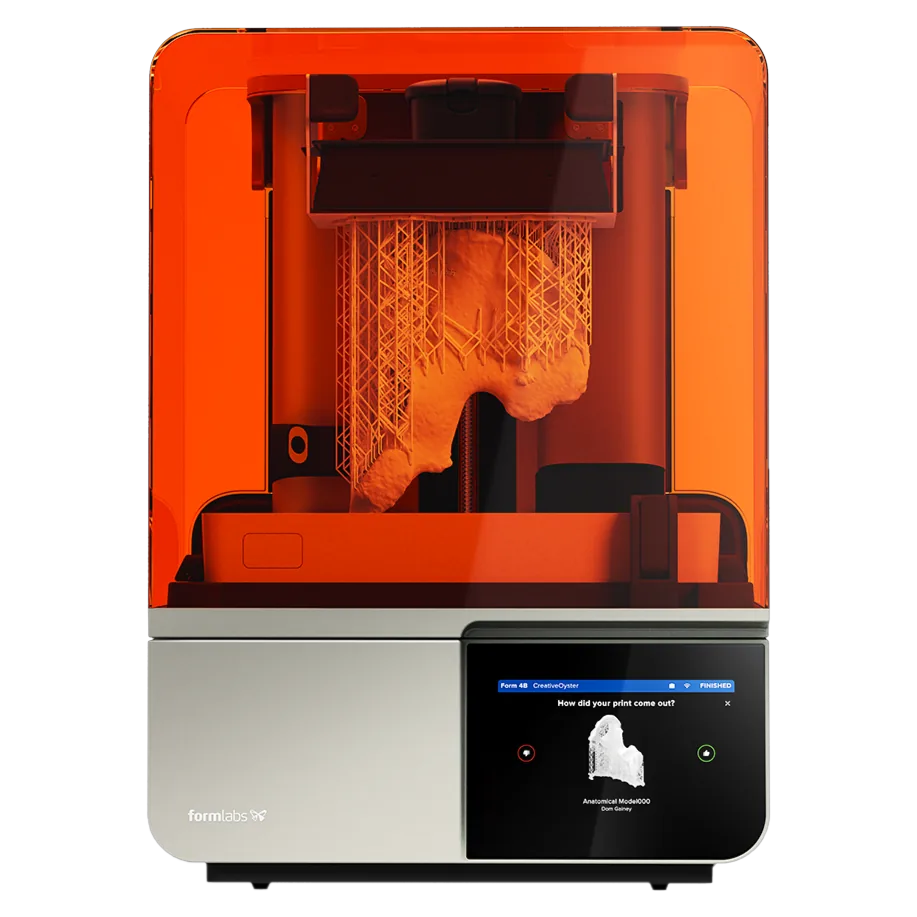
The Formlabs Form 4B is the healthcare version of Form 4: the same Low Force Display™ (LFD) print engine — a 60-LED collimated backlight, a 50 µm Light Processing Unit, and a low-peel release texture — validated for Formlabs’ biocompatible BioMed and dental resins. Hospitals, device makers, and dental labs use it for surgical guides, sizing trials, anatomical models, and patient-specific devices, with automatic resin dispensing, six control systems, and a 98.7% print success rate behind every build. Full specifications →
Authorized Formlabs reseller in the USA — Rev1 helps clinical and device teams choose the right package, BioMed resins, and post-processing. Questions? Call (248) 707-2950.
Factory-Built Precision. US-Supported by Rev1.
Every Form 4B passes a 60-point calibration and quality-control inspection before it leaves the Formlabs factory, and BioMed resins are made in Formlabs’ FDA-registered, ISO 13485-certified facility. Rev1 adds application review, resin selection, onboarding, and US-based support from Auburn Hills, Michigan.

Quality you can trust when it matters most — at a speed that keeps up with surgery schedules.
Point-of-care teams, medical device manufacturers, and dental labs need parts that are accurate, repeatable, and made from materials with documented biocompatibility. Form 4B pairs Formlabs’ fastest resin engine with the BioMed resin family, so a cutting guide or sizing trial is on the table the same morning it was planned.
Who prints on Form 4B — and what they say.
From orthopedic implant makers to hospital 3D printing labs, Form 4B users report the same thing: speed they had not seen from SLA before. Quotes are from Formlabs’ published Form 4B customer stories.
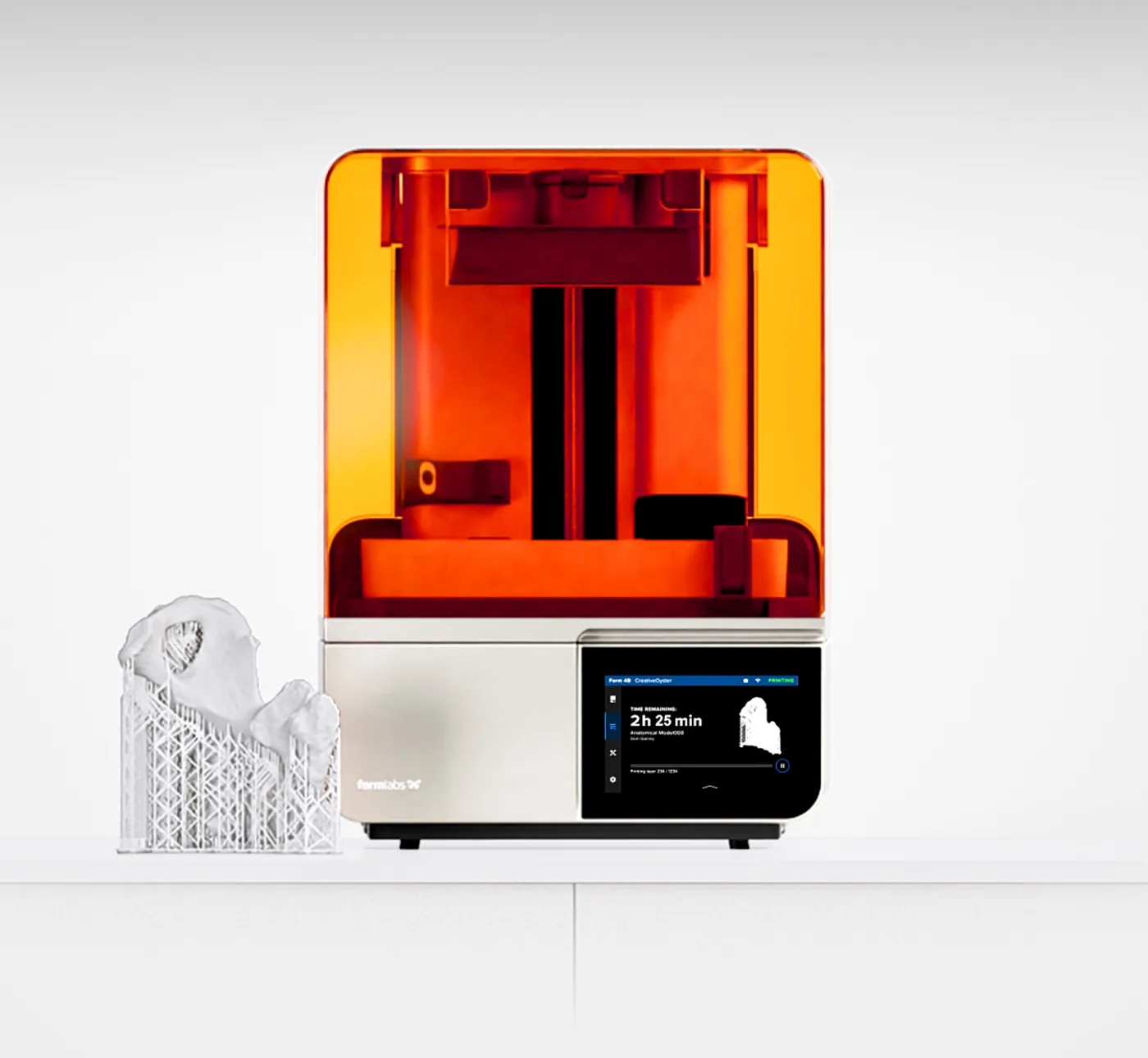
A print engine rebuilt from the light source up.
Form 4B is a masked stereolithography (MSLA) printer, but it does not behave like a typical LCD machine. Formlabs engineered six components — backlight, Light Processing Unit, release texture, flexible film tank, control systems, and resin handling — to work as one Low Force Display™ system.
Uniform, high-power light across the whole platform
The Backlight Unit projects ultra-high-power light from 60 LEDs through a plano-convex collimating lens array. Because the light arrives straight and uniform, a part printed in the corner cures exactly like a part printed in the center — the root of Form 4B’s speed and its consistency from one build to the next. Form 4B shares this engine with Form 4, and Formlabs’ engineering walkthrough of the Form 4 shows each component in motion.
50 µm masking with pre-tuned anti-aliasing
The Light Processing Unit 4 (LPU 4) masks the backlight into the exact shape of each layer at a 50 µm pixel size, with anti-aliasing tuned at the factory for sub-pixel edge resolution. Formlabs built the LPU 4 to be long-lasting, resistant to accidental damage, and simple to swap in the field, so the most-used optical component never becomes a reason for downtime.
Lower peel forces, finer features, lighter supports
A proprietary micro-textured optical film sits on top of the LPU and lets air flow between the tank and the display. That dramatically reduces the suction each layer has to break as it lifts, so Form 4B can print fast without tearing delicate features or distorting thin walls. Lower forces also mean lighter, light-touch supports that snap away cleanly and leave smaller witness marks.
No compromises on the parts that go into the operating room.
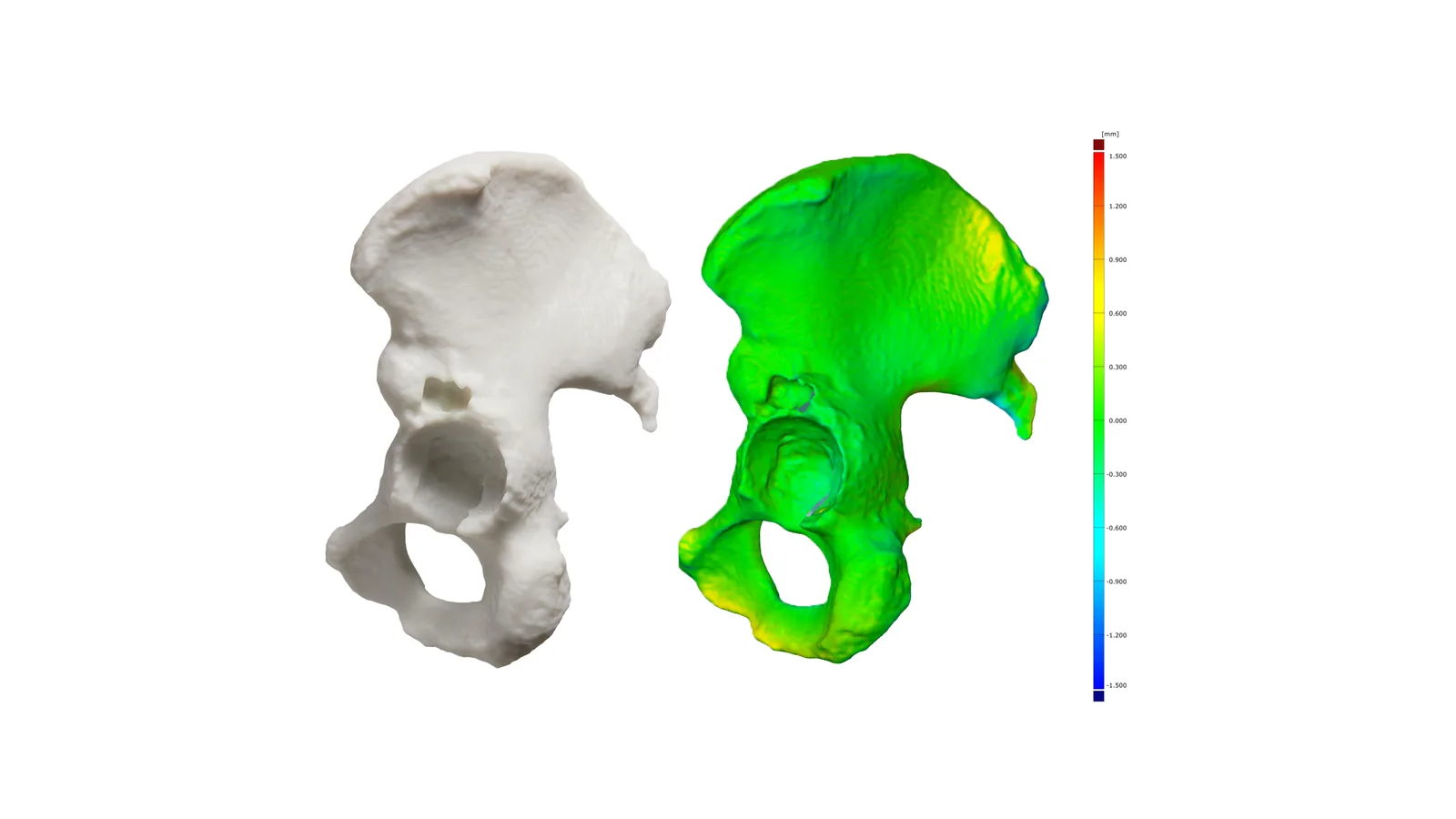
Consistently accurate across the build platform
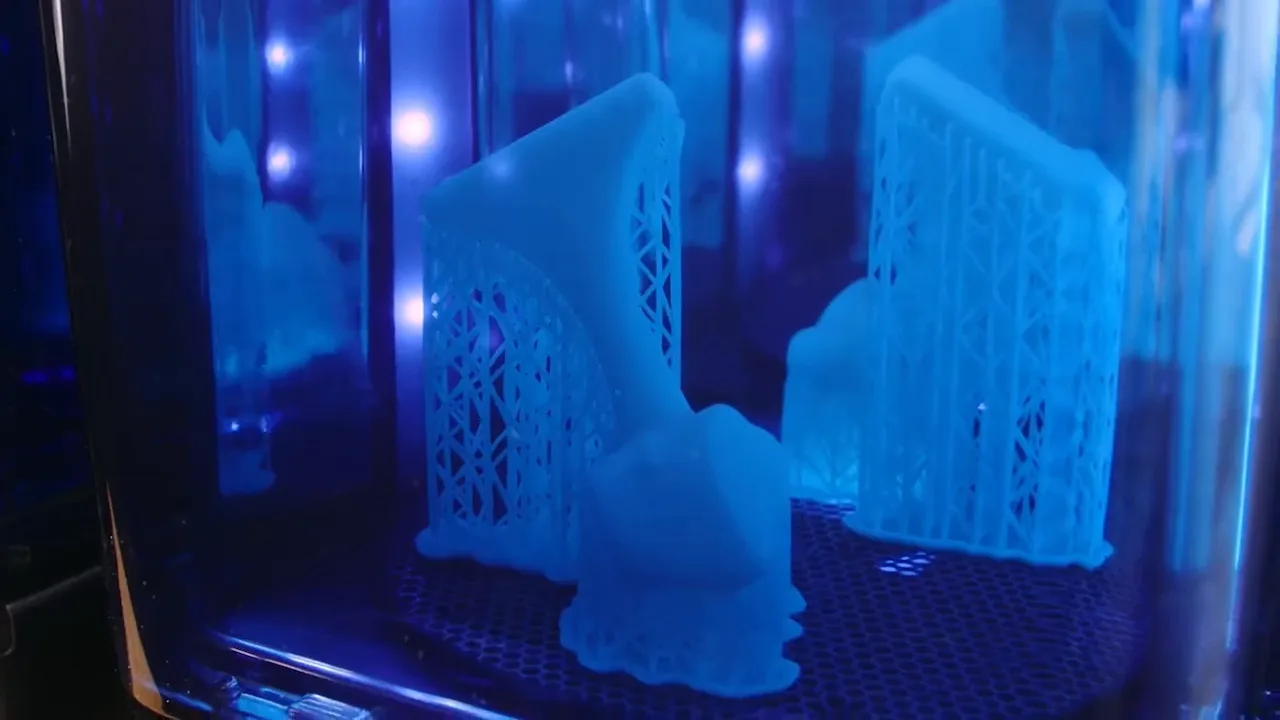
Formlabs scanned a 3D printed anatomical ilium and mapped it against the source model: the deviation map stays tight across the whole bone, not just at the center of the platform. That consistency comes from the collimated backlight — light reaches every pixel at the same angle and intensity, so a cutting guide in the corner fits as well as one in the middle.
Smooth surfaces and fine features, ready for sterilization
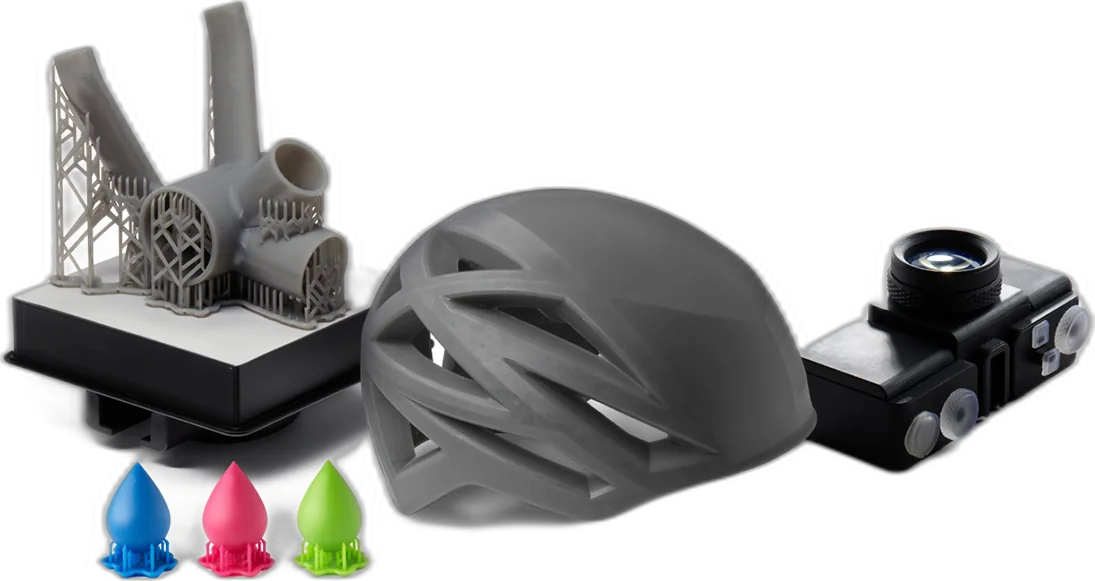
Lower peel forces, light-touch supports, and a 50 µm pixel with pre-tuned anti-aliasing leave smooth, consistent surfaces with crisp edges — from lattice cranial implants to thin-walled guides and masks. Less support scarring means less hand finishing before parts are cleaned, sterilized, and packaged.
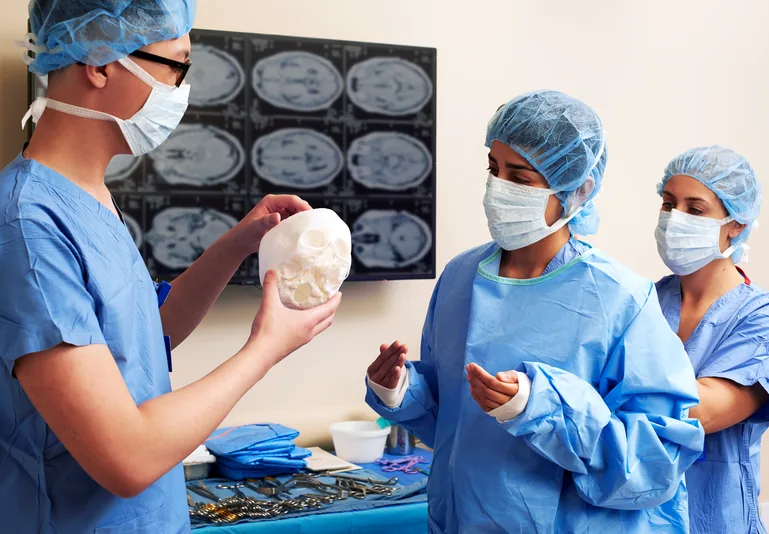
Anatomy surgeons can hold before they operate
Patient-specific models printed from CT and MRI data let surgical teams rehearse a complex case, check implant fit, and explain the procedure to patients. Accurate, smooth parts in BioMed White, Clear, or the flexible BioMed elastomers show bone, vessels, and soft tissue the way the team will see them in the operating room.
Unprecedented throughput: 4× the speed and 30% more build volume.
Formlabs timed real medical parts on Form 4B, a benchmark DLP printer, a benchmark LCD printer, and the previous-generation Form 3B+. Times below are Formlabs’ published averages per part; the speed claim is relative to Form 3B+.
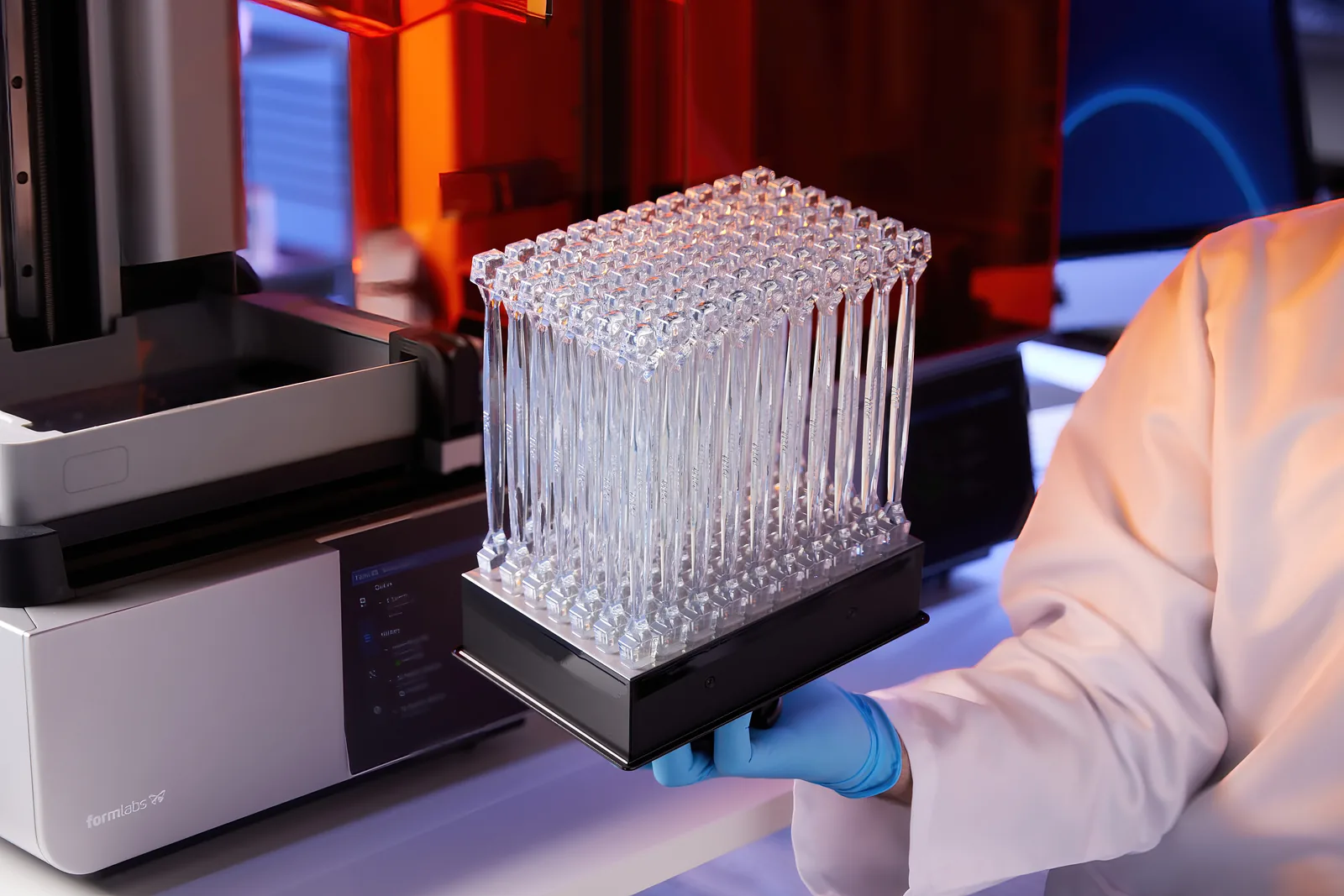
Surgical sizing trials: 4 minutes per part
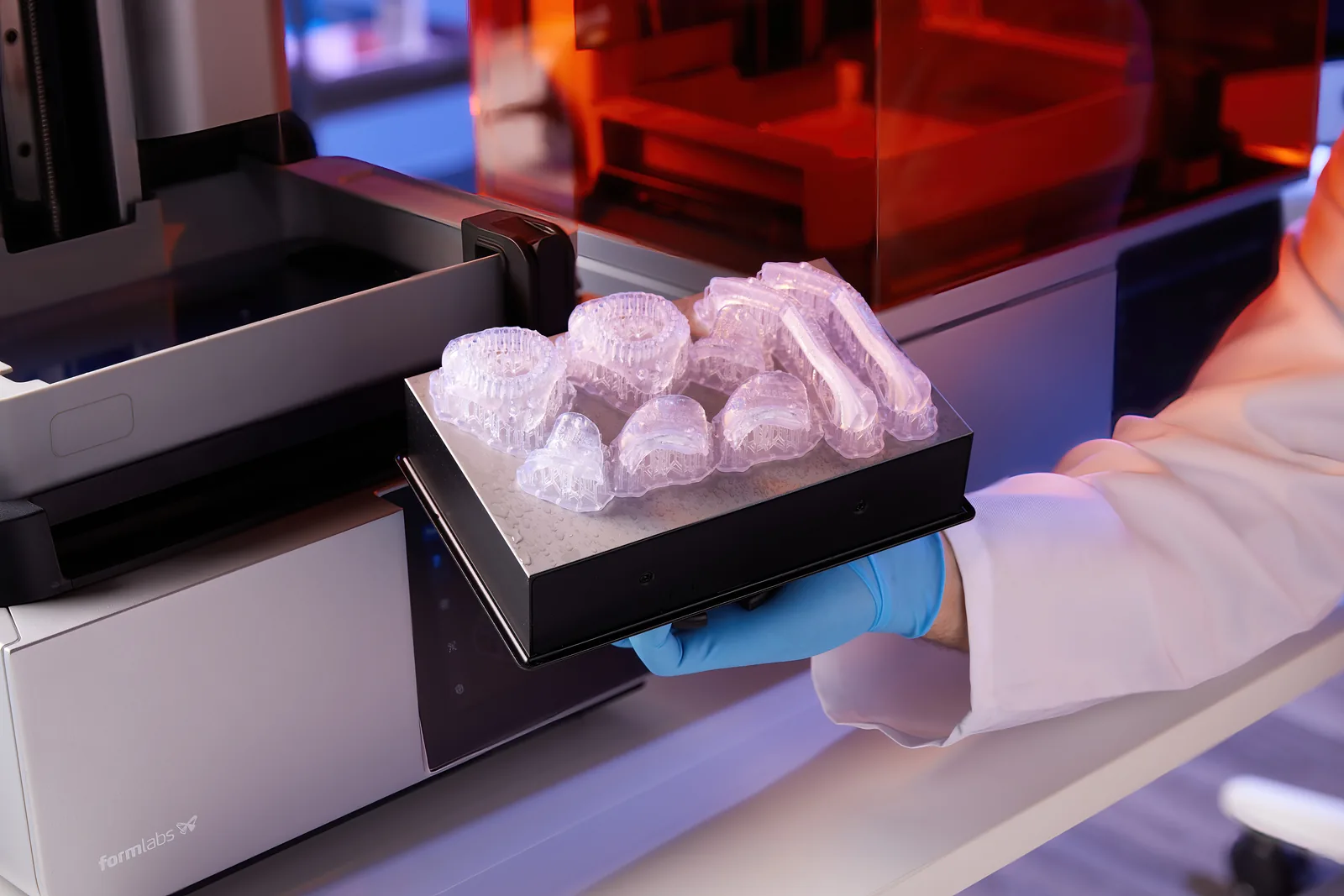
restor3D prints full platforms of sizing trials so surgeons can confirm implant size in the operating room. On Form 4B each trial averages 4 minutes — faster than both benchmark DLP and LCD printers, and more than six times faster than Form 3B+. Because the whole layer cures at once, a full platform takes about as long as a single part.
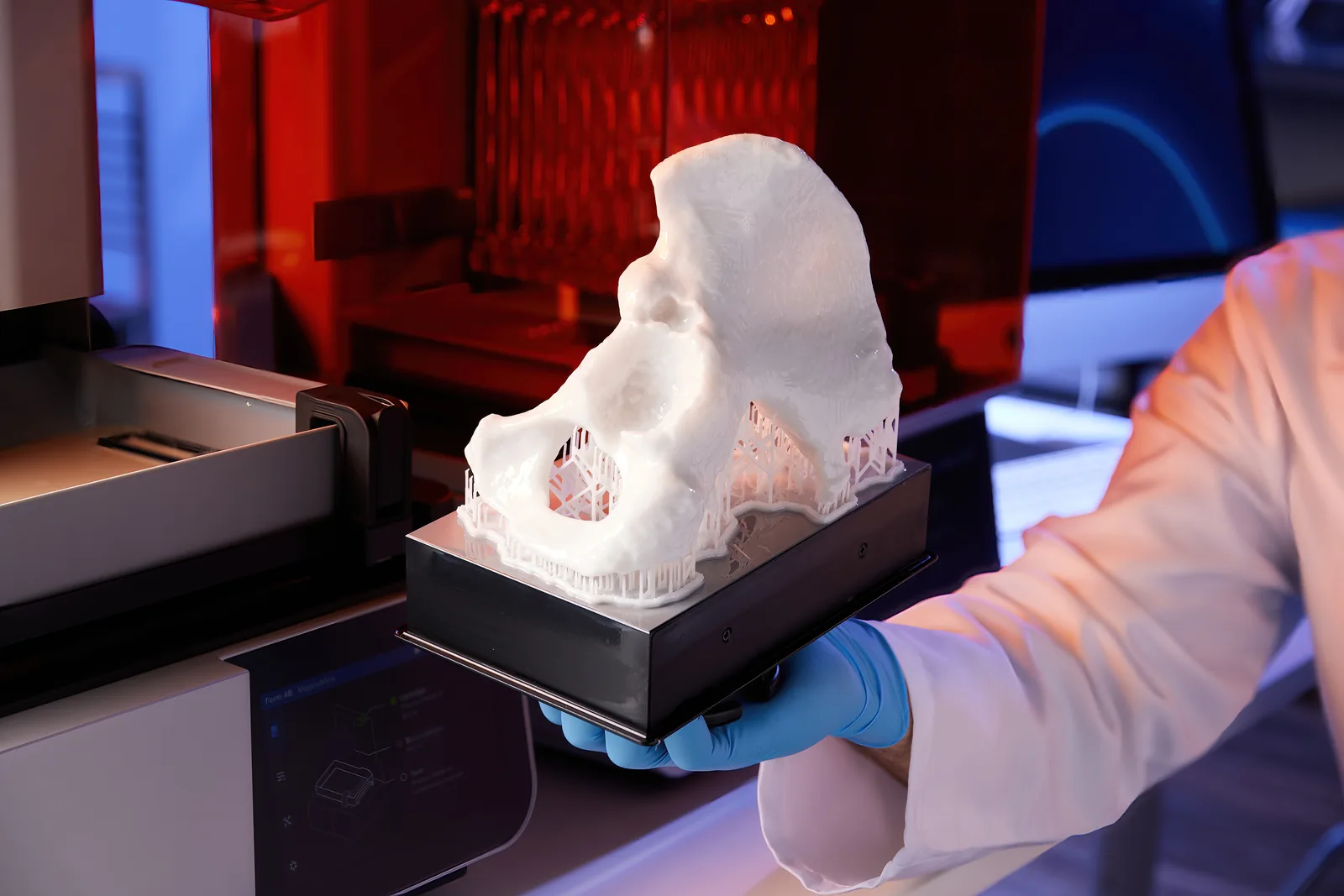
Anatomical models: a full ilium in 3½ hours
Large anatomical models are where older printers stretch overnight. Insight Surgery’s anatomical ilium prints in 3 h 30 min on Form 4B, against 8 h 14 min on a benchmark DLP printer and nearly 15 hours on Form 3B+ — so a model requested in the morning is in the surgeon’s hands the same afternoon.
The engine behind Form 4B, in a few minutes
Formlabs’ launch video for the Form 4 series — which Formlabs features on its Form 4B page — walks through the Low Force Display engine, automatic resin handling, and the speed gains that carry straight over to Form 4B.
The printer manages the resin, so you don’t have to.
Snap in a cartridge, switch materials in under a minute
Resin Cartridge V2 docks in the back of the printer and dispenses resin quickly and precisely as the print needs it — no pouring, no running dry mid-job, minimal waste. Changing materials is a cartridge and tank swap that takes less than a minute, which makes it practical to run several resins through one printer in a single day. Formlabs notes Form 4B remains one of the only SLA printers on the market with automatic resin dispensing.
A dual-layer film tank rated for 75,000+ layers
The Form 4 Resin Tank holds the liquid resin and gives each layer a surface to cure against, using a dual-layer flexible film stack that works with the release texture to keep peel forces low. Formlabs rates each tank for more than 75,000 layers with any Formlabs material — roughly 190 prints of an average 39 mm-tall model at 100 µm — and the built-in mixer keeps resin homogeneous between layers.
Six sensors watching temperature, level, and force
Six upgraded onboard control systems measure and hold the conditions every material is validated against. High-speed conduction heating with infrared sensing brings resin to its target temperature; an ultrasonic sensor manages the tank level; a load cell tracks exactly how much resin remains in the cartridge; and a Z-axis force sensor adjusts print speed to the part geometry and material in real time.
Stop coming back to failed prints.
Formlabs states Form 4B was measured at a 98.7% print success rate by an independent global leader in product testing. When a print supports a scheduled surgery, these are the systems that keep it on time.
Calibrated before it ships, tuned for every resin
Each printer goes through a 60-point calibration and quality-control inspection at the factory. Formlabs optimization engineers then validate print settings for every material by putting hundreds of printed parts to the test, so each resin performs to the same standard right out of the box — on every Form 4B in a fleet.
Watch, manage, and get alerted from anywhere
An integrated 5MP camera (2592 × 1944) records print history and timelapses and streams job status to Formlabs Dashboard and the Form Mobile App. Dashboard sends SMS and email alerts, tracks resin and tank usage, and issues preventative-maintenance reminders. For secure facilities, the camera can be disabled, covered, or removed.
Hardware engineered for years of daily use
Form 4B’s wear parts were designed for longevity and quick replacement. The LPU 4 resists accidental damage and swaps without tools expertise, resin tanks last 75,000+ layers, and Resin Cartridge V2 stores in less space with less waste — so cost per part stays predictable as utilization climbs.
Effortlessly create parts for any medical application.
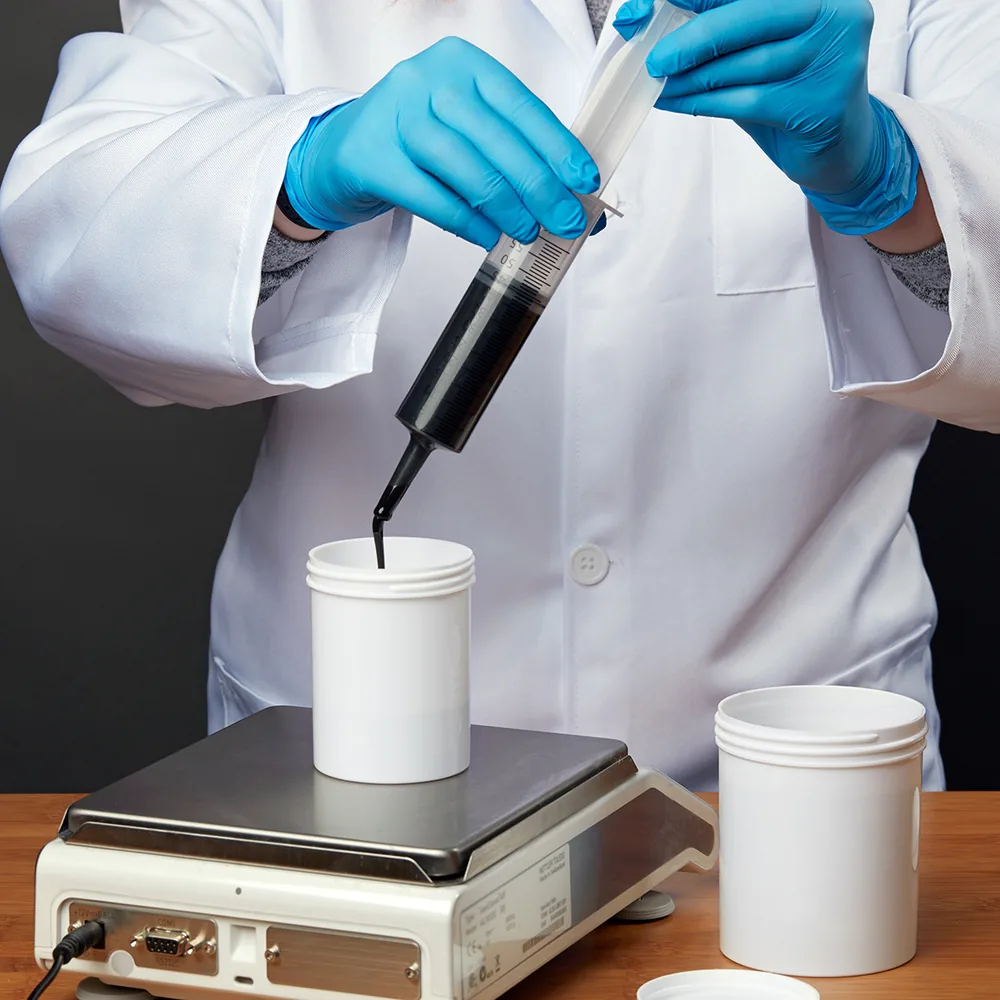
Biocompatible materials are the reason to choose Form 4B: the standard Form 4 cannot print them. BioMed resins are manufactured in Formlabs’ FDA-registered, ISO 13485-certified facility, and each has its own contact rating — always confirm the material against your device’s intended use. Form 4B also runs Formlabs’ dental resin library (see Formlabs Dental) and every standard Formlabs resin. Browse Rev1’s 3D printing resins.
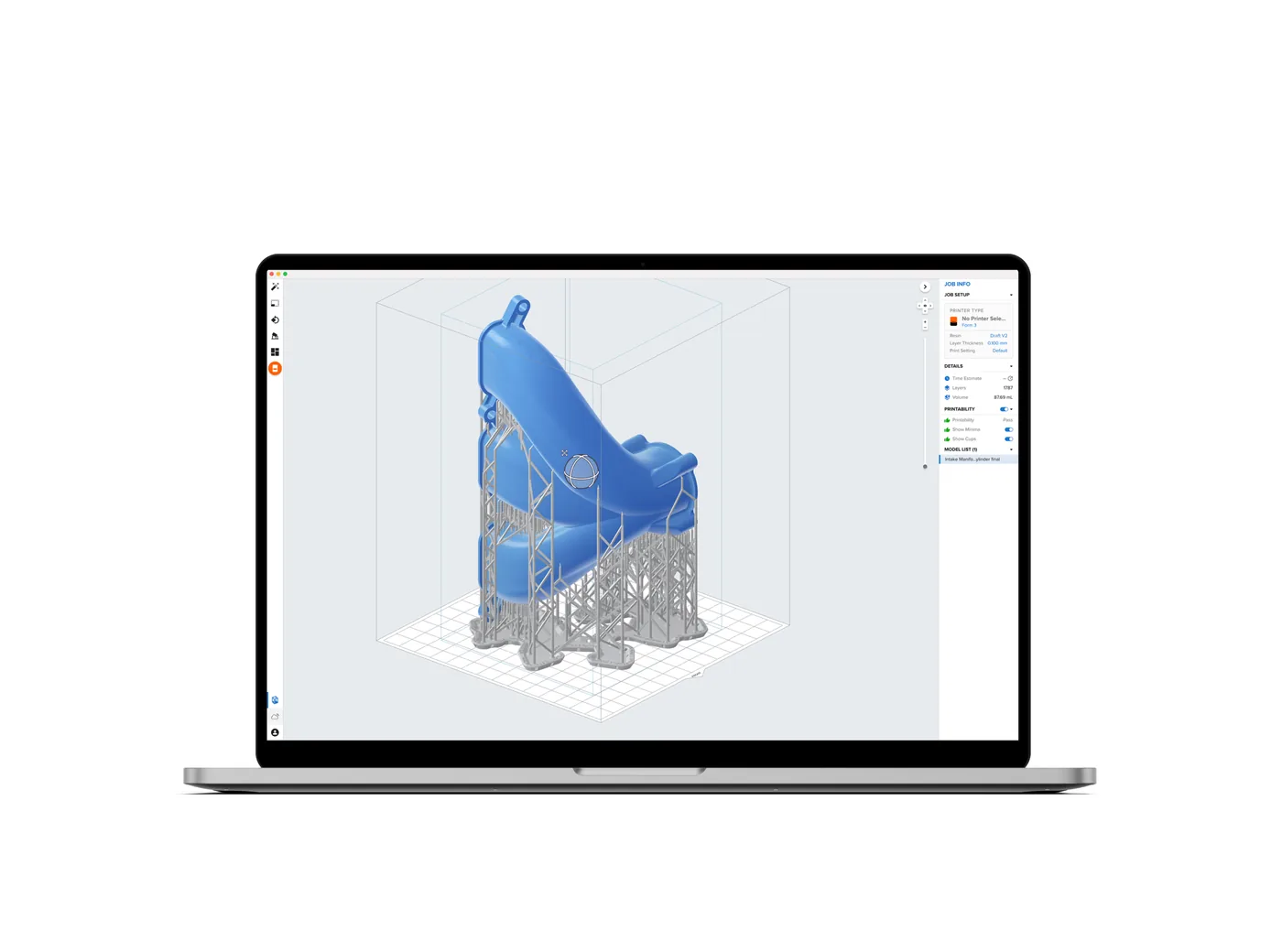
PreForm, Dashboard, and the Form Mobile App — included, free.
PreForm prepares every job: One-Click Print, auto-orientation, automatic support generation with advanced manual editing, auto mesh repair, adaptive layer thickness, and a layer slicer for inspection. It imports STL, OBJ, 3MF, and native CAD formats on Windows 10 (64-bit) and macOS 13 or later. Dashboard manages prints and printers through the cloud, tracks resin and tank usage, and supports enterprise group accounts with admin controls, while the Form Mobile App pushes job notifications to your phone.
The same trusted workflow, now four times faster.
The Form 4B workflow is four steps from scan-derived model to a part that is ready for the clinic: prepare, print, wash and cure, then finish, sterilize, and package.
Design to finished part, start to finish
Formlabs’ Form 4/B workflow overview follows a job from design through PreForm setup, printing, washing, curing, and support removal. Rev1 runs the same walkthrough during onboarding and helps your team document wash, cure, and sterilization steps for each BioMed resin.
Three Form 4B packages, each with Dental and Medical support.
Each package has its own page, just as on Formlabs’ store — switch with the Package selector above. Every Form 4B package ships with a Flex Build Platform; Complete and Premium add Form Wash and Form Cure and a multi-year Formlabs Dental and Medical Service Plan.
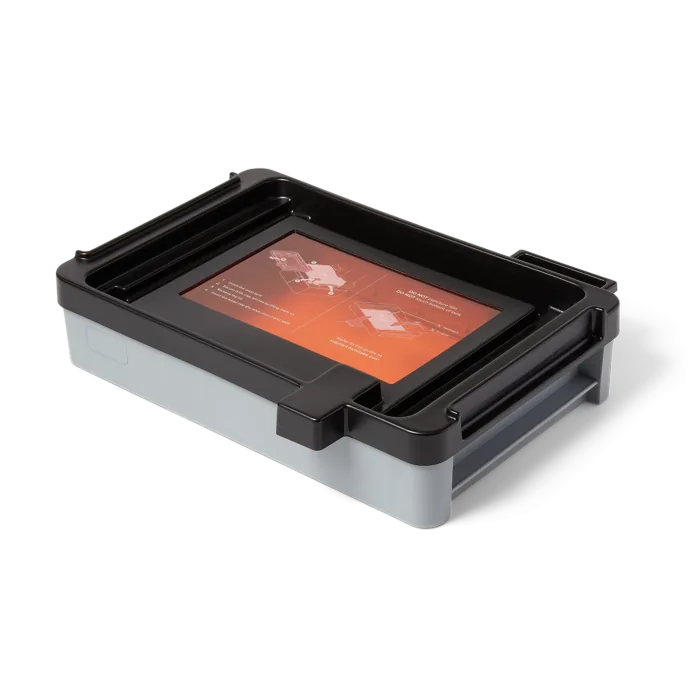
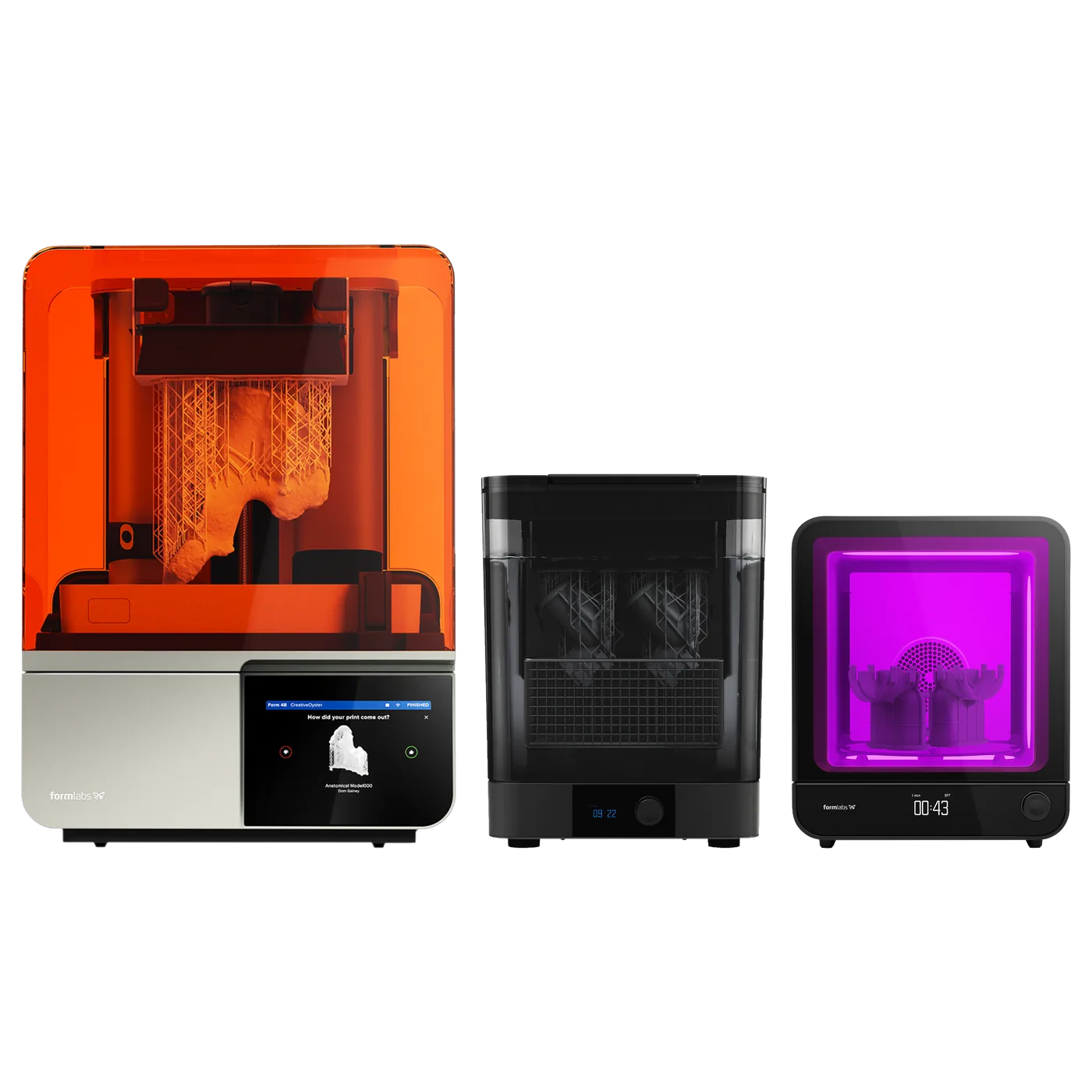
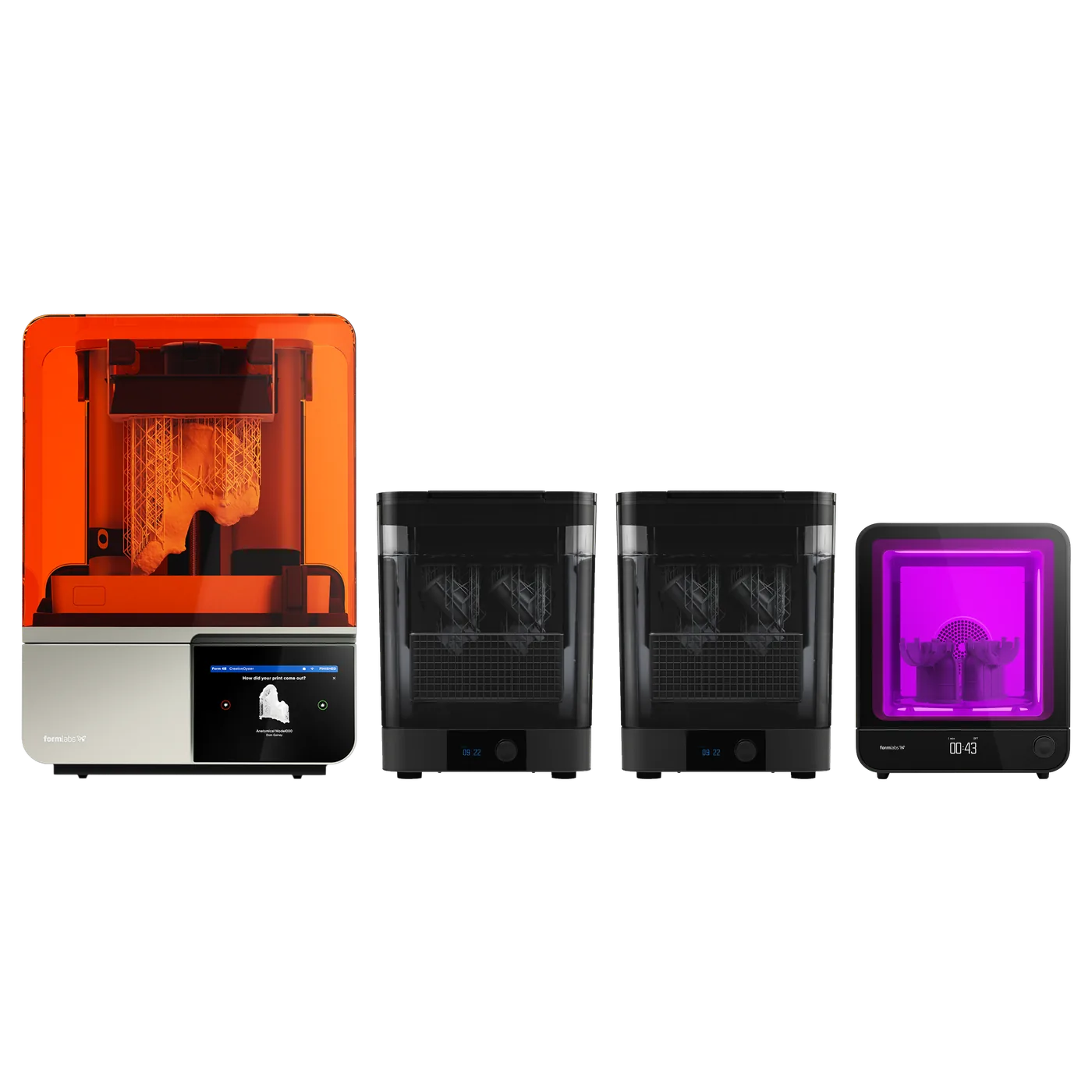
The Form 4B Basic Package includes:
Form 4B vs. Form 4: same engine, different mission.
The most common question we get is whether a medical team needs the B. The hardware is the same; the difference is which materials and support the printer is cleared to run. Figures are from Formlabs’ published specifications and US store.
| Capability | Formlabs Form 4B | Formlabs Form 4 |
|---|---|---|
| Print engine | Low Force Display™ (MSLA) | Low Force Display™ (MSLA) |
| Build volume | 200 × 125 × 210 mm (5.3 L) | 200 × 125 × 210 mm (5.3 L) |
| XY pixel size | 50 µm, pre-tuned anti-aliasing | 50 µm, pre-tuned anti-aliasing |
| Print success rate | 98.7% (independent lab) | 98.7% (independent lab) |
| Biocompatible BioMed resins | Yes | No (available on Form 4B) |
| Dental resins | Yes | No |
| Service plan | Dental and Medical Service Plan | Pro Service Plan |
| Build platform in Basic Package | Flex Build Platform | Standard Build Platform |
| Basic Package price | $7,699 | $2,625 |
If your parts never touch a patient, the Formlabs Form 4 prints the same geometry for less. For large anatomical models and full-size guides, ask about the Form 4BL, or compare the Formlabs Form 4L. Browse all SLA printers and Rev1’s industrial 3D printer range.
Formlabs Form 4B Technical Data
RESOURCES
Downloads & Technical Support
Everything you need to qualify and run your Formlabs Form 4B with confidence.
WHY REV1 TECH
Authorized Formlabs Reseller. Medical & Resin Workflow Specialists.
Rev1 Technologies is headquartered in Auburn Hills, MI, with direct expertise in production resin workflows.