Rev1 HIPS The Dissolvable ABS Support & Lightweight Prototyping Filament
The Dissolvable ABS Support & Lightweight Prototyping Filament
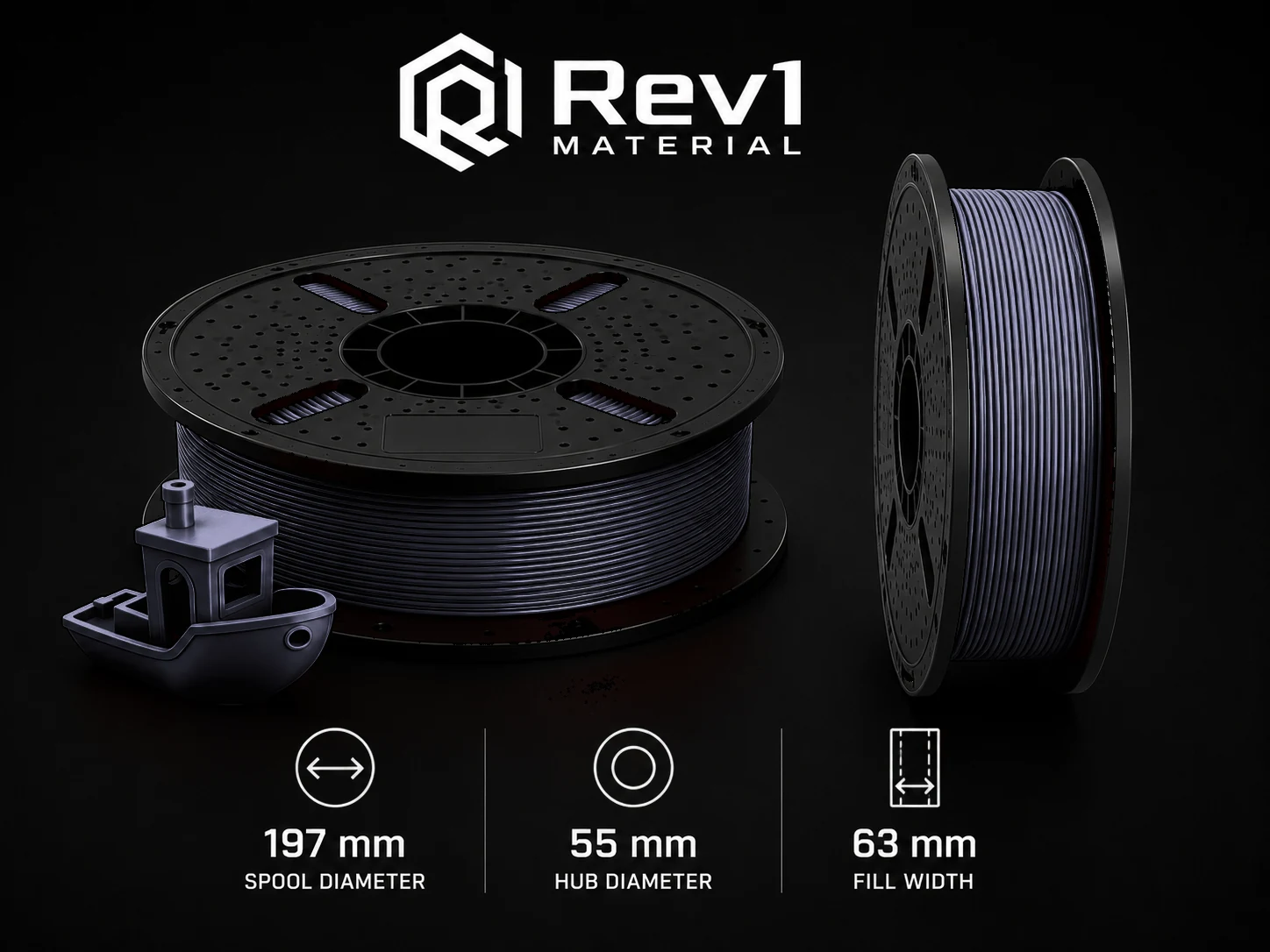
Rev1 HIPS (High-Impact Polystyrene) has two signature jobs: it’s the classic breakaway support material for dual-extrusion ABS prints — print ABS models with HIPS supports, then dissolve them clean away in d-limonene — and a light, high-impact prototyping plastic that sands, machines, and paints beautifully. It prints like ABS, so it wants an enclosure — in 6 colors, on 1 kg and 3 kg spools. Full specifications →
In stock — ships from Rev1. Need a specific color, a 3 kg spool, or case pricing? Call (248) 707-2950.
Dimension-locked, vacuum-sealed, supported by humans.
Rev1 HIPS is precision-extruded 1.75 mm filament, wound evenly and vacuum-sealed with desiccant, then stocked and supported from Auburn Hills, Michigan.

Dissolvable ABS supports — and light, finish-ready models.
HIPS (High-Impact Polystyrene) is the classic partner to ABS: run it as the second material in a dual-extrusion print and it becomes breakaway support that dissolves clean away in d-limonene, leaving perfect surfaces and complex overhangs. On its own it’s a light, rigid-but-tough plastic with a matte finish that sands, machines, and paints beautifully. It prints like ABS — give it an enclosure and Rev1 HIPS delivers clean supports and finish-ready prototypes in 6 colors.
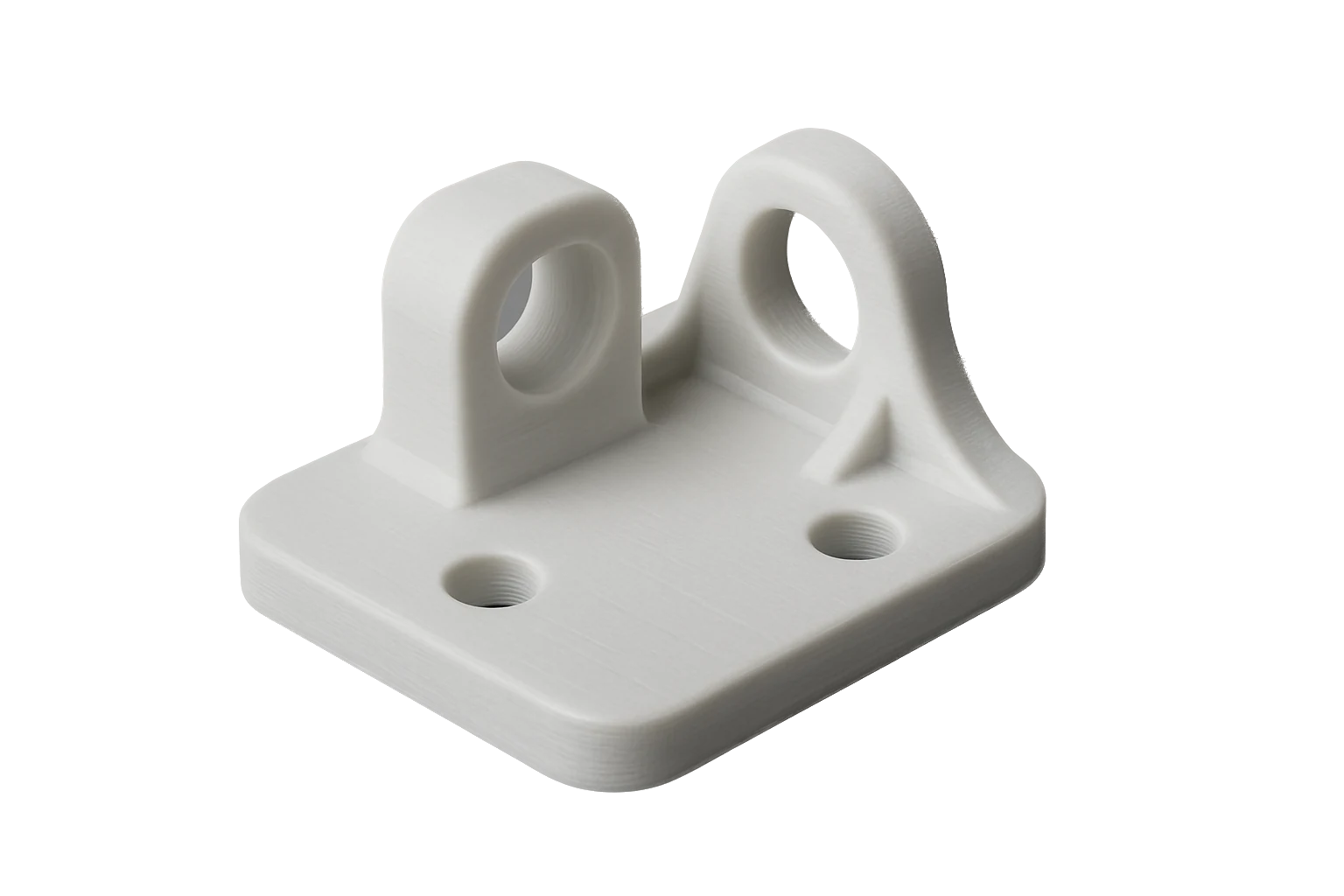
Even diameter and a clean wind for reliable, jam-free runs.
Round, consistent 1.75 mm filament feeds smoothly — critical for clean dual-extrusion support interfaces.
Every Rev1 HIPS spool is wound evenly and held to a tight diameter, so it feeds without under-extrusion across a full 1 kg or 3 kg run. Vacuum-sealed with desiccant to arrive dry, so your supports lay down crisp and dissolve away cleanly.
Dissolves clean in d-limonene — the classic breakaway support for dual-extrusion ABS prints.
Low density (~1.04) with real high-impact toughness — rigid but not brittle.
Matte surface that sands, machines, and takes primer and paint beautifully for models and props.
Black, White, Natural, Red, Blue, and Yellow — supports and finish-ready prototypes alike.
Print settings for clean HIPS parts and supports.
HIPS is styrenic and prints much like ABS: it rewards a stable, draft-free environment. An enclosure, a hot bed, and minimal part cooling keep corners down and layers bonded — and give clean support interfaces on dual-extrusion prints.
Prints in the ABS range for strong layer adhesion; a standard 0.4 mm brass nozzle is fine — HIPS is not abrasive.
A hot bed plus glue or an adhesive sheet prevents the corners from lifting.
Like ABS, HIPS warps — an enclosure holds chamber heat and blocks drafts, the #1 fix for warping and cracking.
HIPS is lower-odor than ABS, but still run it in a ventilated space or with light filtration.
Recommended slicer settings
A solid starting profile for Rev1 HIPS on an enclosed FDM printer. Tune cooling and chamber temperature for your machine.
| Setting | Recommended | Notes |
|---|---|---|
| Nozzle temperature | 230–245 °C | Run in the ABS range for strong layer bonding and clean supports. |
| Bed temperature | 90–110 °C | Glue stick or adhesive sheet on glass/PEI for a strong first layer. |
| Chamber / enclosure | Warm, draft-free | The single biggest factor in warp- and crack-free HIPS. |
| Print speed | 30–60 mm/s | Moderate speeds help interlayer strength. |
| Part cooling fan | 0–20 % | Keep cooling low — too much fan cracks layers. |
| Retraction | 1–5 mm | Direct drive: ~1–2 mm. Tune to control stringing. |
| Nozzle size | 0.4 mm brass | Standard brass is fine — HIPS is not abrasive, no hardened nozzle needed. |
| Drying | 65–80 °C · 4–6 h | Only if exposed to humidity; HIPS is mildly hygroscopic. |
| Support removal | d-Limonene bath | Dissolve HIPS supports off ABS parts in d-limonene — not water. |
Dissolvable supports and light, finish-ready parts.
Dissolvable supports and light, finish-ready parts.
HIPS trades high-strength engineering performance for two things it does better than anything: dissolvable breakaway support for ABS prints, and light, matte parts that sand, machine, and paint beautifully. Stocked in 6 colors, 1 kg and 3 kg spools.
Light, rigid-but-tough functional prototypes.
Low density and high-impact toughness for fast, affordable prototype parts.
HIPS is light in the hand yet genuinely impact-tough, so early functional prototypes and fit-check parts survive handling without adding weight — and cost little to reprint as the design evolves.
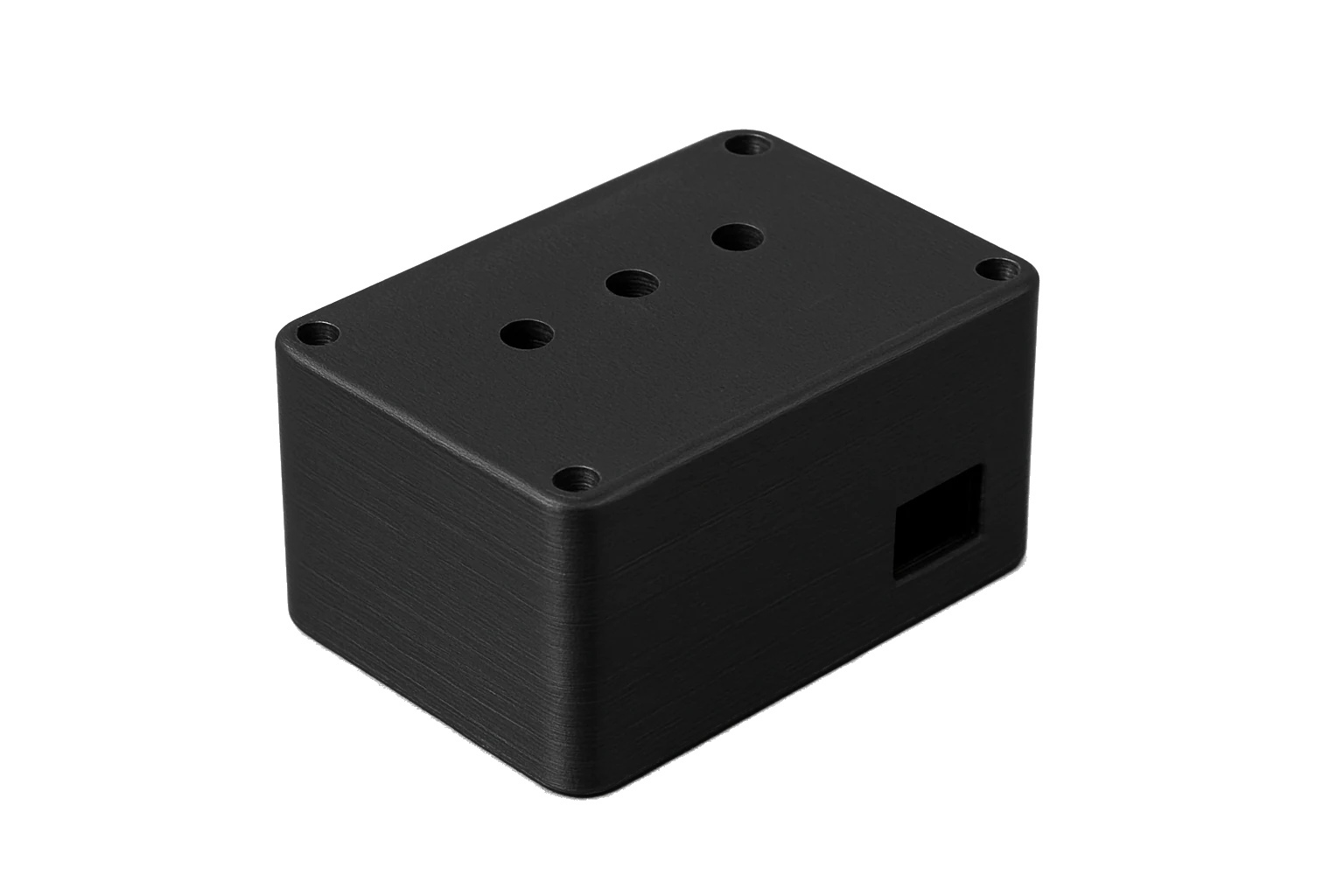
Lightweight enclosure and box prototypes.
Rigid, low-weight housings for bench-testing electronics before you commit.
Print an enclosure prototype in HIPS to check fit, ports, and ergonomics — stiff walls and clean snap-fits at a fraction of the weight, ready to sand and paint for review.
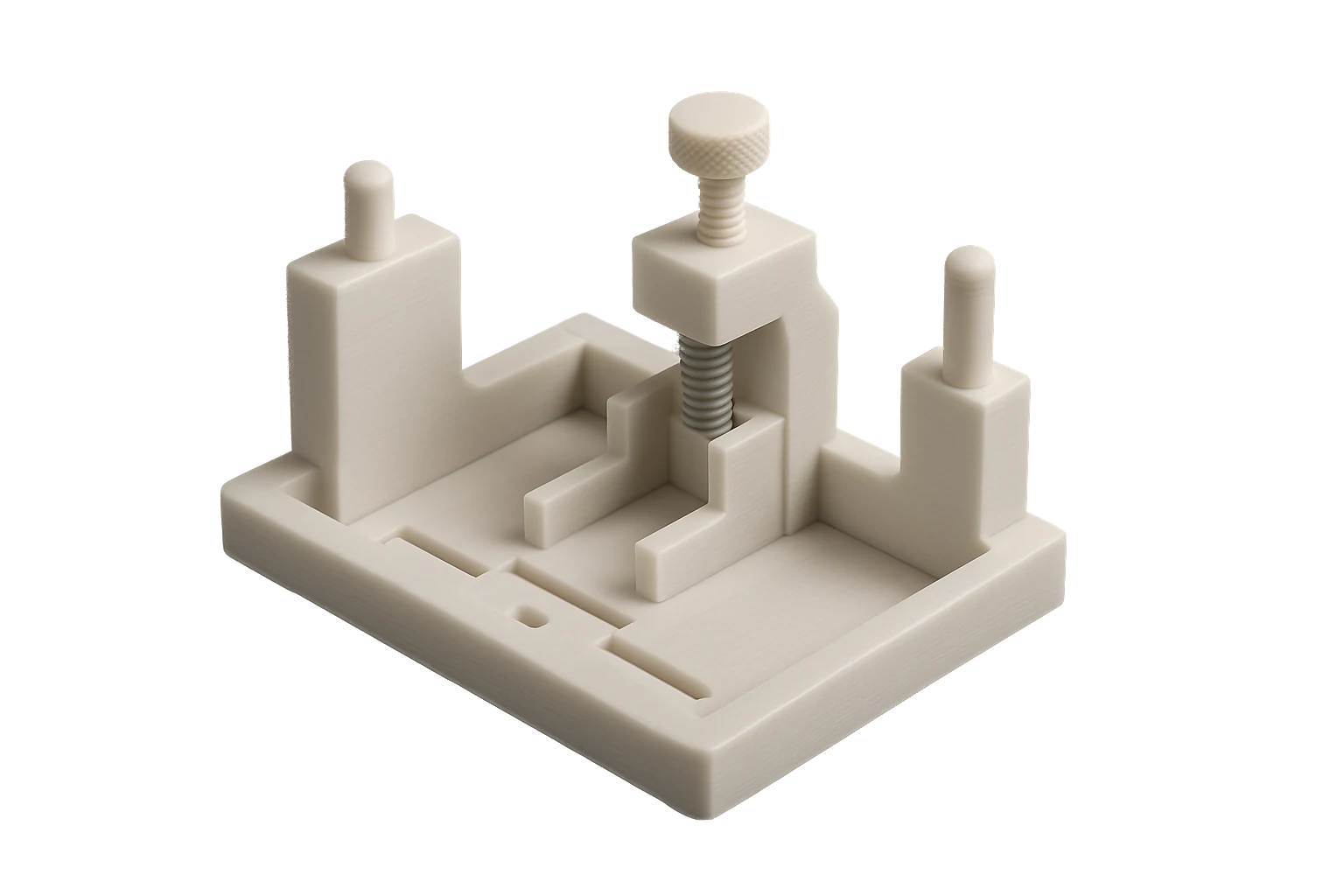
Precision jigs and assembly fixtures.
Dimensionally stable aids for low-stress benchtop tasks.
Print the alignment jigs, gauges, and assembly fixtures your bench needs — HIPS holds its shape and is cheap enough to reprint the moment the job changes.
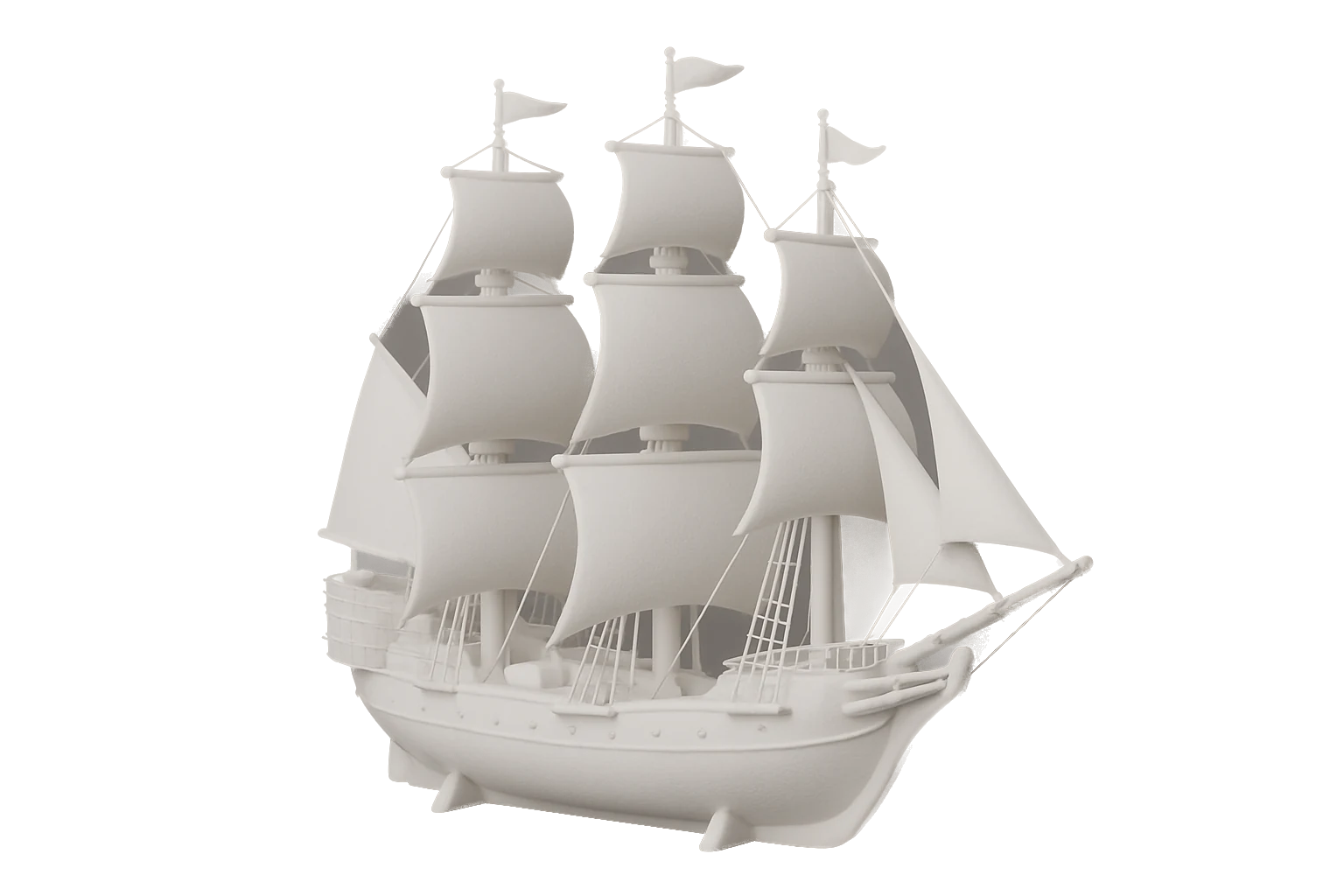
Sands and paints beautifully.
Matte HIPS is the ideal canvas for sanding, priming, and paint.
One of HIPS’s superpowers: its matte surface sands and machines cleanly and takes primer and paint without fighting you — perfect for display models, busts, cosplay, and props you’ll finish by hand.
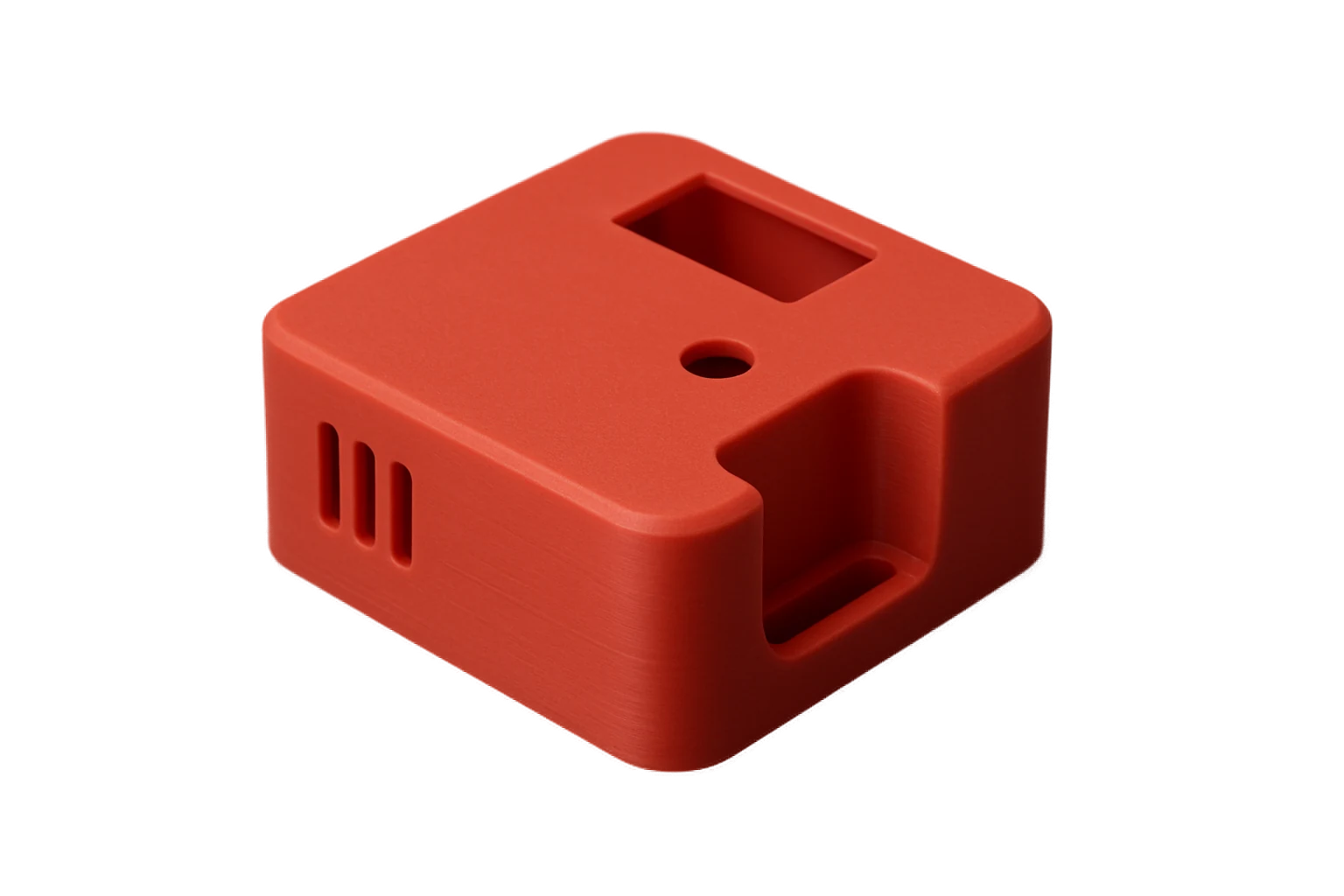
Light product-housing prototypes, finish-ready.
Low-weight housing mockups you’ll sand and paint before the review.
HIPS makes an ideal housing prototype: light to hold, rigid enough to test, and easy to sand and paint to a presentable finish — Natural is a clean base for any custom color.
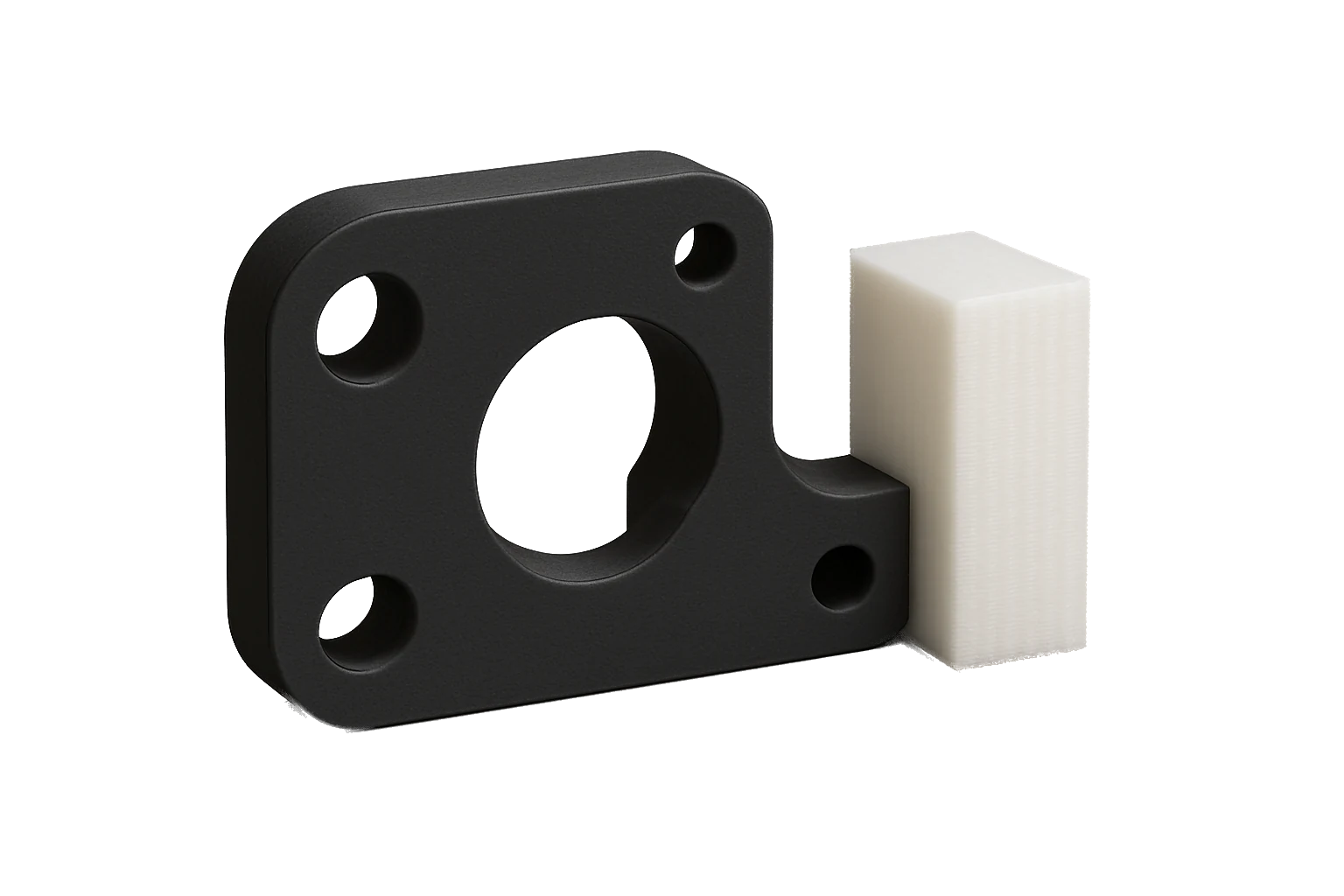
The support material that dissolves clean away.
Print ABS with HIPS supports, then dissolve them off in d-limonene.
HIPS’s headline job: run it as the support material on a dual-extrusion ABS print, then drop the part in a d-limonene bath — the HIPS dissolves away and leaves perfect surfaces and complex overhangs no breakaway support can match. Ask us about 3 kg spools and case pricing.
HIPS vs. ABS vs. PVA.
Pick by the job. HIPS is the limonene-dissolvable support and lightweight, paintable prototyping plastic; ABS is the high-strength, heat-resistant structural material; PVA is the water-soluble support for PLA and PETG.
| Rev1 HIPS | ABS | PVA | |
|---|---|---|---|
| Dissolves in | d-Limonene | Doesn’t dissolve | Water |
| Best support for | ABS prints | — | PLA / PETG prints |
| Strength & heat | Light, not structural (~90 °C) | High, heat-resistant (~100 °C) | Low |
| Ease of printing | Needs enclosure | Needs enclosure | Moisture-sensitive |
| Finishing | Sands & paints well | Acetone vapor | Not a display material |
| Best for | ABS supports / light models | Heat / functional parts | PLA support |
General material guidance; exact performance depends on part geometry, print settings, and grade. HIPS is a lightweight support and prototyping material — for high-strength or high-heat parts, choose ABS, PETG, or PA (nylon).
Rev1 HIPS Technical Data
Mechanical & thermal properties
Typical HIPS reference values for engineering reference. Printed-part performance varies with wall count, infill, layer height, and orientation — treat these as material-level guidance, not a part spec.
| Property | Typical Value | Method |
|---|---|---|
| Tensile strength | ~32 MPa | ISO 527 |
| Elongation at break | ~45 % | ISO 527 |
| Flexural strength | ~45 MPa | ISO 178 |
| Flexural modulus | ~1,900 MPa | ISO 178 |
| Izod impact (notched) | ~12 kJ/m² | ISO 180 |
| Glass transition (Tg) | ~95 °C | DSC |
| Heat deflection (HDT, 0.45 MPa) | ~90 °C | ISO 75 |
| Shelf life (sealed, dry) | 12 months | — |
Specs, profiles, and a human to call.
Your trusted materials partner.

Every spool is checked for tight diameter tolerance and reliable, repeatable printing.
Call (248) 707-2950 and reach people who actually print and support these materials.
Case quantities and standing orders across the full color range.
FAQ
Rev1 HIPS — Common Questions
What is HIPS used for?
Two things. First, it’s the classic dissolvable support material for dual-extrusion ABS prints — print your ABS model with HIPS supports, then dissolve them away in d-limonene for perfect surfaces and complex overhangs. Second, it’s a light, high-impact prototyping plastic that sands, machines, and paints beautifully for models, props, and housings.
How do I dissolve HIPS supports?
HIPS dissolves in d-limonene, not water. Drop the finished ABS-plus-HIPS part in a d-limonene bath (agitation and mild warmth speed it up) and the HIPS support washes away, leaving the ABS surface clean. Use limonene in a ventilated space and dispose of it properly.
Do I need an enclosure to print HIPS?
Strongly recommended. HIPS is styrenic and prints much like ABS — it warps and cracks when it cools unevenly or hits a draft. An enclosure holds chamber heat and blocks airflow, the single biggest factor in clean HIPS. A heated bed at 90–110 °C is also essential.
Does HIPS need a hardened nozzle?
No. HIPS is not abrasive, so a standard 0.4 mm brass nozzle is all you need — no hardened steel required. Print it in the ABS temperature range (230–245 °C) for strong layer bonding and clean support interfaces.
What colors and sizes are available?
6 colors — Black, White, Natural, Red, Blue, and Yellow — on 1 kg and 3 kg spools. Pick your color and spool size in the buy-box, or ask us about case quantities.
Can I sand and paint HIPS?
Yes — it’s one of the material’s strengths. HIPS has a matte finish that sands and machines cleanly and takes primer and paint without fighting you, which makes it ideal for display models, busts, cosplay, and props you finish by hand. Natural is a clean base for any color.
Is HIPS strong enough for functional parts?
HIPS is light and high-impact but it is not a high-strength engineering or high-heat material — it holds shape only to roughly 90–95 °C. For structural or heat-exposed parts, choose ABS, PETG, or PA (nylon). HIPS shines as dissolvable support and lightweight, finish-ready prototyping.
Is the 3 kg spool better value?
Yes — the 3 kg spool lowers cost per kilogram and means fewer spool changes on long support-heavy or production runs. It’s the go-to for shops and print farms.