Your 3D printer is a networked computer inside your facility. What is it sending home?
The AirGap Series answers that question at the hardware level: WiFi, Bluetooth and Ethernet removed or disabled, files moved by USB only, no cloud account and no camera. An industrial, large-format machine that physically cannot phone home — built for defense, ITAR and IP-sensitive work.
- Radios removed
- USB-only transfer
- No cloud, no telemetry
- US-verified by Rev1, Michigan
What an air gap means on these machines
A networked printer is an attack surface and an exfiltration path — a computer on your floor with its own radios, cloud account and camera. The AirGap Series removes the path itself, so there is nothing to police and nothing to misconfigure.
WiFi and Bluetooth hardware removed or disabled — there is no wireless path on or off the machine.
Ethernet disabled. The printer is not a node on your network and cannot be reached from it.
Sliced files move by controlled USB only. You decide what goes on the machine; nothing is pushed to a cloud.
No vendor cloud, no telemetry, no remote camera feed. The machine cannot phone home because the path does not exist.
Two reasons to take the network off the machine
Some buyers must isolate by regulation. Many more choose to, because the design file is the intellectual property and a connected machine is a risk they do not have to carry.
- Defense primes and Tier 1–3 subcontractors (the Defense Industrial Base)
- DoD depots, arsenals, shipyards and air-logistics complexes
- SCIFs and classified program spaces — where an air gap is required inside the boundary
- Expeditionary and shipboard manufacturing with no network by design
- National labs and the nuclear-weapons complex
- DIB shops shrinking the network footprint that falls in CMMC scope
- Anyone wary of connected or overseas-made hardware after the cloud-printer scares
- Aerospace, space and critical-infrastructure supply chains
- Semiconductor, medical-device and motorsport teams with trade-secret geometry
- Universities and FFRDCs running export-controlled research
What the air gap buys you
A machine with no network path is not an asset on your CUI network. Removing it from the boundary is the cheapest kind of scope reduction.
No radios, no network, no cameras. The isolation posture a secure space expects is the machine as it ships — not a setting you have to police.
Part geometry is often the IP. With USB-only transfer and no cloud, the design file never has a path to leave your facility.
Large-format plus true 500 °C-class PEEK / PEKK / ULTEM means real tooling and flight-representative parts — capability most "secure" desktop lines cannot reach.
Industrial platforms, in AirGap configuration
The AirGap Series is built on CreatBot’s industrial platforms — large-format FFF through sealed high-temperature PEEK / ULTEM — so you get real end-use capability, not a locked-down desktop. Every machine is quote-only; specs for each base platform are on its product page.

A full cubic metre of heated build volume for one-piece production parts, tooling and fixtures — with every network radio removed so the file never leaves the building.
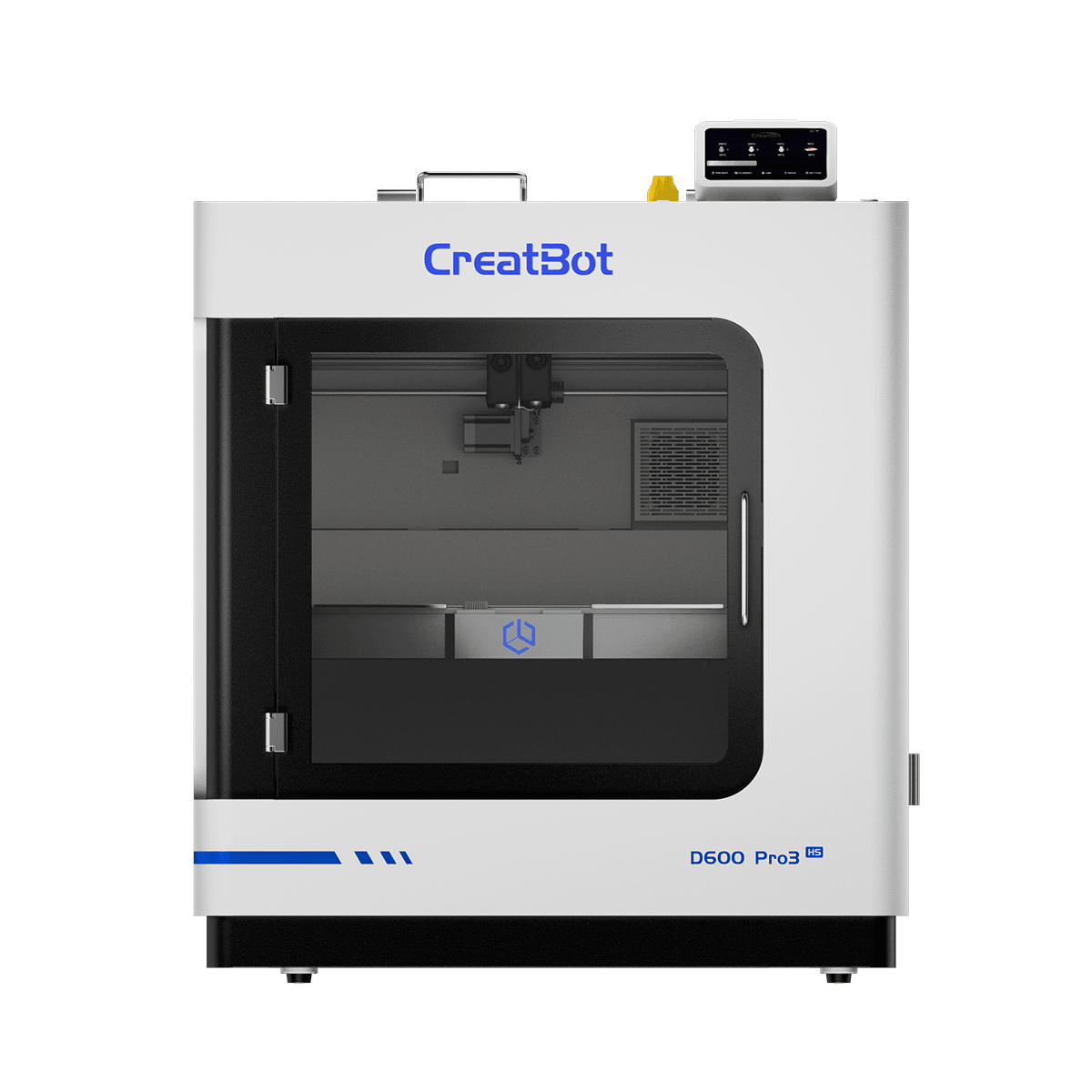
Industrial FFF for big functional parts, jigs and composite tooling — offline by hardware, not by a software switch.
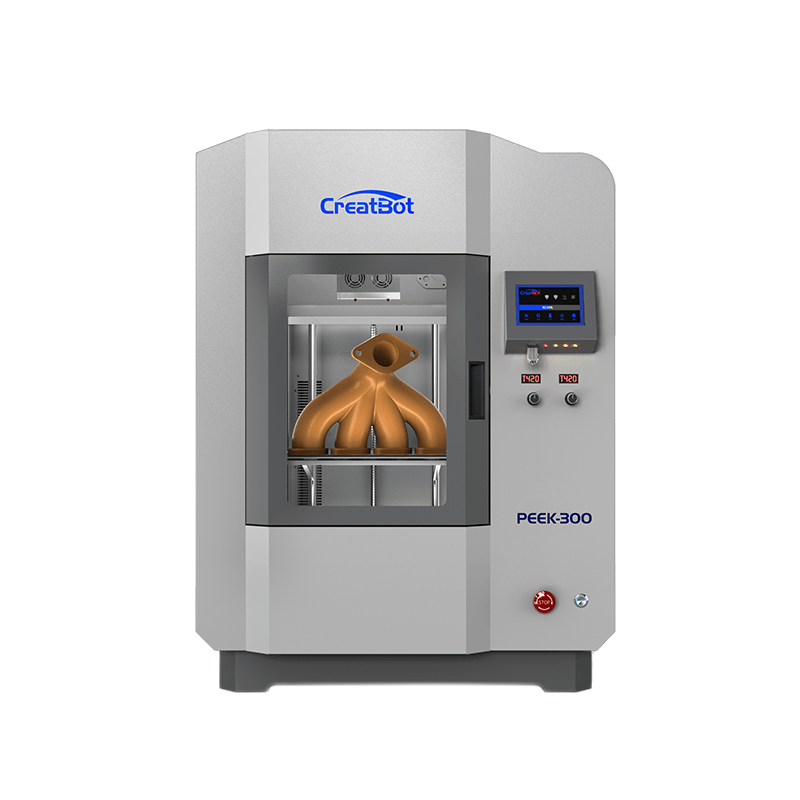
Dual high-temperature nozzles and a sealed heated chamber for aerospace-grade PEEK, PEKK and ULTEM end-use parts — in an isolated, USB-only machine.
Rev1 is the authorized US distributor for the Creatlabs AirGap Series. Machines and full specifications are arriving — register your requirement now and we will brief you first.
What this is — and what it is not
Defense procurement runs on trust, so we will not overclaim. Here is exactly what the AirGap Series delivers today, and where the lines are.
- A 3D printer with WiFi, Bluetooth and Ethernet removed or disabled, transferring files by USB only.
- Supplied by Rev1 Technologies, the exclusive authorized US distributor, which verifies the isolation on machines arriving in the US.
- Backed by a per-machine conformity document tied to the printer’s serial number.
- TAA or NDAA compliant — air-gapping does not change country of origin, and the AirGap Series is manufactured overseas.
- A held cybersecurity certification. Formal SGS / IEC 62443-4-2 certification is in progress, not yet obtained — we will say so until it is.
- A substitute for your own System Security Plan, CUI handling procedures or a CMMC assessment. The air gap is one control, not the whole program.
Certification status (SGS / IEC 62443-4-2) is updated as it progresses. If your contract has a specific requirement — TAA, NDAA, a named standard — tell us up front and we will be straight about fit.
Air-gapped 3D printers — frequently asked questions
What does "air-gapped" actually mean on these printers?
The wireless hardware (WiFi and Bluetooth) is removed or disabled and the Ethernet interface is disabled, so the machine has no path to any network. Sliced files are loaded over USB only. There is no vendor cloud, no telemetry and no remote camera, so the printer cannot send data off-site because the connection does not exist.
Does an air gap make the printer TAA or NDAA compliant?
No. Air-gapping is a security measure, not a country-of-origin change. The AirGap Series is manufactured overseas, so it is not TAA or NDAA compliant. If your contract requires TAA/NDAA, tell us up front and we will be straight with you about fit rather than overclaim.
Is there a certification?
Formal cybersecurity certification (SGS / IEC 62443-4-2) is in progress and not yet issued. Today the machine ships with a serial-number-tied conformity document, and Rev1 verifies the isolation on US arrival. We publish the certification status honestly and will update it when a stamped certificate exists.
How does an air-gapped printer help with CMMC?
A printer with no network path is not a networked asset handling CUI, so it can sit outside your CMMC network boundary. That reduces the scope you have to assess and document. It is one control that supports your program — not a replacement for your System Security Plan or an assessment.
What can the AirGap Series actually print?
The line is built on CreatBot’s industrial platforms: large-format FFF up to a full cubic metre, and sealed high-temperature machines running PEEK, PEKK and ULTEM. That means production tooling, fixtures and flight-representative end-use parts, not just prototypes. Specs for each base platform are on its linked product page.
How do I buy, and what is the lead time?
The AirGap Series is quote-only. Request an AirGap briefing and our US team will confirm the right platform for your parts and security requirements, the isolation specification, conformity documentation and lead time. We can also print a sample of your part on the base platform first.
Request an AirGap briefing
Tell us your parts, your material and your security requirement. Our US team confirms the right platform, the isolation specification, conformity documentation and lead time — and can print a sample of your part on the base platform first.