Rev1 PETG Tough, Easy, Everyday Engineering Filament
Tough, Easy, Everyday Engineering Filament
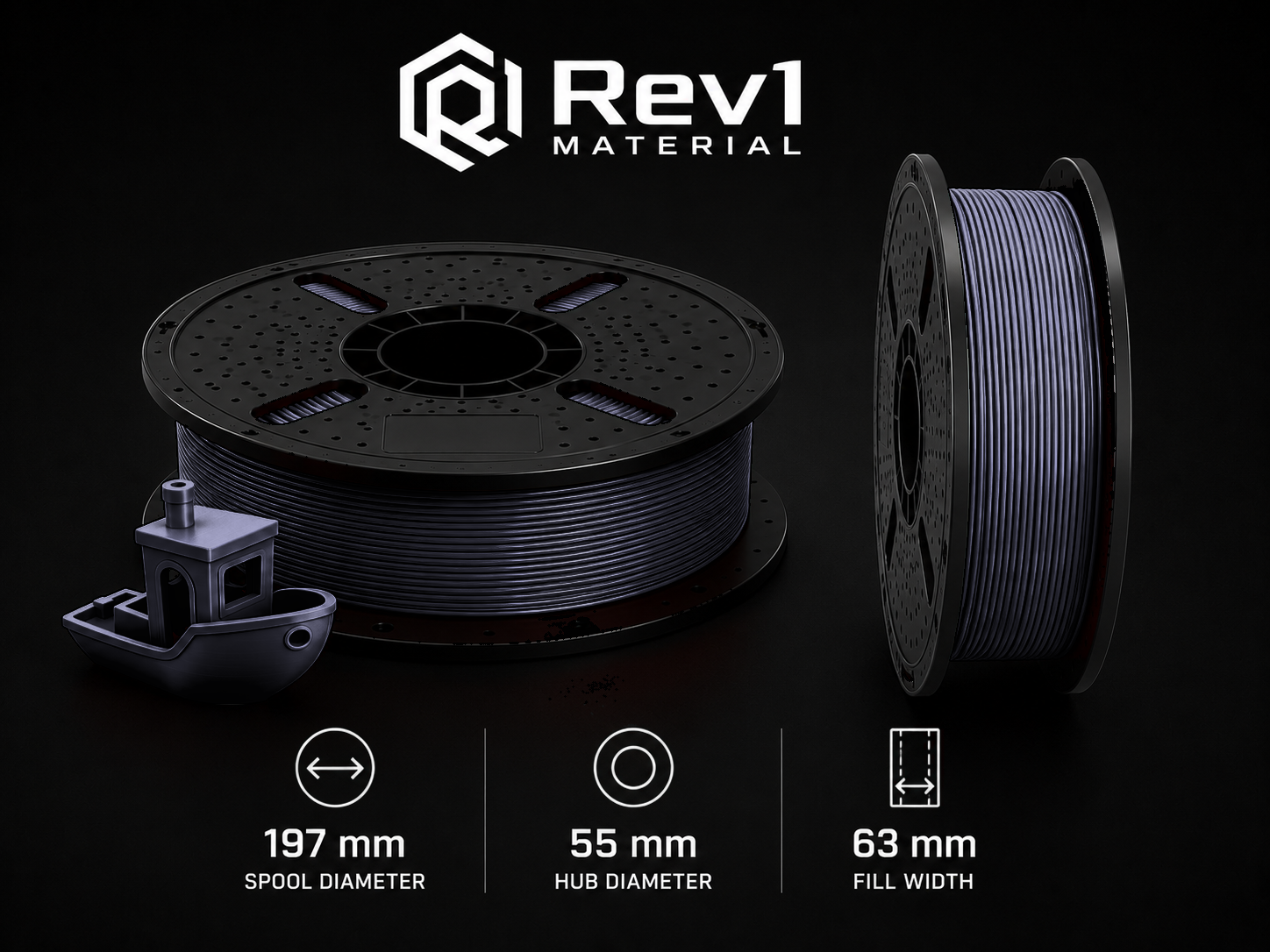
The sweet spot between easy and strong: PETG prints almost as simply as PLA but gives you real toughness, chemical and water resistance, and low warp — in 28 colors, on 1 kg and 3 kg spools. The everyday choice for functional and outdoor parts. Full specifications →
In stock — ships from Rev1. Need a specific color, a 3 kg spool, or case pricing? Call (248) 707-2950.
28 colors, two spool sizes, stocked in our US warehouse.
Rev1 PETG is consistent, tightly-spooled filament built for everyday functional printing, with a full color range and 1 kg or 3 kg spools. Rev1 Technologies stocks and ships it from Auburn Hills, Michigan.

As easy as PLA, but tough enough to use.
PLA is easy but brittle; ABS is tough but fussy and smelly. PETG sits right in the middle: it prints on any FDM printer without an enclosure, yet parts come out impact-resistant, slightly flexible instead of snapping, and resistant to water, chemicals, and UV. That makes Rev1 PETG the default choice for brackets, enclosures, mounts, and outdoor parts that actually have to do a job — in any of 28 colors.
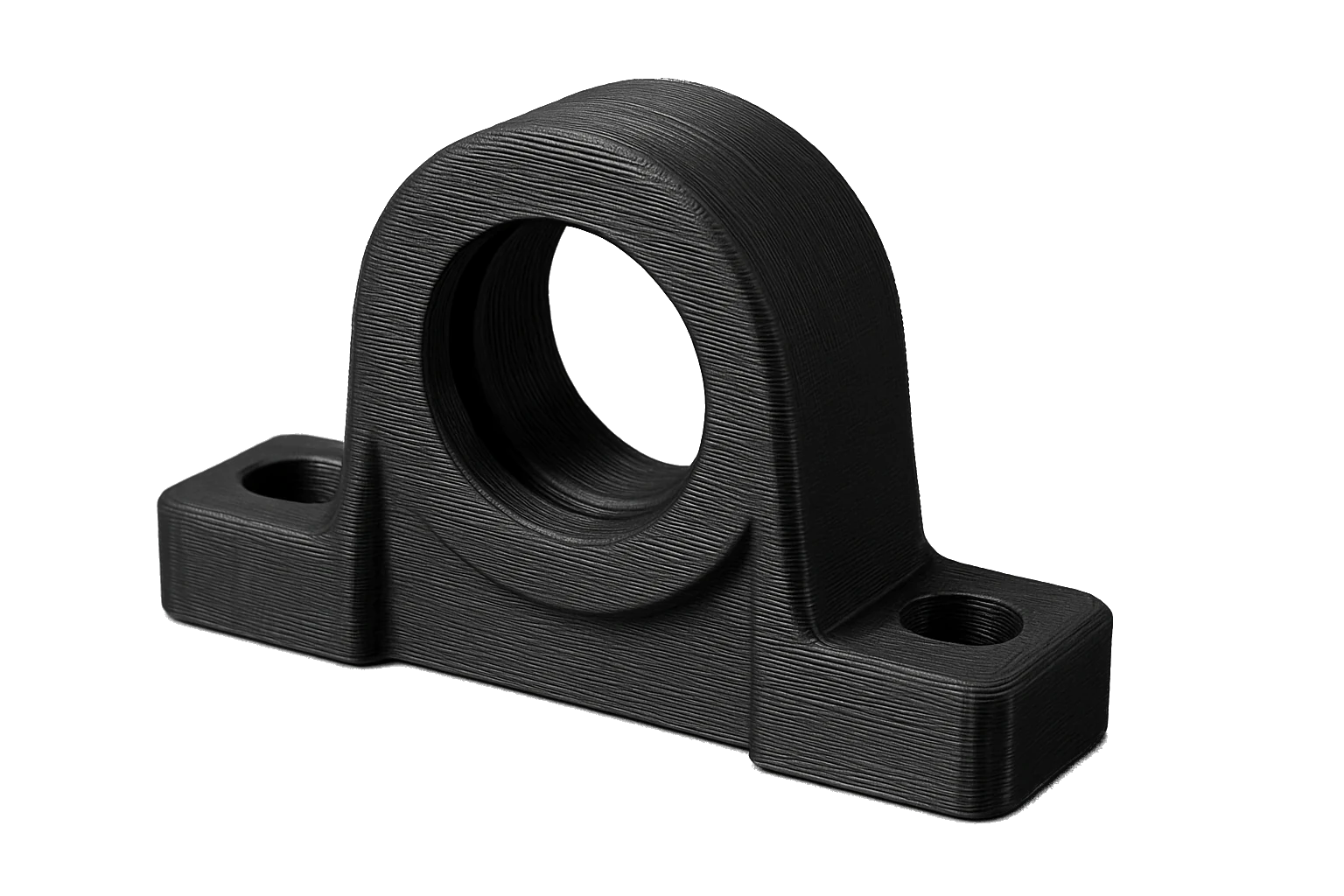
Even diameter and a clean wind for jam-free printing.
Round, consistent 1.75 mm filament feeds smoothly so long prints don’t fail halfway.
Every Rev1 PETG spool is wound evenly and held to a consistent diameter, so it feeds without tangles or under-extrusion across a full 1 kg or 3 kg run. Pick from 28 colors — solids for parts, transparents for light pipes and covers — all printing on the same easy profile.
Strong layer adhesion and impact resistance — parts flex and absorb shock instead of cracking like PLA.
Shrugs off moisture, many chemicals, and sunlight, so prints hold up indoors and outdoors.
Prints flat with good bed adhesion and minimal warping — no heated chamber required.
Solids, transparents, and specialty shades so you can match a product, a brand, or a build.
Print settings that just work.
PETG is forgiving, but a few habits give the cleanest results — a little extra Z-gap and good cooling tame stringing.
A standard 0.4 mm brass nozzle is fine; print a touch hotter than PLA for strong layers.
Good first-layer adhesion on a warm bed; a light glue or PEI sheet helps and aids release.
No enclosure or heated chamber needed — PETG prints reliably on open-frame machines.
PETG picks up moisture; dry a damp spool to eliminate stringing and surface haze.
Recommended slicer settings
A solid starting profile for Rev1 PETG on most direct-drive and Bowden FDM printers. Fine-tune retraction and cooling for your specific machine.
| Setting | Recommended | Notes |
|---|---|---|
| Nozzle temperature | 230–250 °C | Hotter than PLA for strong layer bonding; tune per color. |
| Bed temperature | 70–85 °C | Smooth PEI or a thin glue layer aids adhesion and release. |
| Print speed | 30–60 mm/s | Slower than PLA; capable machines run faster with good cooling. |
| First layer | ~20 mm/s | Slow the first layer and raise Z-offset slightly vs. PLA. |
| Part cooling fan | 30–50 % | Light cooling sharpens detail without weakening layers. |
| Retraction | 2–5 mm | Direct drive: ~1–2 mm. Tune to kill stringing. |
| Nozzle size | 0.4 mm + | Standard brass nozzle; larger nozzles work well for strength. |
| Drying | 60–65 °C · 4–6 h | Only if the spool has been exposed to humidity. |
| Enclosure | Not required | Prints reliably on open-frame printers. |
Parts that have to last.
Pick a color — the print stays just as easy.
Every Rev1 PETG color runs on the same temperature and speed settings, so switching shades never means re-tuning your printer. Solids for parts, transparents for light pipes and covers, and specialty finishes for display pieces — all in 1 kg and 3 kg spools, stocked in our US warehouse.
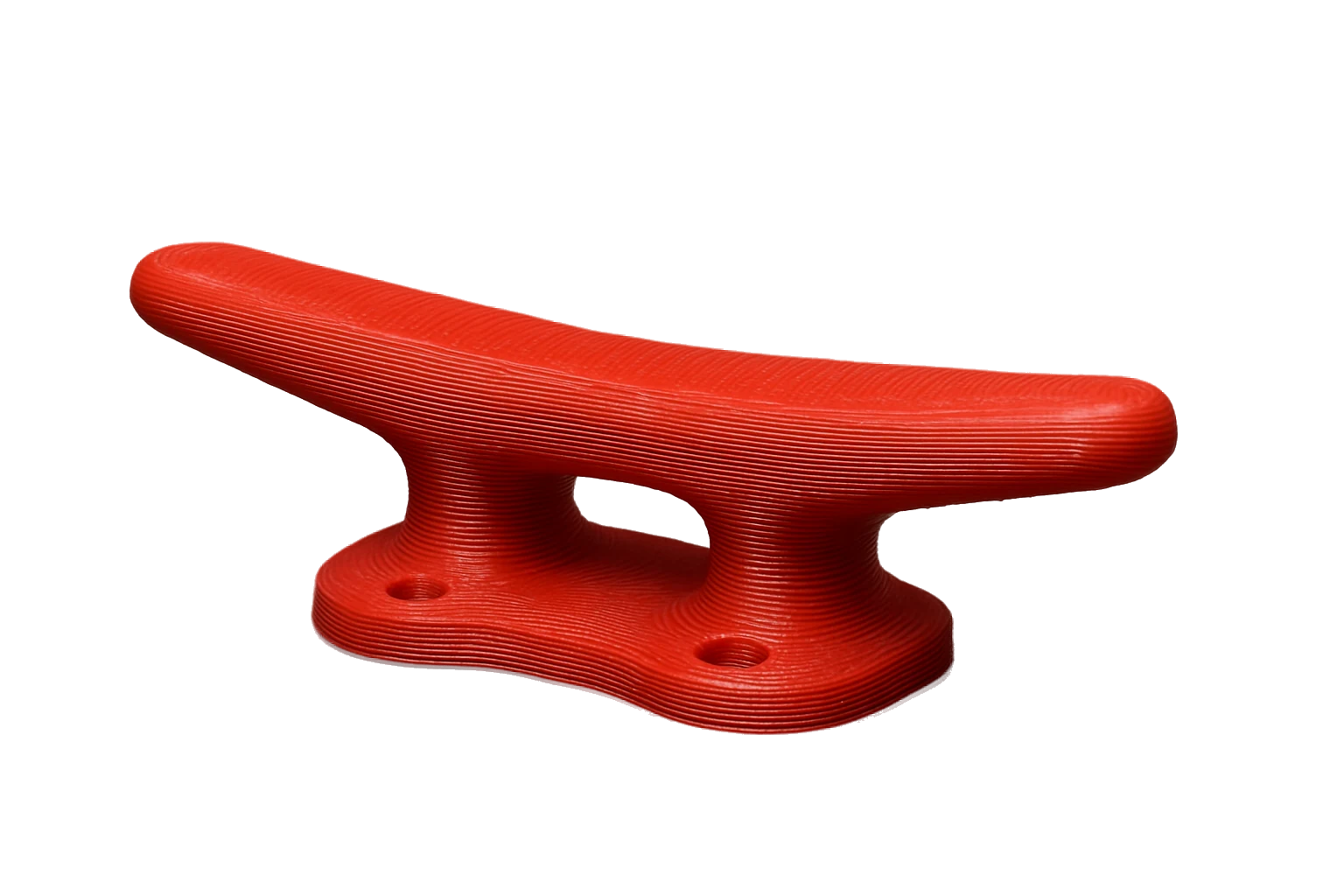
Saturated, opaque solids that hold their color.
Reds, blues, greens, yellows, and more — deep, even pigment that doesn’t wash out under shop lighting.
The solid range covers the everyday colors makers reach for on functional parts, enclosures, and brackets — with consistent pigment from the first meter of the spool to the last.
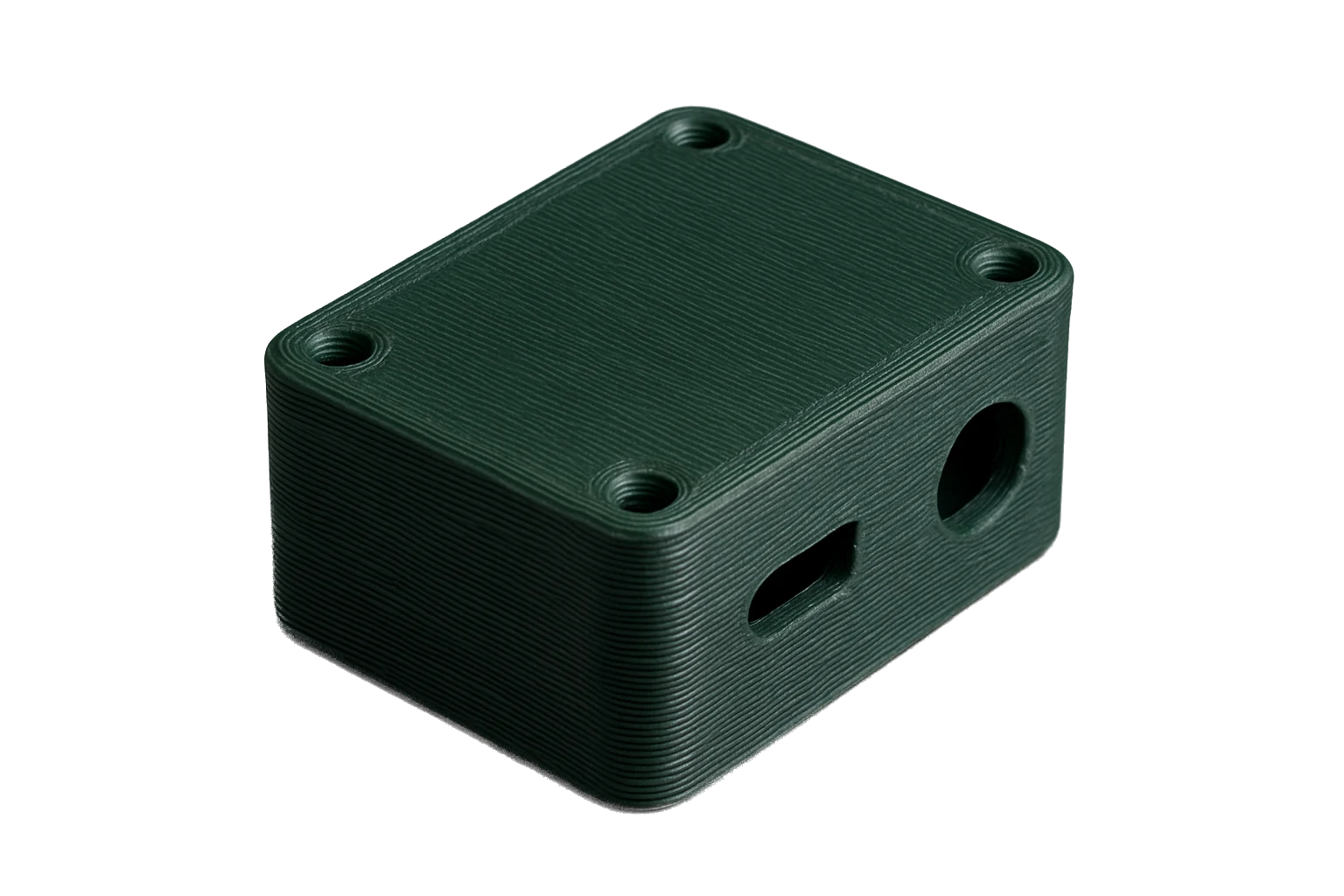
28 curated shades, not a random rainbow.
Greys, greens, blues, pinks, and naturals chosen to match real products and brand palettes.
Standardize a build, a classroom, or a product line on a palette you can re-order every time — each color is stocked separately, so refills match the parts you already printed.
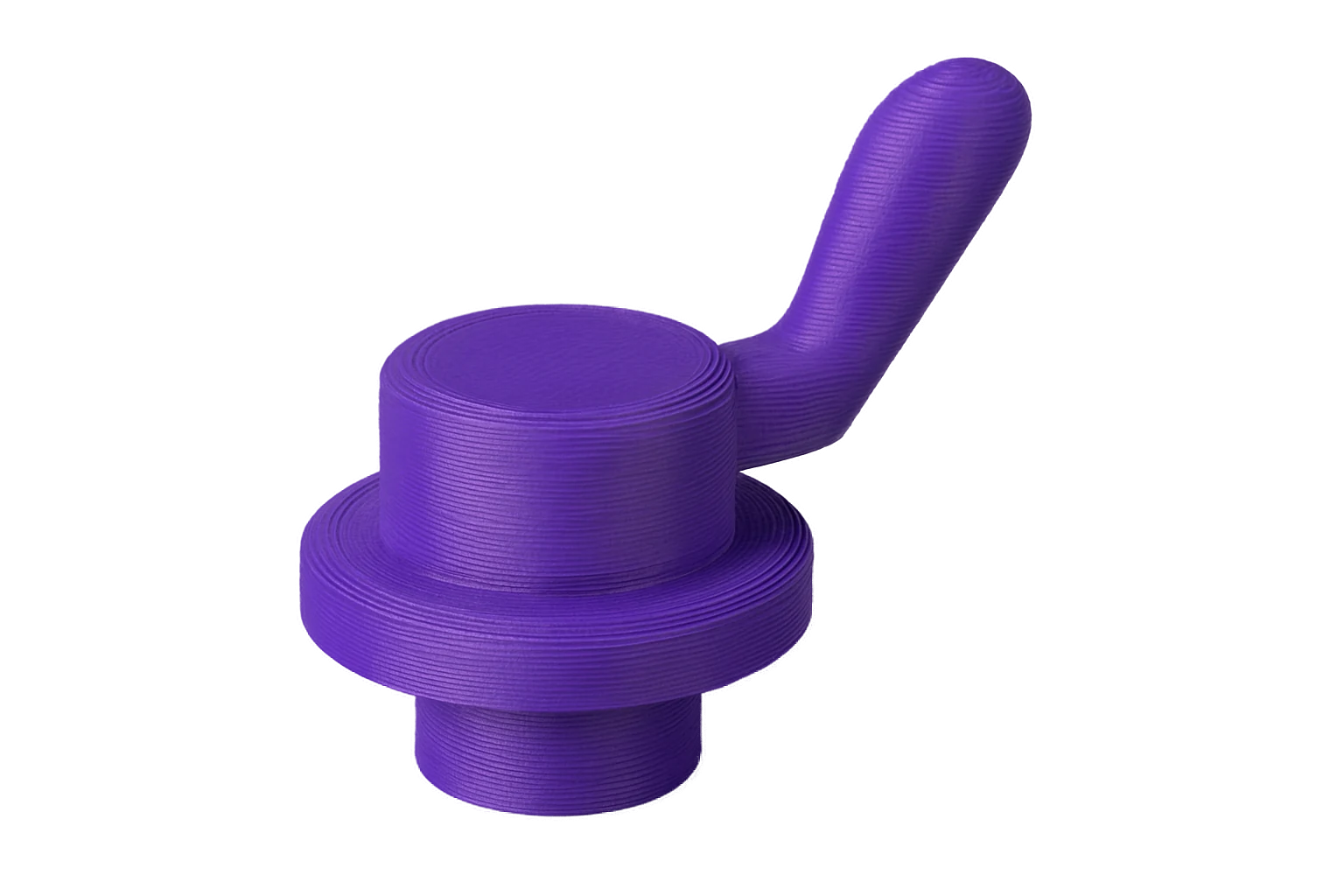
Stand-out colors for parts that should be seen.
Purples, oranges, and pastels for props, signage, and consumer pieces.
When a part is the product — an enclosure, a prop, a display model — the accent range gives you finish-quality color straight off the printer, no painting required.
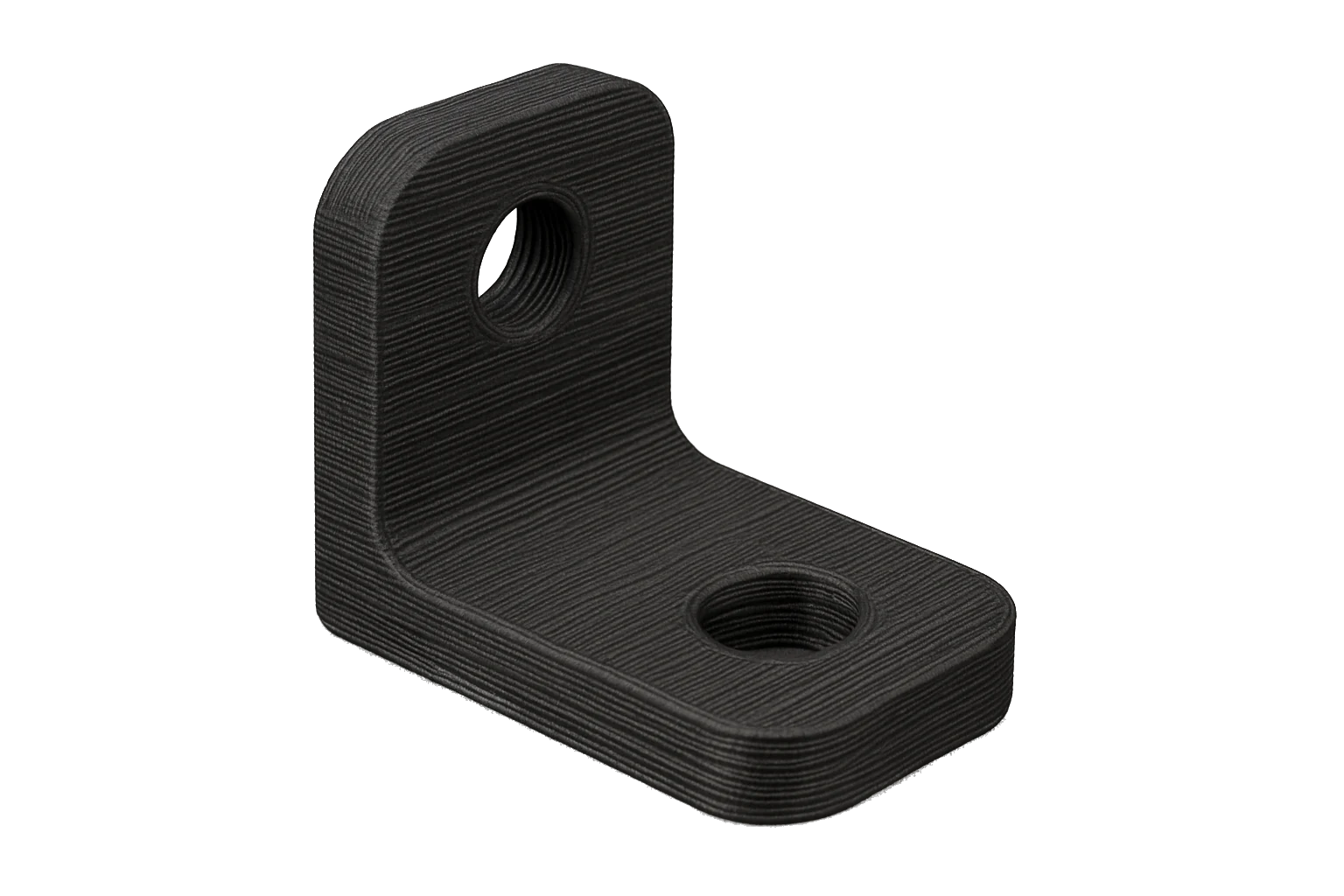
A carbon-fiber look without the abrasive fill.
Deep, technical matte finish that hides layer lines on functional parts.
The carbon-fiber shade prints on a standard brass nozzle — you get the premium, low-sheen look for jigs and housings without the wear of filled filaments.

Pearl and metallic shades that catch the light.
Pearl gold, silver, and shimmer finishes for decorative and presentation prints.
For models, awards, and consumer goods, the pearl and metallic range adds a finished, premium look that reads as molded rather than printed.
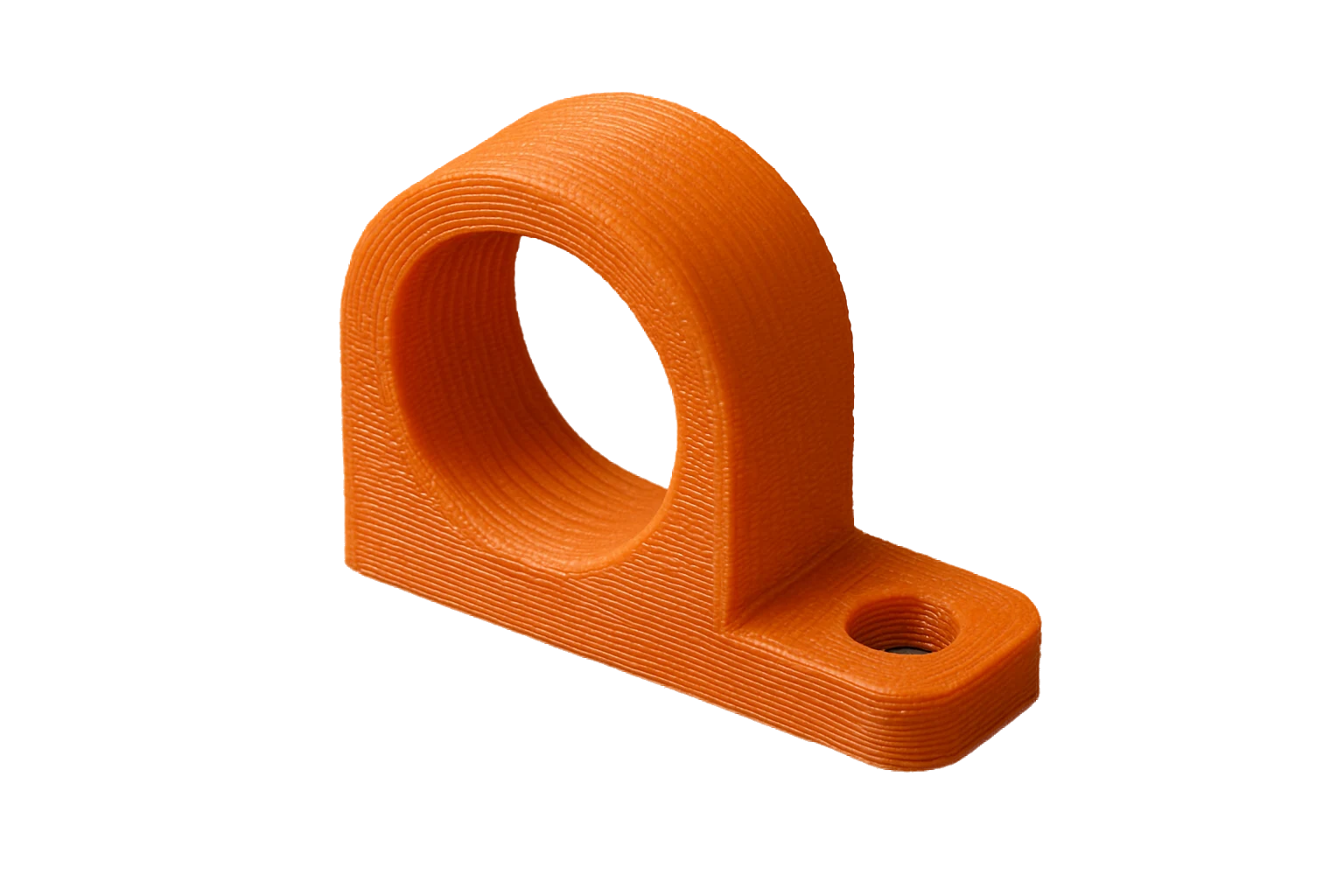
Need a specific color or a 3 kg spool?
Tell us the shade and volume — Rev1 stocks the range and quotes case quantities.
Outfitting a print farm, classroom, or product line? Rev1 keeps the full color range on the shelf in Auburn Hills, Michigan, with 3 kg spools and standing-order pricing for the colors you run most.
PETG vs. PLA vs. ABS.
Approximate positioning for orientation; PETG is the easy-but-tough middle ground.
| Rev1 PETG | PLA | ABS | |
|---|---|---|---|
| Ease of printing | Easy | Easiest | Hard (enclosure) |
| Toughness / impact | High | Low (brittle) | High |
| Water / chemical / UV | Good | Poor | Fair |
| Enclosure needed | No | No | Yes |
| Approx. price (1 kg) | ~$25 | ~$20 | ~$23 |
General material positioning; exact properties vary by brand and grade. Prices vary by retailer and date.
Rev1 PETG Technical Data
Mechanical & thermal properties
Typical values for engineering reference. Printed-part performance varies with wall count, infill, layer height, and orientation — treat these as material-level guidance, not a part spec.
| Property | Typical Value | Method |
|---|---|---|
| Tensile strength | ~48 MPa | ISO 527 |
| Elongation at break | ~120 % | ISO 527 |
| Flexural strength | ~69 MPa | ISO 178 |
| Flexural modulus | ~2,080 MPa | ISO 178 |
| Izod impact (notched) | ~7.5 kJ/m² | ISO 180 |
| Glass transition (Tg) | ~80 °C | DSC |
| Heat deflection (HDT, 0.45 MPa) | ~70 °C | ISO 75 |
| Shelf life (sealed, dry) | 12 months | — |
RESOURCES
Datasheet & Print Support
Everything you need to slice and print Rev1 PETG.
WHY REV1 TECH
Rev1 Filament. Tested, Supported, Shipped Fast.
Rev1 Technologies stocks Rev1 PETG in Auburn Hills, MI, with real print support and fast shipping.

We help you match the color, dial in the profile, and keep production running.
FAQ
Rev1 PETG — Common Questions
Is PETG hard to print?
No — it's nearly as easy as PLA. Print at 230–250 °C with a 70–85 °C bed, no enclosure needed. A slightly larger Z-gap and good cooling reduce stringing; otherwise it's very forgiving.
PETG vs PLA vs ABS — which should I use?
Use PETG when you need toughness, water/chemical/UV resistance, or outdoor durability but want easy printing. PLA is easiest but brittle; ABS is tough but needs an enclosure and ventilation. PETG is the practical middle.
What colors and sizes are available?
28 colors — solids, transparents, and specialty shades — on 1 kg and 3 kg spools. Pick your color and spool size in the buy-box, or ask us about case quantities.
Do I need to dry it?
PETG absorbs moisture over time, which causes stringing and a hazy surface. A fresh sealed spool prints fine; if it's been open in humid air, dry it before printing.
Is the 3 kg spool better value?
Yes — the 3 kg spool lowers your cost per kilogram and means fewer spool changes on long or production runs. It's the go-to for shops and farms.
Can Rev1 quote bulk or a specific color?
Yes. Tell us the color and quantity and we confirm stock and quote case pricing with standing-order scheduling, usually within one business day. Call (248) 707-2950.
Why is my PETG stringing, and how do I fix it?
Stringing is almost always moisture or too little retraction. Dry the spool at 60–65 °C, increase retraction (2–5 mm Bowden, ~1–2 mm direct), drop the nozzle 5–10 °C, and enable a small travel/Z-hop. A little light part-cooling also helps.
How do I stop warping and get good bed adhesion?
Run a 70–85 °C bed, slow the first layer, and use a thin glue-stick layer or a clean PEI sheet. PETG bonds aggressively to PEI — the glue actually protects the sheet and helps release. A brim helps on tall or thin footprints.
How heat-resistant is PETG?
PETG starts to soften around 70–80 °C, so it handles warm indoor and outdoor use but not a hot car interior or engine-bay heat. For sustained high temperatures, step up to ABS/ASA, PC, or PA (nylon).