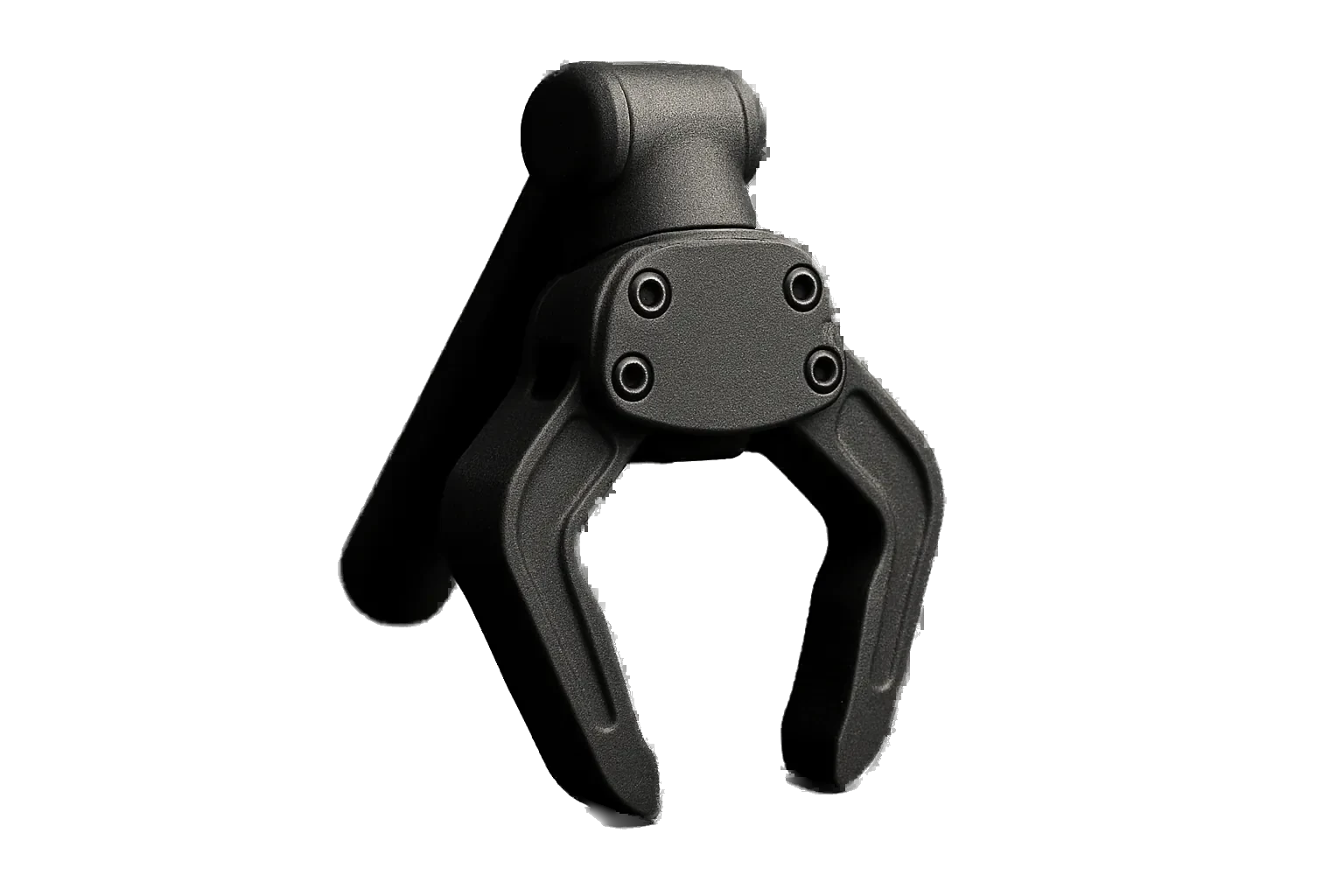
CARBONX Nylon 6+CF • 3DXTECH • REV1 TECH
3DXTech CarbonX™ Nylon 6+CF CF-Reinforced PA6 Gen3 -- 3,800 MPa Modulus · 147°C HDT · Hardened Nozzle Required
CF-Reinforced PA6 Gen3 -- 3,800 MPa Modulus · 147°C HDT · Hardened Nozzle Required
3DXTech’s CarbonX Nylon 6+CF (PA6+CF Gen3) delivers a stiff, dimensionally stable structure with chopped carbon fiber reinforcement — raising tensile modulus to 3,800 MPa and heat deflection to 147°C. Strong chemical resistance to mineral oils, fuels, and hydraulic fluid. Gen3 formulation improves interlayer adhesion and print reliability over earlier PA6+CF materials. Made in Grand Rapids, Michigan.
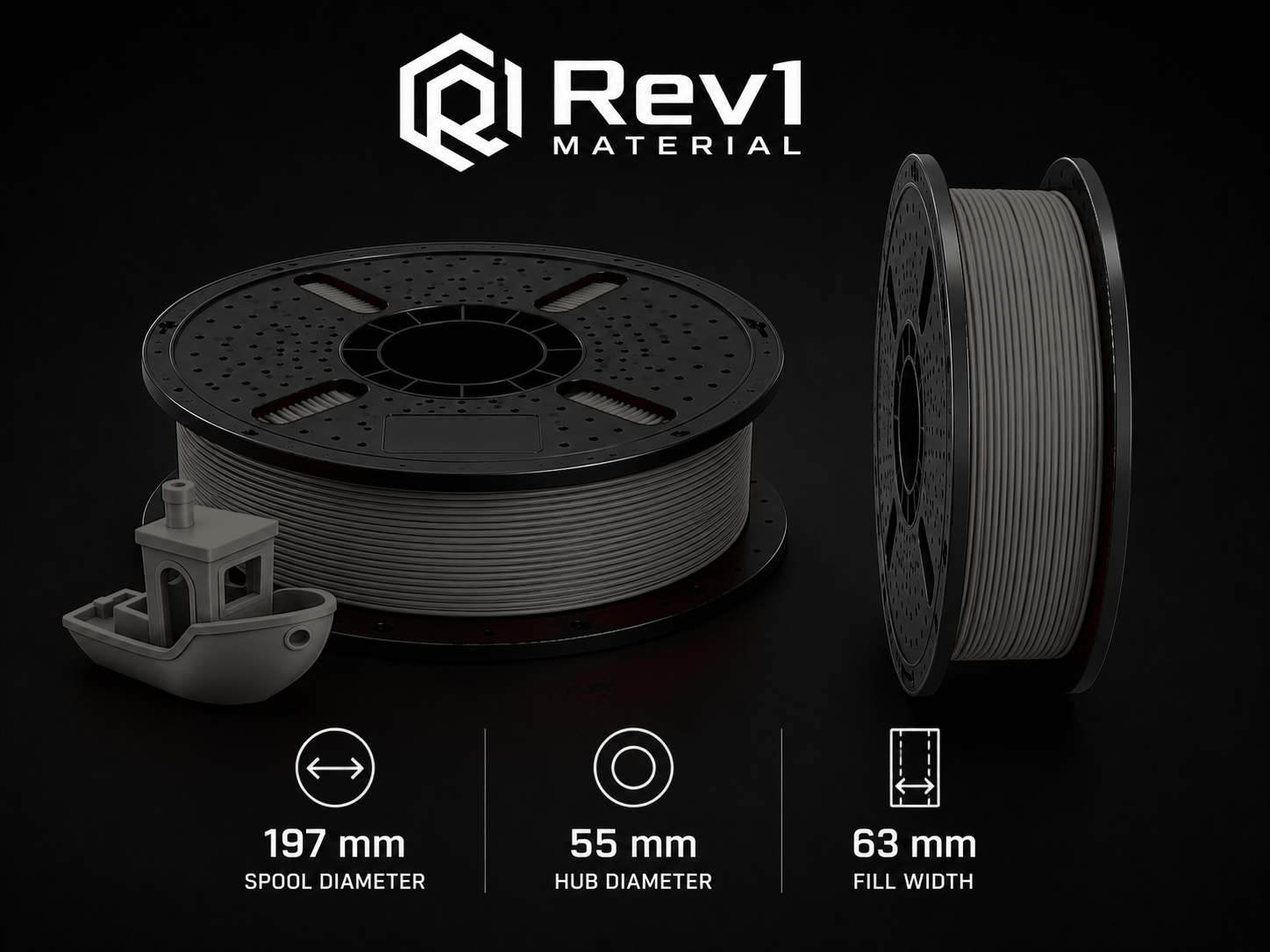
Select Spool Size
Lead time varies. Contact Rev1 to confirm availability.
WHY CARBONX Nylon 6+CF
3,800 MPa Modulus. 147°C HDT. Gen3 Formulation.
CarbonX™ Nylon 6+CF (PA6+CF Gen3) is 3DXTech’s carbon fiber reinforced Polyamide 6 — delivering 3,800 MPa tensile modulus, 147°C heat deflection temperature, and broad chemical resistance to fuels, oils, and hydraulic fluids. The third-generation formulation improves interlayer adhesion and print reliability over earlier PA6+CF variants. For structural applications where PA6’s higher crystallinity, lower cost, and chemical profile outperform PA12.
Gen3 Formulation — Improved Interlayer Adhesion
Third-generation PA6+CF compound with enhanced bonding chemistry. Improved Z-strength and layer-to-layer cohesion over first- and second-generation PA6+CF materials reduces delamination risk in structural parts.
147°C HDT — Semi-Crystalline Advantage
PA6 Tg is just 70°C, yet HDT reaches 147°C at 0.45 MPa — a direct result of PA6’s high crystallinity. Parts maintain structural integrity far above the glass transition, enabling continuous-use temperatures unfilled PA6 cannot match.
Chemical Resistance: Oils, Fuels, Hydraulic Fluid
PA6 exhibits stronger resistance to mineral oils, fuels, and hydraulic fluids than PA12. A more chemically aggressive nylon for fluid-contact structural components in automotive, industrial, and off-highway applications.
Lower Cost than PA12+CF
PA6 raw material costs less than PA12. CarbonX Nylon 6+CF starts at $78/500g — lower cost of entry versus the PA12-based CF variant for applications where PA6 chemistry meets requirements.
PRINTING WITH CARBONX Nylon 6+CF
PA6+CF Gen3 — Moisture Management Is Critical
CarbonX Nylon 6+CF requires a hardened steel nozzle — standard brass will wear rapidly against the carbon fiber. PA6 absorbs moisture significantly faster than PA12 — strict drying protocol before every print session is non-negotiable. Industrial hardware with a heated enclosure delivers the most reliable results.
- Extruder Temp 260–285°C — all-metal hot end required
- Bed Temp 70–90°C — PEI or garolite build surface
- Chamber Temp Recommended — heated enclosure reduces Nylon 6 warping tendency
- Nozzle Hardened steel ≥0.4mm — MANDATORY. Standard brass nozzle will wear rapidly against CF.
- ⚠ Drying Warning PA6 absorbs moisture faster than PA12. Dry at 80°C for 4 hours minimum before every print session — no exceptions. Print directly from dryer for best results. Wet PA6 filament prints with bubbling, stringing, and severely degraded layer adhesion.
- ⚠ Nozzle Warning Hardened nozzle is non-negotiable. Carbon fiber reinforcement is highly abrasive — a standard brass nozzle will show measurable wear within a single 500g spool. Use hardened steel, ruby, or sapphire nozzle. 0.4mm minimum diameter — small nozzles are more prone to CF bridging.
THERMAL DATA
147°C HDT — Semi-Crystalline PA6 Outperforms Its Tg
PA6 has a relatively low glass transition (70°C), yet its high-crystallinity structure delivers a 147°C heat deflection temperature. This semi-crystalline advantage means parts maintain structural integrity far above Tg — a key reason PA6 outperforms amorphous materials in long-term structural applications.
HDT at 0.45 MPa. Significantly higher than Tg due to PA6’s semi-crystalline morphology — the crystalline phase retains stiffness well above the glass transition temperature. CF reinforcement further elevates HDT over unfilled PA6.
PA6 Tg is relatively low compared to PA12 (158°C). This is not a service-temperature limit — the crystalline phase dominates structural performance. HDT of 147°C demonstrates stiffness retention well above Tg in crystalline domains.
Estimated continuous-use temperature for PA6+CF under load. CF reinforcement improves stiffness retention; semi-crystalline PA6 maintains structural performance at temperatures that would deform amorphous materials with similar Tg values.
Required before every session. PA6 absorbs moisture faster than PA12 — re-dry even a spool opened hours earlier. Print directly from a heated dry-box for best interlayer adhesion. Wet PA6 prints with bubbling and layer delamination.
CHEMICAL RESISTANCE
Stronger Chemical Resistance Than PA12 for Oils, Fuels & Hydraulic Fluid
CarbonX™ Nylon 6+CF’s PA6 matrix delivers broader resistance to mineral oils, fuels, and hydraulic fluids than PA12-based CF variants. For fluid-contact structural components in automotive, industrial, and off-highway applications, PA6 chemistry provides a meaningful advantage over PA12.
Consult 3DXTech CarbonX PA6+CF Gen3 TDS for complete chemical compatibility data before use in fluid-contact applications.
SPECIFICATIONS
CarbonX™ Nylon 6+CF — Full Technical Data
Source: 3DXTech CarbonX PA6+CF Gen3 TDS. ISO-standard test specimens. 1.75mm black filament.
Material Properties
| Polymer | Polyamide 6 (PA6) + Carbon Fiber |
| Diameter | 1.75mm |
| Color | Black (only) |
| Glass Transition (Tg) | 70°C |
| HDT (0.45 MPa, ISO 75) | 147°C |
| Continuous Use Temp | ~120°C |
| Surface Resistance | >10³ Ω/sq |
| Moisture Absorption | Hygroscopic — dry at 80°C / 4 hr |
| Tensile Strength | 63 MPa (ISO 527) |
| Flexural Strength | 84 MPa (ISO 178) |
| Tensile Modulus | 3,800 MPa (ISO 527) |
| Flexural Modulus | 3,750 MPa (ISO 178) |
| Tensile Elongation | 3% |
| Density | 1.17 g/cm³ (ISO 1183) |
Print Parameters
| Extruder Temp | 260–285°C |
| Bed Temp | 70–90°C |
| Chamber Temp | Recommended for warping control |
| Drying Protocol | 80°C / 4 hr minimum (PA6 hygroscopic) |
| Nozzle | Hardened steel ≥0.4mm (MANDATORY) |
| Hot End Requirement | All-metal, rated ≥300°C |
Availability
| Spool Sizes (Available) | 500g, 750g |
| 500g Price | $78 |
| 750g Price | $115 |
| Lead Time | Varies — contact Rev1 to confirm |
| Quality Standard | ISO 9001:2015 Certified |
| Origin | Grand Rapids, MI, USA |
SPOOL SELECTION
500g & 750g — Two Sizes for Every Run
CarbonX™ Nylon 6+CF is available in Black (1.75mm) in two spool sizes. Choose 500g for qualification or low-volume runs; 750g for higher-volume production at better per-gram cost.
- Black (1.75mm)
- Ideal for qualification & prototyping
- Hardened nozzle mandatory
- Black (1.75mm)
- Better per-gram cost for production
- Hardened nozzle mandatory
PRINT QUALITY
Production-Grade PA6+CF Output on the Right Equipment
CarbonX™ Nylon 6+CF Gen3 produces parts with strong interlayer adhesion and good surface detail when properly dried and printed on a calibrated industrial platform with a hardened nozzle.
COMPATIBLE PLATFORMS
Requires an Industrial-Grade 3D Printer
CarbonX Nylon 6+CF demands an all-metal hot end rated to 300°C+, a heated enclosure for warping control, AND a hardened steel nozzle. Any open-platform printer meeting these requirements can run PA6+CF.
CreatBot F160
Purpose-built Nylon platform with dual all-metal hot ends and integrated chamber heating. PA6+CF compatible. Rev1’s top recommendation for first-time PA6 adopters.
Rev1 RecommendedCreatBot F300
300mm build volume, 420°C hot end rating, 200°C heated chamber. PA6+CF compatible. Production-oriented platform for larger part geometries.
Rev1 RecommendedCreatBot F430
Quad-nozzle large-format industrial printer with multi-material capability. PA6+CF compatible. Supports Nylon plus support materials for complex geometries.
Rev1 RecommendedAny Open-Platform Printer
Minimum: 300°C+ all-metal hot end • 70–90°C heated bed • heated enclosure recommended • hardened steel nozzle ≥0.4mm (MANDATORY for CF).
WHERE IT WORKS
Where CF-Reinforced PA6 Outperforms the Alternatives
When structural stiffness, 147°C heat deflection, and chemical resistance to oils and fuels are all required simultaneously — CarbonX Nylon 6+CF Gen3 delivers.
Automotive Under-Hood
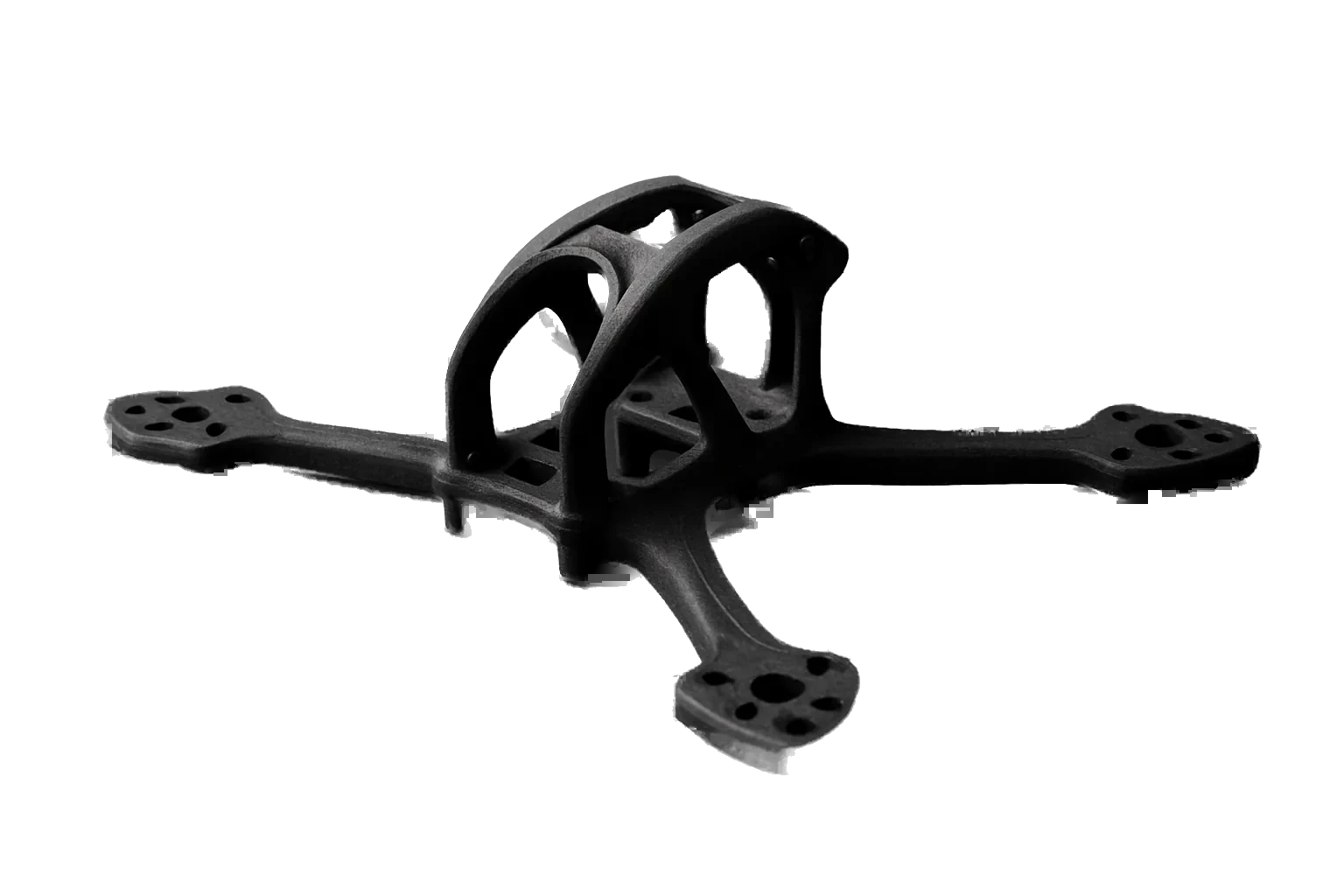
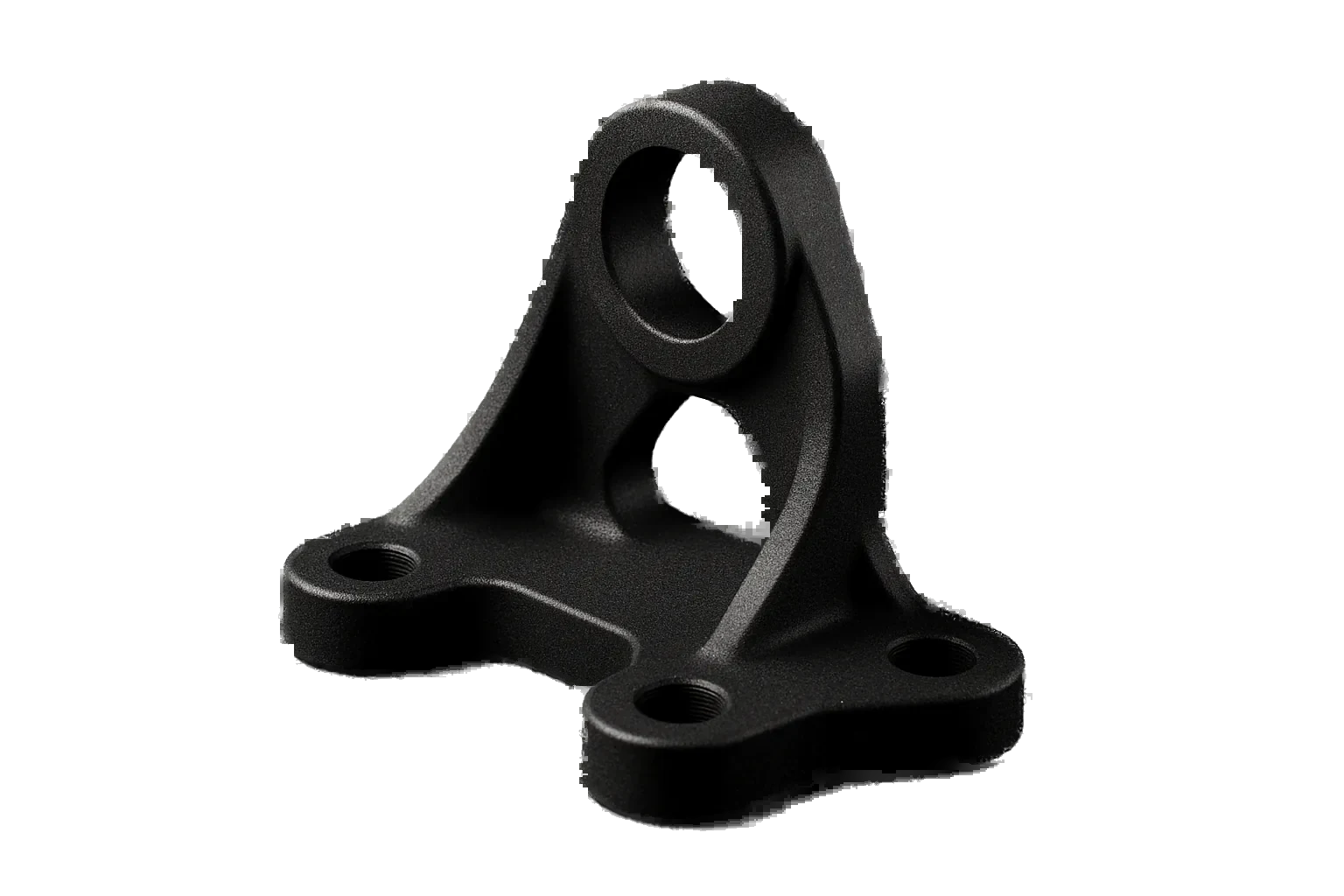
Brackets, housings, and fluid-contact components in high-temperature under-hood environments. PA6+CF’s chemical resistance to oils and fuels and 147°C HDT make it a natural fit for automotive structural applications.
Industrial Fluid Systems
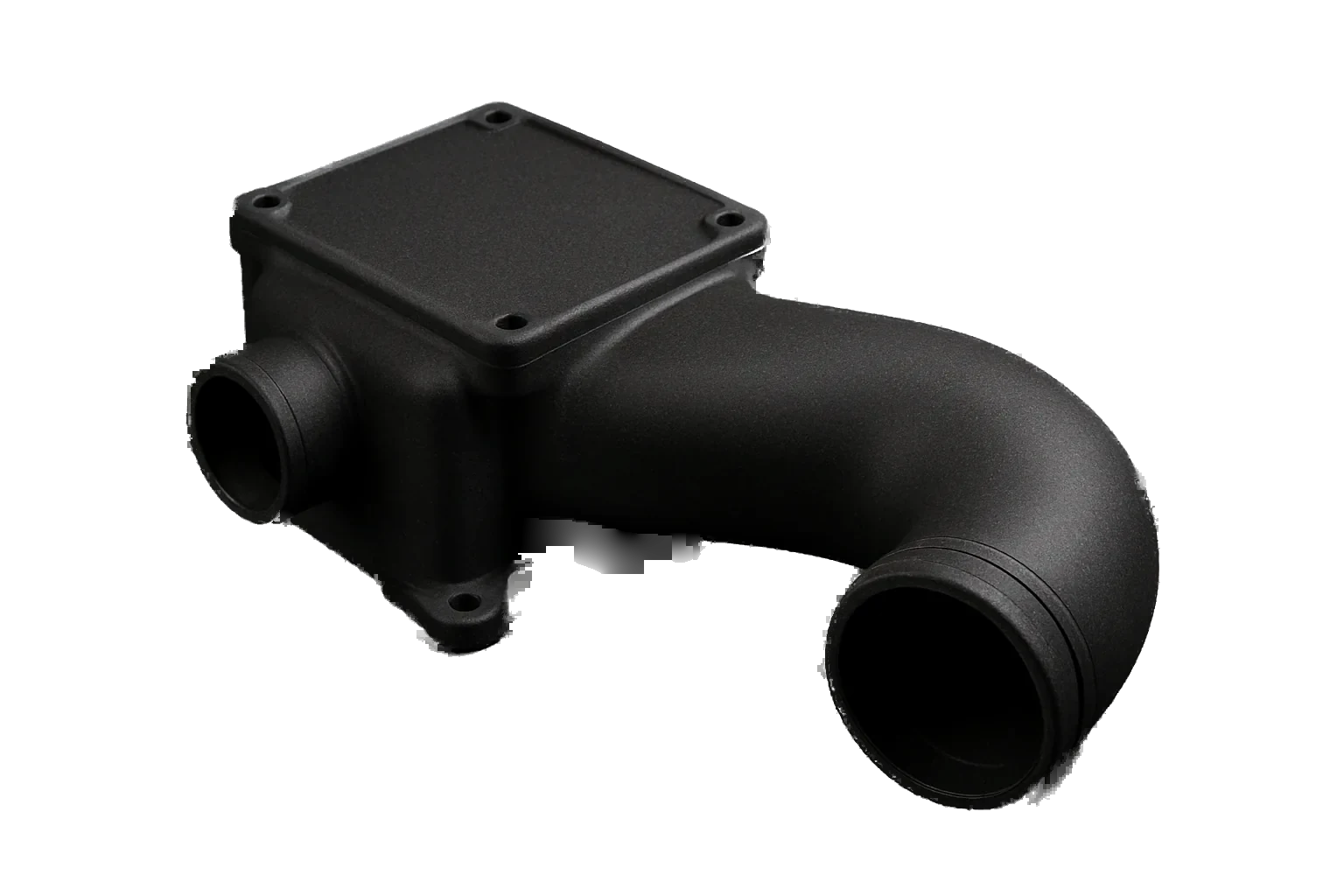
Valve bodies, manifolds, and tooling in contact with hydraulic fluids, mineral oils, and process chemicals. PA6 outperforms PA12 in direct hydrocarbon resistance.
Structural Jigs & Fixtures
High-stiffness production tooling, assembly fixtures, and checking gauges requiring dimensional stability and low creep at elevated temperatures.
Aerospace Ground Support
Structural brackets, connectors, and load-bearing components for ground support equipment requiring stiffness, thermal performance, and CF-enhanced strength-to-weight ratio.
Off-Highway & Heavy Equipment
Structural enclosures, brackets, and fluid-contact parts in agricultural, construction, and off-highway equipment where PA6+CF’s chemical and thermal profile matches demanding service environments.
Prototyping & Bridge Production
Cost-effective bridge production for engineering-grade PA6+CF parts. At $78/500g, lower material cost enables higher iteration velocity during development vs. PA12-based CF variants.
MATERIAL CARE
PA6 Absorbs Moisture Fast — Strict Drying Protocol Is Non-Negotiable
PA6 absorbs moisture significantly faster than PA12 — even brief ambient exposure between print sessions can degrade layer adhesion. Follow this protocol every session. Print directly from dryer for best results.
Dry Before Every Session
80°C minimum / 4 hours minimum. PA6 absorbs moisture faster than PA12 — even a spool that was sealed yesterday benefits from a fresh drying cycle before printing.
Print From the Dryer
For best interlayer adhesion, print directly from a heated dry-box or dryer system. PA6 moisture re-absorption during long print runs causes degraded layer bonding and surface quality.
Store Sealed With Desiccant
Return unused filament to an airtight bag or container with fresh desiccant immediately after printing. Long-term storage in original sealed packaging with fresh desiccant is recommended.
Recognize Wet Filament Symptoms
Popping or crackling during extrusion, rough surface texture, layer delamination, and visible bubbling in the melt are signs of moisture contamination. Re-dry at 80°C / 4 hr and restart.
HOW IT COMPARES
CarbonX™ Nylon 6+CF vs. Commonly Evaluated Alternatives
Buyers evaluating CarbonX Nylon 6+CF typically compare against CarbonX Nylon 12+CF (higher elongation, near-zero moisture absorption, easier drying), CarbonX PC+CF (higher Tg), and generic nylon CF filaments (inconsistent quality, no published TDS).
3DXTech / Rev1 Tech
3DXTech
3DXTech
Various
3DXTECH QUALITY
Manufactured in Michigan. Certified to ISO 9001:2015. Third-Generation Formulation.
Every spool of CarbonX™ Nylon 6+CF is produced in-house at 3DXTech’s Grand Rapids, MI facility under ISO 9001:2015 certification. Gen3 formulation compounds PA6 resin with chopped carbon fiber under tightly controlled processing parameters, with full lot traceability throughout filament fabrication.
ISO 9001:2015 Certified
Production under a certified quality management system. Lot traceability and process controls throughout filament fabrication. Not commodity offshore production.
Made in Grand Rapids, MI
Filament extruded and wound in-house at 3DXTech’s Michigan facility. Direct factory quality control — not third-party contract manufacturing.
Gen3 TDS Available
Full processing parameters, mechanical properties, and chemical resistance data published in the CarbonX™ PA6+CF Gen3 TDS. Available for download below. No guesswork — verify specifications before qualification.
RESOURCES
Downloads & Technical Support
Everything you need to qualify and print CarbonX™ Nylon 6+CF Gen3 with confidence.
WHY REV1 TECH
Authorized 3DXTech Reseller. Industrial AM Specialists.
Rev1 Technologies is an authorized 3DXTech reseller headquartered in Auburn Hills, MI, with direct technical expertise in high-performance FFF materials and the printers that run them.
Authorized Reseller
Every spool ships direct from the authorized channel. MAP pricing guaranteed. Single-channel license compliance — not a grey-market distributor.
Platform Expertise
Rev1 carries the industrial printers validated for PA6+CF. If you need guidance on which platform to match with this material, our team has run them.
Pre-Sales Technical Support
Questions about print settings, printer selection, drying protocol, or qualifying PA6+CF for a specific application? Contact Rev1 before you order — that conversation is free.
FREQUENTLY ASKED
CarbonX™ Nylon 6+CF — Buyer Questions Answered
What is CarbonX™ Nylon 6+CF?
CarbonX™ Nylon 6+CF is 3DXTech’s Gen3 carbon fiber reinforced Polyamide 6 (PA6) filament. It delivers 3,800 MPa tensile modulus and 147°C heat deflection temperature. Available in Black only. A hardened steel nozzle is mandatory — CF reinforcement is abrasive and will rapidly wear brass nozzles. PA6 absorbs moisture quickly — strict drying at 80°C / 4 hr is required before every print session.
What temperatures does CarbonX™ Nylon 6+CF require?
CarbonX™ Nylon 6+CF requires an extruder temperature of 260–285°C and a bed temperature of 70–90°C. A heated enclosure is recommended to control warping. Dry at 80°C for 4 hours minimum before every print session — PA6 is significantly more hygroscopic than PA12. All-metal hot end rated to 300°C+ is required.
Why is PA6 Tg only 70°C but HDT is 147°C?
PA6 is semi-crystalline. The glass transition at 70°C represents the amorphous domains softening — but the crystalline phase retains stiffness well above Tg. This is why PA6 heat deflection temperature (147°C at 0.45 MPa) is dramatically higher than its Tg. For structural applications, HDT is the relevant thermal performance metric — not Tg.
How does Nylon 6+CF compare to Nylon 12+CF?
Key differences: PA6+CF has better chemical resistance to mineral oils, fuels, and hydraulic fluids. PA6+CF is lower cost ($78 vs. $88/500g). PA12+CF has near-zero moisture absorption (PA6 is significantly more hygroscopic) — making PA12 easier to dry and maintain. PA12+CF also has 8,000 MPa tensile modulus vs. 3,800 MPa for PA6+CF. Choose PA6 for chemical resistance and cost; choose PA12 for higher modulus and simpler moisture management.
Why does CarbonX™ Nylon 6+CF need a hardened steel nozzle?
Carbon fiber is highly abrasive. A standard brass nozzle will show measurable wear within a single 500g spool of CF filament. Hardened steel, ruby-tipped, or sapphire nozzles all work. 0.4mm minimum diameter — smaller nozzles are more prone to CF bridging and clogging.
What applications use CarbonX™ Nylon 6+CF?
CarbonX™ Nylon 6+CF is used in automotive under-hood structural components, industrial fluid system brackets, production tooling and fixtures requiring stiffness at elevated temperatures, aerospace ground support hardware, and off-highway equipment structural parts. Any application where PA6 chemistry (chemical resistance to oils/fuels, lower cost) outweighs the moisture management trade-off versus PA12.
What is the Gen3 formulation improvement?
3DXTech’s Gen3 designation indicates the third-generation PA6+CF compound, featuring improved interlayer adhesion chemistry and enhanced print reliability vs. earlier PA6+CF materials. Gen3 reduces delamination tendency in structural parts and extends the printable process window. Full processing parameters are documented in the CarbonX PA6+CF Gen3 TDS.
Should I choose Nylon 6+CF or PC+CF?
CarbonX™ PC+CF has a higher Tg (~147°C vs. 70°C for PA6) and lower moisture absorption. Choose Nylon 6+CF when chemical resistance to fuels, oils, and hydraulic fluids is the primary requirement, or when lower material cost is a priority. Choose PC+CF when a higher glass transition temperature and inherently lower moisture uptake are required for the application.