SHINING 3D FreeScan Omni Standalone Inspection-Ready Metrology · 0.02 mm · Onboard GD&T
The world’s first standalone inspection-ready metrology 3D scanner — scan, inspect to GD&T tolerances, and generate a report on the device’s own 5.5″ touchscreen. No laptop required.
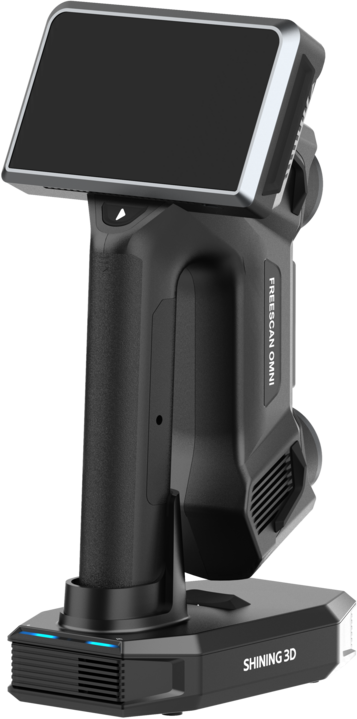
The FreeScan Omni puts the whole quality-control loop in your hand. A dual optical engine — blue laser for 0.02 mm detail plus IR VCSEL for speed — captures up to 7,619,000 pts/s, while PTB-certified SHINING 3D Inspect runs onboard the 5.5″ touchscreen so you scan a part, compare it to nominal, and generate an inspection report without ever connecting a laptop. Dock it and the Smart Dock charges the battery and backs up your data over Wi-Fi automatically. Full specifications →
Authorized SHINING 3D reseller and factory-trained FreeScan support partner in the USA — Rev1 validates your accuracy class, part mix, and inspection-software needs before you commit. Questions? Call (248) 707-2950.
Certified Accuracy. Inspection Built In.
Every FreeScan Omni is acceptance-tested to VDI/VDE 2634 Part 3 and ISO 10360, and its onboard SHINING 3D Inspect is PTB-certified for GD&T measurement. Rev1 Technologies is your authorized SHINING 3D reseller and US support partner in Auburn Hills, Michigan — not a grey-market importer.

Scan. Inspect. Report. All on the Device — No Laptop.
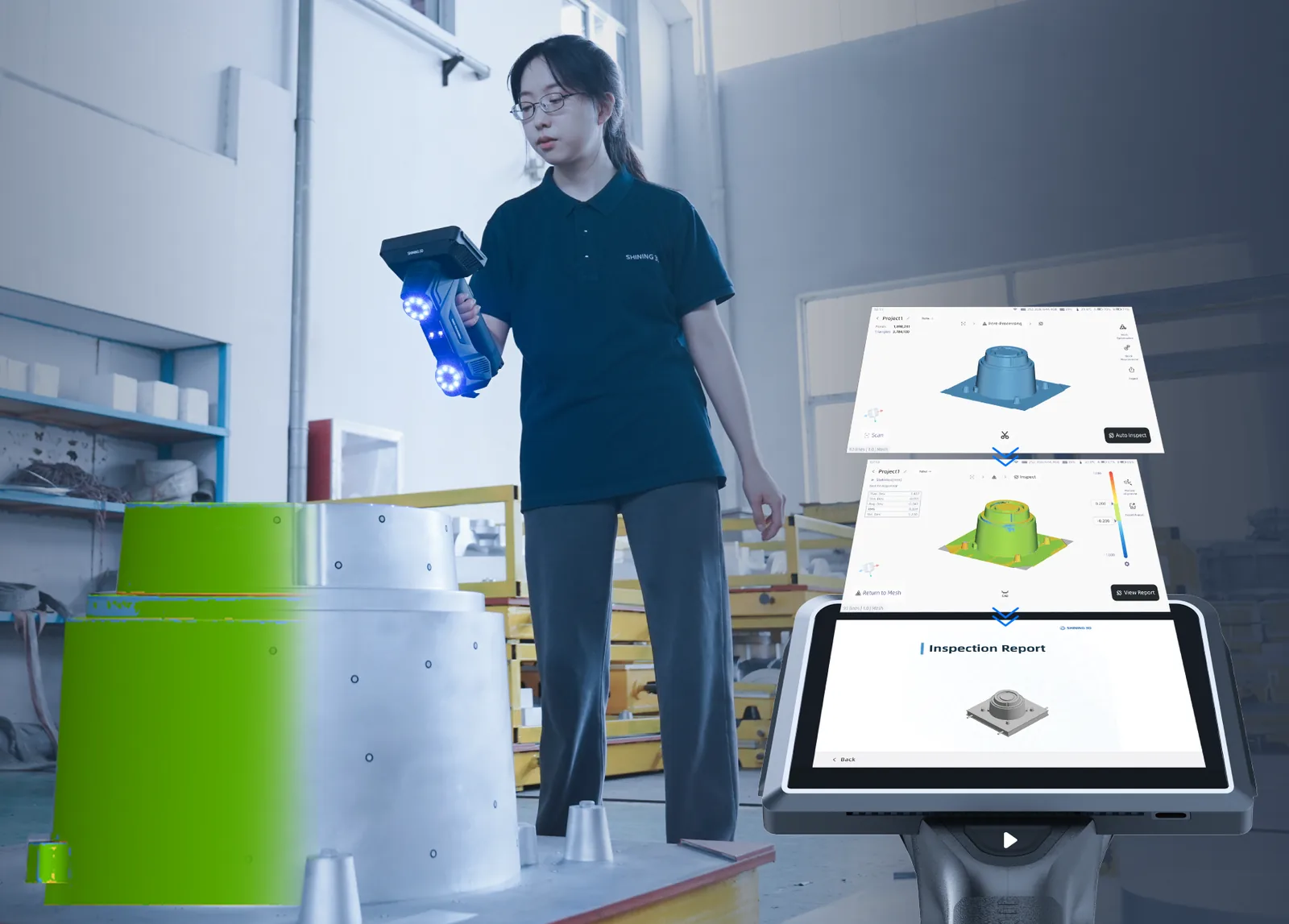
The World’s First Standalone Inspection-Ready Scanner
Every other metrology handheld is tethered to a workstation to do anything useful. The FreeScan Omni is different: PTB-certified SHINING 3D Inspect runs directly on its 5.5″ touchscreen, so a technician scans the part, aligns it to nominal CAD, measures GD&T features, and generates an inspection report standing right at the part — no laptop, no cart, no walk back to the office.
Collapsing the scan-to-report loop onto the device changes how inspection works on a shop floor. First-article checks, incoming-goods inspection, and on-machine verification happen where the part is, in one continuous workflow, instead of capturing data in one place and analyzing it somewhere else hours later. An operator can flag an out-of-tolerance feature before the part leaves the fixture, and a quality engineer can hand the scanner to a machinist without also handing over a laptop and a software seat. For distributed teams, MRO bays, and field service, “quality control in your hand” is not a slogan — it removes the single biggest piece of friction in handheld metrology.
0.02 mm Accuracy You Can Put in an Inspection Report.
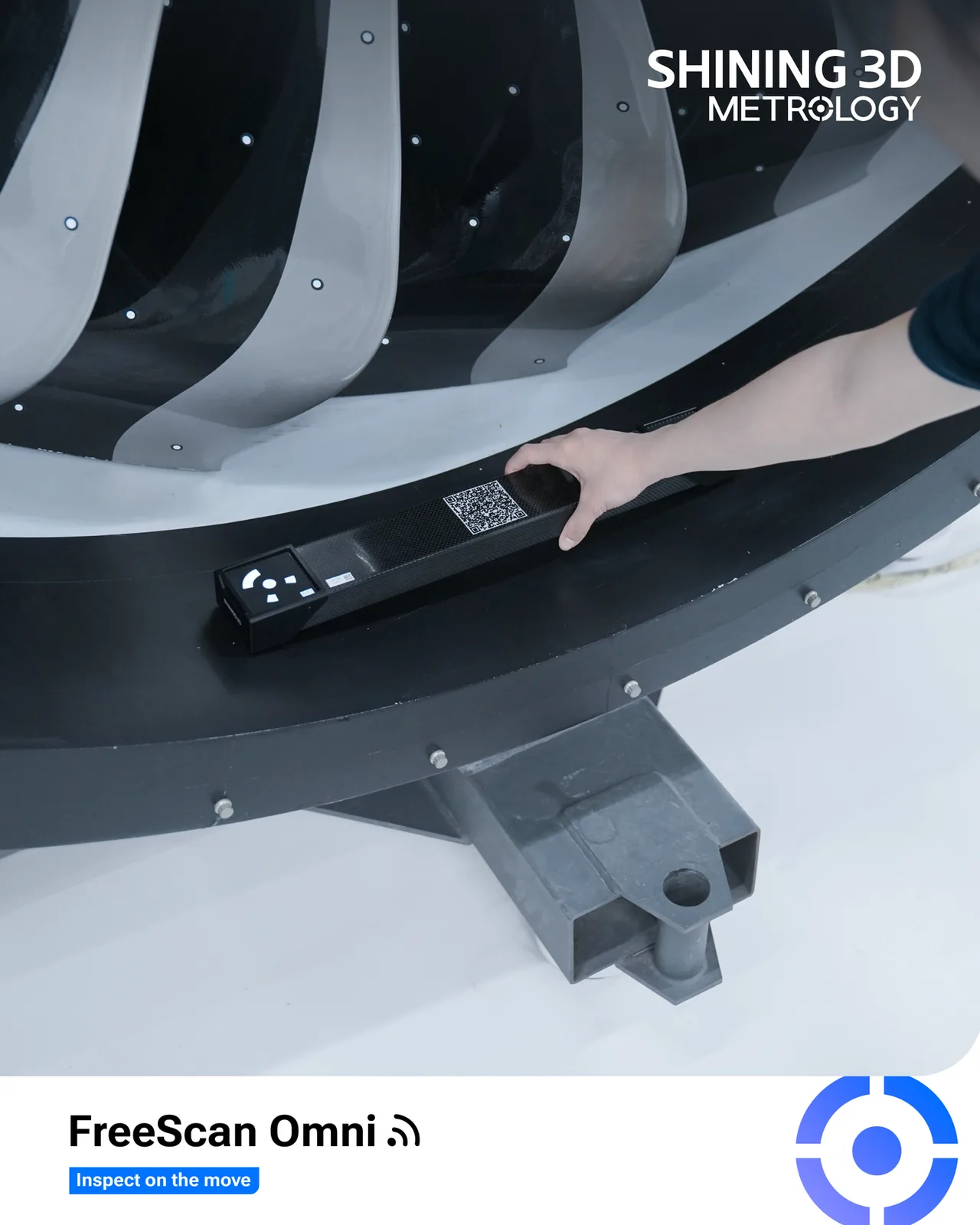
Lab-Validated, Traceable Numbers
The FreeScan Omni holds 0.02 mm single-point accuracy and 0.02 + 0.03 mm/m volumetric accuracy — tightening to 0.02 + 0.015 mm/m with Video Photogrammetry — validated to VDI/VDE 2634 Part 3 and ISO 10360. That is metrology-grade accuracy in a handheld you can carry to the part.
For dimensional inspection, the number that matters is the one you can defend in an audit. The Omni’s 0.02 mm class sits with the tightest handheld laser scanners on the market, and its volumetric accuracy is stated as a base plus a per-metre term so you know exactly how error behaves as the part grows. Engage VPG and the per-metre term drops, holding global accuracy across larger assemblies without sticking coded targets. Rev1 supplies the acceptance documentation and traceable calibration certificate for first-article inspection, regulated workflows, and QA audits on request.
Among the tightest in the handheld laser-scanner class — a certified figure, not a marketing peak.
0.02 + 0.015 mm/m with Video Photogrammetry — global accuracy that doesn’t run away on larger parts.
Validated to VDI/VDE 2634 Part 3 and ISO 10360 — the standards QA uses to qualify metrology systems.
Acceptance report and traceable calibration certificate for regulated and first-article workflows.
Blue Laser for Detail. IR VCSEL for Speed. Three Modes.
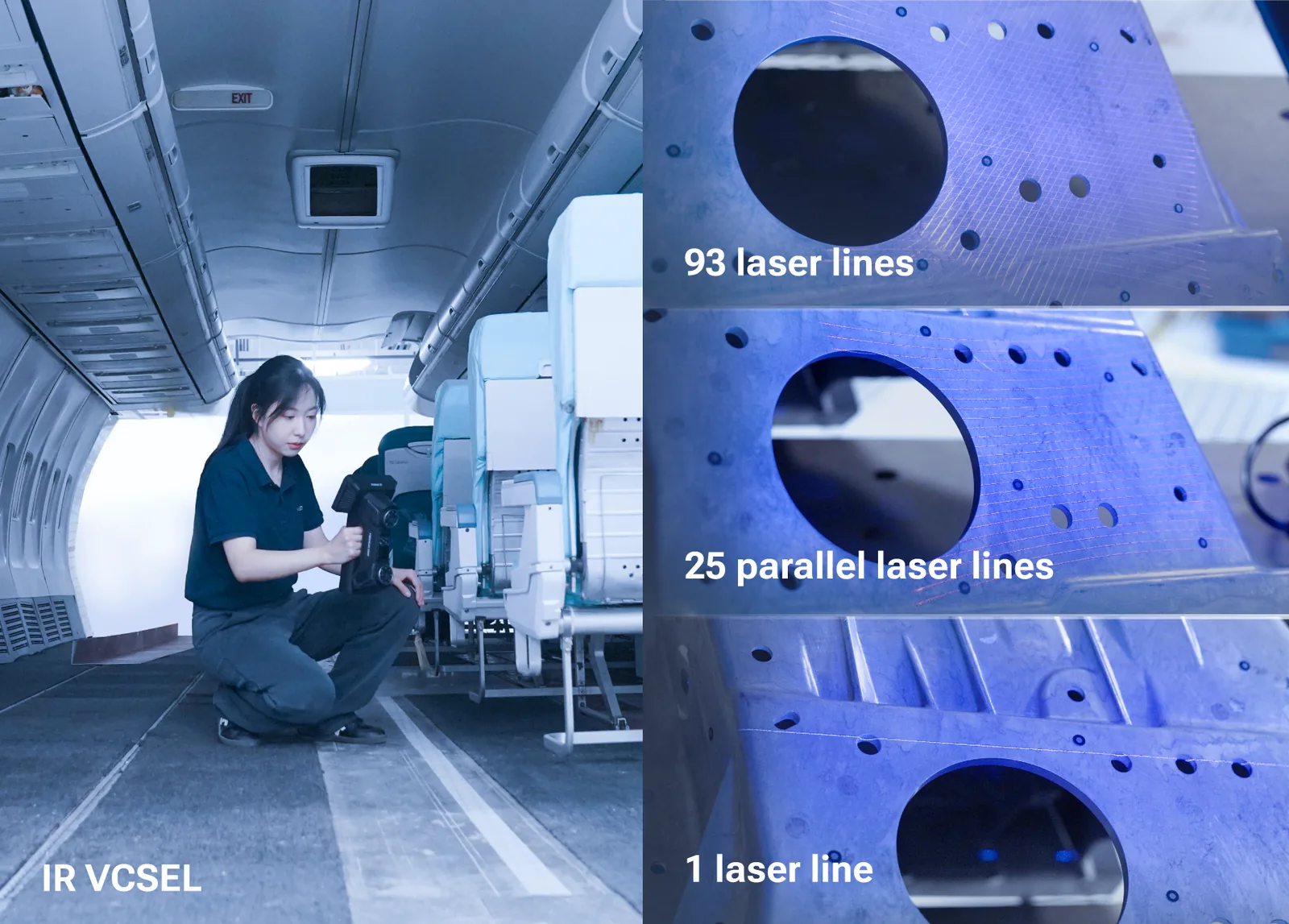
One Scanner That Adapts to the Part
The Omni pairs a blue-laser engine with IR VCSEL technology and switches between modes on demand: 93 laser lines for high-speed area capture, 25 parallel lines for fine detail, and a single line for deep pockets and hard-to-reach features — with resolution from 0.01 to 10 mm.
Different features need different light. Wide, open surfaces are fastest with the 93-line high-speed mode; tight tolerances and crisp edges want the 25-line detail mode; and a single laser line reaches into deep pockets, bores, and channels that multi-line projection can’t see cleanly. The IR VCSEL engine adds a fast, wide capture path for getting global form quickly, while blue-laser light stays stable on dark, shiny, and reflective industrial surfaces that defeat structured-light systems. The result is one device that covers everything from a polished turbine blade to a matte casting without changing hardware — you change modes, not scanners.
7,619,000 Points Per Second.
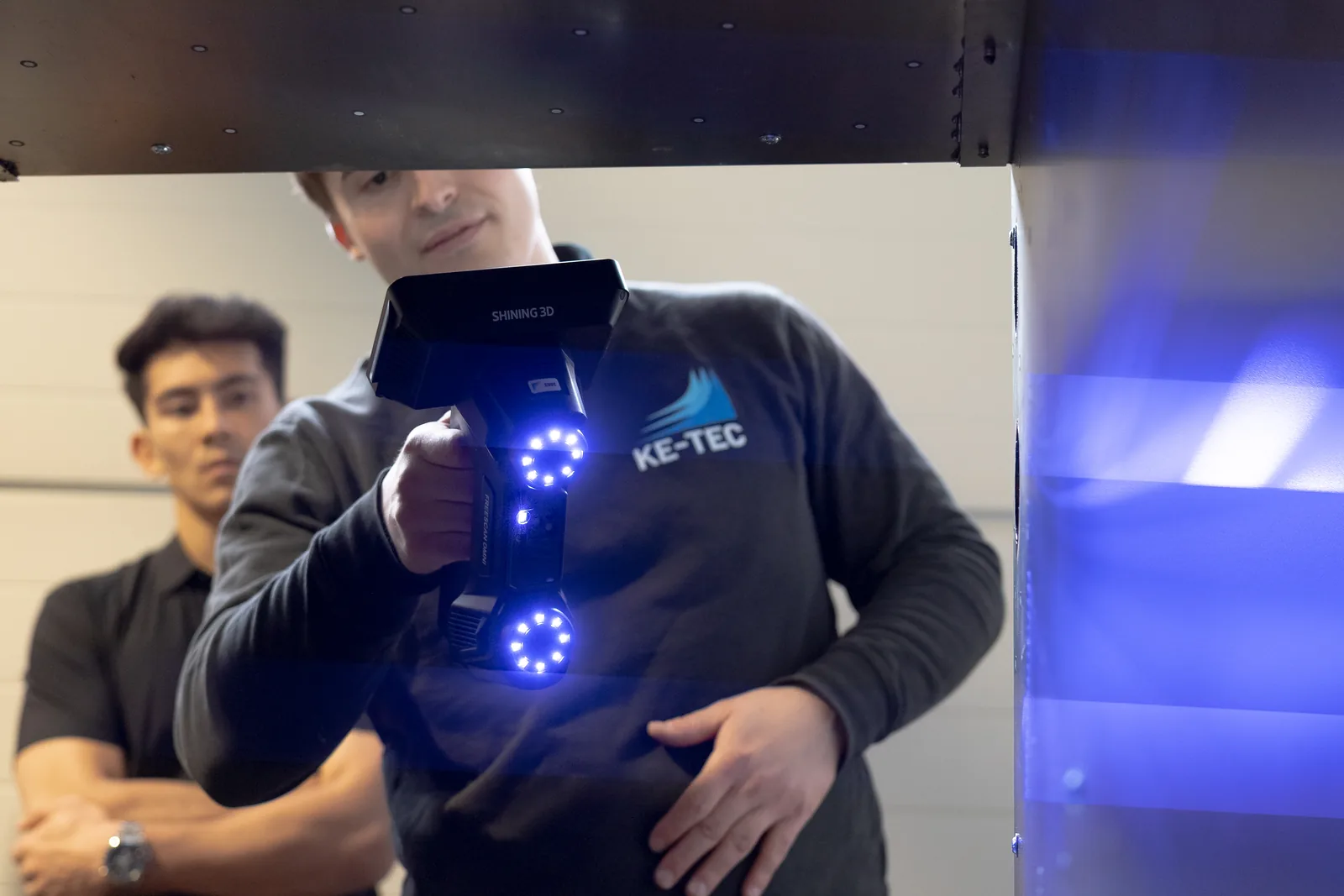
Capture That Keeps Up With the Job
With up to 7,619,000 points per second across its multi-line modes, the Omni digitizes parts fast enough that capture is never the bottleneck — you spend your time inspecting, not waiting on a point cloud.
Speed in a handheld metrology scanner is about throughput, not bragging rights: the faster the device builds a complete, clean mesh, the more parts an inspector clears in a shift and the less an operator’s hand fatigue affects data quality. The Omni’s high acquisition rate, combined with mode-switching and a wide capture field, means a casting or panel is fully digitized in a sweep or two rather than a long grid of overlapping passes — fewer seams to align, less drift, and a faster path to a report. On a production inspection line, that difference is measured in parts per hour.
Dock It. It Charges and Backs Up Your Data Automatically.
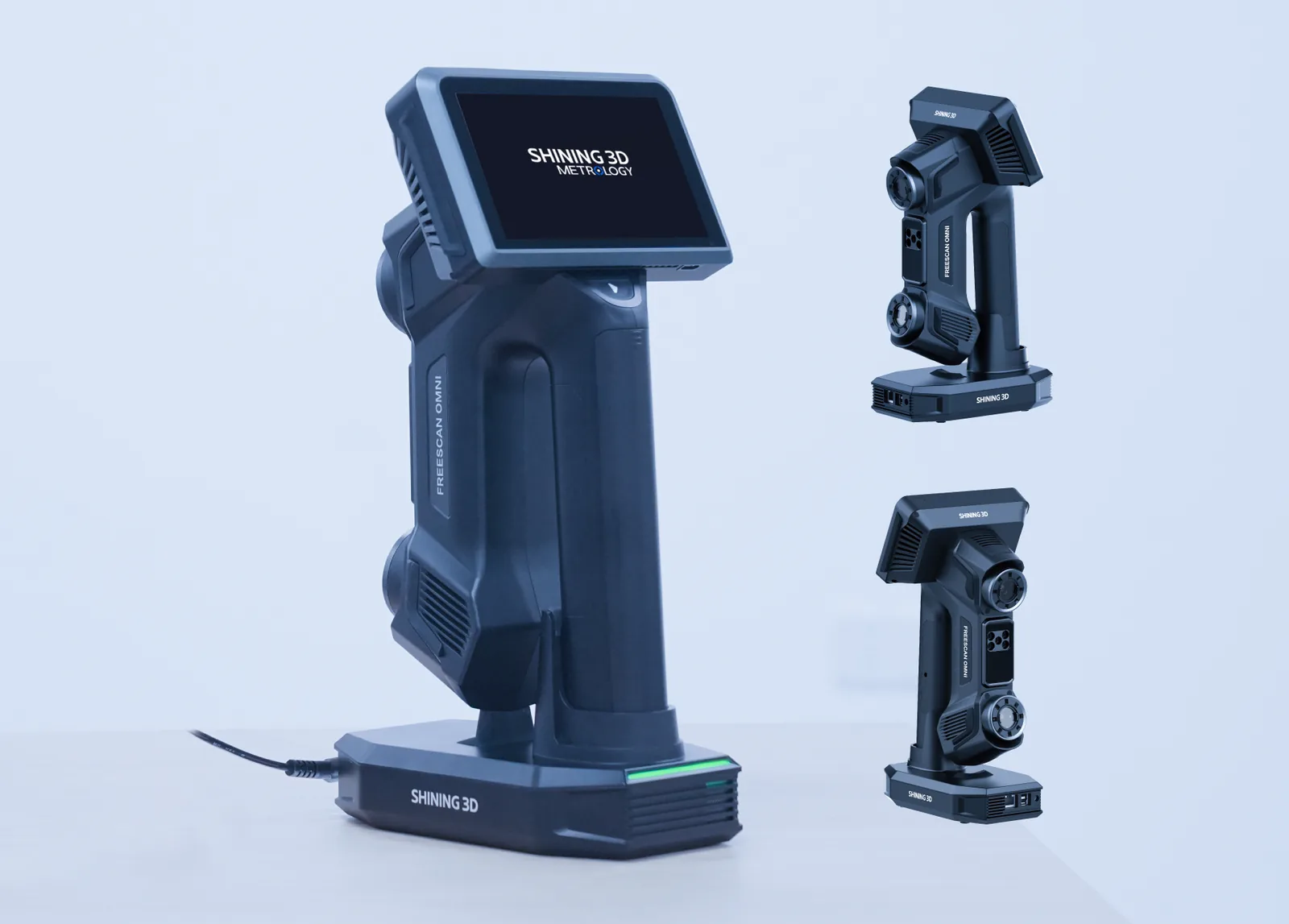
Charge and Sync — No Cables, No USB
The Smart Dock does two jobs at once: it charges the battery and backs up every scan and inspection report over Wi-Fi to the connected workstation. The moment you set the scanner down, transfer begins automatically — no USB cable, no manual copy step, no driver to install.
A standalone scanner only works if getting data off it is effortless, and the Smart Dock is the piece that closes that loop. Reports and scans created on the device land on your network the instant the Omni is docked, so a quality engineer at a desk has the technician’s results without anyone moving a file by hand. Paired with hot-swappable batteries — eight cells in the kit, four in use at a time, about an hour of continuous scanning per set — an operator simply rotates batteries and keeps working while docked cells charge and sync. It is a workflow designed so the hardware never makes you stop.
AI Finds the Features. VPG Drops the Markers.
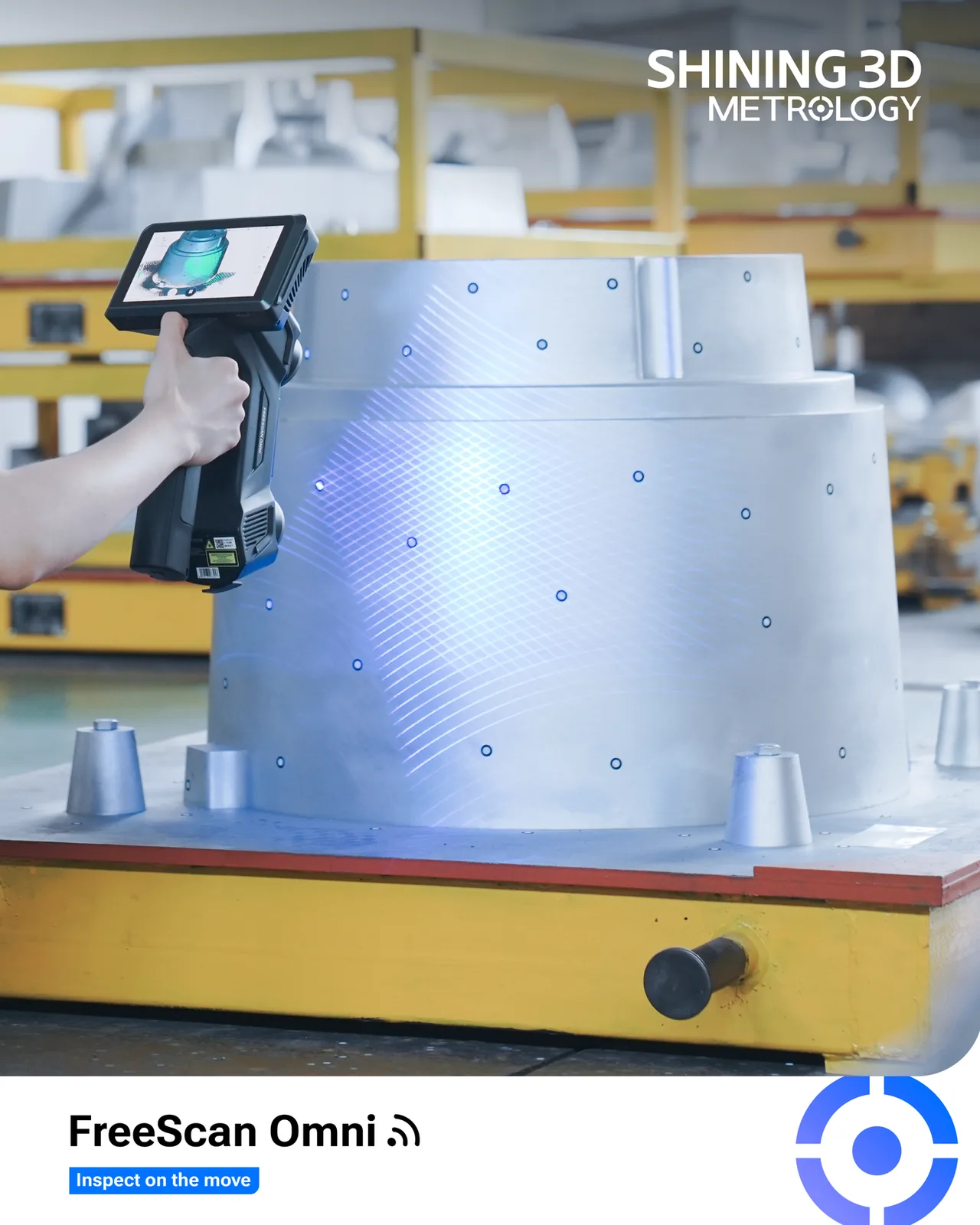
Faster Measurement, Less Setup
Onboard AI Feature Recognition automatically identifies and measures holes, slots, and other standard features, so routine GD&T checks take seconds instead of manual selection. Integrated Video Photogrammetry holds global accuracy on larger parts without sticking a single coded target.
Two technologies do the unglamorous work that usually slows inspection down. AI Feature Recognition reads common geometry — bores, slots, edges — and snaps measurements to them, which removes the click-by-click feature selection that eats an inspector’s time and introduces operator variation. Video Photogrammetry, meanwhile, builds the global reference frame from the scanner’s own video stream rather than from coded targets stuck across the part, so large-part accuracy no longer costs an hour of taping and untaping before you can start. Together they shrink both the setup at the front of a scan and the analysis at the back — the two places handheld inspection normally loses time.
Inspect On-Device, or Export to the Whole Industry Stack.
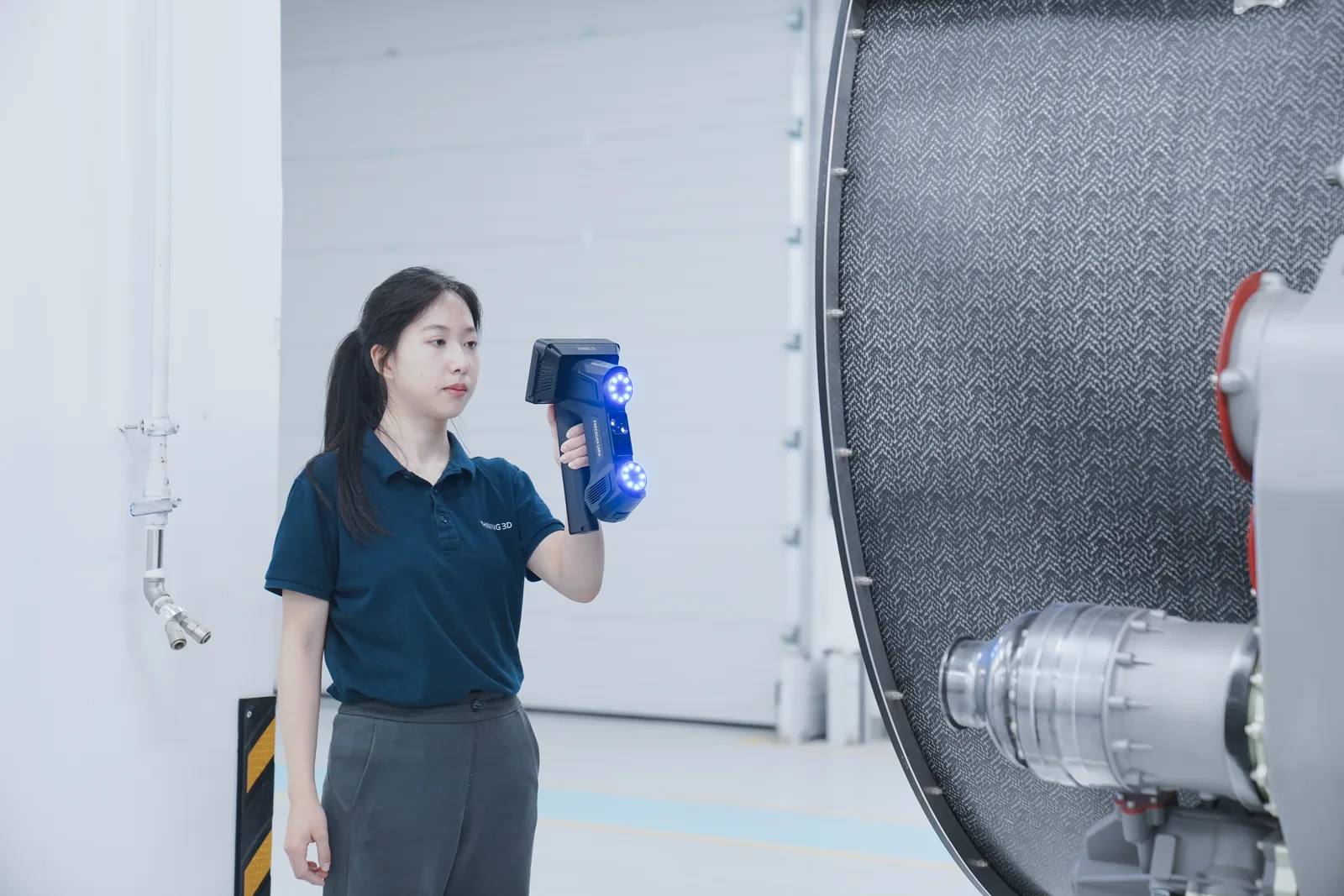
Run GD&T inspection onboard in SHINING 3D Inspect, or export to dimensional-inspection software for part-to-CAD analysis and reverse-engineering tools for scan-to-CAD — no proprietary lock-in.
Certified Geometry Into Every Downstream Tool
The Omni exports STL, OBJ, PLY, ASC, and 3MF — straight into Geomagic Design X, PolyWorks Inspector, Geomagic Control X, EXModel Pro, and SHINING 3D Inspect. Onboard reporting for the floor, full-power desktop analysis when you need it.
Aerospace, Automotive, Energy, MRO, and the QA Lab.
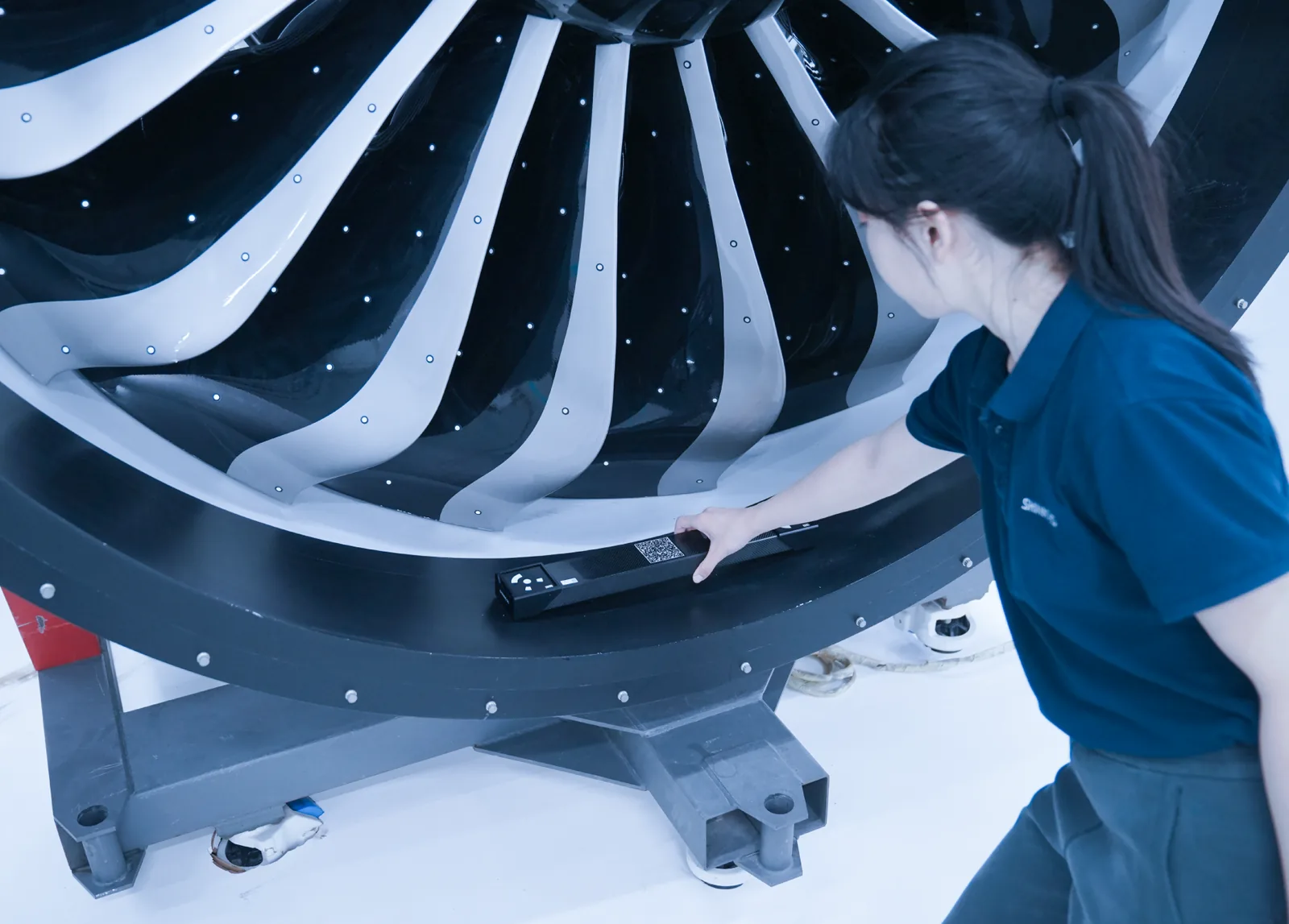
One standalone scanner covers first-article and production inspection, reverse engineering, and MRO — from aerospace structures and turbine hardware to automotive body and powertrain, castings, and field service.
From a Turbine Blade to a Body-in-White
The 0.02 mm accuracy, dual optical engine, and onboard inspection cover dimensional QA, reverse engineering, and MRO across high-value parts — turbine and engine hardware, automotive panels and powertrain, castings and weldments, and field inspection where the part can’t come to a CMM. Inspect at the machine, on the line, or in the field, then sync the report the moment you dock.
A Modular Series, a Proven Engine, US Support Behind It.
Omni or Omni Lite — Grow Into Inspection
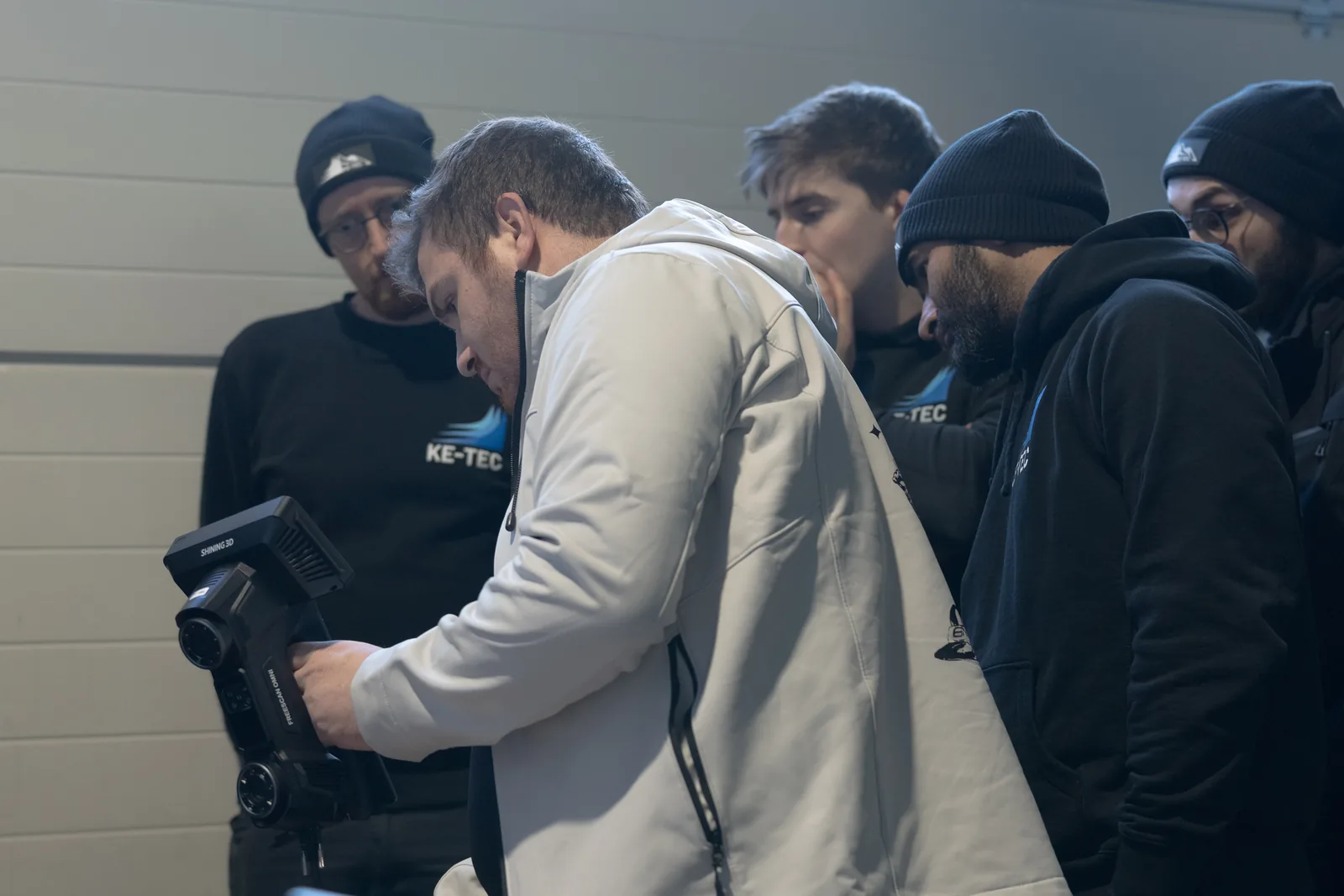
The FreeScan Omni ships with onboard SHINING 3D Inspect built in. The Omni Lite shares the same certified accuracy and scanning hardware, with the inspection module available as an optional upgrade — so you can start with capture and add on-device inspection when you need it, without changing scanners.
Both models run the FreeScan optical engine and software, so an operator or QA owner who learns one knows the other. Rev1 helps you choose between Omni and Omni Lite during application review — matching the inspection workflow, accuracy class, and software seats to how your team actually works — and supports the system for its working life. Pre-sale application review, calibration verification, software integration, and operator training are delivered from Auburn Hills, Michigan by a factory-trained team; warranty service routes through authorized channels, never a grey-market importer.
FreeScan Omni vs. the Handheld Metrology Field
How the Omni compares against recognized handheld metrology laser scanners on the capabilities that decide an inspection purchase — on-device inspection, dual optical engine, and certified accuracy.
| Capability | FreeScan Omni | Creaform HandySCAN BLACK | Scantech KSCAN-Magic | Peel 3 / CAD |
|---|---|---|---|---|
| Onboard standalone inspection | Yes — no laptop | No (tethered PC) | No (tethered PC) | No (tethered PC) |
| Onboard touchscreen | 5.5″ built-in | None | None | None |
| Optical engine | Blue laser + IR VCSEL | Blue laser | Blue laser | Structured light |
| Laser lines (max) | 93 | ~11 (28 w/ extra) | ~51 | n/a |
| Single-point accuracy | 0.02 mm | 0.025 mm | Up to 0.020 mm | 0.050 mm |
| Markerless photogrammetry | Yes — integrated VPG | Targets required | Photogrammetry add-on | Targets required |
| Pricing (est. street) | From ~$812/mo (OAC) | ~$50,000+ (quote) | ~$45,000+ (quote) | ~$10,000 |
Rev1 pricing is shown as an estimated monthly payment (OAC); request a quote for full system pricing. Competitor figures are approximate, compiled from publicly available manufacturer information, and vary by configuration and region. The Omni’s defining advantage is standalone, on-device GD&T inspection at a 0.02 mm accuracy class — a workflow tethered scanners cannot match. For the largest assets and widest fields of view, compare the wireless wide-FOV FreeScan UE Nova or the dynamic-tracking FreeScan Trak Nova. Confirm current specifications with each manufacturer.
SHINING 3D FreeScan Omni Technical Data
RESOURCES
Downloads & Technical Support
Documentation, software, and Rev1 support for the FreeScan Omni. Explore all Rev1 3D software, or book a live scan demo.
WHY REV1 TECH
Authorized SHINING 3D Reseller. Metrology & RE Specialists.
Rev1 Technologies is an authorized SHINING 3D FreeScan partner headquartered in Auburn Hills, MI, with direct expertise in 3D scanning, reverse engineering, and dimensional inspection workflows.
Rev1 serves manufacturers, QA labs, fabricators, and field-service teams across the USA. We don’t just ship boxes — we validate the application, set up the inspection workflow, train operators, and support the scanner for its working life.