Key Specs
Accuracy0.005 mm
FOV Large430×300 mm
FOV Small160×110 mm
Shot Time<1 second
Light SourceBlue LED
Pricing
Contact for Quote
Q9 ~$34,999 · Q12 ~$39,999. Rev1 delivers a complete proposal within 1 business day.
0.005 mm Dual Range MSF Robot-Ready
High-Precision 3D Inspection Scanner · Fixed Blue LED Structured Light
SHINING 3D Metrology

OptimScan
Q Series

0.005 mm accuracy · dual scan range 430×300 / 160×110 mm · 4 high-res cameras · <1s per shot · Monocular-Stereo Fusion · markerless · robot integration · ISO 10360-13 certified
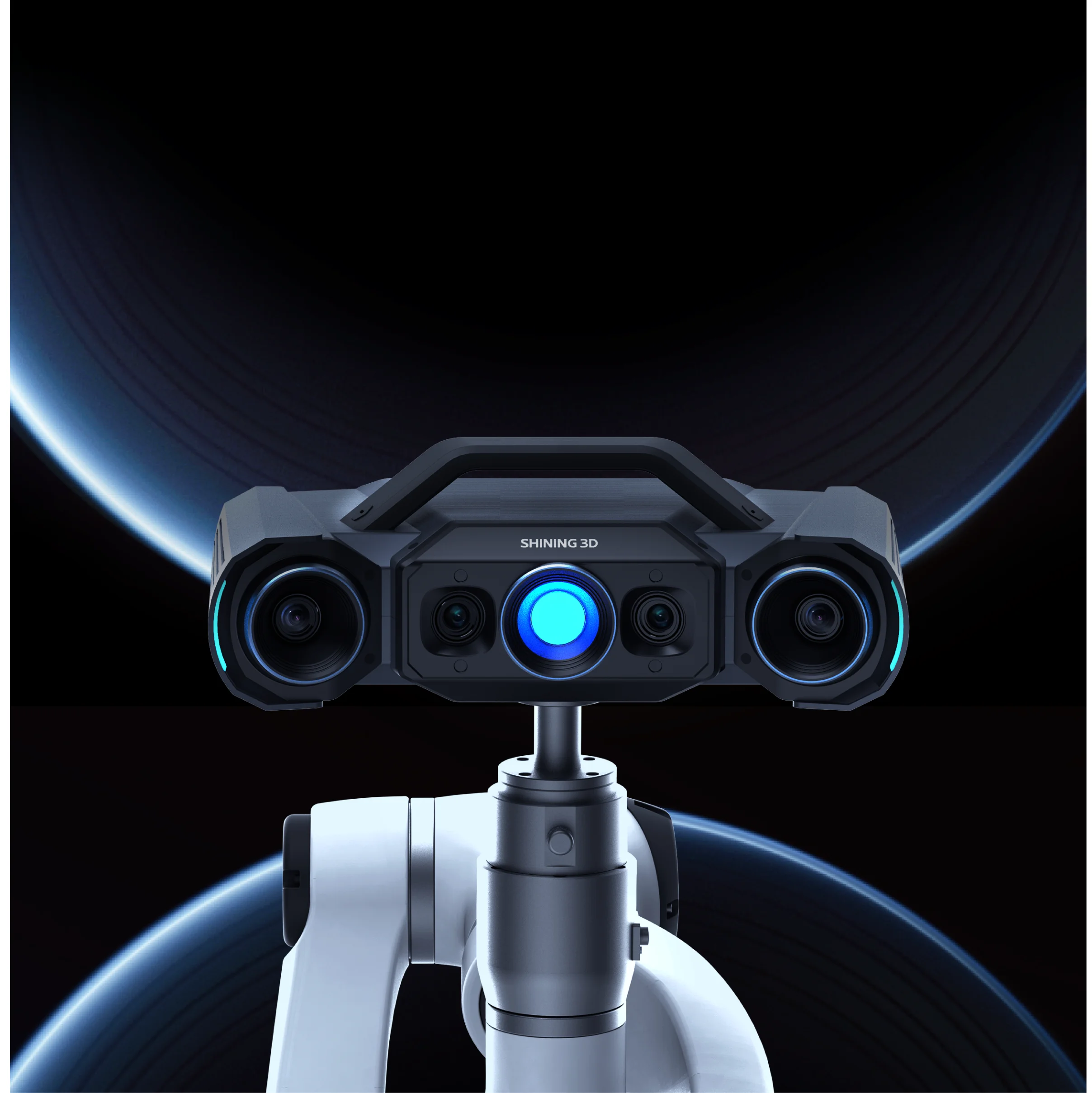
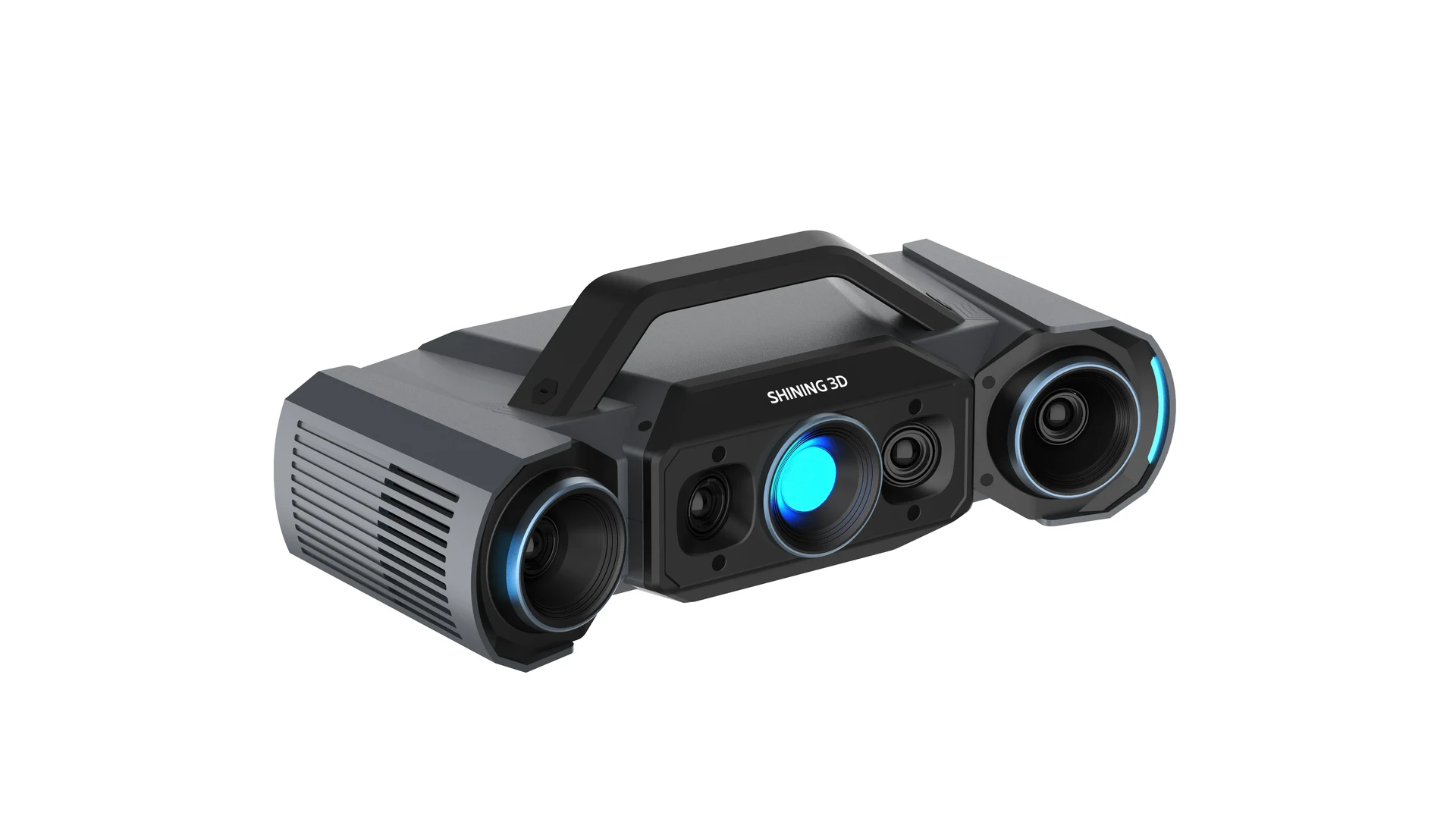
SHINING 3D OptimScan Q12 — high-precision blue LED 3D inspection scanner
Choose Your Model

OptimScan Q12 — Flagship · OptimScan Q9 — High Value

Flagship
OptimScan Q12
4 × 12.3MP Cameras
The flagship Q Series model, equipped with four 12.3-megapixel cameras for maximum geometric detail capture across complex industrial surface features. Same 0.005 mm accuracy and dual scan range as Q9, with higher camera resolution enabling finer point distance in small range mode (0.04 mm vs 0.05 mm). Best for the most demanding precision inspection applications — aerospace components, fine connector geometry, tight-tolerance machined parts, and mold surface analysis where maximum data density is critical.
4 × 12.3MP cameras — highest resolution
Small range point distance: 0.04 mm
0.005 mm accuracy · ISO 10360-13
High Value
OptimScan Q9
4 × 9MP Cameras
Same core technology platform as Q12 — same 0.005 mm accuracy, same dual scan range, same Monocular-Stereo Fusion, same <1s shot speed, same robot integration capability. Equipped with four 9-megapixel cameras that deliver exceptional detail capture for the majority of industrial components. The Q9 covers the same application range as Q12 while optimizing the balance between performance and value, making high-quality 3D inspection more accessible across broader project requirements.
4 × 9MP cameras — same application coverage
Small range point distance: 0.05 mm
0.005 mm accuracy · ISO 10360-13
0.005 mm
Accuracy (Small Range)
ISO 10360-13 · ISO/IEC 17025 accredited lab · both Q9 and Q12
<1 s
Per Shot
Dual-chip computing module — rapid image acquisition and data processing
4
High-Res Cameras
Q12: 4×12.3MP · Q9: 4×9MP — captures geometrically intricate features
Core Capabilities

0.005 mm · Dual Range · MSF · Multi-Exposure · Versatile · Automated

Reliable High Performance — 4 Cameras · 0.005 mm
Four High-Resolution Cameras. 0.005 mm Accuracy. ISO 10360-13 Certified.

Equipped with four high-resolution cameras — 12.3MP on the Q12, 9MP on the Q9 — the OptimScan Q Series captures geometrically intricate features across complex industrial surfaces with dense, consistent data. Combined with powerful hardware modules and advanced 3D reconstruction algorithms, the systems deliver 0.005 mm accuracy in small range mode, verified in accordance with ISO 10360-13 and tested in SHINING 3D's ISO/IEC 17025-accredited Accuracy Lab. Every unit ships with a calibration certificate traceable to international metrology standards. For aerospace components, precision machined parts, connector geometry, and mold surfaces where tolerance bands are measured in microns, the Q Series delivers the data density and certified accuracy that CMM workflows demand.

0.005 mmISO 10360-134 CamerasISO/IEC 17025
OptimScan Q Series — four high-resolution cameras reliable high performance 0.005mm
OptimScan Q Series — dual scan range large 430x300mm small 160x110mm single-click switching
Dual Scan Range — One Click to Switch
Large 430×300 mm · Small 160×110 mm. No Manual Adjustment.

The Q Series features two scan ranges switchable with a single click — no manual adjustment of aperture or focal length required. Large range: 430×300 mm FOV at 590 mm working distance with 0.015 mm accuracy (Q12: 0.1 mm point distance / Q9: 0.11 mm) — for overall part coverage, large surface areas, and component-level geometry capture. Small range: 160×110 mm FOV at 210 mm working distance with 0.005 mm accuracy (Q12: 0.04 mm point distance / Q9: 0.05 mm) — for fine features, tight tolerances, and detailed inspection of critical geometry. Scanned data from both ranges fuse seamlessly in software within the same project — start with the large range for overall structure, zoom to small range for critical features, combine both datasets automatically.

430×300 mm Large160×110 mm SmallSingle-Click SwitchSeamless Data Fusion
Monocular-Stereo Fusion (MSF)
More Complete Data on Complex Geometry. Turning Corners. Joints.

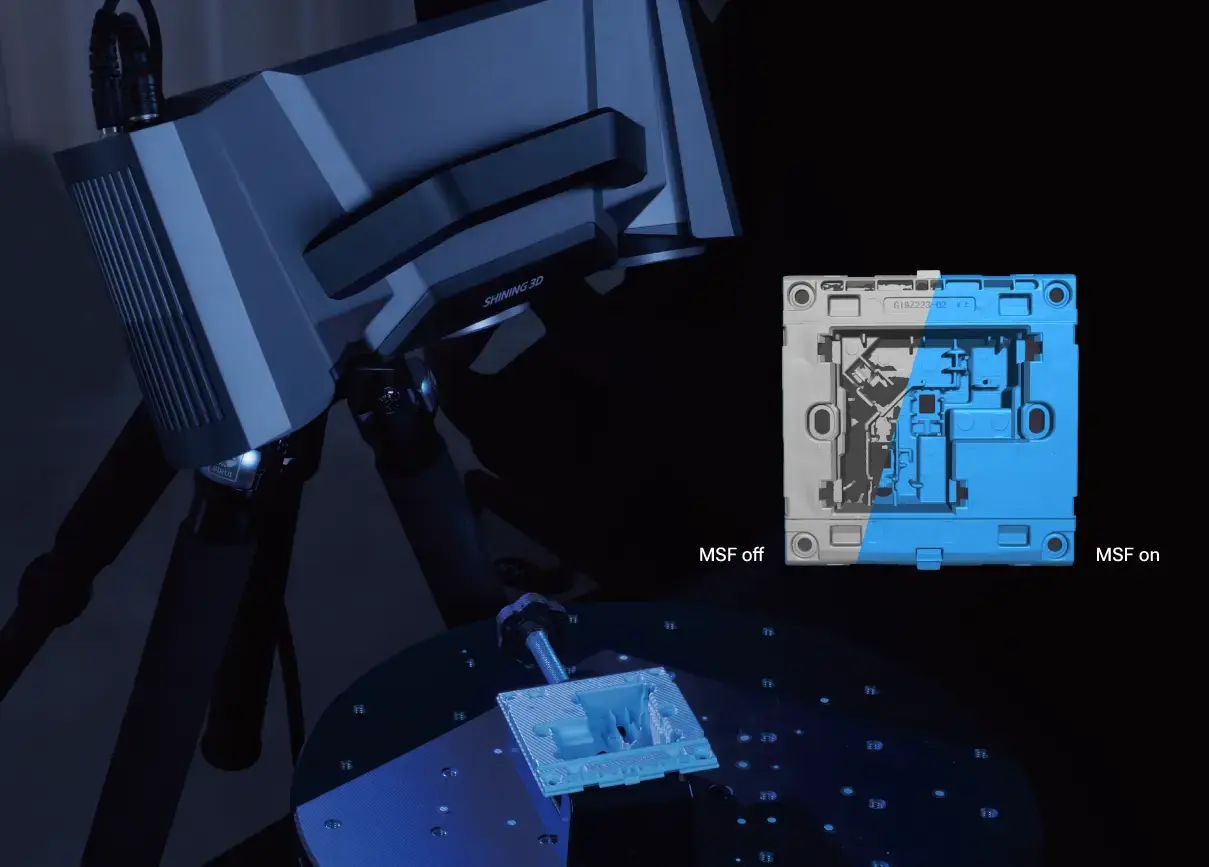
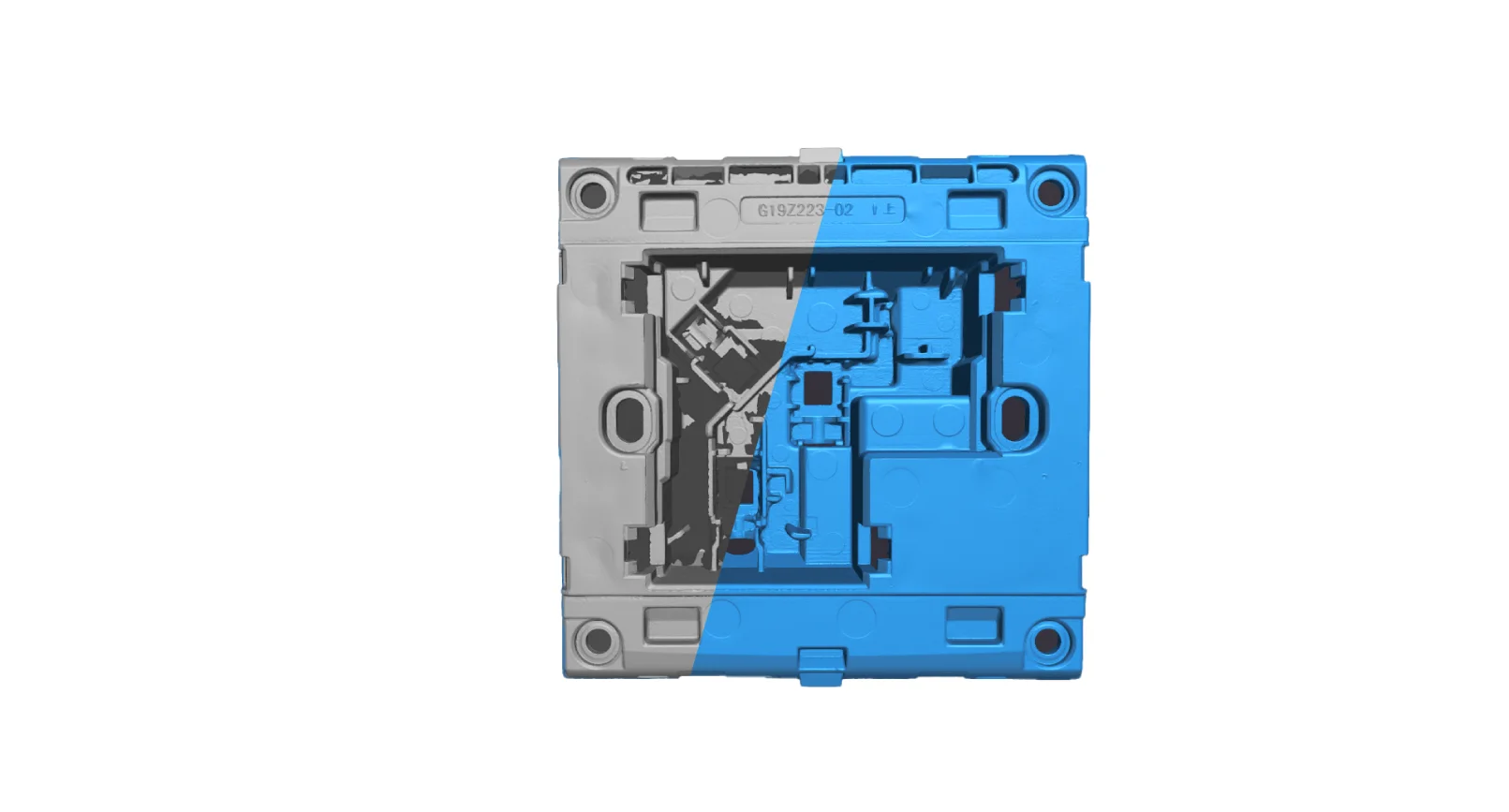
Monocular-Stereo Fusion is a proprietary data acquisition enhancement that increases coverage on geometries that challenge standard stereo structured light systems: turning corners, joints, undercuts, and surface transitions where conventional stereo occlusion creates data gaps. MSF effectively increases data coverage and improves point cloud integrity on precisely the features that tend to be problematic in production inspection workflows — connector edges, machined joint geometry, housing corners, and complex transitional surfaces. For parts where complete surface coverage in fewer setups is a requirement, MSF reduces the number of scan positions needed to achieve gap-free data.

Turning CornersJointsMore CoverageFewer Setups
OptimScan Q Series — Monocular-Stereo Fusion MSF turning corners joints data coverage
OptimScan Q Series — multiple exposure modes auto exposure less than 1 second per shot dual-chip computing
Multiple Exposure · <1 s Per Shot · Dual-Chip Computing
Intelligent Auto Exposure. Every Shot Under 1 Second.

Powered by a built-in dual-chip computing module, the Q Series delivers rapid image acquisition and efficient data processing — each shot completes in under 1 second, capturing a dense set of high-resolution data points with exceptional precision. Multiple exposure modes are supported, including intelligent automatic exposure that automatically optimizes settings across a wide range of surface conditions — dark materials, shiny surfaces, mixed surface types — significantly reducing per-part scan time while ensuring optimal results without manual adjustment. For production inspection environments where throughput matters, the combination of <1s shot speed and intelligent exposure eliminates two of the most common sources of scan delay: computation wait time and surface-specific manual exposure tuning.

<1s Per ShotAuto ExposureDual-Chip ModuleAll Surface Types
Versatile & Highly Adaptable
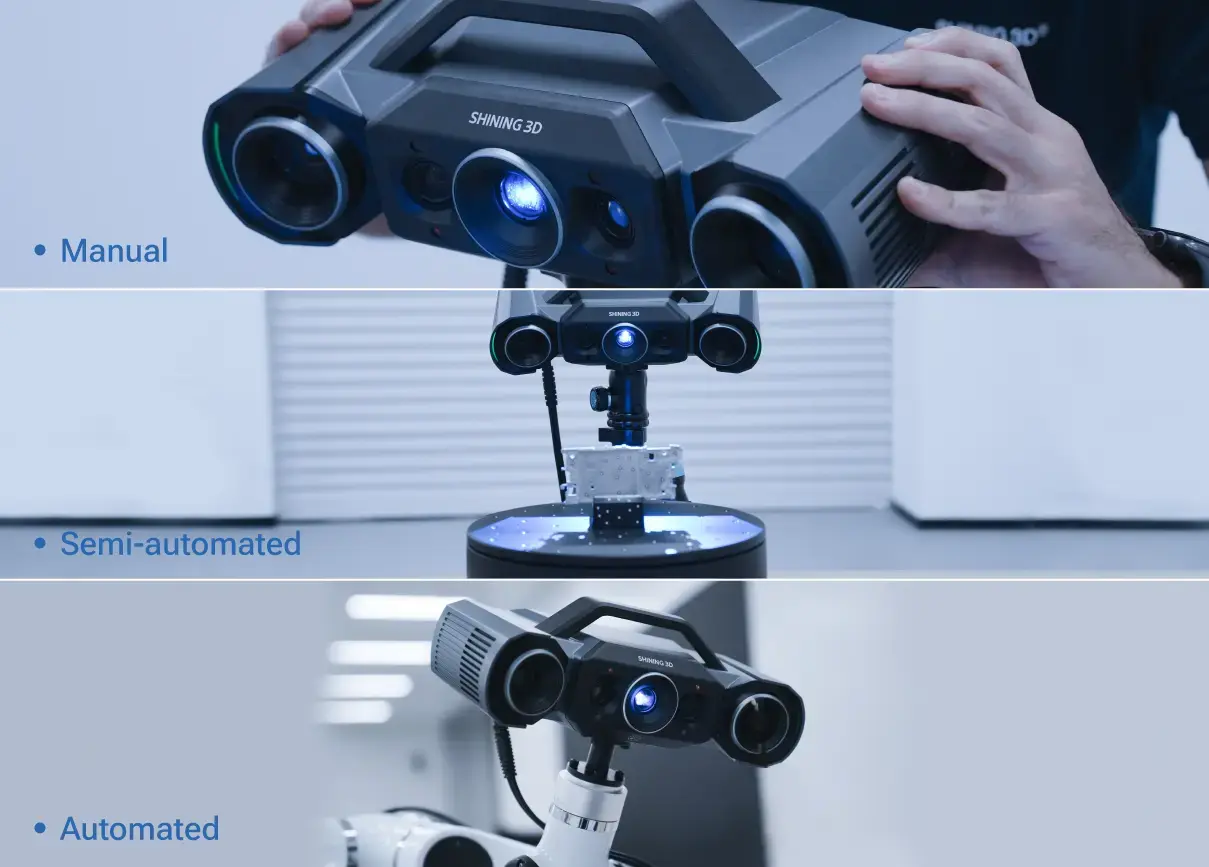
Manual · Tripod + Turntable · Robot. Same Scanner, Three Modes.

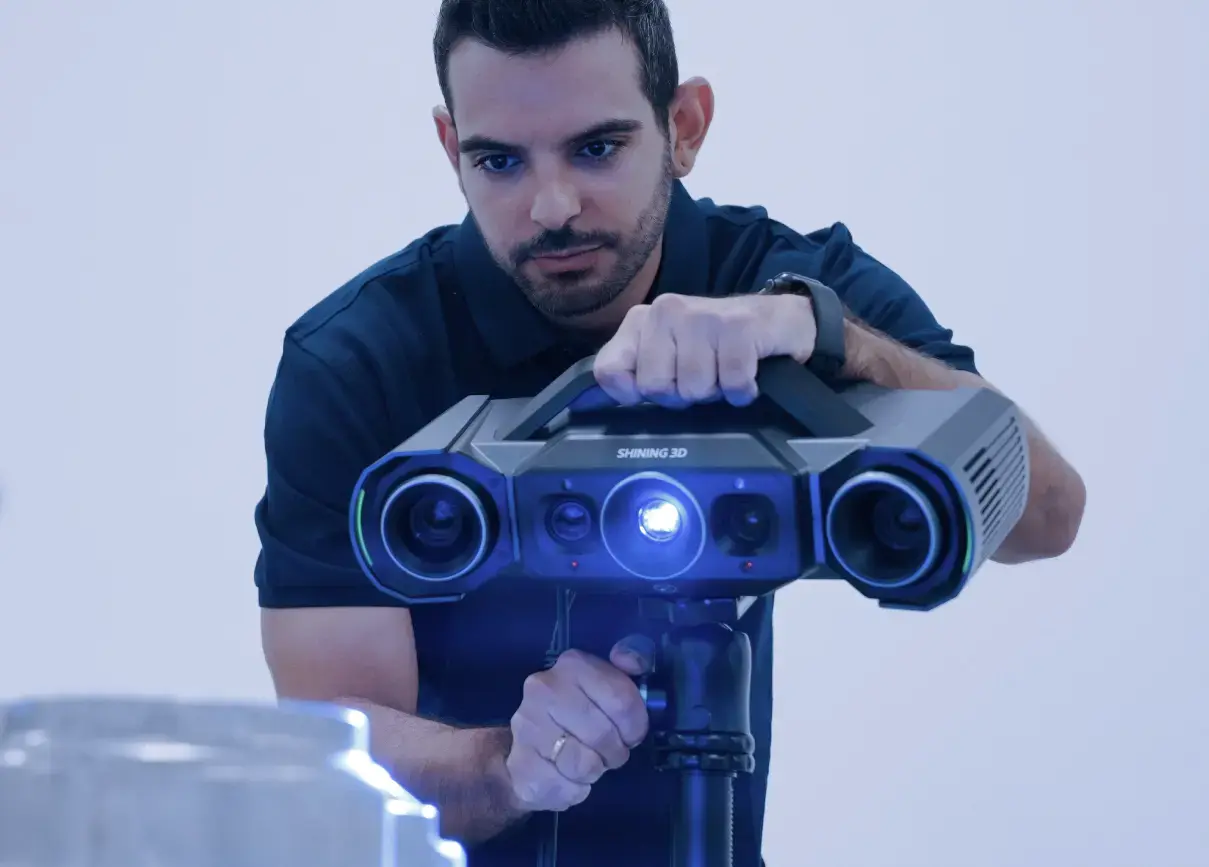
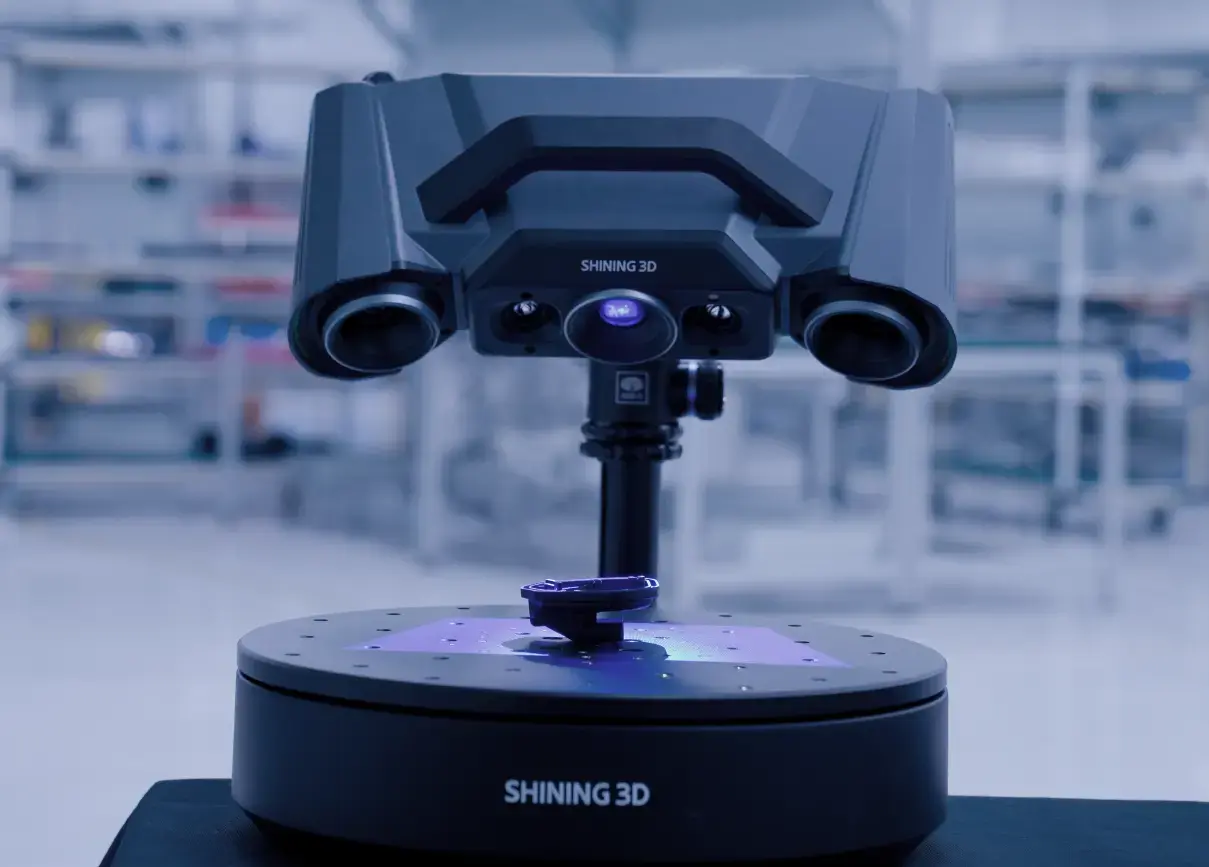
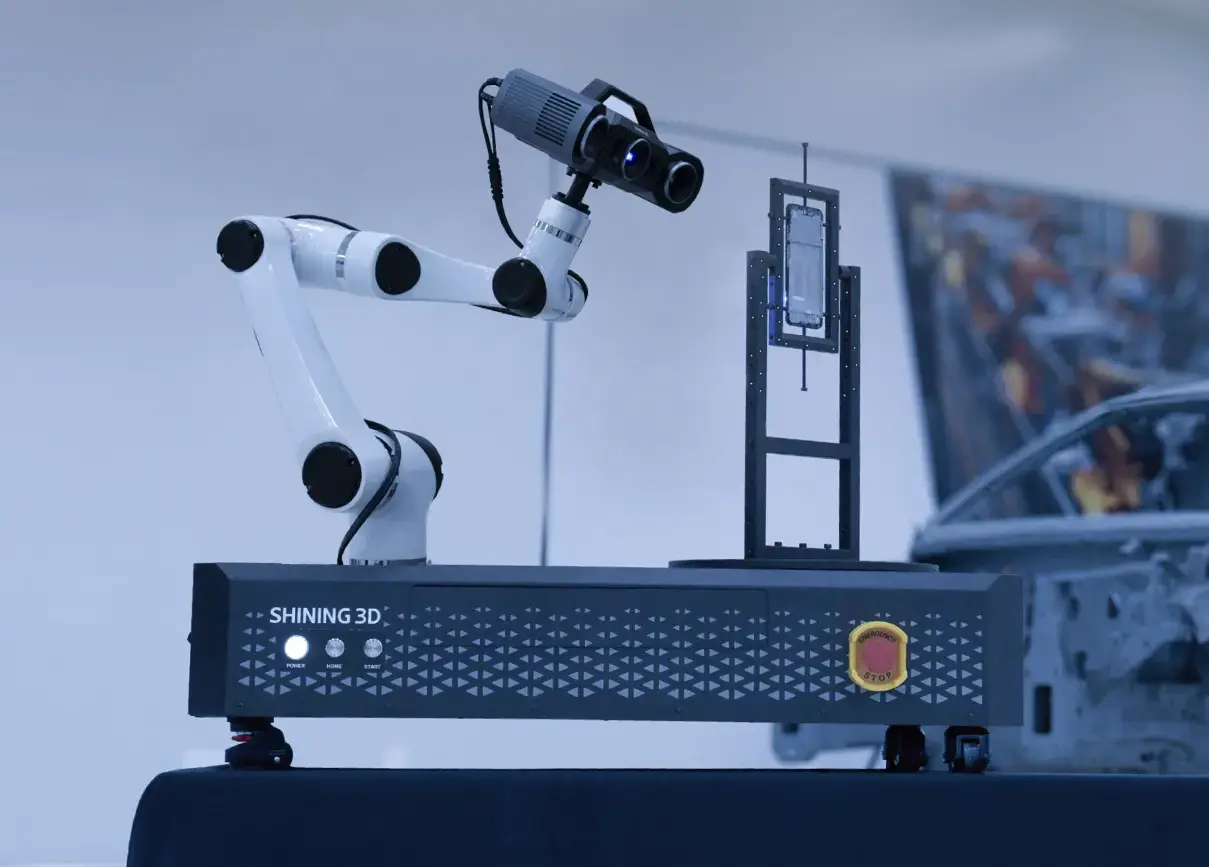
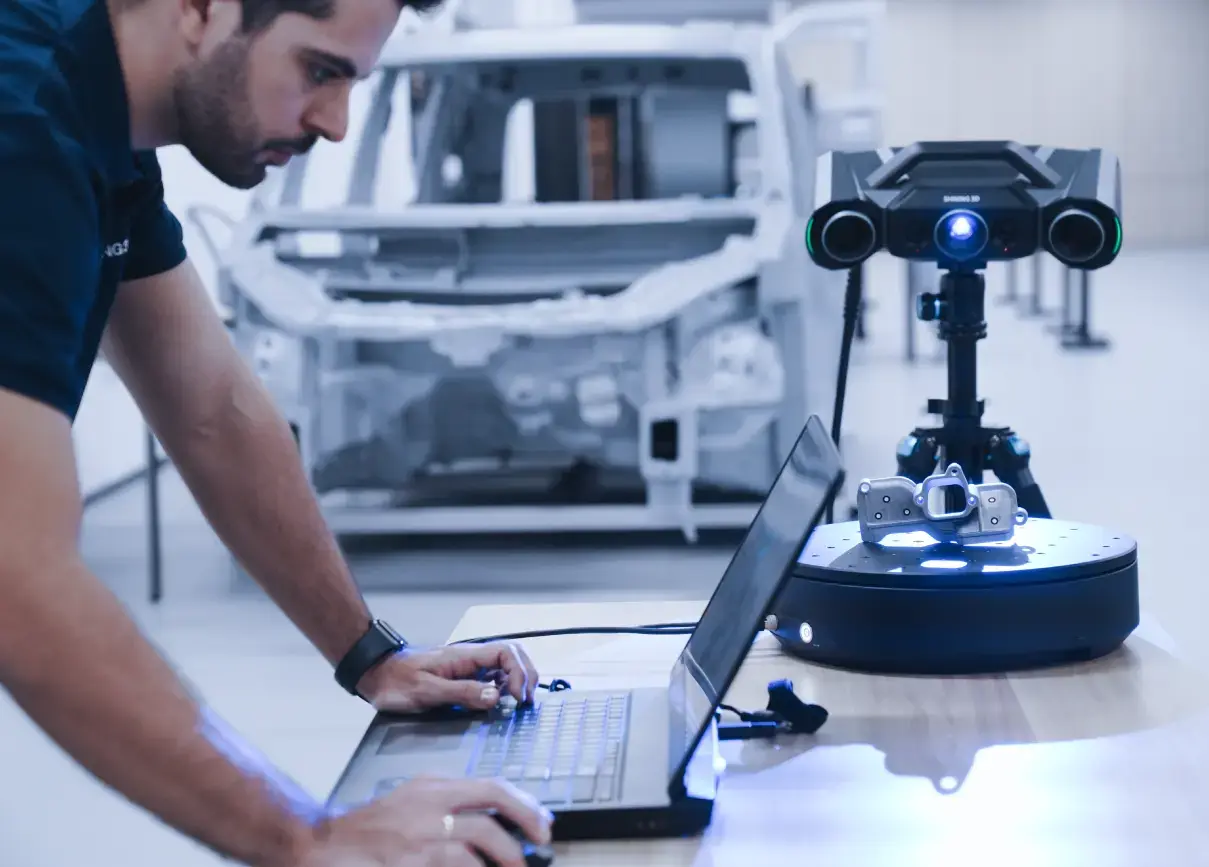
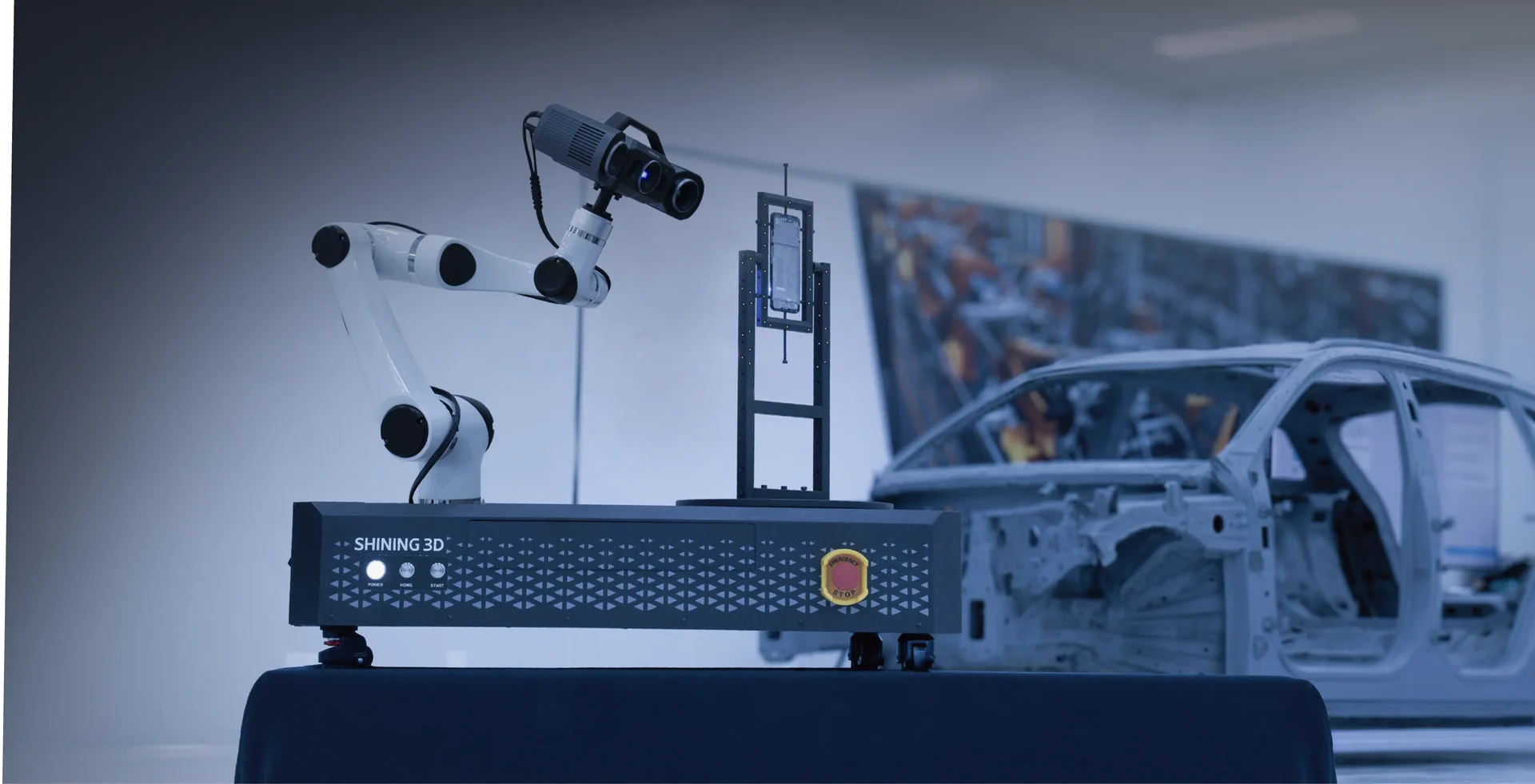
The Q Series operates across three deployment modes with the same hardware. Manual: handheld operation for flexible scanning of individual parts in any orientation — compact and lightweight enough at 3.5 kg for sustained manual use. Semi-automated: fixed on a tripod and paired with an automatic turntable (up to 20 kg part load) for consistent multi-angle capture with increased throughput and scan-to-scan repeatability. Fully automated: integrated with a robotic arm for precise, programmed inspection of production parts — path teaching, automated 3D measurement, automated inspection, automated report generation. The robot integration enables fully lights-out inspection workflows for high-volume production environments.

ManualTripod + TurntableRobot Integration3.5 kg
OptimScan Q Series — versatile adaptable manual tripod turntable robot integration flexible deployment
OptimScan Q Series — automated inspection solution path teaching robot 3D measurement report generation
Automated Inspection Solution
Path Teaching → Automated Scan → Automated Inspect → Automated Report.

Integrated with an intelligent 3D inspection system, the Q Series enables a fully automated workflow from scan to report generation — no operator involvement at any step after path teaching. Step 1: Path Teaching — program the robot scan positions for the specific part geometry. Step 2: Automated 3D Measurement — robot executes the scan sequence, Q Series captures data at each position. Step 3: Automated 3D Inspection — data automatically aligned to CAD, GD&T analysis executed via SHINING 3D Inspect. Step 4: Automated Report Generation — inspection report generated without operator intervention. For high-volume production inspection where consistent throughput and zero operator variability are requirements, this four-step automated workflow represents the production-floor deployment model for the Q Series.

Path TeachingAuto ScanAuto InspectAuto Report
Why OptimScan Q Series

Three Reasons the Q Series Stands Out in Fixed Inspection

0.005 mm — The Accuracy Required for Precision Aerospace and Electronics Inspection
Most handheld metrology scanners operate in the 0.015–0.02 mm accuracy range. The Q Series achieves 0.005 mm in small range mode — three to four times more accurate — enabling inspection of tolerance bands that handheld systems cannot reliably resolve. For aerospace turbine blades, electronic connector pin geometry, precision mold surfaces, and semiconductor packaging inspection, 0.005 mm accuracy bridges the gap between handheld 3D scanning and coordinate measuring machines. With ISO 10360-13 certification and ISO/IEC 17025 laboratory traceability, the Q Series produces inspection results with the documentation chain required by regulated manufacturing environments.
Dual Range + MSF — Complete Data on Every Scan, Fewer Setups
Two scan ranges in one scanner, switchable with a single click. Large range for overall part coverage; small range for critical feature detail — same part, same project, no scanner swap. Monocular-Stereo Fusion then fills in the data gaps that dual-range structured light systems still leave on turning corners and joints. The combination means fewer manual repositions per part, more complete point clouds per scan session, and less post-processing time patching data gaps. For complex parts with both large structural geometry and fine feature requirements — aerospace housings, automotive transmission components, consumer electronics enclosures — this is the configuration that reduces total inspection time-per-part most effectively.
Robot-Ready Automation — Scale from Manual to Lights-Out Production Inspection
The Q Series doesn't require a separate robot-optimized hardware variant — the same scanner used for manual inspection integrates directly with robotic arms for automated production inspection. Start with manual scanning for prototype and first-article work; move to tripod and turntable for semi-automated lab inspection; integrate with a robot for fully automated in-line inspection — same hardware at every stage. For manufacturers whose 3D inspection volume is growing and whose production environments are evolving toward automation, this scalability means the initial investment in Q Series hardware supports the entire maturity curve of a 3D inspection deployment.
Model Comparison

OptimScan Q12 vs Q9 — What's Different

SpecificationOptimScan Q12OptimScan Q9
Camera Resolution4 × 12.3MP4 × 9MP
Accuracy (Small Range)0.005 mm0.005 mm
Accuracy (Large Range)0.015 mm0.015 mm
Point Distance — Small0.04 mm0.05 mm
Point Distance — Large0.1 mm0.11 mm
FOV (both ranges)430×300 mm / 160×110 mm430×300 mm / 160×110 mm
Working Distance590 mm (large) / 210 mm (small)590 mm (large) / 210 mm (small)
Shot Time<1 second<1 second
MSFYesYes
Robot IntegrationYesYes
CertificationISO 10360-13 · ISO/IEC 17025ISO 10360-13 · ISO/IEC 17025
Best ForMaximum data density, finest features, aerospace/connector precision inspectionExcellent detail for most industrial applications at better value

Both models share the same core platform, accuracy, scan ranges, MSF, and robot integration. Q12 provides higher camera resolution and finer point distance for the most demanding precision applications. Q9 delivers the same application coverage at better value. Rev1 will help you identify which model matches your tightest tolerance requirements.

Competitive Landscape

OptimScan Q Series vs ZEISS ATOS Q vs GOM Scan 1

SpecificationOptimScan Q12ZEISS ATOS Q 12MGOM Scan 1
Accuracy0.005 mm (small range)Comparable — traceable per VDI/VDE 2634Comparable — VDI/VDE 2634
Camera Resolution4 × 12.3MP2 × 12MP (Triple Scan = 3-in-1)Not publicly specified
Scan Ranges2 built-in (single click)Multiple — interchangeable lenses required3 measuring areas (lens swap)
Lens Swap RequiredNo — dual range built-inYes — physical lens change per volumeYes — physical lens change
Monocular-Stereo FusionYes — MSF proprietaryTriple Scan Principle (3-view)Standard stereo
Robot IntegrationYesYes — ATOS ScanBox / ScanCobot ecosystemYes — ScanCobot compatible
Software IncludedSHINING 3D Inspect (PTB-certified) · includedZEISS INSPECT — industry standard, additional costZEISS INSPECT — additional cost
Weight3.5 kg4 kgApprox. 1.4 kg (sensor only)
Shot Speed<1 secondHigh-speed — comparableHigh-speed — comparable
Markerless ScanningYesYes — No reference points needed (best-fit)Yes
Entry Price (est.)~$34,999 (Q9) · ~$39,999 (Q12)$80,000–$150,000+$30,000–$60,000+
Ecosystem Lock-inOpen — PolyWorks, Geomagic, GD&T any softwareZEISS INSPECT ecosystemZEISS INSPECT ecosystem
U.S. SupportRev1 Technologies — local, direct lineZEISS dealer networkZEISS dealer network

Competitor specs from publicly available sources. ZEISS ATOS Q pricing estimated from dealer listings — contact for current quote. OptimScan Q Series pricing from Rev1 Technologies. Rev1 can demo OptimScan Q Series against any competitor on your specific parts.

The Key Differentiator
Dual Range Without a Lens Swap — at Half the ATOS Q Price

The ZEISS ATOS Q requires a physical lens change to switch between measuring volumes — a manual, time-consuming step that introduces calibration variability and adds friction to mixed-part workflows. OptimScan Q Series switches between its large (430×300 mm) and small (160×110 mm) scan ranges in a single software click, with no hardware change and no recalibration. Both ranges are pre-calibrated and available instantly. For inspection workflows that regularly switch between part sizes or between overall geometry and fine feature capture on the same part, this is a material operational advantage. SHINING 3D Inspect is also PTB-certified and included — the ZEISS equivalent (ZEISS INSPECT) is separately licensed. The Q Series delivers comparable blue LED structured light accuracy at roughly one-third the total system cost.

Your Authorized Partner

Why Buy the OptimScan Q Series Through Rev1 Technologies

Sold & Supported By
Authorized Metrology Partner
01
Authorized SHINING 3D Metrology Partner
Every Q Series system sold by Rev1 carries full manufacturer warranty and direct SHINING 3D engineering support. Authorized U.S. reseller — not grey-market.
02
On-Site Installation & Calibration
Rev1 handles scanner calibration, software installation, SHINING 3D Inspect setup, dual scan range verification on your specific part families, and hands-on operator training at your facility.
03
Free Demo on Your Parts
Send Rev1 your most geometrically complex production parts. We'll run a full Q Series scan-to-inspect workflow — large range + small range + MSF — and deliver the complete point cloud and inspection report before you commit.
04
Robot Integration Guidance
(248) 707-2950 — Rev1 can advise on path teaching strategy, turntable selection for your part weights, and robot arm integration planning for automated Q Series deployments.
05
Business Financing Available
Rev1 offers business financing for qualified buyers. 72-month structures make both Q9 and Q12 accessible as monthly operational investments for quality engineering teams.
06
Q9 vs Q12 Selection
Uncertain which model matches your tolerance requirements? Rev1 will assess your tightest part tolerances and required point density and recommend the right model — we won't upsell unless the Q12's finer point distance is genuinely required for your applications.
Also Consider

Other SHINING 3D Metrology Scanners

Technical Specifications

SHINING 3D OptimScan Q Series — Complete Spec Sheet

Accuracy (Large)
0.015 mm
Accuracy (Small)
0.005 mm
FOV (Large Range)
430 × 300 mm
FOV (Small Range)
160 × 110 mm
Working Distance (Large)
590 mm
Working Distance (Small)
210 mm
Depth of Field (Large)
300 mm
Depth of Field (Small)
60 mm
Cameras
Q12: 4 × 12.3MP · Q9: 4 × 9MP
Point Distance — Q12
Large: 0.1 mm · Small: 0.04 mm
Point Distance — Q9
Large: 0.11 mm · Small: 0.05 mm
Shot Time
<1 second per shot
Light Source
Blue LED
Markerless
Yes · optional 1/2/4mm non-reflective markers for higher accuracy
Weight
3.5 kg
Dimensions
366 × 162 × 132 mm
Certifications
ISO 10360-13 · ISO/IEC 17025 · CE · FCC · IP50
Software
SHINING 3D Inspect (PTB) · PolyWorks · Geomagic Control X · Geomagic Design X
Common Questions

Frequently Asked — SHINING 3D OptimScan Q Series

What is the difference between Q9 and Q12?
Both share the same core platform — same dual scan range (430×300mm / 160×110mm), same 0.005mm small range accuracy, same ISO 10360-13 certification, same MSF, same <1s shot speed, same robot integration. The difference is camera resolution: Q12 has four 12.3-megapixel cameras vs Q9's four 9-megapixel cameras. This translates to finer point distances: Q12 achieves 0.04mm point distance in small range vs Q9's 0.05mm. For most industrial inspection applications, Q9 provides more than sufficient detail density. For the finest feature inspection — connector pin geometry, micro-scale surface analysis, aerospace blade trailing edges — Q12's higher point density provides meaningful advantage. Rev1 will assess your tightest tolerance requirements and recommend the right model.
How does the dual scan range work in practice?
The Q Series has two scan configurations built into the same hardware, switchable with a single click in software — no physical adjustment. Large range: 430×300mm FOV at 590mm working distance, 0.015mm accuracy. Small range: 160×110mm FOV at 210mm working distance, 0.005mm accuracy. In a typical inspection workflow: start with large range to capture overall part geometry, flag critical features, then switch to small range for detailed capture of those features. Both data sets process in the same software project and fuse automatically. This eliminates the need to physically swap scanner heads or reposition at a different working distance — the same setup covers both scales.
What is Monocular-Stereo Fusion and why does it matter?
Standard structured light inspection scanners use stereo cameras — two cameras that triangulate 3D position from a projected pattern. Stereo systems have inherent occlusion limitations: when one camera can't see a surface feature because the geometry blocks its line of sight, that area doesn't get captured. Turning corners, inside joints, sharp transitions, and edge features are the most common problem zones. Monocular-Stereo Fusion adds a monocular acquisition path that supplements the stereo data in these geometrically challenging areas, increasing data coverage on exactly the features that most commonly produce data gaps in conventional stereo inspection. The result: more complete point clouds in fewer scan positions for complex industrial parts.
Can the Q Series be used for in-line automated inspection?
Yes. The Q Series integrates with robotic arms for fully automated inspection workflows: path teaching (programming scan positions for the specific part geometry), automated 3D measurement (robot executes the scan sequence), automated inspection (data aligned to CAD, GD&T analysis via SHINING 3D Inspect), and automated report generation — all without operator involvement after initial path programming. For high-volume production environments, the Q Series also pairs with a fixed tripod and automatic turntable (up to 20 kg part load) for semi-automated lab inspection. Rev1 can advise on robot integration requirements and turntable configuration for your specific part geometries and production volumes.
What does Rev1 include with Q Series purchase?
Delivery anywhere in the U.S., on-site scanner installation and calibration, SHINING 3D Inspect setup and template creation for your specific part families, dual scan range verification on your actual parts, and hands-on operator training. Free demo scan before purchase — send Rev1 your most challenging parts and we'll run a full Q Series workflow (large range + small range + MSF + inspection report) and deliver the results. Contact Rev1 at (248) 707-2950 or (248) 707-2950. Complete proposals within 1 business day.

Auburn Hills, Michigan's premier source for industrial 3D printers, 3D scanners, materials, and software. Serving engineers and manufacturers across North America.

Products
Company
Contact
Payment methods
AMEXApple PayGoogle PayPayPalShop PayUnionPayVISA
Pay over time

© 2026 Rev1 Technologies. All rights reserved.