METROLOGY 3D SCANNER • SHINING 3D • REV1 TECH

SHINING 3D OptimScan Q12/Q9 HD 0.004 mm · HD Dual Range · MSF · Robot-Ready

High-precision fixed 3D inspection scanners — 0.004 mm certified accuracy, one-click HD dual scan range, Monocular-Stereo Fusion, and manual-to-robotic automation in a single platform.
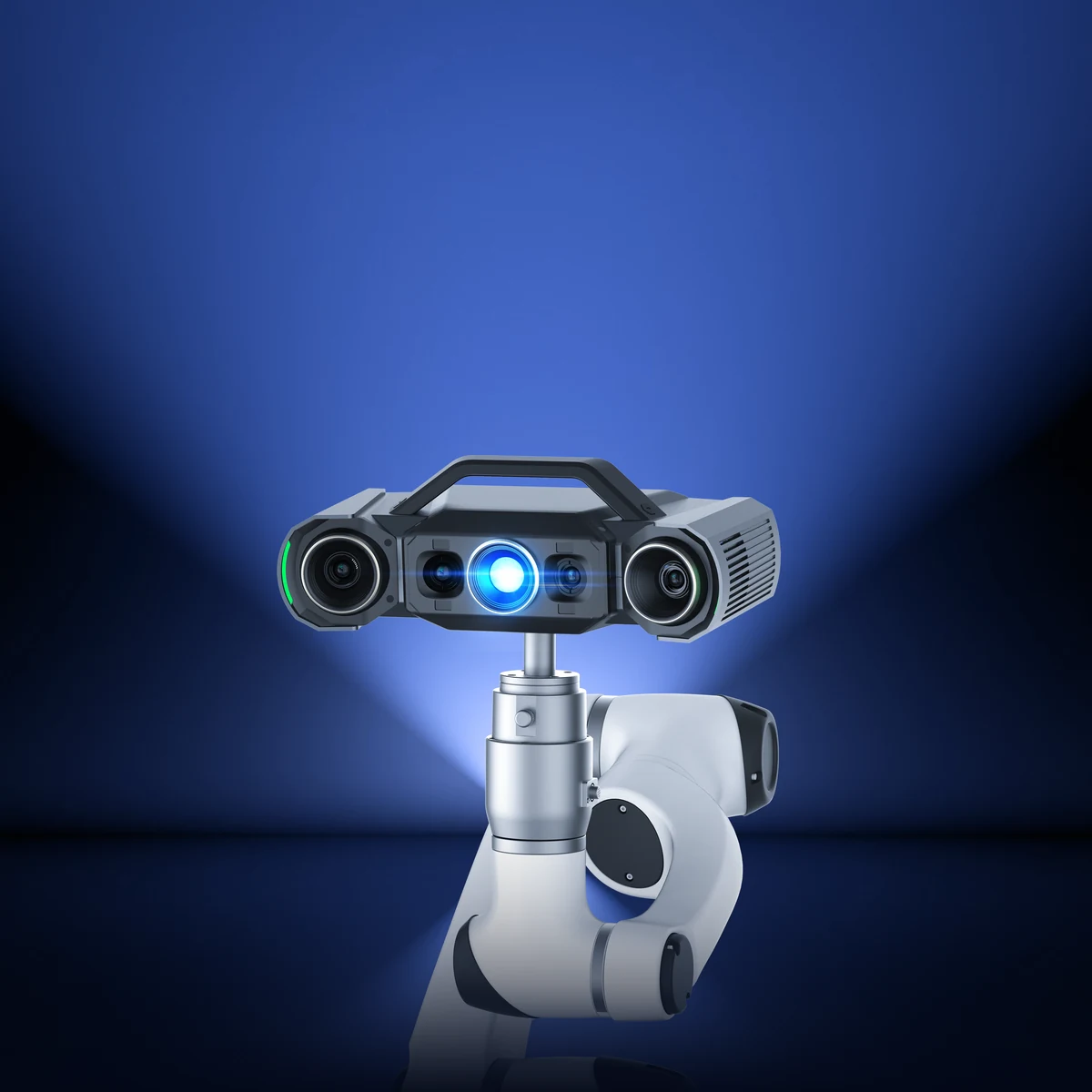
SHINING 3D OptimScan Q12 HD high-precision 3D inspection scanner on a robotic mount with blue LED projector

The OptimScan Q12 HD and Q9 HD push past the limits of fringe-projection optical scanning — four high-resolution cameras, 0.004 mm certified accuracy, and two pre-calibrated HD scan ranges switchable in a single click. From first-article inspection of micro-feature parts at the bench to lights-out robotic inspection on the line. Full specifications →

0.004 mmAccuracy (Small Range)
80×50HD Small FOV (mm)
<1 sPer Shot
4High-Res Cameras
Deployment
ManualTripod + TurntableRobot IntegrationHD Dual Range — 1 Click
Light & Optics
Blue LED Structured LightQ12 HD: 4 × 12.3 MPQ9 HD: 4 × 9 MPMonocular-Stereo Fusion
Certification
ISO 10360VDI/VDE 2634 Part 2ISO/IEC 17025 LabIP50
Pricing
Contact Rev1 for pricing Quote-priced metrology system · financing available · OAC

Rev1 validates measurement requirements, accuracy targets, and inspection workflow before purchase — authorized SHINING 3D metrology reseller and US support partner. Questions? Call (248) 707-2950.

SHINING 3D OptimScan Q12 HD metrology 3D inspection scanner — front view with blue LED projector on a robotic mount
Rev1 Technologies · Certified Metrology Accuracy

Certified Accuracy. Internationally Traceable.

Every OptimScan Q12/Q9 HD scanner is acceptance-tested to VDI/VDE 2634 Part 2 and ISO 10360, calibrated in SHINING 3D’s ISO/IEC 17025 accredited Accuracy Lab, and ships with a calibration certificate traceable to international metrology standards. Rev1 Technologies is your authorized SHINING 3D reseller and US support partner, Auburn Hills, Michigan.


VDI/VDE 2634 Part 2 ISO 10360 Acceptance ISO/IEC 17025 Accredited Lab Calibration Certificate & Traceability
SHINING 3D — ISO/IEC 17025 accredited metrology manufacturer
SHINING 3DISO/IEC 17025 Lab
Rev1 Technologies — authorized SHINING 3D metrology reseller, Auburn Hills MI
Rev1 TechnologiesAuthorized Reseller
Choose Your Model

OptimScan Q12 HD — Maximum Density. OptimScan Q9 HD — High Value.

Both HD models share the same high-precision platform — the same 0.004 mm small-range accuracy, the same HD dual scan range, the same Monocular-Stereo Fusion, the same <1 s shot speed, and the same robot integration. The difference is camera resolution and point density: the Q12 HD’s four 12.3 MP cameras resolve a finer 0.02 mm point distance for the most demanding micro-feature work; the Q9 HD’s four 9 MP cameras cover the same applications at 0.03 mm point distance and better value.

SpecificationOptimScan Q12 HDOptimScan Q9 HD
Camera resolution4 × 12.3 MP4 × 9 MP
Accuracy (small / large)0.004 mm / 0.01 mm0.004 mm / 0.01 mm
Point distance — small range0.02 mm0.03 mm
Point distance — large range0.054 mm0.06 mm
FOV (large / small)220×150 mm / 80×50 mm220×150 mm / 80×50 mm
MSF · robot integrationYes · YesYes · Yes
Best forMaximum point density — dental implants, micro-connectors, fine mold detailExcellent HD detail for most precision inspection at better value

Rev1 will assess your tightest tolerance requirements and recommend the right HD model — for most high-precision inspection the Q9 HD is more than sufficient; for the finest micro-feature work the Q12 HD’s higher point density is a meaningful advantage.

0.004 mm
Accuracy — Small Range
Acceptance-tested to VDI/VDE 2634 Part 2 and ISO 10360, calibrated in SHINING 3D’s ISO/IEC 17025 accredited Accuracy Lab — both HD models.
<1 s
Per Shot
Built-in dual-chip computing platform — rapid image acquisition and data processing, every capture under a second.
4
High-Res Cameras
Q12 HD: 4 × 12.3 MP · Q9 HD: 4 × 9 MP — dense, consistent HD data on geometrically intricate surfaces.
Metrology-Grade HD Accuracy

0.004 mm. Beyond the Limits of Standard Fringe-Projection Scanning.
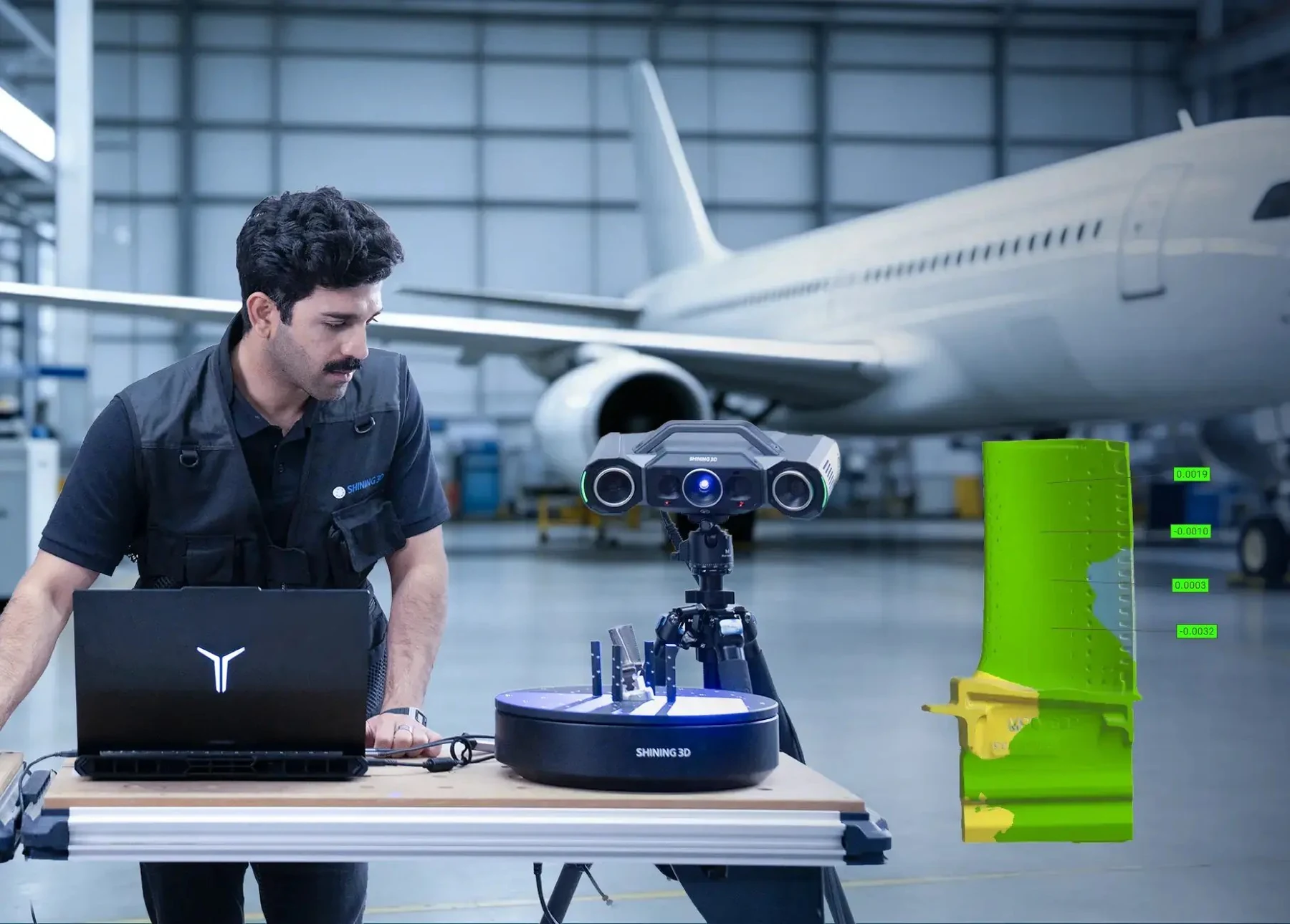
Engineer scanning a precision part with the tripod-mounted OptimScan Q12 HD in an aircraft hangar, scan data on the laptop

The Accuracy Regulated Inspection Demands

The OptimScan Q12/Q9 HD pushes beyond the performance limits of fringe-projection optical scanning, delivering a new level of accuracy and fine-detail capture within its class. At 0.004 mm in small-range HD mode — tighter than the 0.005–0.02 mm band most handheld and fixed scanners hold — it lets fixed structured-light scanning stand in for CMM queues on dental implants, micro-connectors, turbine-blade edges, and precision mold surfaces. Four high-resolution cameras and advanced 3D reconstruction deliver the dense, consistent point clouds that micron-band tolerance work requires, with the VDI/VDE 2634 / ISO 10360 / ISO/IEC 17025 documentation chain regulated environments demand.

Accuracy0.004 mm (small range)
AcceptanceVDI/VDE 2634 · ISO 10360
CalibrationISO/IEC 17025 lab
Cameras4 × 12.3 MP (Q12 HD)
HD Dual Scan Range

Large 220×150. Small 80×50. One Click — No Lens Swap.
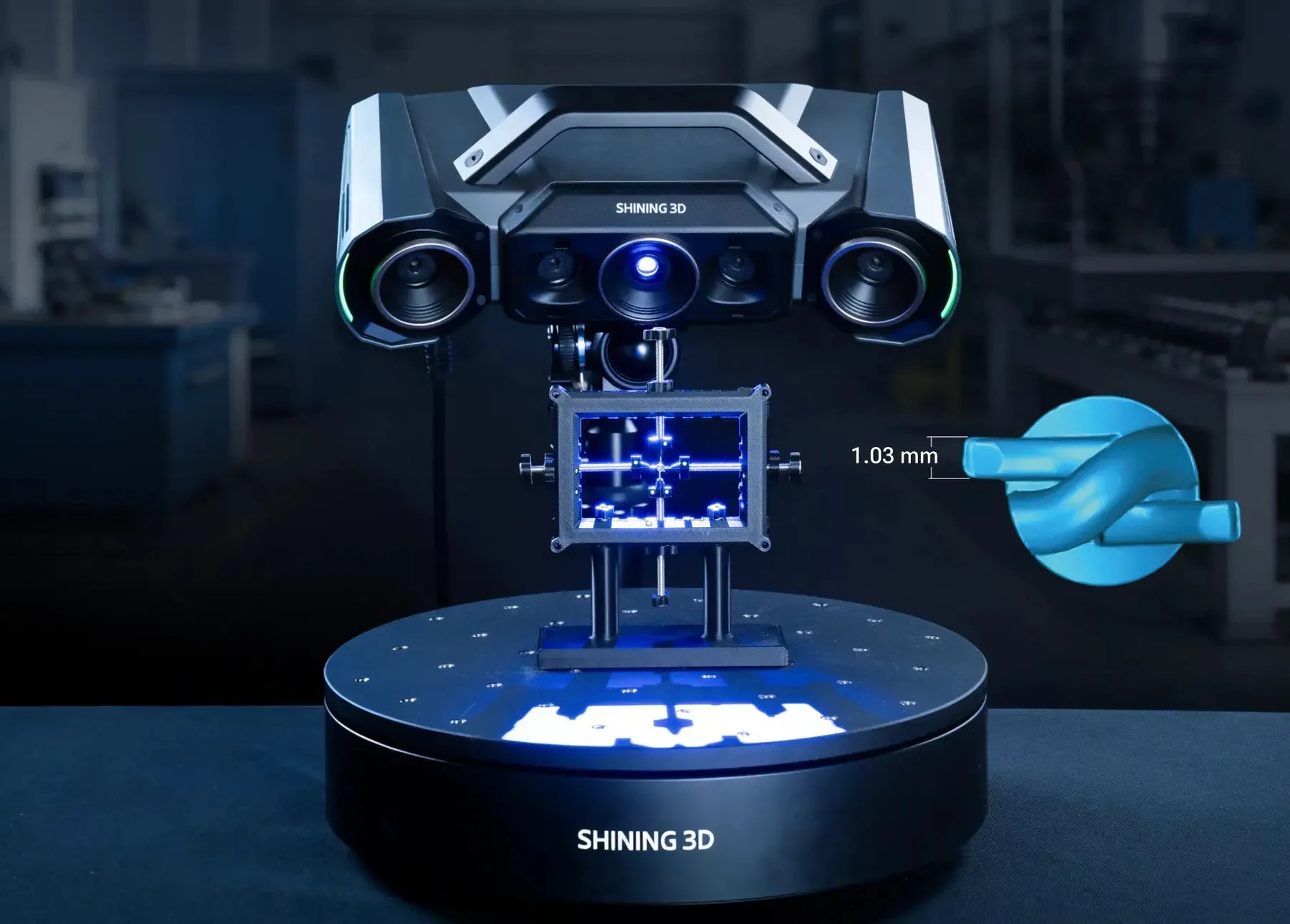
OptimScan Q12 HD above an automatic turntable with high-density HD scan data and a 0.03 mm point-distance callout

Two Pre-Calibrated HD Ranges in the Same Hardware

Switch between the 220×150 mm large range (600 mm working distance, 0.01 mm accuracy) and the 80×50 mm small range (200 mm working distance, 0.004 mm accuracy) with a single software click — no aperture adjustment, no focal-length change, no recalibration. Start with the large range for overall part structure, zoom to the small range for the finest features, and both datasets fuse seamlessly in the same project. Competing systems require a physical lens change for the same flexibility.

Large Range220 × 150 mm @ 600 mm
Small Range80 × 50 mm @ 200 mm
SwitchSingle click — no recal
DataSeamless range fusion
Monocular-Stereo Fusion

Complete Data on Corners, Joints, and Undercuts.
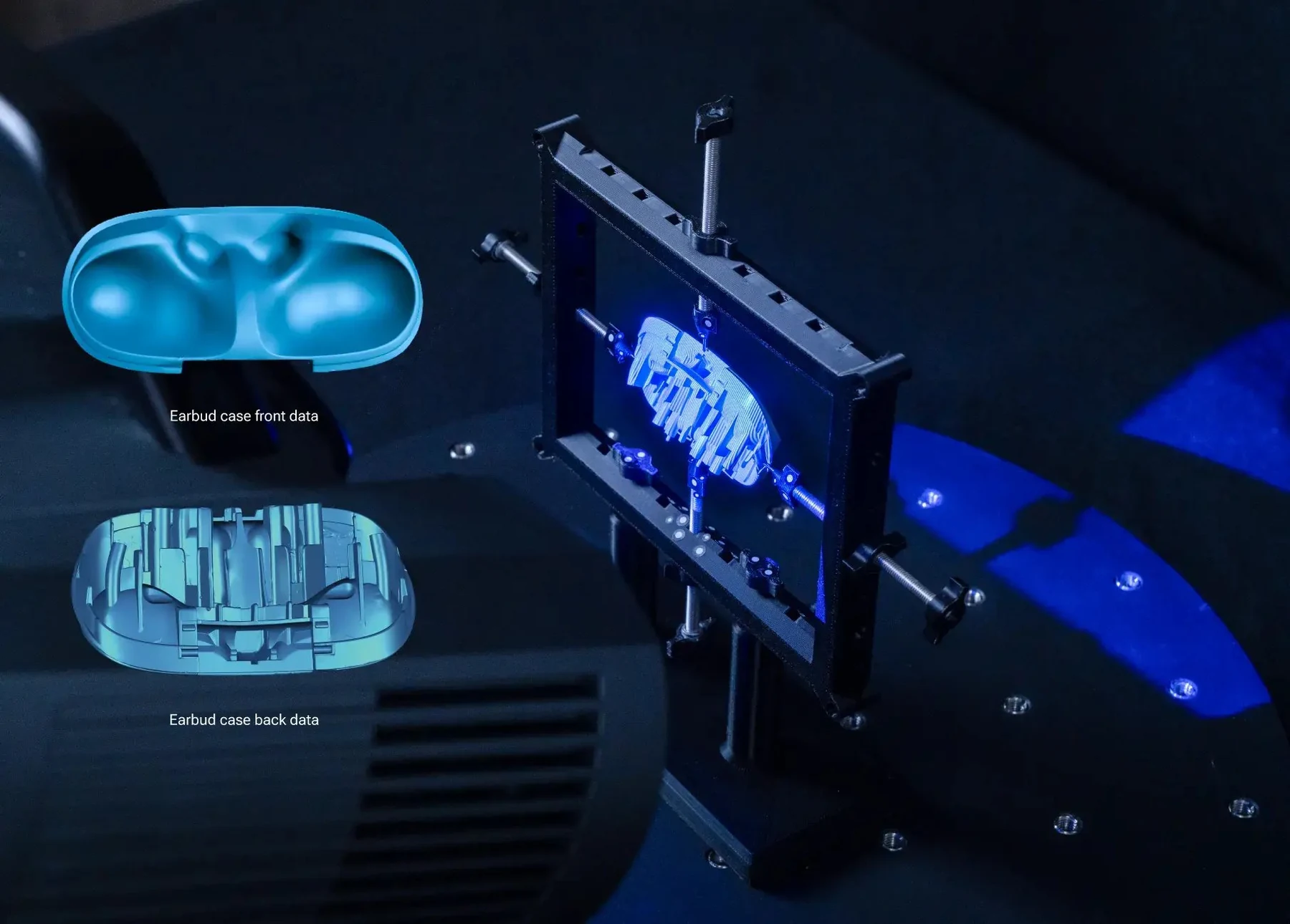
OptimScan Q12 HD scanning an earbud-case mold with MSF — front and back scan data showing complete coverage in a dark lab

Where Standard Stereo Leaves Gaps, MSF Fills Them

Stereo structured-light systems triangulate from two cameras — so when geometry blocks one camera’s line of sight, the data simply isn’t captured. Turning corners, inside joints, sharp transitions, and deep cavities are the classic problem zones. SHINING 3D’s Monocular-Stereo Fusion adds a monocular acquisition path that effectively increases data coverage and improves the integrity of the scanned data exactly where occlusion creates gaps — more complete point clouds in fewer scan positions, and less post-processing time patching holes on complex industrial parts.

CoverageCorners · joints · undercuts
BenefitFewer setups per part
Watch the demo
Speed & Software

Every Shot Under 1 Second. Smarter Scanning Built In.
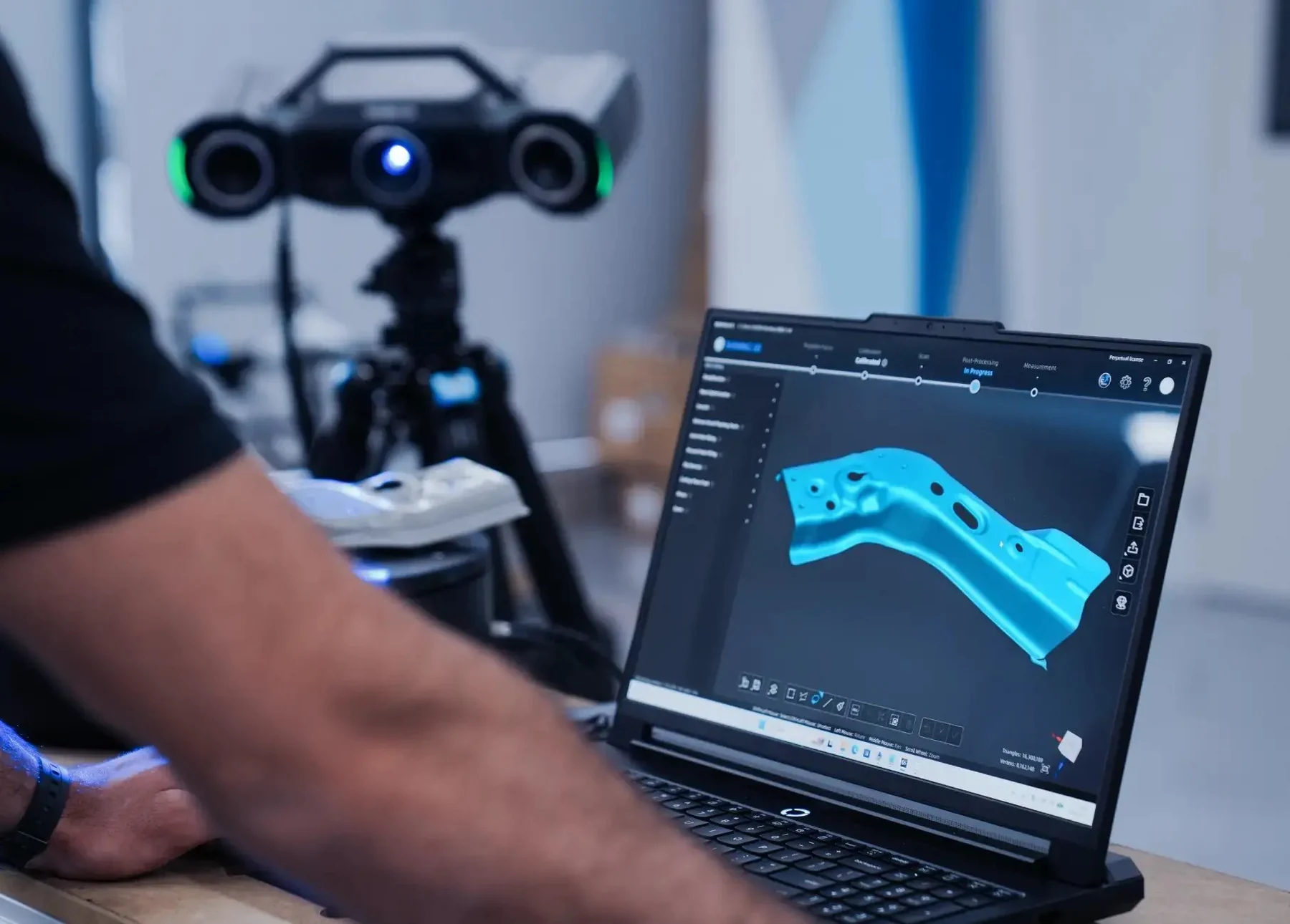
Operator at a laptop reviewing OptimScan Q12 HD scan data with the scanner fixed on its mount behind
Dual-Chip Computing Platform

Throughput Plus Continuously Updated Software

A built-in dual-chip computing platform completes each capture — acquisition plus processing — in under one second. The OptimScan software ships with smart scanning aids built in: a scanning-template workflow, real-time vibration detection, temperature control, and automatic background cutting. Scan as much as you want, all year round, with no hidden fees or additional license costs.

<1 s Per Shot Vibration Detection Temperature Control Background Cutting
Manual · Turntable · Robot

Same Scanner, Three Deployment Modes. Scale to Lights-Out.

No separate robot-optimized variant required — the same 3.6 kg scanner moves from handheld first-article work to tripod-and-turntable lab inspection to fully robotic in-line inspection as your volume grows.
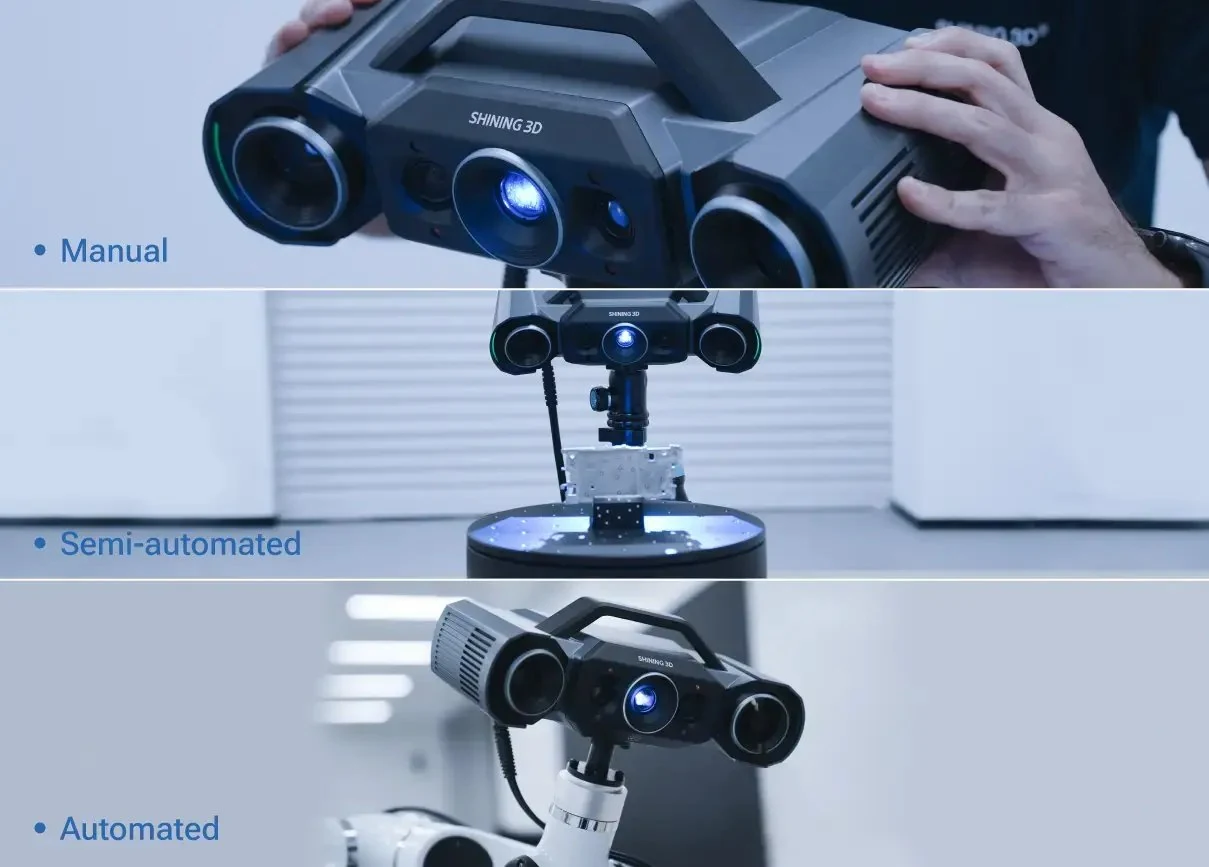
OptimScan Q12 HD three operation modes — manual handheld, semi-automated turntable, and automated robotic operation

Manual, Semi-Automated, or Fully Automated

Manual: compact and easy to carry, the HD scanner gives operators full control and flexibility for individual parts — at 3.6 kg it is light enough for sustained handheld use. Semi-automated: fix it on a tripod with an automatic turntable (up to 20 kg part load) for repeatable multi-angle capture, or add the optional dual-axis turntable (up to 3 kg) for single-click multi-angle scanning. Fully automated: integrate with an industrial robotic arm for precise, repetitive, operator-free production inspection. One investment supports the entire maturity curve of your deployment.
Weight3.6 kg
Turntable LoadUp to 20 kg
Dual-AxisOptional — up to 3 kg
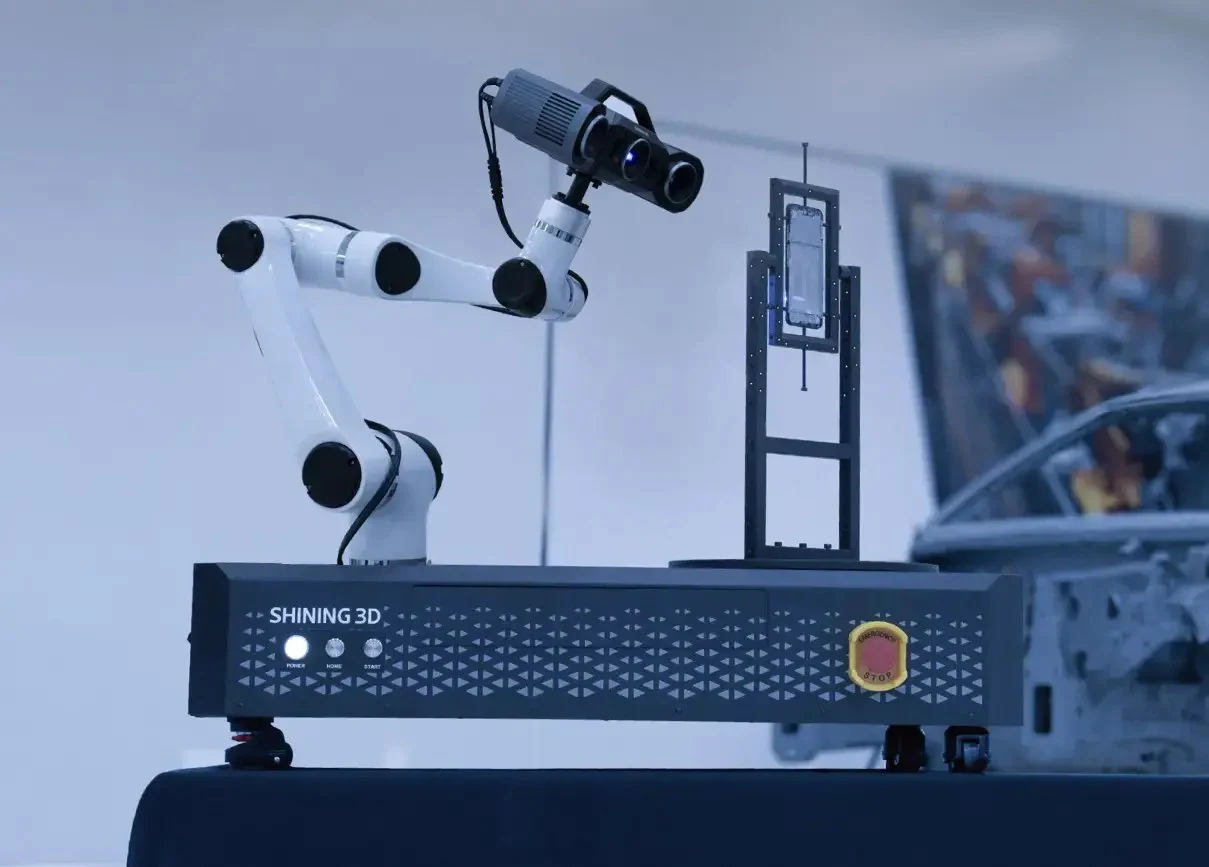
OptimScan Q12 HD on a collaborative robotic arm in an automated inspection cell scanning a part on a fixture

Four Steps to Operator-Free Inspection

Integrated with an automated inspection solution, the HD scanner runs scan-to-report with no operator involvement after setup: teach the robot path for the part geometry, then the system executes automated 3D measurement, aligns data to CAD and runs GD&T analysis in SHINING3D Inspect, and generates the inspection report — every cycle, zero operator variability, real-time results at critical production-line stations.

Step 1Path teaching
Step 2Automated 3D measurement
Step 3Automated CAD + GD&T
Step 4Automated report
Right scanner for your inspection?
Not sure the OptimScan Q12/Q9 HD fits your accuracy targets?
Send us your part or measurement spec — Rev1 runs a full large-range + small-range + MSF workflow with an inspection report, and validates 0.004 mm accuracy against your tolerances. Free, no purchase required.
Software & Inspection

PTB-Certified Inspect. Open to Any Ecosystem.
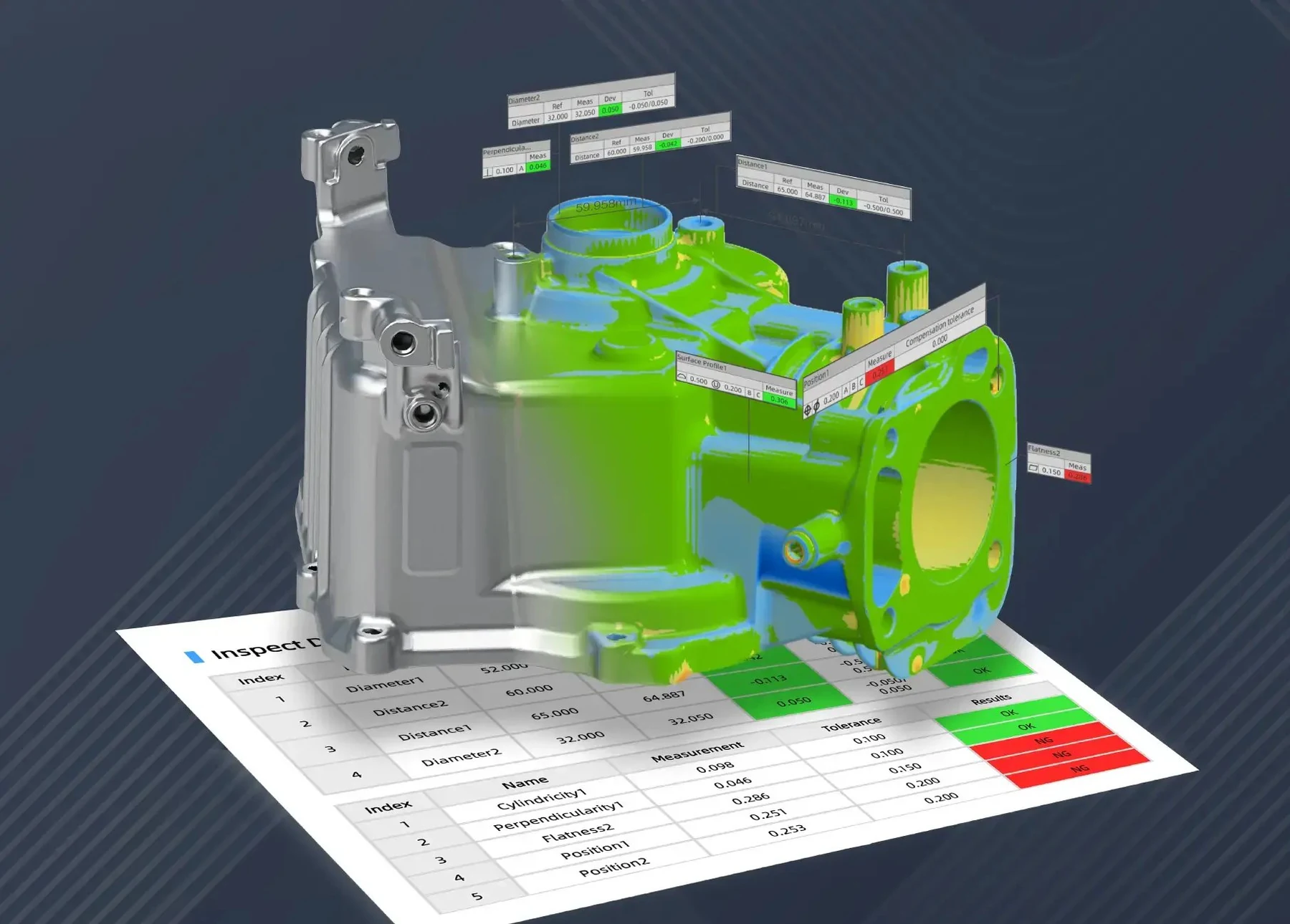
SHINING3D Inspect GD&T deviation color map of a valve body from OptimScan Q12 HD scan data with an inspection report

Scan → Align → GD&T → Report — No Hand-Offs

SHINING3D Inspect — PTB-certified for traceable measurement — delivers a streamlined, modular, customizable approach from data acquisition to reporting: Compare, Cross-Section, Feature, Dimension, Gauges, Quick Measurement, and report generation in one continuous workflow. And unlike ecosystem-locked competitors, the HD scanner exports cleanly to PolyWorks Inspector, Geomagic Control X, and Geomagic Design X — the same scan serves dimensional inspection and reverse engineering. Explore all Rev1 3D software.

IncludedSHINING3D Inspect (PTB)
Open ExportsPolyWorks · Control X · Design X
AnalysisGD&T · compare · sections
ReportsAutomated generation
Scan Results — Interactive 3D

Don’t Take Our Word for It. Rotate the HD Data Yourself.

Official SHINING 3D scan results straight off the OptimScan Q12 HD — dense, gap-free meshes on exactly the micro-feature geometry that breaks lesser scanners: deep-cavity earbud-case molds and threaded dental implants. Each viewer loads on click, straight from SHINING 3D’s official Sketchfab models.

Applications

Built for Small, Micro-Feature Precision Parts — Bench to Line

Where 0.004 mm accuracy and a traceable documentation chain matter most. Need automated in-line visual inspection at production volume? Pair the HD scanner with Rev1’s Vision AI solutions, or book a live scan demo on your parts.
Component Dimension Inspection (GD&T) Stamped & Sheet-Metal QC Mold Development & Repair Dental Implants Electronic Connectors Turbine Blades Transmission & Braking Components First-Article Inspection
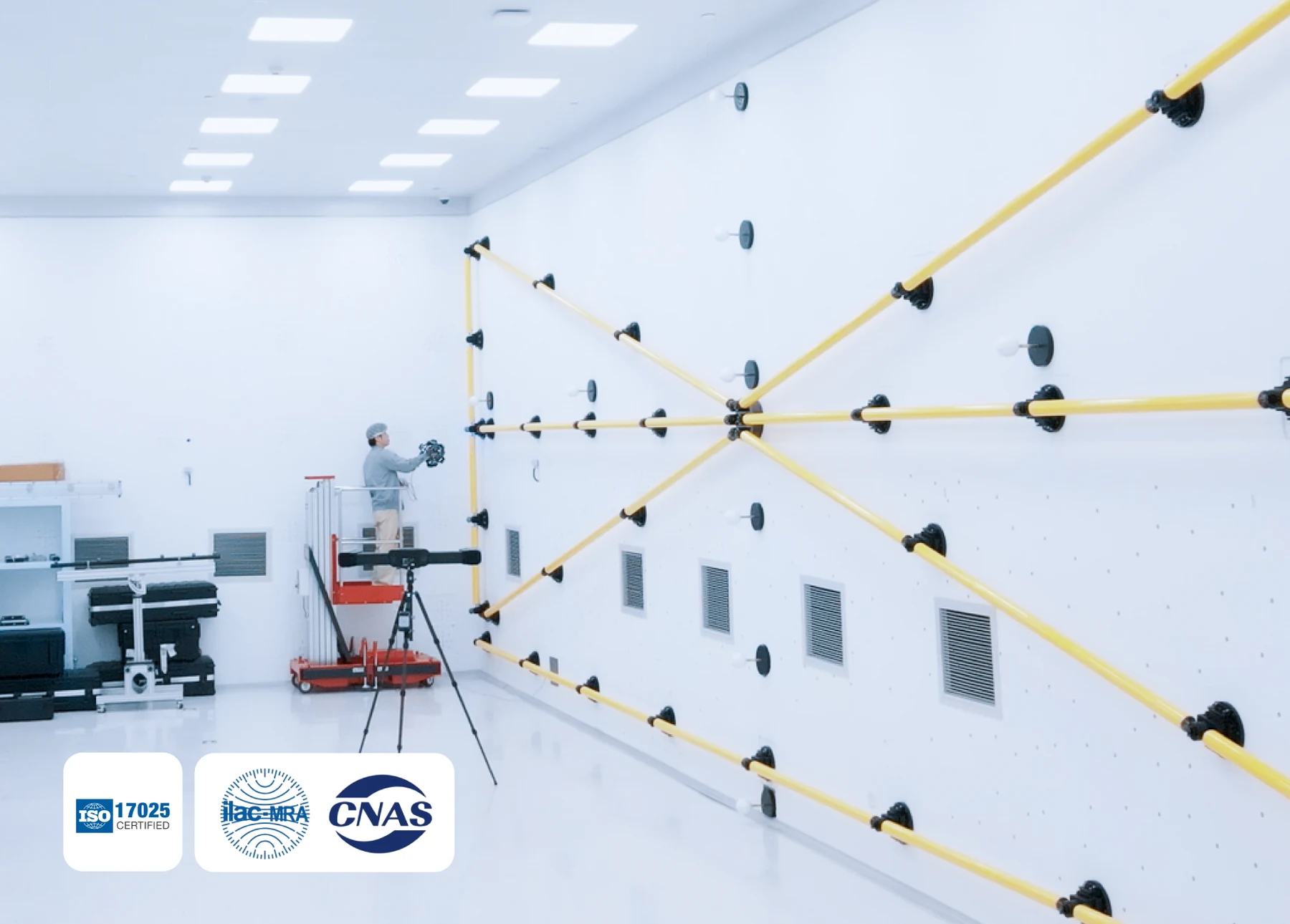
SHINING 3D ISO/IEC 17025 accredited accuracy lab with a calibration reference wall certifying the OptimScan Q12 HD
Certified Accuracy at Scale

From the Accredited Accuracy Lab to the Production Line

Every HD scanner is calibrated in SHINING 3D’s ISO/IEC 17025 accredited Accuracy Lab and acceptance-tested to VDI/VDE 2634 and ISO 10360 — the same traceable accuracy then scales into robotic cells beside the line: automated measurement, CAD comparison, GD&T analysis, and report generation at production cadence. For mixed-part environments, the one-click HD dual range covers overall geometry and the finest features without a hardware change.

Lights-Out Inspection Zero Operator Variability In-Line Robotic Cells
Competitive Analysis

OptimScan Q12/Q9 HD vs. ZEISS ATOS Q vs. GOM Scan 1

How the HD series compares on the capabilities that decide a fixed-inspection purchase — accuracy, range switching, data coverage, and included software.

CapabilityOptimScan Q12 HDZEISS ATOS Q 12MGOM Scan 1
Accuracy0.004 mm (small range)Comparable — VDI/VDE 2634Comparable — VDI/VDE 2634
Camera resolution4 × 12.3 MP2 × 12 MPNot publicly specified
Range switchingHD dual range built-in — one clickInterchangeable lenses requiredLens swap per measuring area
Occlusion coverageMonocular-Stereo Fusion (MSF)Triple Scan principleStandard stereo
Robot integrationYesYes — ScanBox ecosystemYes — ScanCobot
Inspection softwareSHINING3D Inspect (PTB) — no per-year feesZEISS INSPECT — licensed separatelyZEISS INSPECT — licensed separately
EcosystemOpen — PolyWorks, Geomagic, any GD&T suiteZEISS INSPECT ecosystemZEISS INSPECT ecosystem
Total system costRequest a quote — strong value vs. legacy systemsPremium tierMid-to-premium tier

Competitor figures are approximate, from publicly available manufacturer information, and vary by configuration; provided by Rev1 Technologies for general orientation. The ATOS Q requires a physical lens change to switch measuring volumes — a manual step with recalibration friction; the HD series switches pre-calibrated ranges in one click, with PTB-certified inspection software included and no recurring license fees. Rev1 can demo the HD series against any competitor on your specific parts.

Planning a QC / inspection deployment?
Configure the OptimScan Q12/Q9 HD for your facility
Tell us your parts, accuracy targets, and inspection software — Rev1 confirms Q12 HD vs Q9 HD, turntable or robot configuration, certification, pricing, and lead time within one business day.
Specifications

SHINING 3D OptimScan Q12/Q9 HD Technical Data

Technology
Blue LED structured light — fixed / tripod / robot
Accuracy (Small Range)
0.004 mm
Accuracy (Large Range)
0.01 mm
FOV — Large / Small
220 × 150 mm / 80 × 50 mm
Working Distance
600 mm (large) / 200 mm (small)
Depth of Field
120 mm (large) / 30 mm (small)
Cameras
Q12 HD: 4 × 12.3 MP · Q9 HD: 4 × 9 MP
Point Distance — Q12 HD
0.02 mm (small) / 0.054 mm (large)
Point Distance — Q9 HD
0.03 mm (small) / 0.06 mm (large)
Shot Time
<1 second per shot — dual-chip platform
Light Source
Blue LED — grating pattern projection
Scanning Modes
Manual · turntable (20 kg) · dual-axis (3 kg) · robotic
Inspection Software
SHINING3D Inspect (PTB) — optional
Compatible Software
PolyWorks, Geomagic Control X, Geomagic Design X
Data Cable
5 m
Dimensions
366 × 162 × 132 mm
Net Weight
3.6 kg
Certifications
VDI/VDE 2634 Part 2 · ISO 10360 · ISO/IEC 17025 lab · CE · FCC · RoHS · IP50

RESOURCES

Downloads & Technical Support

Everything you need to qualify, certify, and run your OptimScan Q12/Q9 HD with confidence.

Brochure & Documentation
SHINING 3D OptimScan Q12/Q9 HD brochure, spec sheet, and operating documentation — request the current revision from Rev1.
Calibration Certificate & Acceptance Report
VDI/VDE 2634 Part 2 / ISO 10360 acceptance report and ISO/IEC 17025 traceable calibration certificate, issued with each unit.
Rev1 Technical Support
Measurement-plan review, robot/turntable integration guidance, training, and post-sales engineering support from Rev1.

WHY REV1 TECH

Authorized SHINING 3D Reseller. Industrial Metrology Specialists.

Rev1 Technologies is an authorized SHINING 3D metrology partner headquartered in Auburn Hills, MI, with direct expertise in dimensional inspection and quality-control workflows.

YOUR REV1 PARTNER
AUTHORIZED SHINING 3D RESELLER

Rev1 serves manufacturers and QC teams across the USA. We don’t just ship boxes — we deploy, calibrate, train, and support your team so your HD scanner delivers traceable accuracy from day one.

01
Application & Measurement Engineering
Our engineers review your parts and tolerances, recommend Q12 HD vs Q9 HD, and validate accuracy targets before your scanner arrives.
02
On-Site Setup, Calibration & Training
Installation, HD dual-range verification on your actual parts, SHINING3D Inspect template setup, and hands-on operator training — anywhere in the U.S.
03
Free Demo on Your Parts
Send Rev1 your most challenging parts — we run the full large-range + small-range + MSF workflow and deliver the inspection report before you buy.
04
Direct Engineering Support
Call (248) 707-2950 — a person answers. Measurement-plan and workflow help for the life of the system.
05
Robot & Turntable Integration
Rev1 advises on robotic-arm integration, turntable configuration, and path-teaching strategy for your part geometries and volumes.
06
Equipment Financing
Rev1 works with multiple industrial lending partners — flexible terms to fit your capital budget, OAC.
Buyer FAQ

OptimScan Q12/Q9 HD — questions buyers ask before quoting.

How is the HD version different from the standard OptimScan Q12/Q9?
The HD models push accuracy and detail capture beyond the standard series: 0.004 mm small-range accuracy (vs 0.005 mm) and a finer point distance — 0.02 mm on the Q12 HD and 0.03 mm on the Q9 HD. The HD trades a tighter, denser scan range (220×150 / 80×50 mm) for that resolution, making it the choice for the smallest, most intricate parts where micro-feature fidelity matters most.
What is the difference between the Q12 HD and the Q9 HD?
Both share the same platform — dual 220×150 / 80×50 mm scan ranges, 0.004 mm small-range accuracy, VDI/VDE 2634 / ISO 10360 acceptance, MSF, <1 s shots, and robot integration. The difference is camera resolution: the Q12 HD’s four 12.3 MP cameras achieve 0.02 mm point distance vs the Q9 HD’s 0.03 mm. For most precision inspection the Q9 HD is more than sufficient; for dental implants, micro-connectors, and the finest mold detail the Q12 HD’s density is a meaningful advantage.
How does the HD dual scan range work in practice?
Two scan configurations are built into the same hardware and switch with a single software click — no aperture or focal-length adjustment, no recalibration. A typical workflow: capture overall geometry in the 220×150 mm large range, then switch to the 80×50 mm small range for the finest features. Both datasets process in the same project and fuse seamlessly.
What is Monocular-Stereo Fusion and why does it matter?
Stereo scanners triangulate from two cameras, so any surface one camera can’t see — turning corners, inside joints, deep cavities — becomes a data gap. MSF adds a monocular acquisition path that supplements stereo data exactly in those occluded zones, increasing data coverage and producing more complete point clouds in fewer scan positions on complex industrial parts.
Can the HD scanner run fully automated in-line inspection?
Yes. Integrated with an industrial robotic arm, it runs a four-step operator-free workflow: path teaching, automated 3D measurement, automated CAD alignment + GD&T analysis in SHINING3D Inspect, and automated report generation — real-time inspection reports at critical production-line stations. For lab throughput without a robot, pair it with a tripod and automatic turntable rated to 20 kg, or the optional dual-axis turntable for single-click multi-angle scanning.
How much does the OptimScan Q12/Q9 HD cost?
The HD series is a quote-priced metrology system — final pricing depends on model (Q12 HD vs Q9 HD), turntable or robot configuration, software, and support. Rev1 provides a tailored quote and financing options within one business day; call (248) 707-2950 or request pricing above. Equipment financing is available, OAC.
How does it compare to a CMM?
A CMM probes discrete points; the HD scanner captures millions of points per shot in under a second, producing full-surface deviation color maps against nominal CAD. At 0.004 mm accuracy with a VDI/VDE 2634 / ISO 10360 / ISO/IEC 17025 documentation chain, it offloads the high-volume full-surface work from your CMM queue, while CMMs remain the tool for the very tightest single-feature callouts.
Does it scan dark or reflective surfaces?
The OptimScan software adapts capture across dark materials, shiny machined metal, and mixed surfaces, and scanning is markerless by default. For extreme cases — mirror-polished chrome or optically clear parts — a temporary vanishing scanning spray is recommended. Built-in vibration detection and temperature control keep results stable on the shop floor.
What software is included, and what does it export to?
SHINING3D Inspect — PTB-certified — provides CAD compare, cross-sections, features, dimensions, gauges, and automated reports, with continuously updated OptimScan capture software and no per-year scanning fees. Data also exports cleanly to PolyWorks Inspector, Geomagic Control X, and Geomagic Design X for scan-to-CAD work — no ecosystem lock-in.
What does Rev1 include with an OptimScan Q12/Q9 HD purchase?
Delivery anywhere in the U.S., on-site installation and calibration verification, SHINING3D Inspect template setup for your part families, HD dual-range verification on your actual parts, and hands-on operator training. A free demo scan on your own parts is available before purchase — call (248) 707-2950; complete proposals within one business day.
What part sizes does the HD range suit best?
The HD ranges — 220×150 mm large and 80×50 mm small — are tuned for small and micro-feature parts: dental implants, connectors, gear teeth, fine mold detail, stamped components, and turbine-blade edges. For larger envelopes captured at standard accuracy, the standard OptimScan Q12/Q9 with its 430×300 mm large range may be the better fit; Rev1 will match the range to your typical part size.
Are there ongoing software or scanning fees?
No. The OptimScan capture software is continuously updated and lets you scan as much as you want, all year round, with no hidden fees or additional license costs. SHINING3D Inspect is available as an optional inspection suite, and your data exports freely to PolyWorks, Geomagic Control X, and Geomagic Design X — no per-seat ecosystem lock-in.

READY TO ORDER

Get the SHINING 3D OptimScan Q12/Q9 HD From an Authorized Reseller

Free consultation — no purchase required. Rev1 validates your measurement requirements, recommends Q12 HD vs Q9 HD, and provides pricing and lead time within one business day.

Reply within 1 business day Certified, traceable accuracy Authorized SHINING 3D reseller in the USA Setup & training included

Auburn Hills, Michigan's premier source for industrial 3D printers, 3D scanners, materials, and software. Serving engineers and manufacturers across North America.

Products
Company
Contact
Payment methods
AMEXApple PayGoogle PayPayPalShop PayUnionPayVISA
Pay over time

© 2026 Rev1 Technologies. All rights reserved.