CreatBot D400 HS Professional High-Speed Industrial 3D Printer
Champion DNA, Desktop Footprint — 300 mm/s, 90 mm³/s, 420 °C Dual Extruders
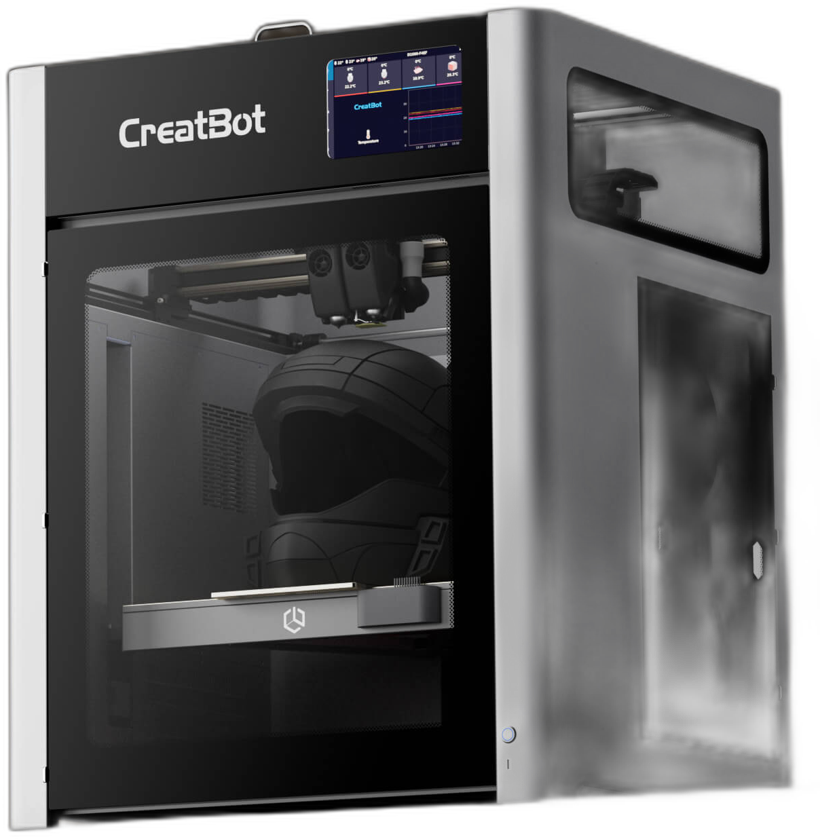
The CreatBot D400 HS distills the industrially proven architecture of CreatBot’s best-selling D600 Pro3 HS platform into a desktop-class machine. A 90 mm³/s high-flow hotend, 420 °C auto-raising dual extruders, a 70 °C active heated chamber, and deeply optimized Klipper firmware deliver flagship engineering-material performance at 300 mm/s. Full specifications →
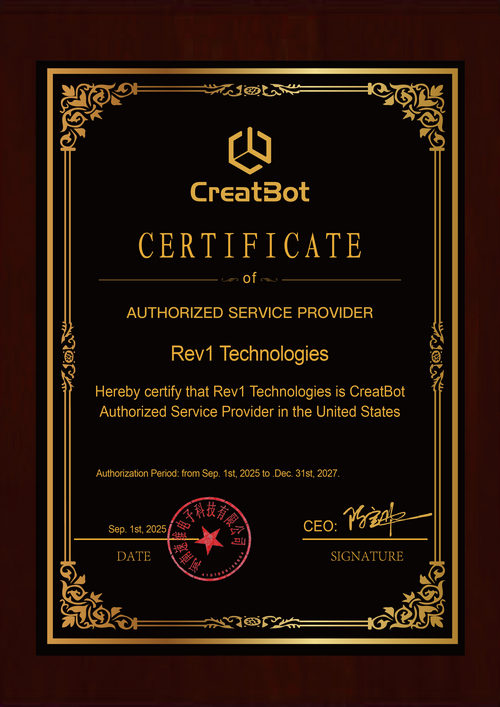
Rev1 validates application fit, material requirements, and facility readiness before purchase. Only authorized CreatBot service provider in the USA — talk to an engineer at (248) 707-2950.
The Only Approved CreatBot Service Provider in the USA.
Rev1 Technologies is the sole CreatBot Authorized Service Provider in the United States and a certified CreatBot Premium Distributor. Phone and video support, application consultation, parts, and engineering guidance are delivered from Auburn Hills, Michigan.

High-Speed Performance
Champion DNA in a Desktop Footprint
The D400 HS inherits the structural architecture and tuned Klipper firmware of CreatBot’s best-selling D600 Pro3 HS — flagship throughput, scaled to a machine that fits a professional workshop.
Built on a Proven Industrial Platform
CreatBot developed the D400 HS on the identical platform as the best-selling D600 Pro3 HS industrial workhorse. That means a deeply optimized, reinforced motion system, an industrially validated frame, and firmware tuned over thousands of production hours — not a clean-sheet design with unproven reliability. The result you see here is a clean, deliberate machine: a fully enclosed steel-and-aluminum frame with a side-mounted dual filament window, a front-and-center 7-inch touchscreen, and a closed build chamber that holds heat where engineering materials need it. Every load-bearing axis carries the same reinforced linear motion the larger platform relies on for hours-long unattended jobs, so the D400 HS holds its geometry at 300 mm/s instead of softening into ringing and layer shift the way lighter desktop frames do. You get champion-grade engineering, sized for the bench, driven from a 7-inch touchscreen — a machine engineered to run production parts in a professional workshop, not a tinkerer’s prototype that happens to print.
Dual Extrusion
Smart Auto-Raising Dual Extruders, 420 °C
Two independent hotends, an automatic mechanical shutter, and fully automated XYZ offset calibration make multi-material and multi-color production clean, reliable, and hands-off.
420 °C Auto-Raising Hotends
The smart dual extruders reach hotend temperatures up to 420 °C, heat from cold to 400 °C in about two minutes, and hold a tight ±0.15 °C thermostat accuracy. The idle nozzle lifts away automatically during single-material runs, and hotends swap quickly when you need a different nozzle size — 0.3 through 1.0 mm.
90 mm³/s High-Flow Hotend
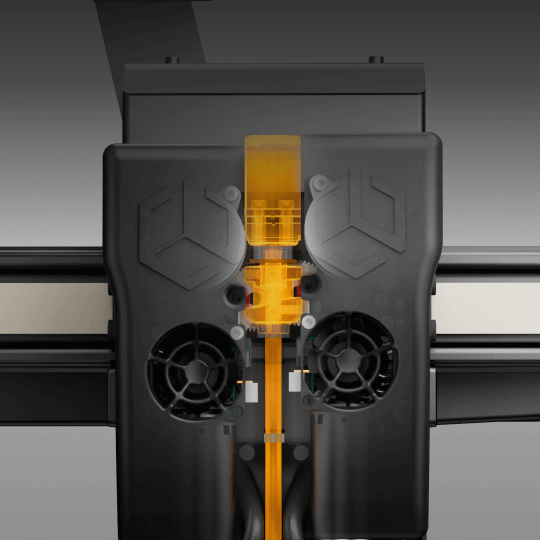
Each of the two hotends is a true high-flow design, peaking at 90 mm³/s of volumetric throughput — the engine behind the D400 HS’s 300 mm/s headline speed. A conventional hotend chokes on thick perimeters and dense infill long before the motion system runs out of speed; the high-flow melt path keeps molten plastic moving fast enough to feed those fat extrusions without skipping or under-extruding. Both nozzles climb to a 420 °C maximum, reach 400 °C from cold in roughly two minutes, and hold ±0.15 °C thermostat accuracy so the melt stays consistent across a multi-hour large-format job. That combination — high flow plus high temperature — is exactly what carbon- and glass-filled engineering grades demand, because they need both the heat to fuse cleanly and the flow to lay down the thick, stiff walls those parts are designed around. Nozzles swap quickly from 0.3 to 1.0 mm, so you can trade resolution for raw deposition rate as each job requires.
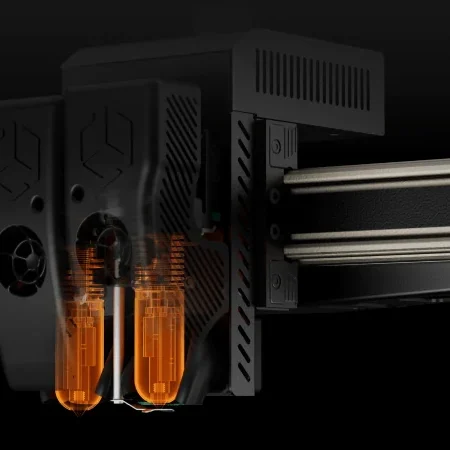
See the Dual Print Head in Motion
Watch the smart dual extruders work: the active nozzle lays down material while the idle head stays lifted and shuttered, then the heads swap and re-calibrate their XYZ offset automatically — the hands-off multi-material workflow that keeps dual-color and soluble-support prints clean and string-free.
Thermal Control
70 °C Active Heated Chamber
A truly heated, insulated chamber — not just an enclosure — is what makes large engineering-grade parts print without warping. The D400 HS adds real-time deformation compensation on top.
Actively Heated, Double-Insulated
A double-layer insulation-cotton chamber heats actively to 70 °C, improving interlayer bonding and preventing the shrinkage and deformation that ruin large parts in carbon- and glass-filled engineering materials. The warm, stable environment keeps the whole part above its glass-transition stress zone while it builds.
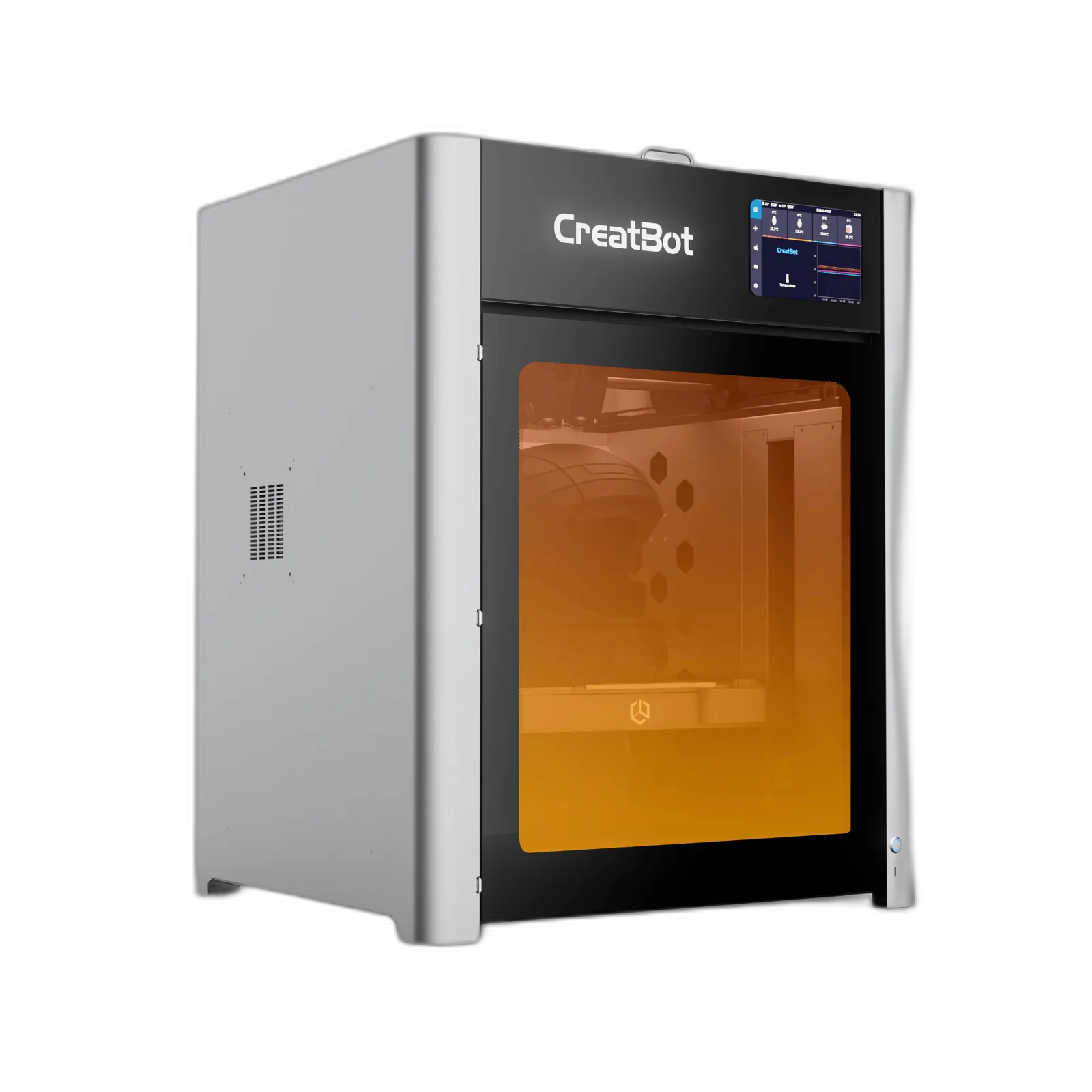
Thermal-Deformation Compensation
CreatBot’s patented Intelligent Chamber Heating Algorithm works with Z-Axis Magic Box technology to counteract frame and build-plate thermal expansion in real time. As the chamber comes up to temperature, the machine compensates for the dimensional drift that heat normally introduces — preserving accuracy and surface finish even at full chamber heat.
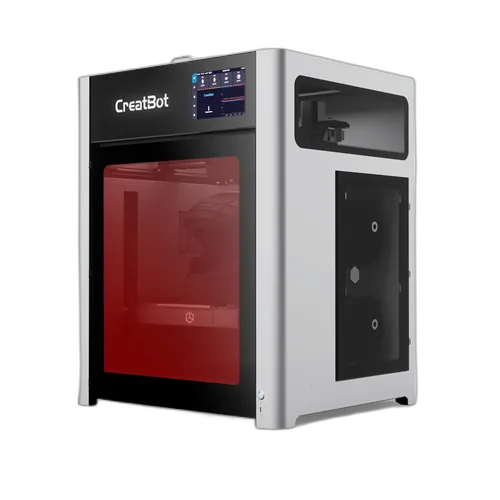
Calibration & Precision
Eddy Current Leveling & Camera Offset
Non-contact bed probing, full automatic dual-nozzle alignment, and micron-class positioning take the guesswork — and the wear parts — out of setup.
Eddy Current Bed Leveling — 0.001 mm
A non-contact, zero-wear eddy current sensor probes the bed to 0.001 mm accuracy and completes full-bed calibration in just 60 seconds. Automatic mesh leveling maps the entire large platform for a uniform first layer — no shims, no manual knobs, and no consumable probe to replace.
HD-Camera & Photoelectric Offset Calibration
Aligning two nozzles to each other is normally a tedious manual chore — the D400 HS automates it end to end. An HD macro camera looks directly at both nozzle tips, measures the XY gap between them to 0.02 mm, and writes the offset correction into firmware with no test prints and no manual nudging. A dual photoelectric sensor then sets each nozzle’s Z height to 0.005 mm, so the second extruder lands its first layer exactly on plane with the first. Because both axes are measured optically before every dual-material job, dual-color changes and soluble-support combinations stay perfectly registered even after a nozzle swap or after the chamber heats and the frame expands — the alignment that makes clean multi-material prints possible, handled automatically. Underneath it all, micron-class motion holds 0.00375 mm X/Y positioning (0.00156 mm on Z) so features, holes, and mating surfaces stay dimensionally true across the large platform.
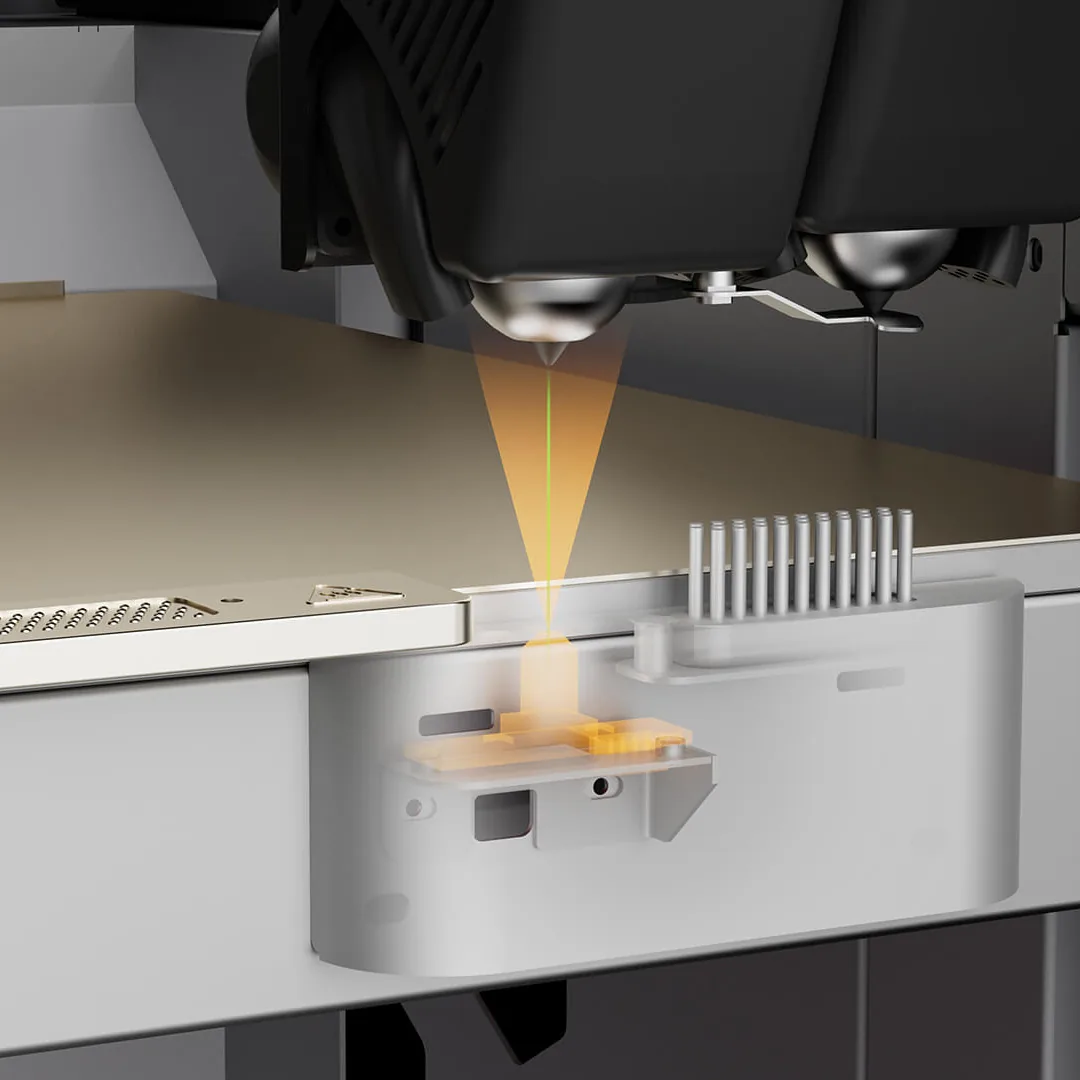
Watch Automatic Calibration Run
Before each job the D400 HS calibrates itself: the dual nozzles align to the photoelectric offset sensor and the eddy-current probe scans the plate to build a height mesh — 60-second, hands-off bed leveling to 0.001 mm probing accuracy, so first layers land true across the full 420 mm bed without paper-shimming or manual knobs.
Build Volume & Materials
420×400×420 mm of Engineering-Grade Capacity
A large, heated build volume plus a broad engineering-material list lets the D400 HS produce functional carbon- and glass-filled parts that smaller, cooler machines simply can’t.
Large-Format, Dual-Mode Build Area
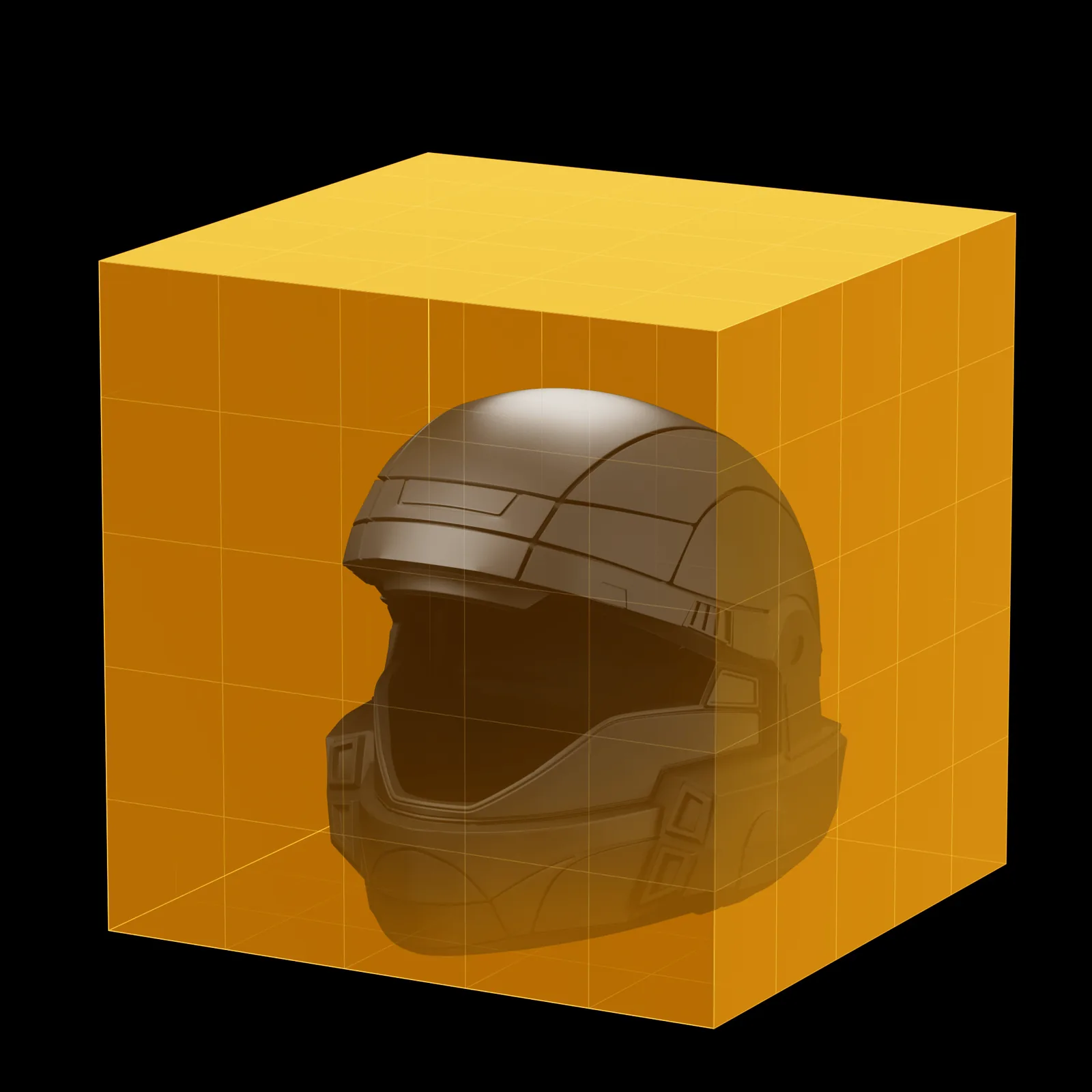
Single-extrusion jobs use the full 420×400×420 mm volume; dual-extrusion jobs run in a 365×400×420 mm envelope. That is enough room for sizeable functional prototypes, jigs and fixtures, and short-run end-use parts — all inside the heated chamber that keeps them dimensionally true on an aviation-aluminum plate with a removable magnetic sheet rated above 100 °C.
From PLA to PPS-CF Composites
The 420 °C hotends and 70 °C chamber open up the full engineering range — everyday plastics through demanding carbon- and glass-reinforced grades. UltraPA-CF alone delivers roughly 80 MPa strength and about 150 °C heat resistance for true functional end-use parts.
Removable Magnetic Flex Plate
Finished parts come off without a scraper. The heated build surface is an aviation-aluminum plate topped with a removable magnetic sheet rated above 100 °C — flex it once and the part pops free, then drop the sheet back onto the magnets in perfect registration for the next job. The same surface survives the high bed temperatures that carbon- and glass-filled engineering grades demand, so one plate handles PLA prototypes and PPS-CF production parts without swapping hardware.
Flagship Performance, Desktop Footprint
Industrial Capability Without the Industrial Floor Plan
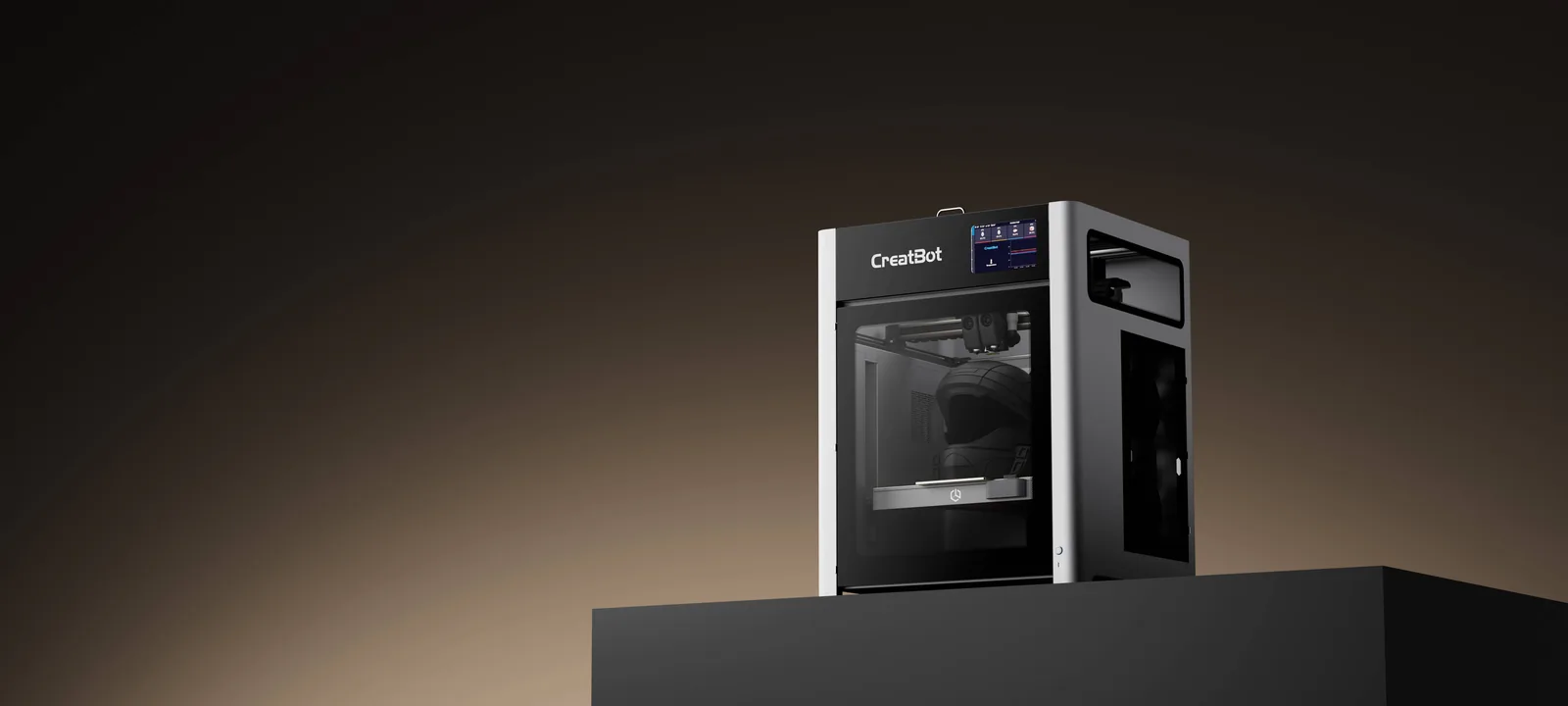
A 110 kg machine in an 785×700×985 mm footprint brings 420 °C dual extrusion, a 70 °C heated chamber, and 300 mm/s Klipper speed to a workshop bench — the kind of capability that used to require a dedicated industrial cell.
Reliability & Remote Control
Engineered for 24/7 Unattended Production
Long large-format jobs run for many hours. The D400 HS is built to finish them — with recovery features, run-out protection, and full remote monitoring so you don’t have to stand watch.
How It Compares
D400 HS vs. Enclosed Professional FFF Peers
Compared against enclosed, dual-nozzle professional FFF printers in the same class — each priced at or above the D400 HS. The D400 HS pairs a true 70 °C heated chamber and 420 °C dual extruders with desktop-class accessibility.
| Specification | CreatBot D400 HS | Raise3D Pro3 Plus | UltiMaker S7 Pro Bundle | Intamsys Funmat Pro 410 |
|---|---|---|---|---|
| Approx. Street Price | Request a quote | ~$7,599 | ~$9,300 | ~$24,995 |
| Technology | Enclosed dual-extruder FFF | Enclosed dual-extruder FDM | Enclosed dual-extruder FDM | Enclosed dual-nozzle FFF |
| Build Volume (single) | 420×400×420 mm | 300×300×605 mm | 330×240×300 mm | 305×305×406 mm |
| Max Nozzle Temp | 420 °C | 300 °C | 280 °C | 500 °C |
| Active Heated Chamber | 70 °C active | Passive enclosure | Passive + air manager | 90 °C active |
| Max Print Speed | 300 mm/s | Standard (HS variant available) | Standard | Standard |
| Composite Materials | CF / GF up to PPS-CF | PA / PC / CF composites | PA / PC composites | PEEK / PEKK / PPS |
| Bed Leveling | Eddy current, 0.001 mm | Auto-leveling | Active leveling | Auto-leveling |
| Firmware | Klipper High-Speed | RaiseOS | UltiMaker / Cura | Intamsuite |
Competitor prices are approximate U.S. street prices as of 2026 and are shown for positioning only; configurations vary. The Intamsys Funmat Pro 410 and true PEEK/PEI capability sit in a higher tier — the D400 HS standard configuration is rated to 420 °C nozzle and 70 °C chamber and is not specified for PEEK/PEI. Specifications subject to change; confirm current figures with Rev1.
CreatBot D400 HS Technical Data
RESOURCES
Downloads & Technical Support
Everything you need to qualify and run your CreatBot D400 HS with confidence.
WHY REV1 TECH
Authorized CreatBot Reseller. Industrial AM Specialists.
Rev1 Technologies is the sole Authorized CreatBot Service Provider in the United States, headquartered in Auburn Hills, MI, with direct technical expertise in industrial 3D printing.

Rev1 Technologies is an authorized CreatBot reseller serving manufacturers across the USA. We don’t just ship boxes — we deploy, calibrate, train, and support your team so your D400 HS produces at full capability from day one.
FAQ
CreatBot D400 HS — Common Questions
Answers to the questions Rev1 hears most from engineers and production managers evaluating the D400 HS.