3DXTech 3DXMAX ASA Pellets Weatherable, UV-Stable Resin for Your Own Extrusion
Weatherable, UV-Stable Resin for Your Own Extrusion
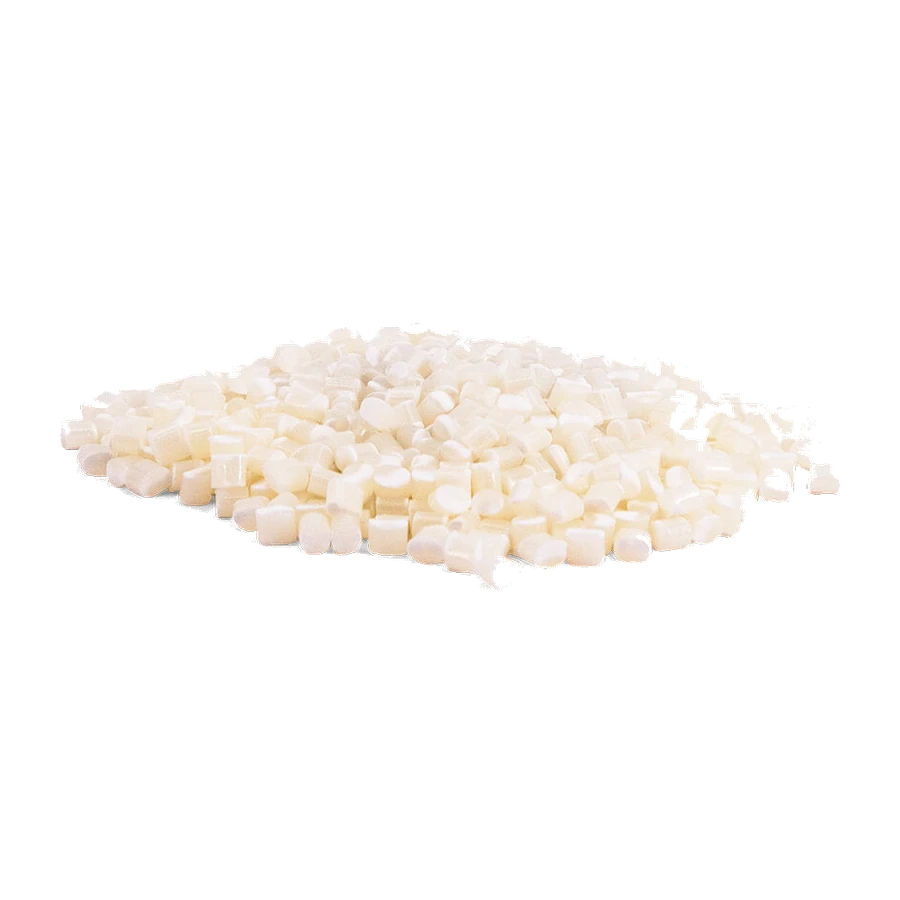
The outdoor-grade ABS alternative — as pellets, for shops that run their own extrusion. ASA delivers ABS-like mechanicals with far better UV and weather resistance, so parts hold color and strength in the sun. Feed a filament extruder (Filabot, Filastruder, or any high-throughput rig) or a pellet-fed printer, and work with a weatherable engineering polymer at resin cost. Full specifications →
Availability and lead time vary by pail size — contact Rev1 to confirm before ordering. Extruding ASA for the first time? Call (248) 707-2950.
USA-made weatherable resin, with a real datasheet behind it.
3DXTech compounds 3DXMAX ASA in Grand Rapids, Michigan with a published technical data sheet and lot traceability — supplied as extrusion-ready pellets. Rev1 Technologies is your authorized 3DXTech reseller and US support partner, Auburn Hills, Michigan.


The outdoor material — before it becomes filament.
ASA (acrylonitrile styrene acrylate) is the go-to when a part has to live outdoors. It matches ABS for stiffness and strength but adds genuine UV and weather resistance, so printed parts keep their color and mechanical properties in the sun instead of yellowing and going brittle. These pellets are that resin before the spool: the same 3DXMAX ASA 3DXTech extrudes into filament, packaged for shops that run their own extrusion. Feed a high-throughput filament extruder to draw your own ASA, or run them directly in a pellet-fed printer — and buy the polymer at resin cost.
ABS mechanicals, weatherable chemistry.
The reason ASA replaced ABS for outdoor parts.
With 45 MPa tensile strength, 10% elongation, and a 105 °C glass transition, ASA behaves like ABS on the print bed — but its acrylate backbone resists UV degradation that turns ABS parts chalky and weak outdoors. Automotive exterior trim, enclosures, signage, and outdoor fixtures are its home turf.
The numbers behind the weatherability.
All figures from the 3DXTech 3DXMAX ASA technical data sheet (TDS Rev 3.0) — characterised on printed specimens. See the full TDS for methods.
Break strength with a 2,010 MPa tensile modulus (ISO 527) — ABS-class structural performance.
Real ductility (ISO 527) — outdoor parts flex and handle rather than shattering.
With a 2,000 MPa flexural modulus (ISO 178) for everyday stiffness.
A useful thermal window (DSC) with 95 °C heat deflection at 0.45 MPa (ISO 75).
The acrylate backbone resists the UV degradation that yellows and weakens ABS outdoors.
Light for the class (ISO 1183) — more length per kilogram once extruded.
Dry, then extrude — 3DXTech’s own recommendations.
Straight from 3DXTech’s processing guidance for ASA pellets. ASA is one of the easier engineering resins to extrude.
Dry before extrusion — a dedicated dryer or toaster oven works. 3DXTech’s advice: don’t use the kitchen oven your family eats from.
Give the resin the full cycle. Wet ASA extrudes with bubbles in the strand — if you see them, dry longer.
A friendly, low extrusion window — tune to your heater bands, thermocouple, and PID.
Draw your own filament on a Filabot/Filastruder-class rig, or feed a pellet-fed printer directly.
Undyed natural resin — what you compound or print downstream is up to you.
Keep pellets sealed and dry between runs, and re-dry after exposure to humidity.
Three shops that buy ASA by the pail.
Pellets make sense when you control the extrusion step yourself.
What these pellets become.
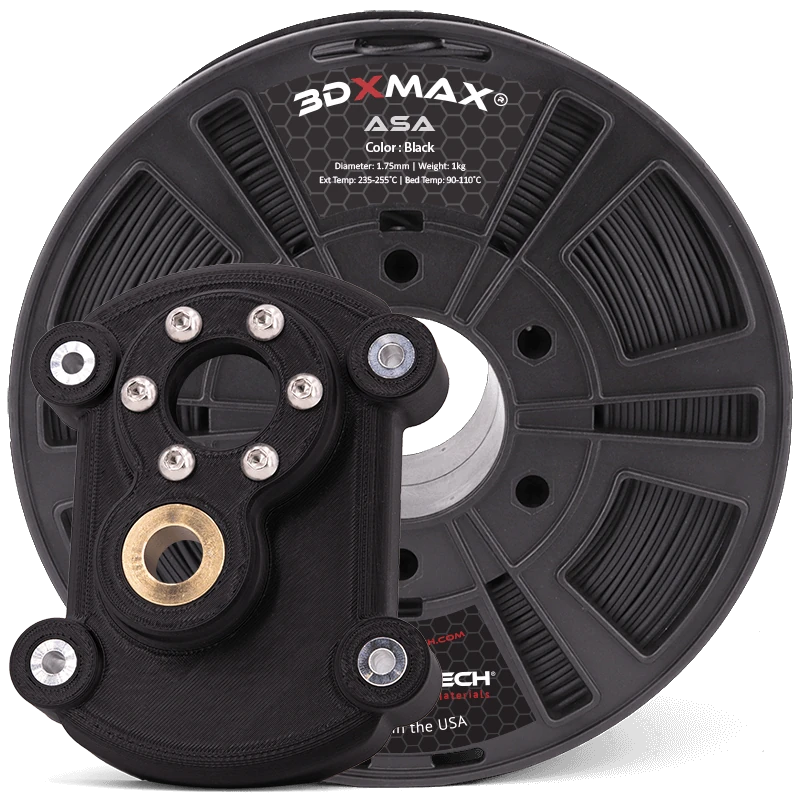
3DXTech draws this exact resin into 3DXMAX ASA filament.
Qualified, tolerance-controlled, ready for the printer — no extrusion step on your side.
If your throughput doesn’t justify running an extruder — or you need diameter tolerance already qualified — the finished 3DXMAX ASA spool is the same weatherable resin with the extrusion done by 3DXTech. Rev1 stocks both formats, so you can start on spools and move to pellets when volume demands it.
View 3DXMAX ASA filament →Which format of ASA should you buy?
Same resin, different point in the chain — the honest trade-offs.
| 3DXMAX ASA Pellets | 3DXMAX ASA Filament | CarbonX ASA+CF | |
|---|---|---|---|
| Format | Natural pellets, 10 / 25 kg pails | Spooled filament, ready to print | Spooled CF-reinforced filament |
| You need | Filament extruder or pellet-fed printer | A standard FDM printer | FDM printer + hardened nozzle |
| Cost per kg | Lowest — resin cost | Higher — includes precision extrusion | Highest — CF compound |
| Weatherable | Yes | Yes | Yes |
| Best for | Filament making, pellet-fed, volume | Everyday outdoor printing | Stiff outdoor structural parts |
Qualitative comparison within the 3DXTech ASA family; confirm exact properties against each TDS. Availability and pricing vary by size and date.
3DXTech 3DXMAX ASA Pellets — Technical Data
RESOURCES
Datasheets & Extrusion Support
Everything you need to qualify and process ASA pellets.
WHY REV1 TECH
Authorized 3DXTech Reseller. Materials Specialists.
Rev1 Technologies is an authorized 3DXTech reseller in Auburn Hills, MI, supplying genuine USA-made polymers in every format — pellets, filament, and CF compounds — with real process support.
We help you pick the right ASA format, dial in the process, and keep material flowing.
FAQ
3DXMAX ASA Pellets — Common Questions
What are ASA pellets for?
Extrusion feedstock — the same weatherable 3DXMAX ASA resin behind the filament, supplied as natural pellets. Feed a filament extruder to draw your own filament, or run them in a pellet-fed 3D printer.
Why ASA instead of ABS?
ASA matches ABS mechanically but adds UV and weather resistance — parts keep their color and strength outdoors instead of yellowing and going brittle. It’s the standard for exterior parts.
Can I print these directly?
Only on pellet-fed printers. For a standard filament printer, either extrude these into filament first or buy the finished 3DXMAX ASA spool — we stock both.
How do I dry them?
80 °C for 2–4 hours before extrusion — a dedicated dryer or toaster oven works. Wet resin shows up as bubbles in the extruded strand; if you see them, dry longer.
What extrusion temperature?
190–210 °C — a friendly, low window compared with high-temp engineering resins. Adjust for how your extruder is configured.
What sizes do pails come in?
10 kg and 25 kg. Pick the size in the buy-box — the 25 kg pail is the better per-kilogram value if your throughput justifies it.
Pellets or finished filament — which should I buy?
Buy pellets if you control the extrusion step and want resin economics or custom diameters. Buy the 3DXMAX ASA spool if you want qualified filament ready for the printer. Unsure? Tell us your setup and we’ll advise.
Is it made in the USA?
Yes — 3DXTech compounds 3DXMAX ASA in its Grand Rapids, Michigan facility, with a published technical data sheet and lot traceability.
Can Rev1 help me set up extrusion?
Yes. Tell us your extruder, drying setup, and target diameter, and our materials team helps you dial in the process and pick the right pail size. Call (248) 707-2950.