Bambu Lab TPU for AMS Flexible TPU That Actually Runs in the AMS
Flexible TPU That Actually Runs in the AMS
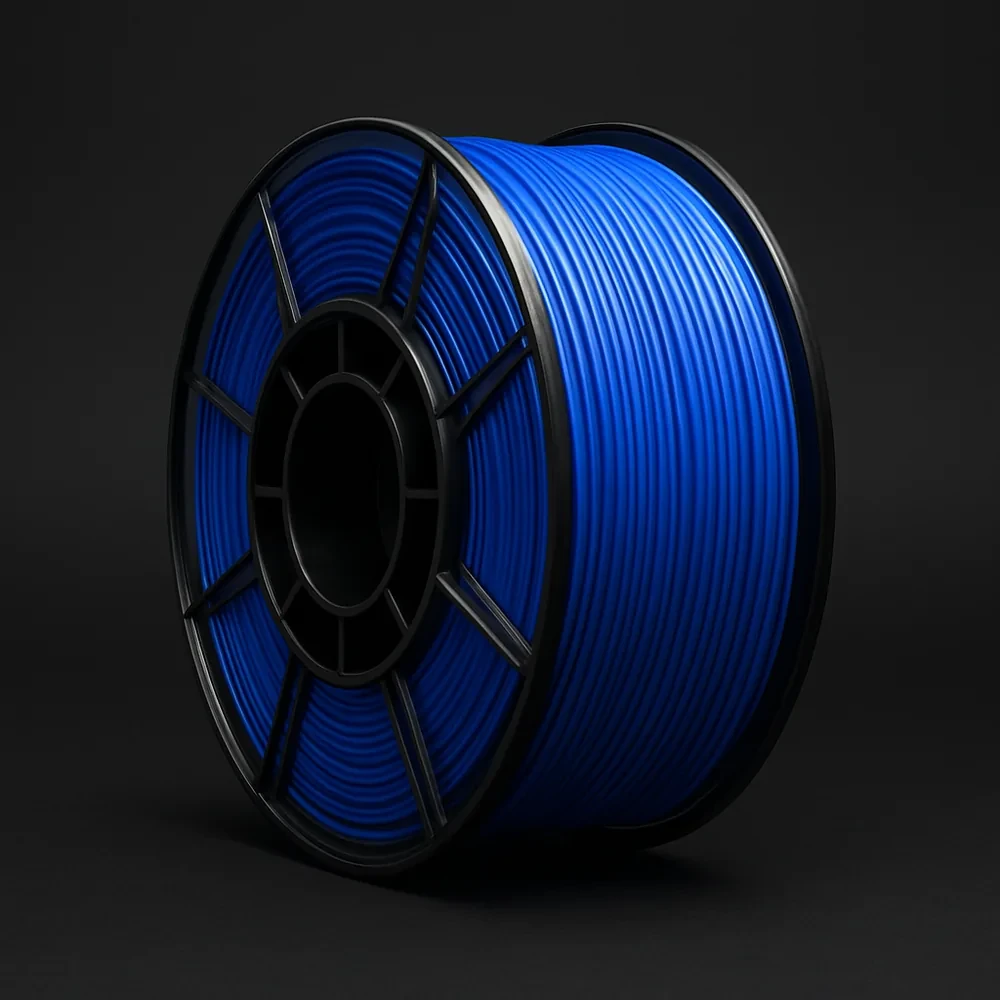
TPU for AMS is Bambu Lab’s flexible thermoplastic polyurethane reformulated so it can run through the AMS — something soft TPU has never reliably done. A firmer Shore 68D durometer gives the filament enough column strength to feed through the AMS’s PTFE path and buffer without buckling, while keeping the toughness that defines TPU: >650% elongation at break, a 124 kJ/m² impact strength, and excellent wear and oil resistance. Print multi-color flexible parts on Bambu hardware, or run it on any open 1.75 mm FDM machine. Full specifications →
In stock in the USA — ships from Rev1. Need a print profile, volume pricing, or help choosing the right flexible material? Call (248) 707-2950.
OEM-Fresh Filament. TDS-Backed Properties.
Every spool of Bambu Lab TPU for AMS ships with lot-traceable material backed by the official Technical Data Sheet. Rev1 Technologies is your authorized Bambu Lab reseller and US support partner, Auburn Hills, Michigan.
The First TPU Engineered to Run in the AMS.
Soft flexible filaments have always been the AMS’s blind spot — low-durometer TPU buckles inside the feed path and buffer, jamming the automated material system that makes multi-color printing effortless for rigid filaments. Bambu Lab’s TPU for AMS solves this with a firmer Shore 68D formulation that has enough column strength to push cleanly through the PTFE tubing and AMS mechanism, while retaining the elasticity, impact absorption, and abrasion resistance that make TPU worth printing. It is flexible where it matters and stiff enough where it counts.
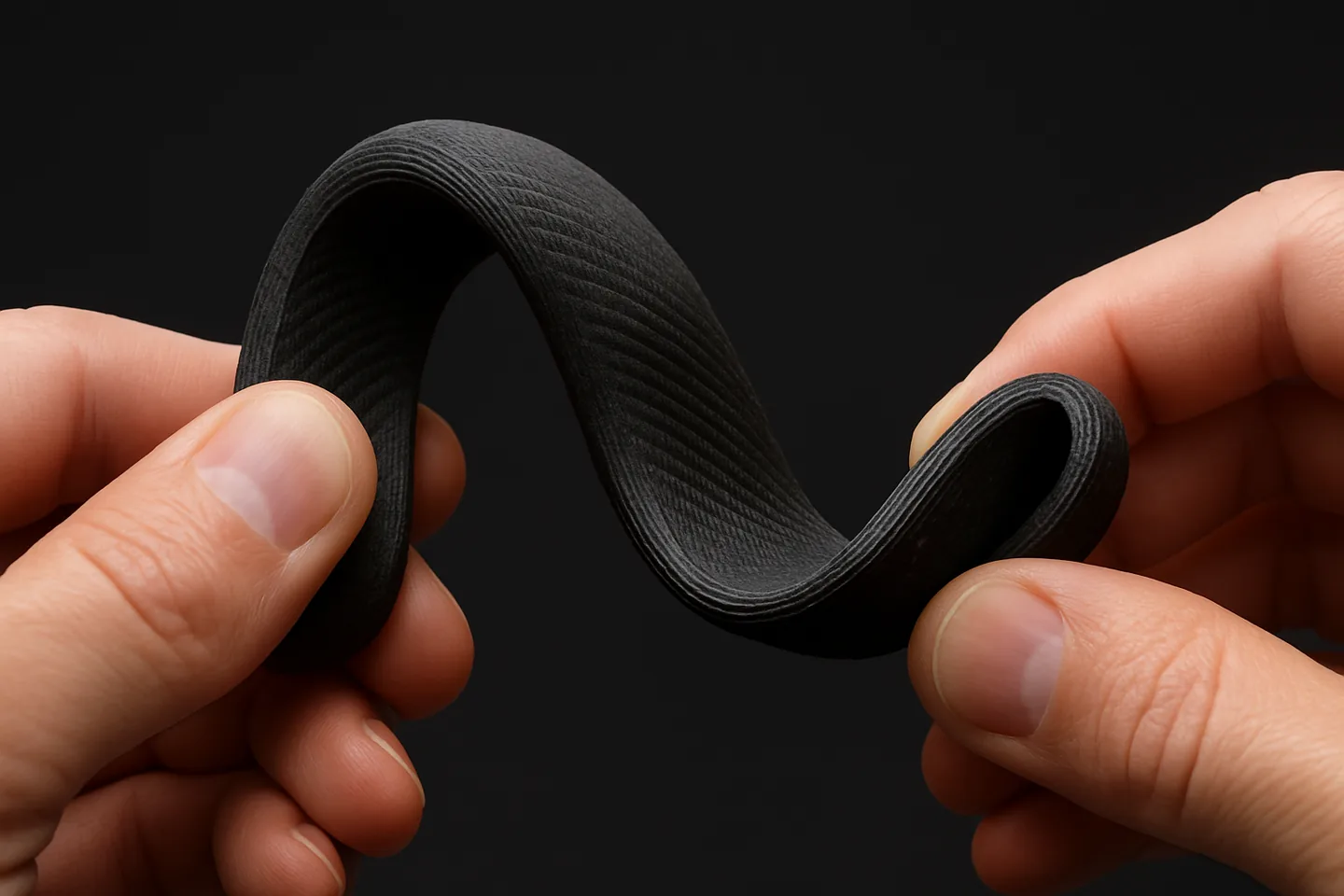
Firm Enough to Feed. Flexible Enough to Matter.
At Shore 68D, TPU for AMS sits at the firmer end of the flexible-filament range — closer to a stiff rubber than a soft gasket material. That durometer is the key to AMS compatibility: the filament resists the compressive buckling that causes soft TPU to bind inside automated feed systems. Yet it still bends, twists, and absorbs impact like the thermoplastic polyurethane it is, with >650% elongation before break.
Multi-Color Flexible Printing, Finally.
Because it feeds through the AMS, TPU for AMS unlocks something the flexible-material world hasn’t had: automated multi-color and multi-material flexible prints. Load several colors into the AMS and print two-tone phone cases, logo-embossed grips, or color-coded gaskets in a single job — with the AMS handling filament changes and purging automatically. On a 1 kg spool with standard Bambu geometry, it drops straight into the ecosystem.
Stretches Past 650%. Absorbs Impact. TDS-Verified.
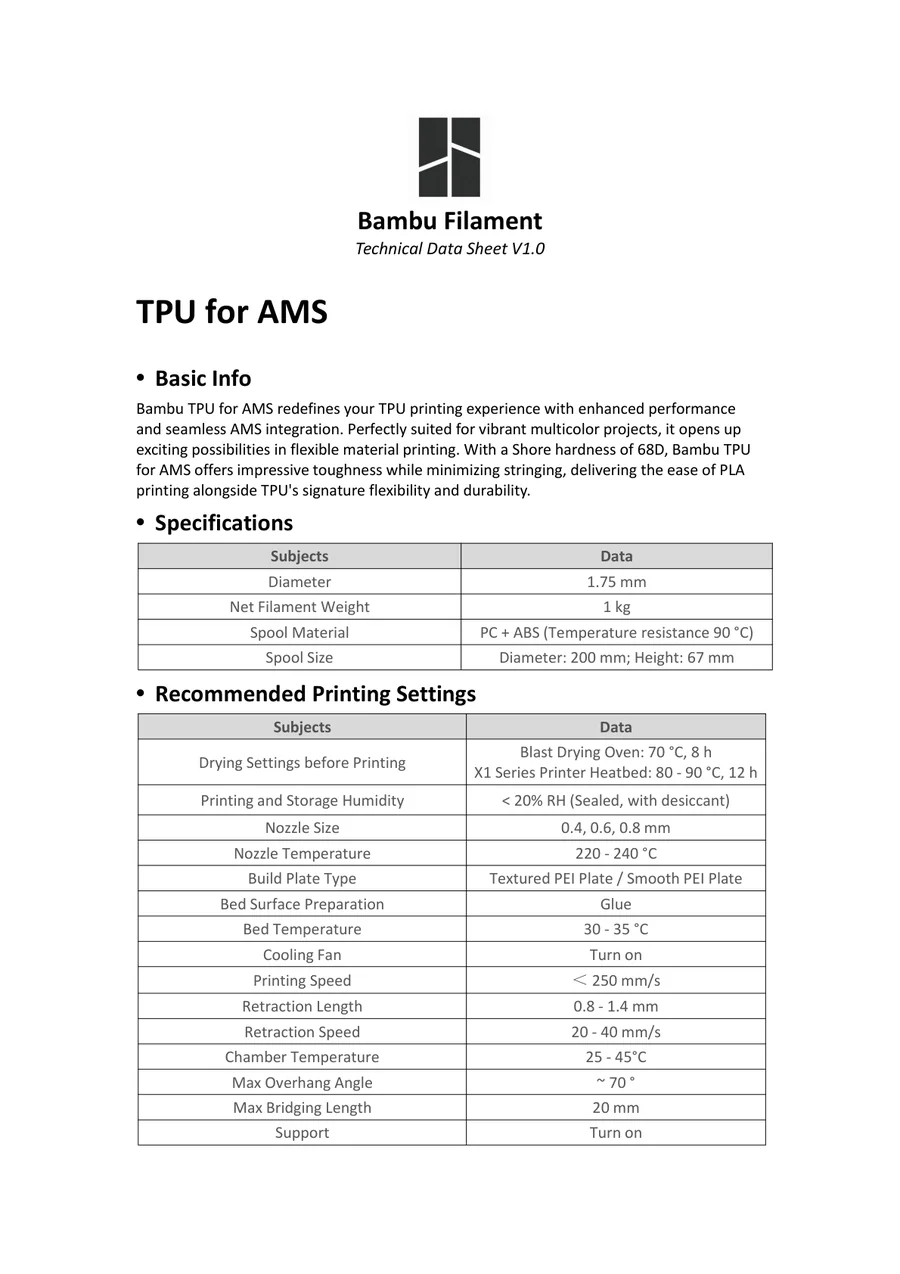
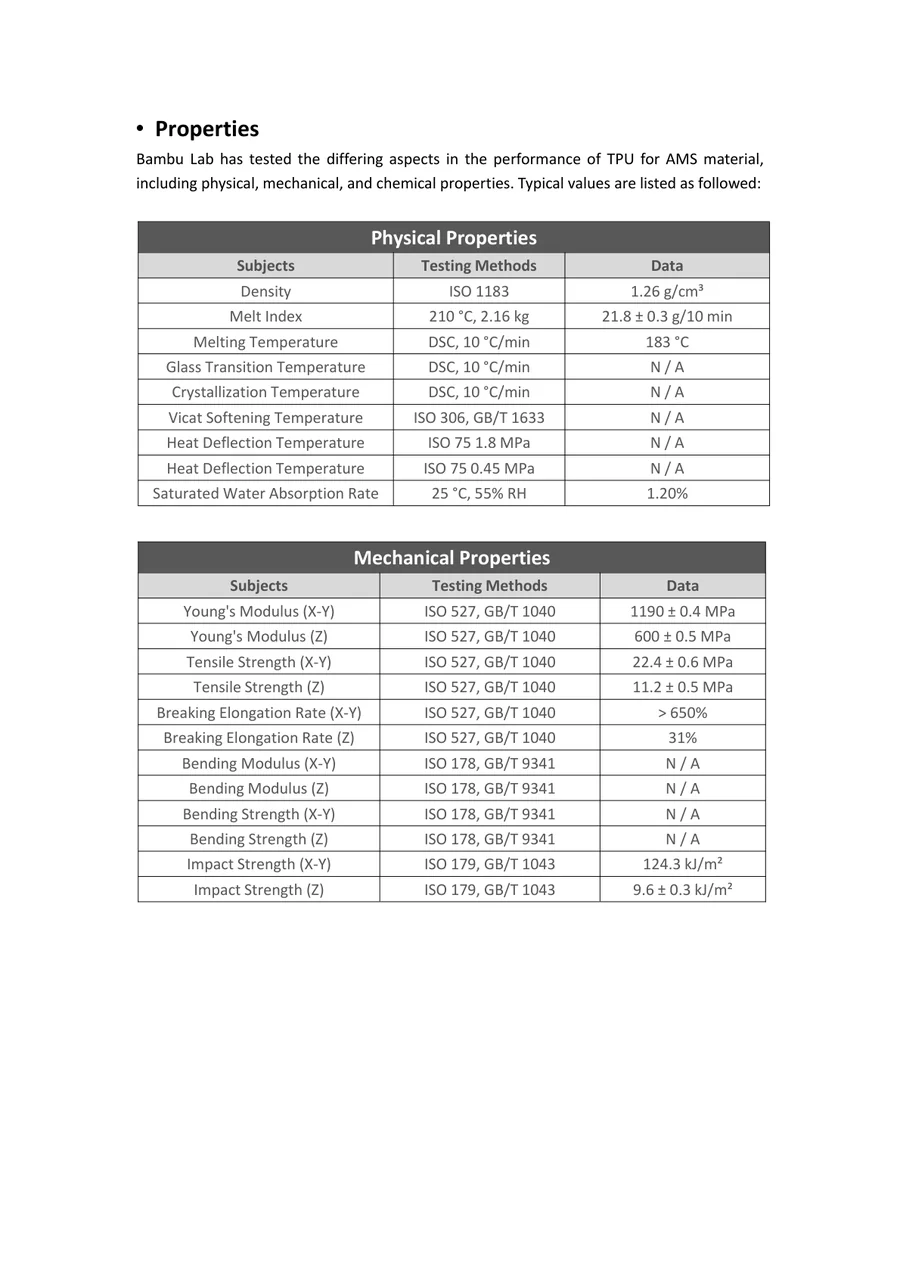
TPU for AMS is defined by two numbers that rigid filaments can’t touch: a breaking elongation of more than 650% in the X-Y plane and a Charpy impact strength of 124.3 kJ/m². Together they describe a material that deforms enormously before it fails and shrugs off impacts that would shatter PLA or crack PETG. With a tensile strength of 22.4 MPa and a Young’s modulus of 1190 MPa, it is stiff for a flexible — every value here comes straight from Bambu Lab’s official Technical Data Sheet, tested to ISO 527, ISO 179, and ISO 1183.
>650% Elongation. It Bends Before It Breaks.
Elongation at break is the headline property of any flexible filament, and at more than 650% in the print plane, TPU for AMS can stretch to many times its original length before failing. For living hinges, snap straps, seals under compression, and parts that flex thousands of cycles in service, that ductility is what separates a part that lasts from one that cracks. Tensile strength of 22.4 MPa gives it real load capacity, not just stretch.
124 kJ/m² Impact. Built to Take Hits.
A Charpy impact strength of 124.3 kJ/m² in the X-Y plane puts TPU for AMS in a different class from rigid filaments — it absorbs and dissipates impact energy rather than transmitting it to a fracture point. Bumpers, protective housings, drone parts, and anything that gets dropped or knocked benefit directly. Density is a light 1.26 g/cm³, so impact-absorbing parts stay low-mass. As with all TPU, Z-axis (interlayer) properties are lower, so orient impact-critical features in-plane.
Wear-Resistant. Oil-Resistant. Made to Last in Service.
TPU’s reputation is built on durability under repeated deformation, and TPU for AMS carries it fully. The material resists abrasion and wear that would grind down rigid plastics, and it stands up to most oils and greases — making it a practical choice for functional parts that live in contact with machinery, hands, or the road. It is not chemically bulletproof: it is not resistant to strong acids, alkalis, or aggressive organic solvents, so match the environment to the material.
Abrasion & Wear Resistance for Moving Parts.
Rollers, bushings, drive wheels, and protective sleeves take constant rubbing contact that wears rigid plastics smooth and brittle. TPU for AMS resists that abrasion the way engineered rubber does, deforming elastically under load and springing back. Combined with its impact toughness, that makes it a strong candidate for wear surfaces, anti-slip treads, and any part where a rigid material would crack or polish away over its service life.
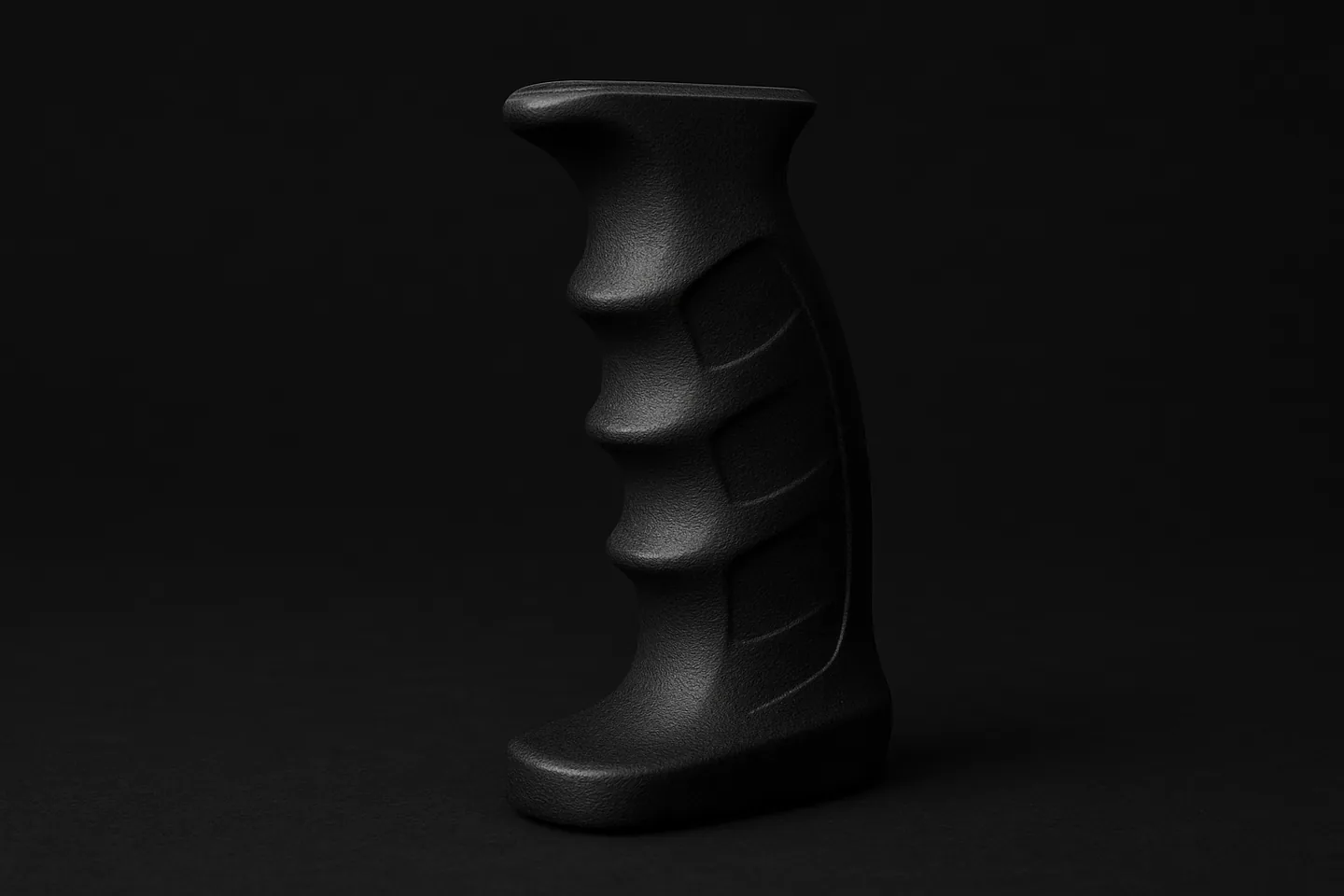
Grippy, Compliant, Comfortable in the Hand.
The same elasticity that makes TPU for AMS impact-tough gives printed parts a soft-touch, high-friction surface. Tool grips, handle covers, ergonomic pads, and anti-slip feet get a tactile quality that rigid filaments can’t produce. Because the material feeds through the AMS, you can print a two-color grip — a firm structural core zone and a compliant contact surface — or add contrasting logos and markings without a second print job.
220–240°C Nozzle. 30–35°C Bed. Dry It First.
On Bambu X1, P1, and A1 hardware, the RFID-tagged spool loads a factory-tuned TPU for AMS profile automatically in Bambu Studio — nozzle temperature, bed adhesion, flow, and cooling all set for the material. On open printers, run the nozzle at 220–240°C, a PEI plate at 30–35°C with a glue layer for release, part cooling on, and print speeds under 250 mm/s. TPU is highly hygroscopic, so drying before use is not optional — a damp spool strings, bubbles, and prints weak regardless of settings.
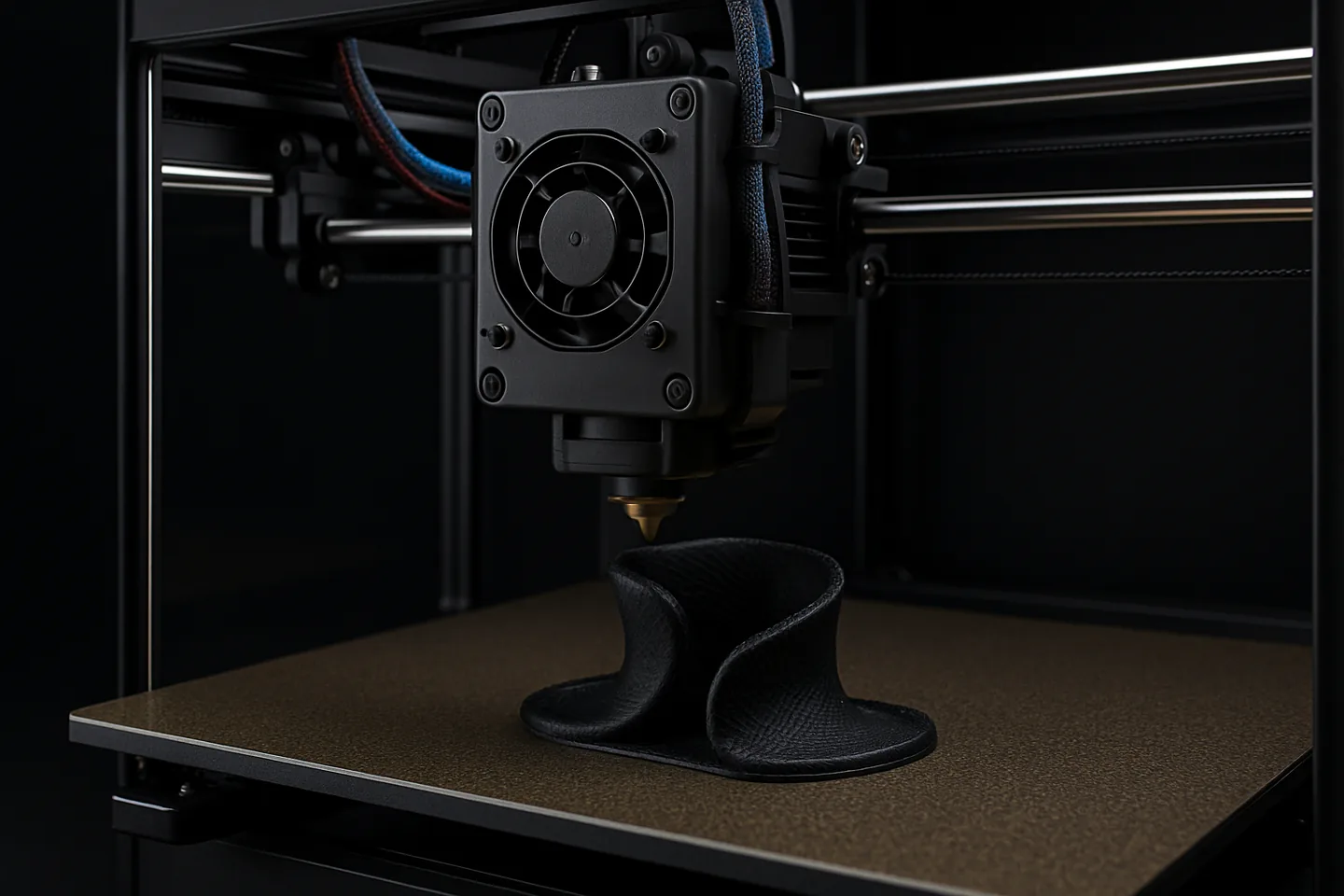
Temperatures Dialed for Flexible Flow.
TPU for AMS prints at a nozzle temperature of 220–240°C with a low bed temperature of 30–35°C on a smooth or textured PEI plate. Apply a glue layer as a release agent so the flexible part lifts cleanly without tearing. Keep the part cooling fan on, hold print speed below 250 mm/s, and use a chamber temperature of 25–45°C. Support is enabled by default, and overhangs up to roughly 70° print cleanly.
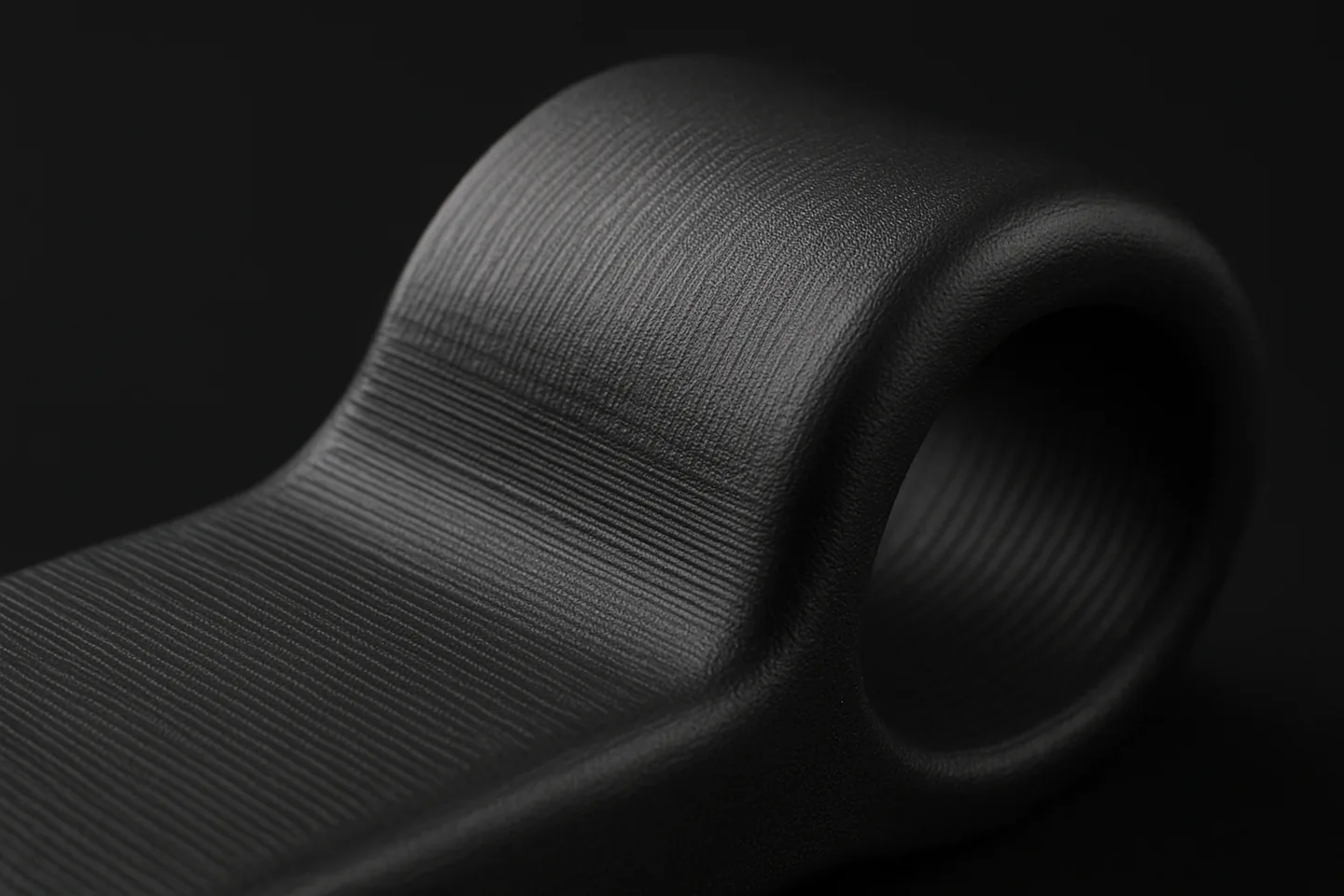
Retraction & Cooling for Clean Flexible Prints.
Flexible filaments are prone to stringing because the elastic filament resists sharp retraction. TPU for AMS is tuned to reduce that, and it responds well to a moderate retraction of 0.8–1.4 mm at 20–40 mm/s. Keep the cooling fan running for crisp detail, and bridge spans up to about 20 mm without support. On direct-drive extruders (including Bambu’s), it prints noticeably cleaner than soft TPU — the firmer durometer keeps the filament path stable.
AMS-Native on Bambu. Open-Format on Everything Else.
TPU for AMS is the rare flexible filament that carries the Bambu RFID tag and is validated to run through the AMS Automated Material System on X1 Carbon, X1E, P1P, P1S, A1, and A1 Mini printers — as well as AMS lite. On machines without an AMS, or on any open 1.75 mm FDM printer with a heated bed, it runs as a standard flexible filament. For best results with any flexible material, a direct-drive extruder is preferred over long Bowden paths.
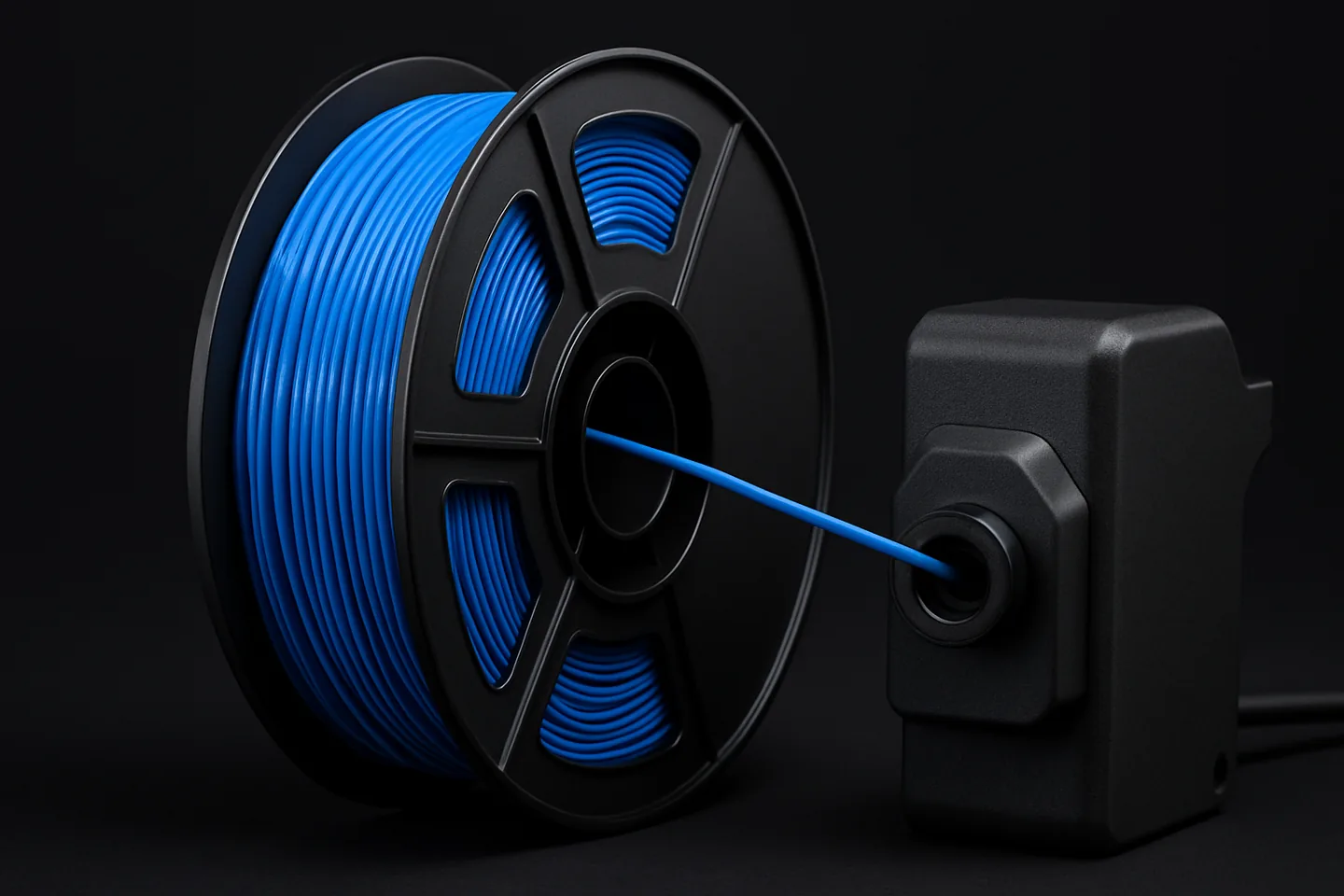
Load It in the AMS. The Profile Loads Itself.
Insert a TPU for AMS spool into the AMS on a Bambu X1, P1, or A1 and the printer reads the RFID tag, identifies the material, and applies the correct nozzle temperature, bed temperature, and flow settings in Bambu Studio — no manual entry. This is the payoff of the 68D formulation: a flexible material that behaves like a first-class citizen in the automated ecosystem, including coordinated purging on multi-color jobs.
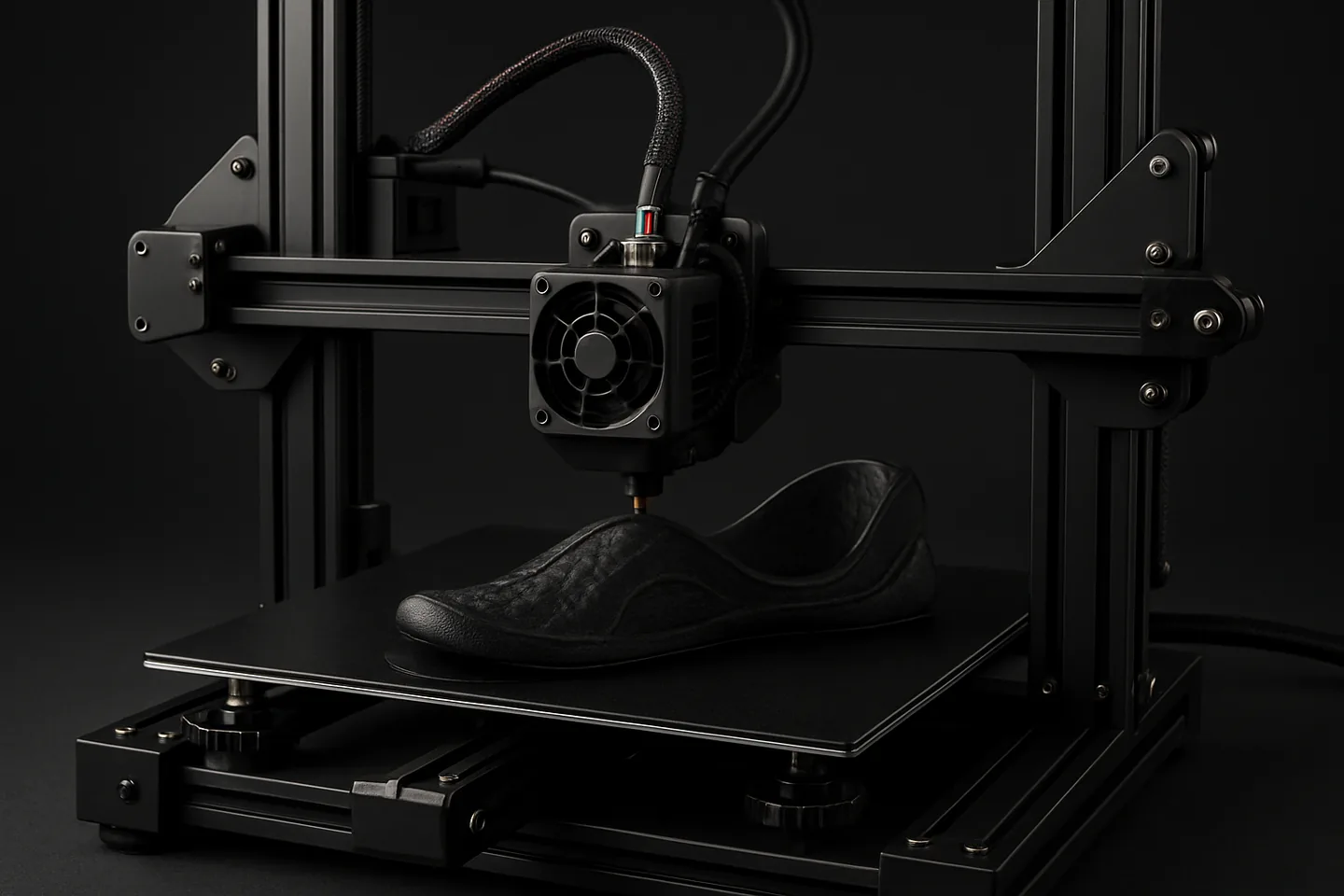
Any Heated-Bed FDM Machine. Direct-Drive Preferred.
TPU for AMS is not firmware-locked. Any 1.75 mm open-format machine with a heated bed and a hotend capable of 240°C will run it — Prusa, Creality, Voron, and industrial FFF machines included. As with all flexibles, a direct-drive extruder gives the best results because it minimizes the unconstrained filament path where soft material can buckle. The firmer 68D durometer makes TPU for AMS more forgiving than typical 95A TPU even on Bowden setups, but slow the first layer and keep retraction modest.
Cleaner Detail and Less Stringing Than Soft TPU.
One of the practical advantages of a firmer TPU is print quality. Soft 95A TPU is notorious for stringing, blobs, and mushy detail because the elastic filament fights retraction and the low durometer smears fine features. The 68D formulation of TPU for AMS holds detail more like a semi-rigid filament while still flexing in the finished part — giving cleaner walls, sharper embossing, and more predictable dimensional results across the AMS ecosystem.
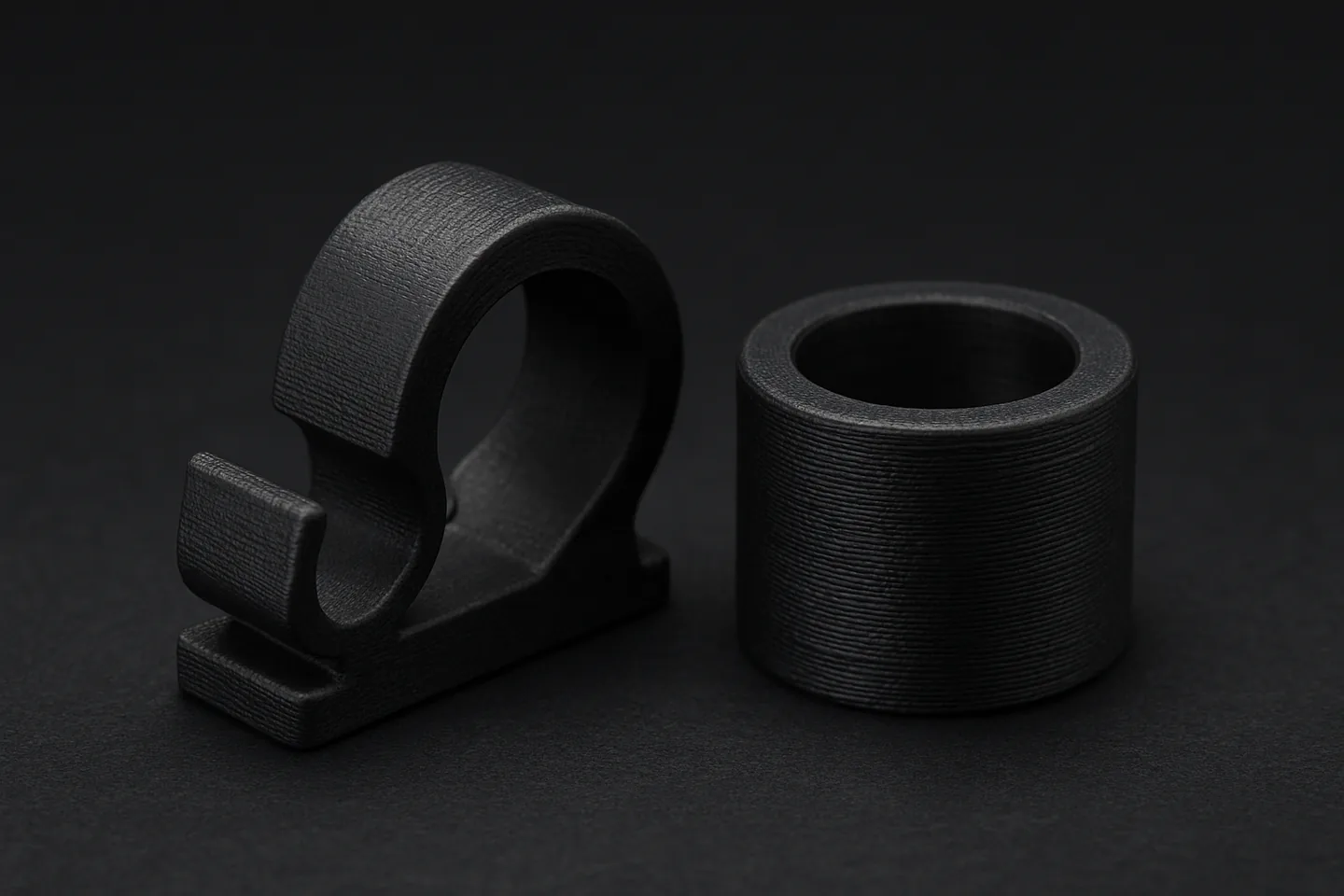
Predictable Fit for Flexible Functional Parts.
Printing gaskets, seals, snap straps, and press-fit bumpers requires dimensional predictability that soft TPU rarely delivers. The firmer melt behavior of TPU for AMS gives tighter tolerance control on holes, slots, and mating surfaces, so flexible parts land closer to nominal on the first try. Its high elongation then does the rest — a snap-fit that’s slightly tight simply stretches into place instead of cracking.
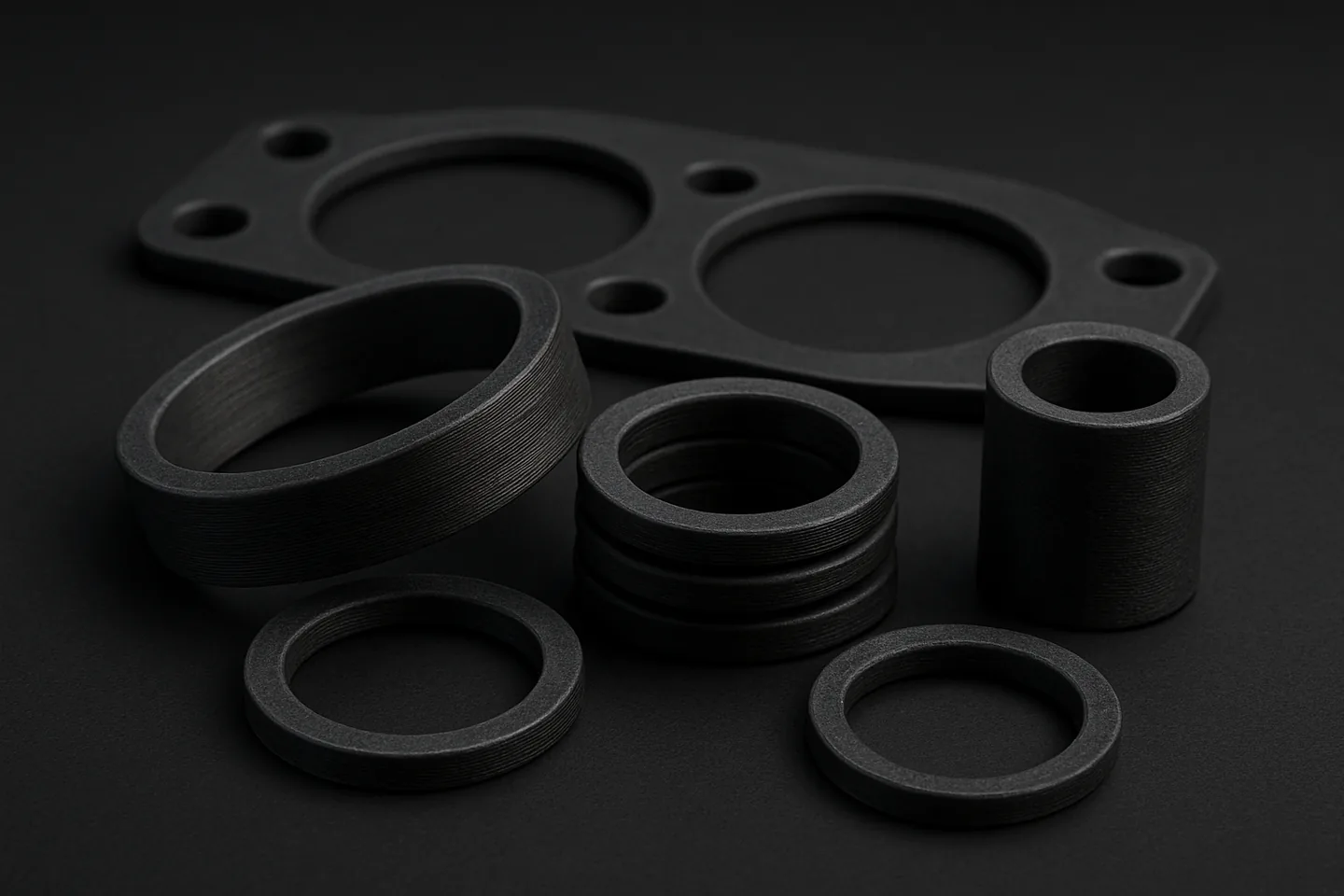
Seals and Gaskets That Actually Seal.
Gaskets, O-ring substitutes, sealing rings, and vibration bushings are classic TPU applications, and TPU for AMS handles them with the added benefit of consistent dimensions and the option of multi-color coding in the AMS. Its resistance to oils and greases suits enclosure seals and machinery pads, while the elastomeric compression set of TPU keeps a printed gasket sealing under sustained clamping load far better than any rigid filament.
Cases, Bumpers, Dampers, Grips, Gaskets, Wheels.
TPU for AMS covers the full spread of flexible-part applications — from consumer accessories to functional industrial components — with the added ability to do them in multiple colors on Bambu hardware. Anywhere a part needs to bend, grip, cushion, seal, or survive impact, this is the material, and the AMS compatibility means those parts no longer have to be single-color, single-material afterthoughts.
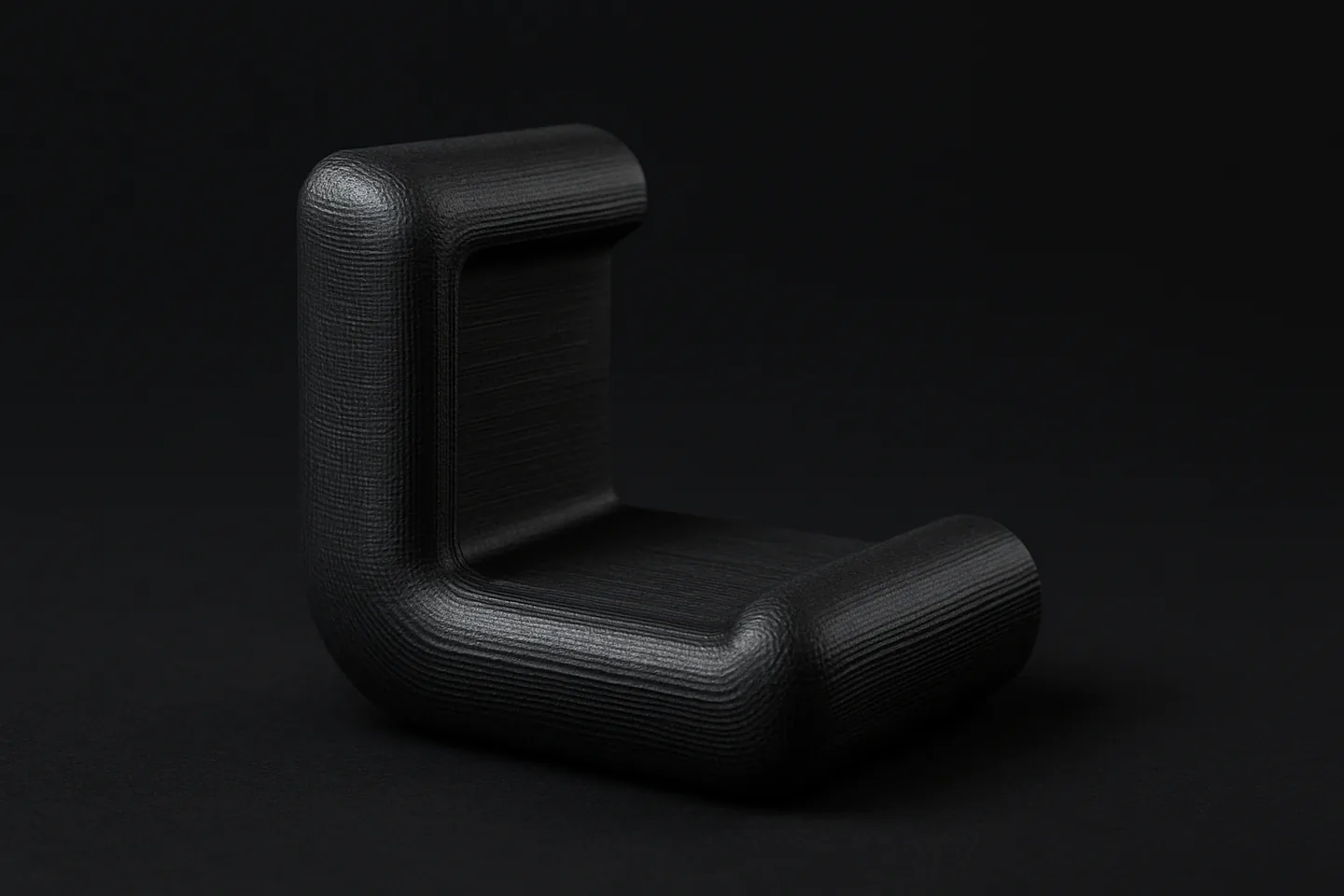
Consumer & Protective — Cases, Bumpers, Guards.
Phone and device cases, corner bumpers, edge guards, protective sleeves, and drop-resistant enclosures all play to TPU for AMS’s strengths: high impact absorption, flexibility for a friction fit, and a soft-touch surface. With multi-color AMS printing, a case can carry a contrasting logo or two-tone design in a single job — something that used to require painting or a second print in another material.
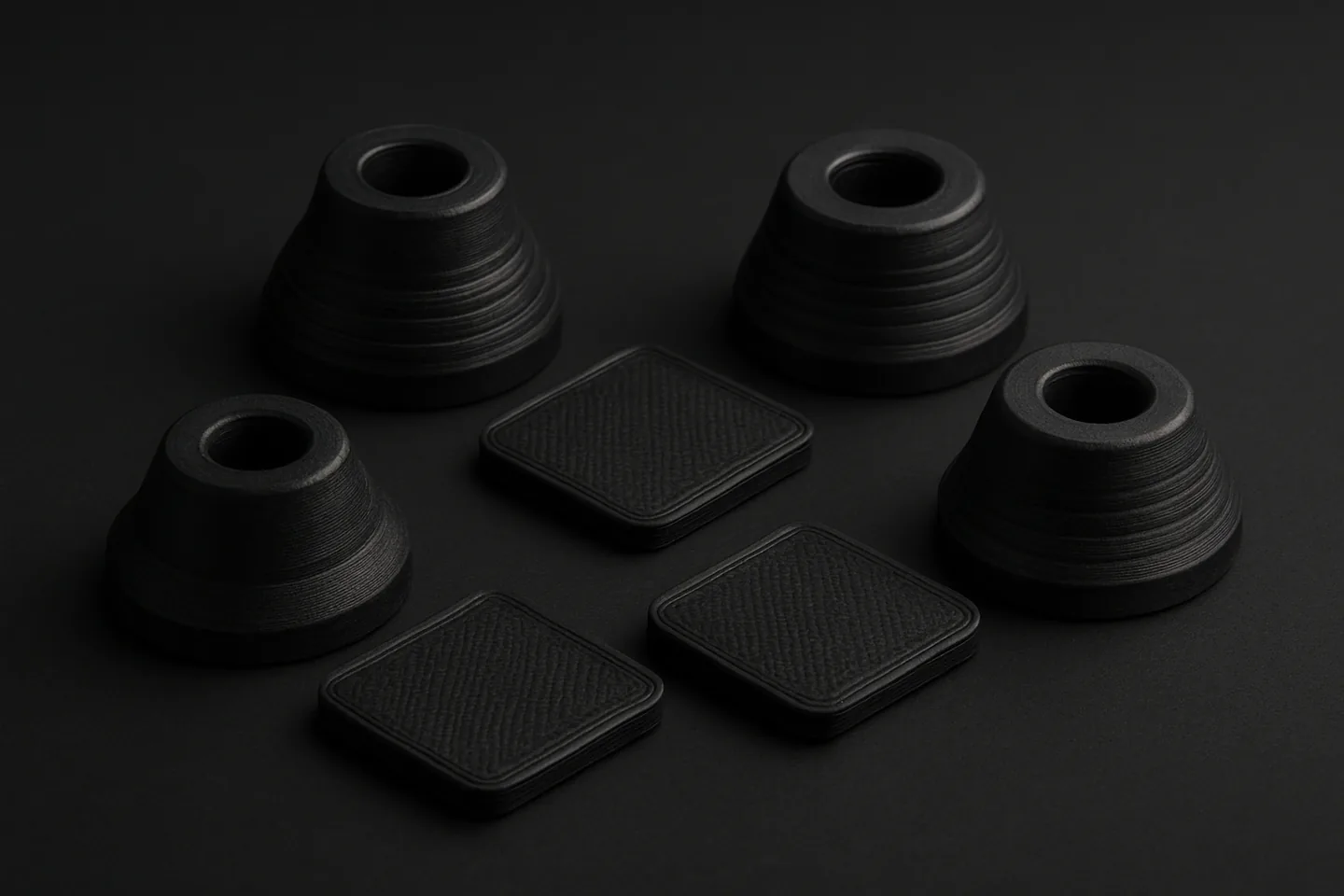
Functional & Industrial — Dampers, Feet, Wheels.
On the functional side, TPU for AMS prints anti-vibration feet and damping pads for machinery and electronics, wear-resistant wheels and rollers, cable strain reliefs and grommets, tool grips, and sealing components. Its oil and grease resistance and high fatigue life suit shop-floor and equipment parts, and the AMS lets you color-code sets — different durometers aren’t needed when one firm-but-flexible material covers the range.
Dry It First. Store It Sealed. Print Confidently.
TPU is one of the most hygroscopic 3D printing materials — it pulls moisture from the air quickly, and even a small amount degrades print quality badly: stringing, surface bubbling, popping at the nozzle, and weak layers. TPU for AMS has a saturated water absorption of 1.20%, so drying before use and sealed storage between prints are essential, not optional. Bambu ships every spool sealed with desiccant; keep it that way when the spool is idle.
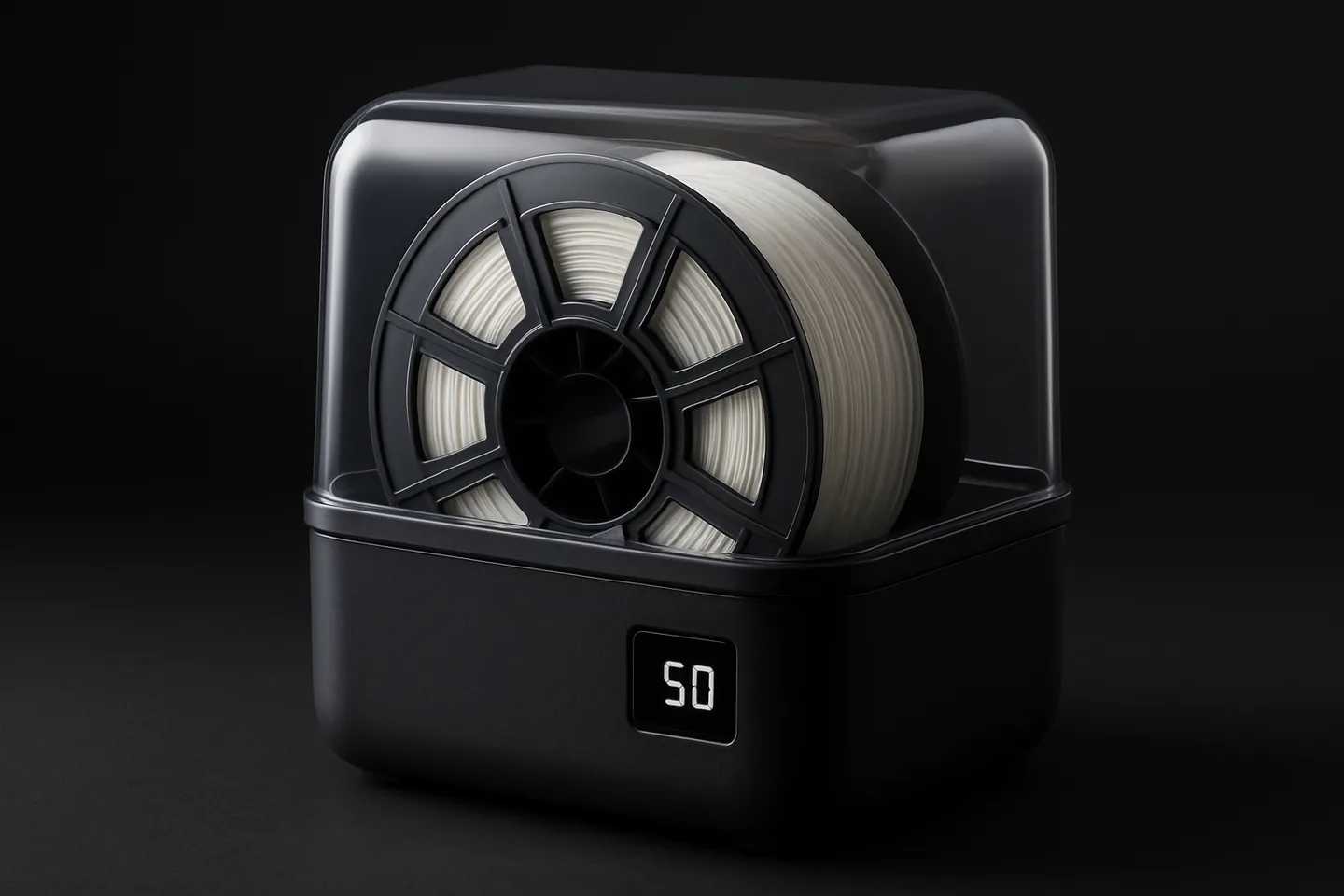
70°C / 8 h in a Blast Oven. Or the X1 Heatbed.
Bambu Lab specifies two drying methods for TPU for AMS: a blast (convection) drying oven at 70°C for 8 hours, or the Bambu X1 series heatbed at 80–90°C for 12 hours with the spool resting on the bed. Print at a storage humidity below 20% RH, sealed with desiccant, to keep the filament in condition. For continuous flexible printing, a heated drybox that feeds the printer directly is the most reliable way to keep TPU dry through long jobs.
Real Flexible Parts. Multi-Color. Rev1-Tested.
TPU for AMS is print-ready at Rev1’s Auburn Hills facility on Bambu X1 Carbon and P1S hardware with the AMS. The gallery below shows representative flexible parts — cases, dampers, grips, gaskets, wheels, and bumpers — printed dry-filament at 220–240°C nozzle, 30–35°C PEI bed with glue, cooling on. This is Rev1’s baseline profile for the material.
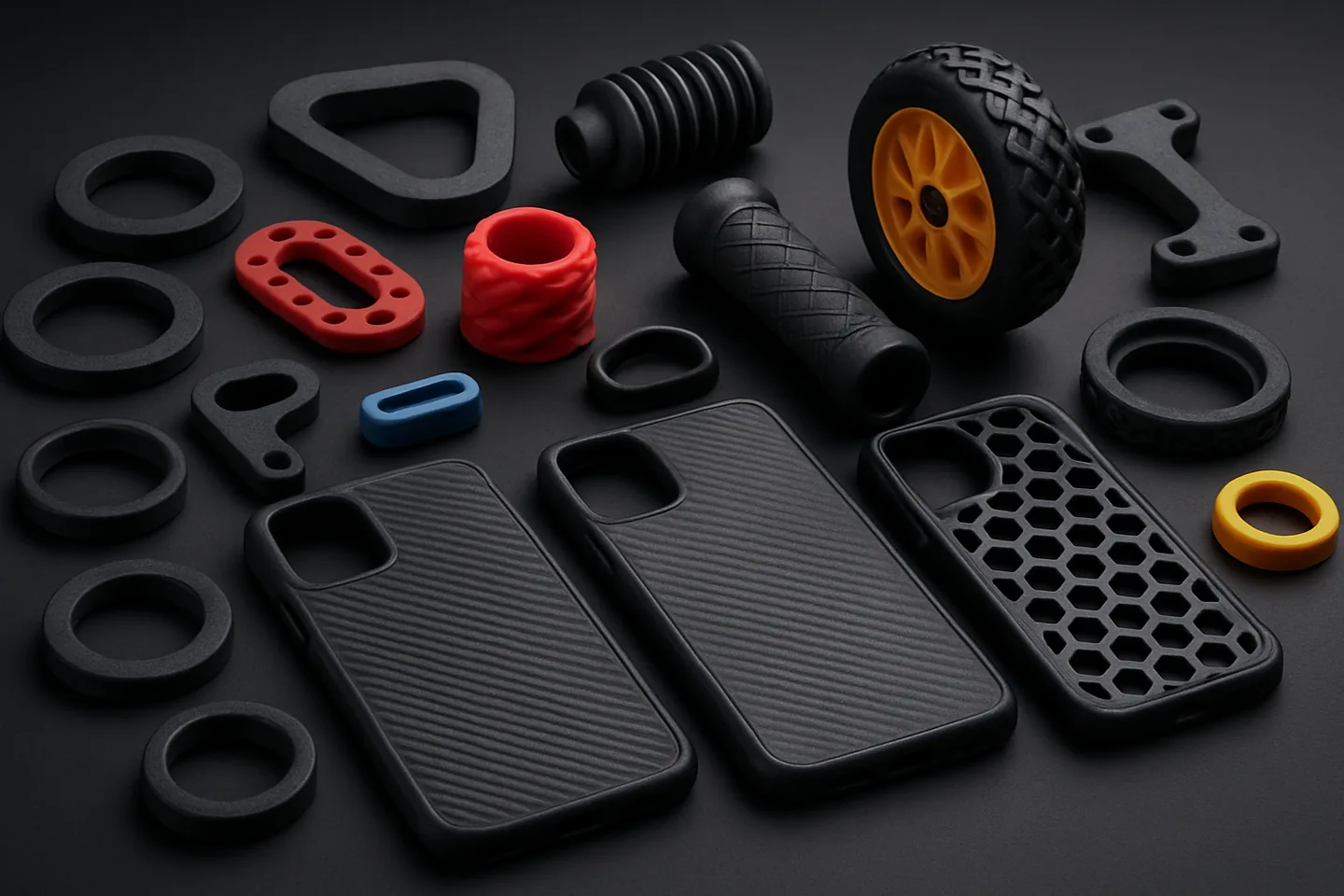
Flexible TPU for AMS parts printed at Rev1 — cases, dampers, grips, gaskets, wheels, bumpers. 220–240°C nozzle, 30–35°C PEI bed, cooling on.
The Brand That Made Multi-Color Easy. Now Flexible Too.
Bambu Lab launched in 2022 and redefined desktop FDM with the AMS — the Automated Material System that made multi-color and multi-material printing effortless for the first time. Its one persistent limitation was flexible filament: soft TPU simply couldn’t run through the mechanism. TPU for AMS is the materials-side answer, a filament engineered specifically so the AMS ecosystem finally extends to flexible parts. It is a purpose-built formulation with published, ISO-tested TDS values — not a generic TPU relabeled.
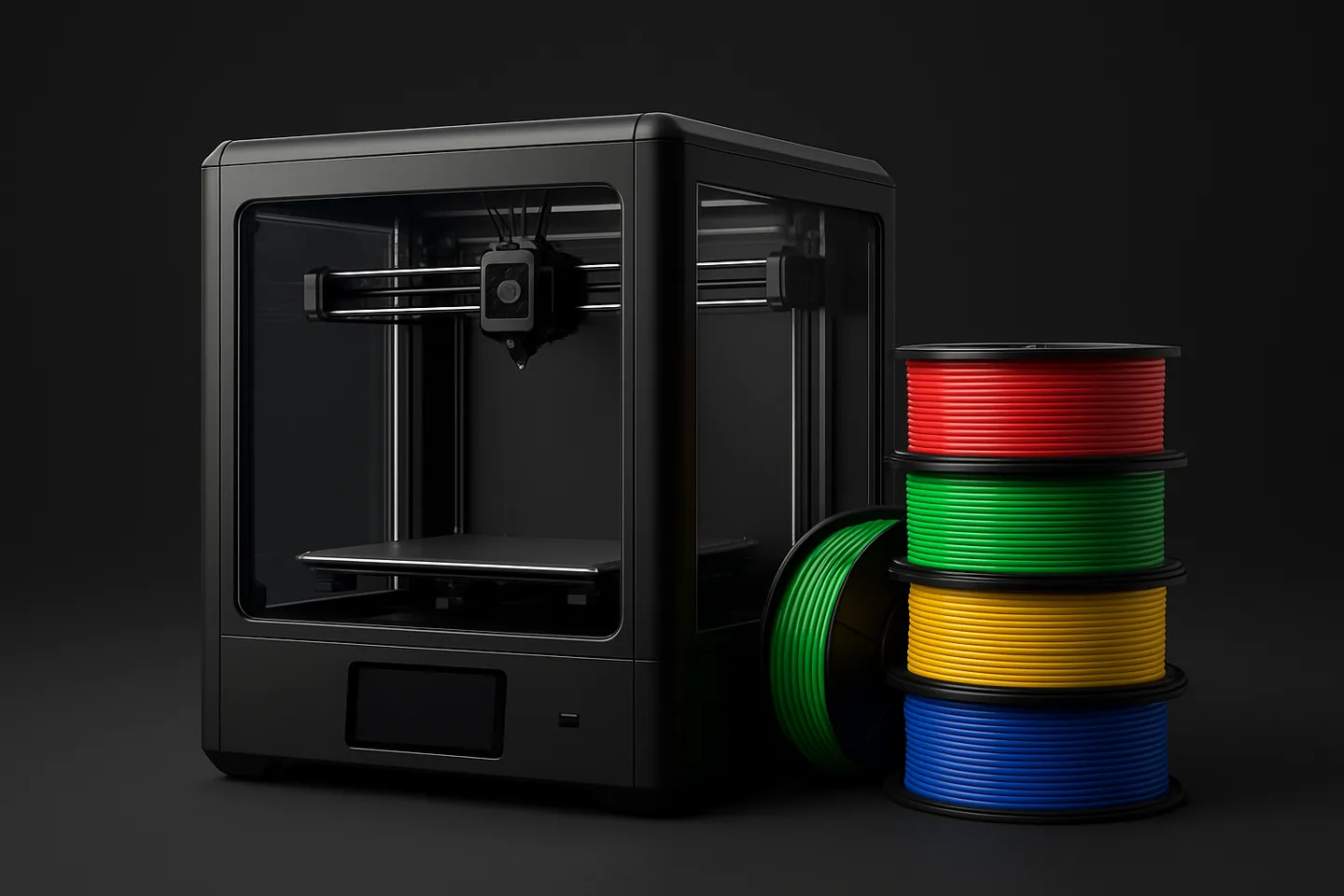
Materials Engineered for the AMS That Needs Them.
Bambu Lab develops its filament line in tandem with its printer hardware — the same team that designs the AMS feed path, hotend, and motion system tunes the material to it. TPU for AMS exists because that integrated approach identified the exact durometer and rheology needed to make flexible filament feed reliably through an automated system. Buy the material from the people who built the machine it’s designed for.
TPU for AMS vs Standard Soft TPU 95A
The defining question for a flexible filament buyer is durometer and feed reliability. TPU for AMS trades some of the softness of standard 95A TPU for a firmer 68D formulation that runs through automated systems and holds detail — while keeping the high elongation and impact strength that flexible parts need. The comparison below is against typical soft 95A TPU; property values reflect Bambu’s published TDS and general 95A ranges.
| Feature | Bambu Lab TPU for AMS ~$30.99 / 1kg |
Typical Soft TPU 95A ~$25–40 / 1kg |
|---|---|---|
| Shore Hardness | 68D (firm) | 95A (soft) |
| AMS Compatible | Yes (validated) | No (buckles / jams) |
| Multi-Color Flexible | Yes (via AMS) | No |
| Elongation at Break | >650% (X-Y) | ~400–550% |
| Impact Strength | 124.3 kJ/m² | High (no break typical) |
| Tensile Strength | 22.4 MPa | ~25–40 MPa |
| Detail / Stringing | Cleaner (firm) | More stringing |
| Bowden Tolerance | More forgiving | Direct-drive only |
| RFID Auto-Profile | Yes (Bambu AMS) | Varies / No |
Note: Soft TPU 95A values are general ranges across common brands, not a single product. Choose 95A when maximum softness is the priority; choose TPU for AMS when you need AMS compatibility, multi-color flexible printing, and cleaner detail.
Bambu Lab TPU for AMS Technical Data
RESOURCES
Datasheets & Print Support
Everything you need to qualify, slice, and print Bambu Lab TPU for AMS with confidence.
WHY REV1 TECH
Authorized Bambu Lab Reseller. Additive Materials Specialists.
Rev1 Technologies is an authorized Bambu Lab reseller headquartered in Auburn Hills, MI, with hands-on expertise in industrial FFF, resin, and production print farms.


Rev1 Technologies serves engineers, print farms, and manufacturers across the USA. We don’t just ship spools — we help you pick the right material, dial in the profile, and keep production running.
FAQ
Frequently Asked Questions — Bambu Lab TPU for AMS
What makes TPU for AMS different from regular flexible TPU?
The key difference is durometer and feed reliability. Most flexible TPU is Shore 95A — soft and rubbery, which is exactly why it jams inside automated feed systems like the Bambu AMS: the low-stiffness filament buckles under compression in the feed path. TPU for AMS uses a firmer Shore 68D formulation that has enough column strength to push through the AMS mechanism and PTFE tubing without binding, so it can run in the automated multi-color system. It keeps the properties that make TPU worth printing — more than 650% elongation, 124.3 kJ/m² impact strength, and wear and oil resistance — while printing cleaner and holding detail better than soft 95A TPU.
Can I really run TPU in the Bambu AMS without jamming it?
Yes — TPU for AMS is specifically validated by Bambu Lab to run through the AMS and AMS lite on X1, P1, and A1 series printers. That is the entire point of the material and its firmer 68D durometer. Standard soft TPU is not AMS-safe and Bambu does not recommend running it through the AMS. With TPU for AMS you can load multiple colors and print multi-color or multi-material flexible parts with automated filament changes and purging. As with any material, keep the filament dry and follow the loaded print profile for best results.
Do I need to dry TPU for AMS before printing?
Yes — drying is essential, and TPU is one of the most moisture-sensitive filaments there is. TPU for AMS has a saturated water absorption of 1.20%, and even modest moisture causes stringing, surface bubbling, popping at the nozzle, and weak layer adhesion. Bambu specifies drying in a blast (convection) oven at 70°C for 8 hours, or on a Bambu X1 series heatbed at 80–90°C for 12 hours with the spool on the bed. After drying, store the spool sealed with desiccant below 20% RH, or feed it from a heated drybox during long prints. Drying before first use and after any extended open-spool storage is the single most impactful thing you can do for print quality.
How flexible is Shore 68D — is it soft or firm?
Shore 68D sits at the firm end of the flexible-filament spectrum. On the Shore D scale it is comparable to a hard rubber or a soft rigid plastic — noticeably stiffer than the Shore 95A TPU most people picture when they think “flexible filament.” In practice, TPU for AMS bends, twists, and springs back, and stretches past 650% before breaking, but it resists compression enough to feed through the AMS and to hold detail on the print bed. If you need a very soft, squishy, gasket-like feel, a soft 95A TPU is a better fit; if you need flexible-yet-tough parts that also print cleanly and run in the AMS, 68D is the sweet spot.
What can I print with TPU for AMS?
TPU for AMS suits any part that needs to flex, grip, cushion, seal, or absorb impact: phone and device cases, corner bumpers and edge guards, anti-vibration feet and damping pads, tool grips and handle covers, gaskets and sealing rings, cable strain reliefs and grommets, wear-resistant wheels and rollers, and protective sleeves. Because it runs in the AMS, you can also print these in multiple colors in one job — two-tone cases, color-coded gasket sets, or logo-embossed grips. Its oil and grease resistance and high fatigue life make it appropriate for functional and light-industrial parts, not just consumer accessories.
What print settings should I use on an open (non-Bambu) printer?
TPU for AMS runs on any open 1.75 mm FDM machine with a heated bed. Start with a nozzle temperature of 220–240°C, a bed at 30–35°C using a smooth or textured PEI plate with a glue layer as a release agent, the part cooling fan on, and print speed under 250 mm/s. Use retraction of 0.8–1.4 mm at 20–40 mm/s. A direct-drive extruder gives the best results with any flexible filament, but the firmer 68D durometer of TPU for AMS makes it more forgiving on Bowden setups than typical soft TPU. Dry the filament first, and slow the first layer for reliable bed adhesion.
Is TPU for AMS resistant to chemicals, oil, and outdoor conditions?
TPU for AMS resists most oils and greases well, which makes it a practical choice for machinery contact parts, tool grips, and equipment pads. It is insoluble in water and odorless. However, it is not resistant to strong acids, alkalis, or aggressive organic solvents, so it is not appropriate for parts that see those chemicals. It is a thermoplastic polyurethane, so like all TPU it is flammable and should not be used near ignition sources. For sustained outdoor UV exposure or high-temperature environments, confirm the specific conditions with our materials team — TPU is chosen primarily for flexibility, impact, and wear rather than chemical or UV service.
What colors does TPU for AMS come in, and do they print differently?
TPU for AMS is available in Black, White, Grey, Blue, Red, Yellow, and Neon Green (availability varies by stock). All colors carry the Bambu RFID tag and are AMS-compatible on X1, P1, and A1 printers. Select your color from the swatch selector above; the hero image updates to show the actual spool color. All colors share the same mechanical properties and print settings — color choice is purely aesthetic, with no measured difference in flexibility, strength, or printability between them. Because the material runs in the AMS, you can also combine colors in a single multi-color flexible print.
Is TPU for AMS skin-safe or food-safe?
Per Bambu Lab’s Technical Data Sheet, TPU for AMS is odorless and listed as presenting no skin hazard under normal handling, which makes it a common choice for wearable-adjacent parts like grips, straps, and phone cases that contact skin during ordinary use. However, it is not certified food-safe or medical-grade, and Rev1 does not represent it as such. FDM prints in any material have porous layer lines that can harbor bacteria and are difficult to fully clean, so we do not recommend TPU for AMS for food-contact, ingestible, or implantable applications. For parts that need a food-contact or biocompatible rating, ask our materials team about certified alternatives and post-processing options.