Rev1 PC-ABS PC Heat & Toughness with ABS Printability
PC Heat & Toughness with ABS Printability
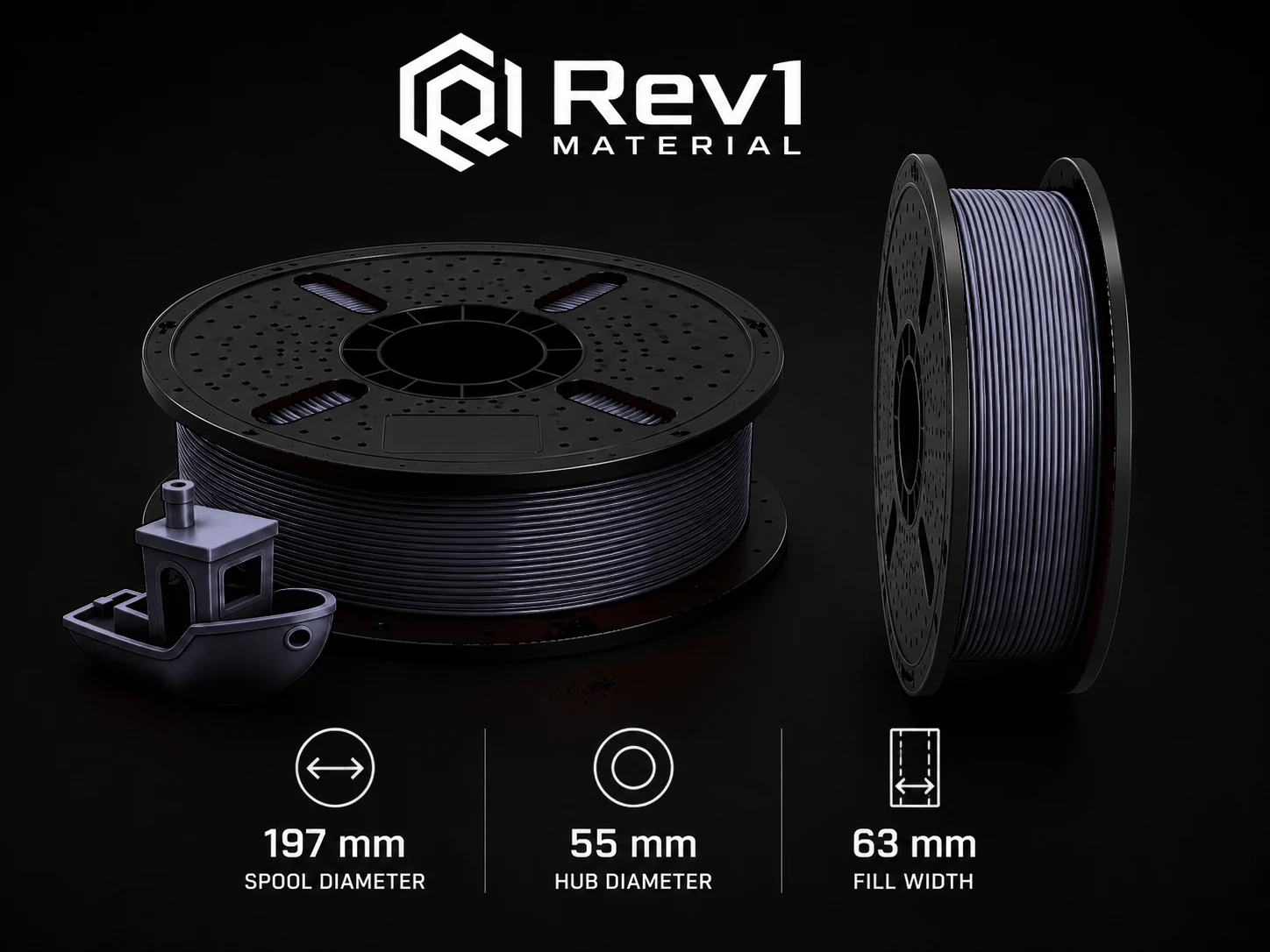
PC-ABS Alloy blends polycarbonate’s heat resistance and strength with the easier printing and finish of ABS — more heat and impact toughness than plain ABS, yet far easier to run than pure PC. The best-of-both engineering styrenic, in 3 colors, on 1 kg and 3 kg spools. Full specifications →
Made-to-order — ships in 1–3 weeks from Michigan. Available in Black, Natural & Ultra Blue, in 1.75 mm and 2.85 mm. Need a 3 kg spool or case pricing? Call (248) 707-2950.
Dimension-locked, vacuum-sealed, supported by humans.
Rev1 PC-ABS Alloy is precision-extruded in 1.75 mm and 2.85 mm, wound evenly and vacuum-sealed with desiccant, then made-to-order and supported from Auburn Hills, Michigan.

PC toughness and heat, ABS printability.
Plain ABS prints easily but tops out on heat and impact; pure PC is stronger and hotter but notoriously hard to print. PC-ABS Alloy blends the two — it holds its shape hotter and takes more impact than plain ABS, yet runs far easier than pure PC and still acetone vapor-smooths to a glossy, molded look. It wants an enclosed, draft-free printer — give it that and Rev1 PC-ABS makes rigid, dimensionally stable, automotive- and electronics-grade parts in 3 colors.
Even diameter and a clean wind for reliable, warp-free runs.
Round, consistent filament in 1.75 mm and 2.85 mm feeds smoothly so long enclosed prints don’t fail.
Every Rev1 PC-ABS spool is wound evenly and held to a tight diameter, so it feeds without under-extrusion across a full 1 kg or 3 kg run. Vacuum-sealed with desiccant to arrive dry — critical for a PC blend, which prints best straight out of the bag.
Holds its shape hotter than plain ABS — in hot cars, enclosures, and near motors where PLA and PETG soften.
More impact strength than plain ABS — stiff and durable for functional, load-bearing parts.
Vapor-smooth with acetone for a glossy, sealed, injection-molded-looking surface.
Black, Natural & Ultra Blue — the engineering-grade shades for functional parts.
Print settings for clean, crack-free PC-ABS.
PC-ABS prints like a hot ABS — hotter than plain ABS, but far easier than pure PC. It rewards a stable, draft-free environment: an enclosure, a hot bed, and minimal part cooling are what keep corners down and layers bonded.
Runs hotter than plain ABS for strong layer adhesion; a 0.4 mm brass nozzle is fine.
A hot bed plus glue or an adhesive sheet prevents the corners from lifting.
An enclosure holds chamber heat and blocks drafts — the #1 fix for warping and cracking.
PC-ABS emits styrene odor while printing; run it in a ventilated space or with filtration.
Recommended slicer settings
A solid starting profile for Rev1 PC-ABS on an enclosed FDM printer. Tune cooling and chamber temperature for your machine.
| Setting | Recommended | Notes |
|---|---|---|
| Nozzle temperature | 250–270 °C | Run hot for strong layer bonding and to reduce cracking. |
| Bed temperature | 100–110 °C | Glue stick or ABS slurry on glass/PEI for a strong first layer. |
| Chamber / enclosure | Warm, draft-free | The single biggest factor in warp- and crack-free PC-ABS. |
| Print speed | 30–60 mm/s | Moderate speeds help interlayer strength. |
| Part cooling fan | 0–20 % | Keep cooling low — too much fan cracks layers. |
| Retraction | 1–5 mm | Direct drive: ~1–2 mm. Tune to control stringing. |
| Nozzle size | 0.4 mm + | Larger nozzles add strength on functional parts. |
| Drying | 70–80 °C · 4–6 h | Dry before printing; the PC content absorbs some moisture. |
| Post-processing | Acetone vapor | Optional vapor smoothing for a glossy, sealed surface. |
Parts that have to take heat and stress.
The alloy behind functional, real-world parts.
PC-ABS trades a little of ABS's ease for PC-grade performance: higher heat resistance, greater impact toughness, machinability, and acetone vapor-smoothing — while still printing far easier than pure PC. Made-to-order in Black, Natural & Ultra Blue, in 1.75 mm and 2.85 mm, on 1 kg and 3 kg spools, shipped from Michigan.
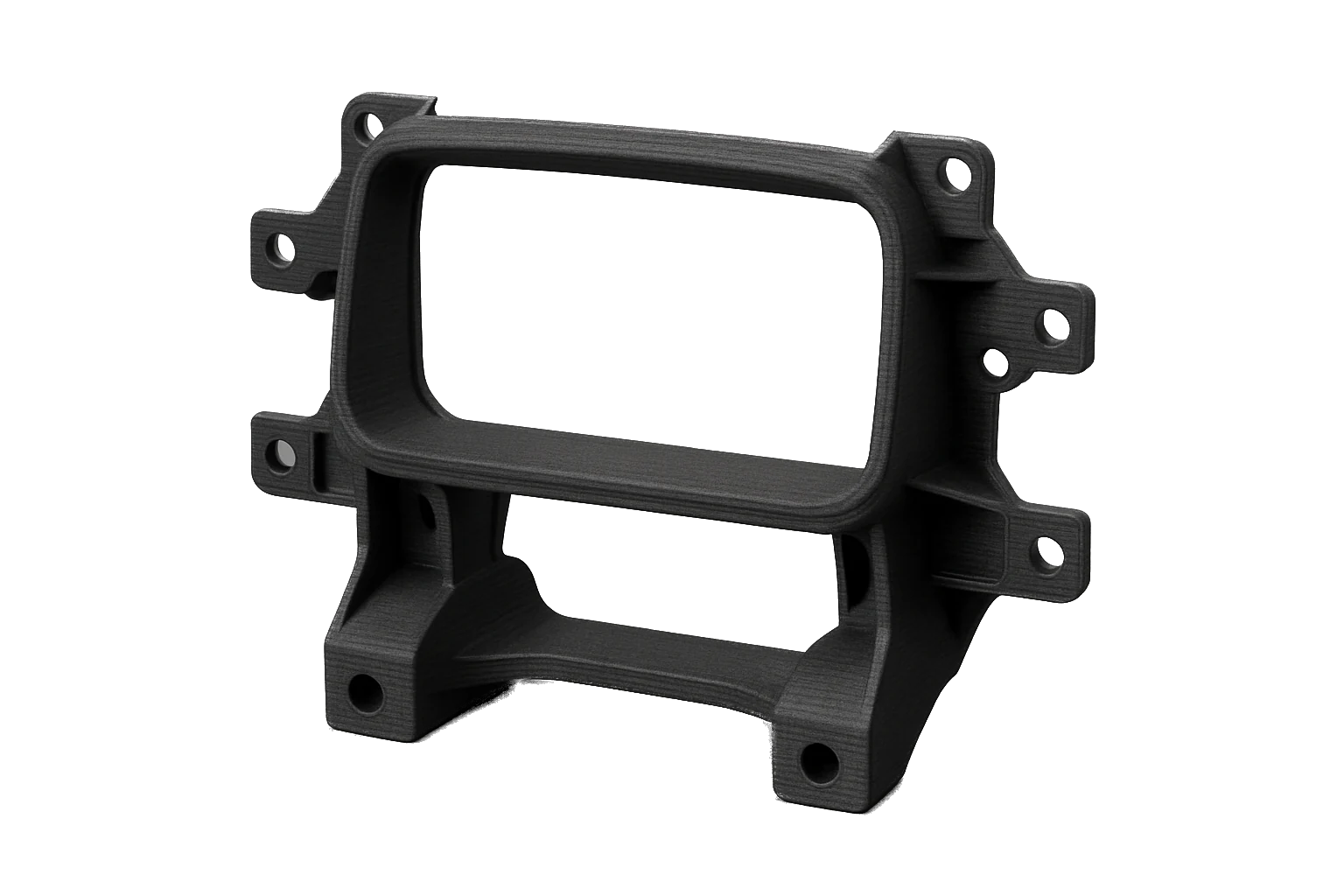
Heat and vibration? That's PC-ABS's home turf.
A higher glass-transition temperature and greater impact toughness than plain ABS for parts near heat and movement.
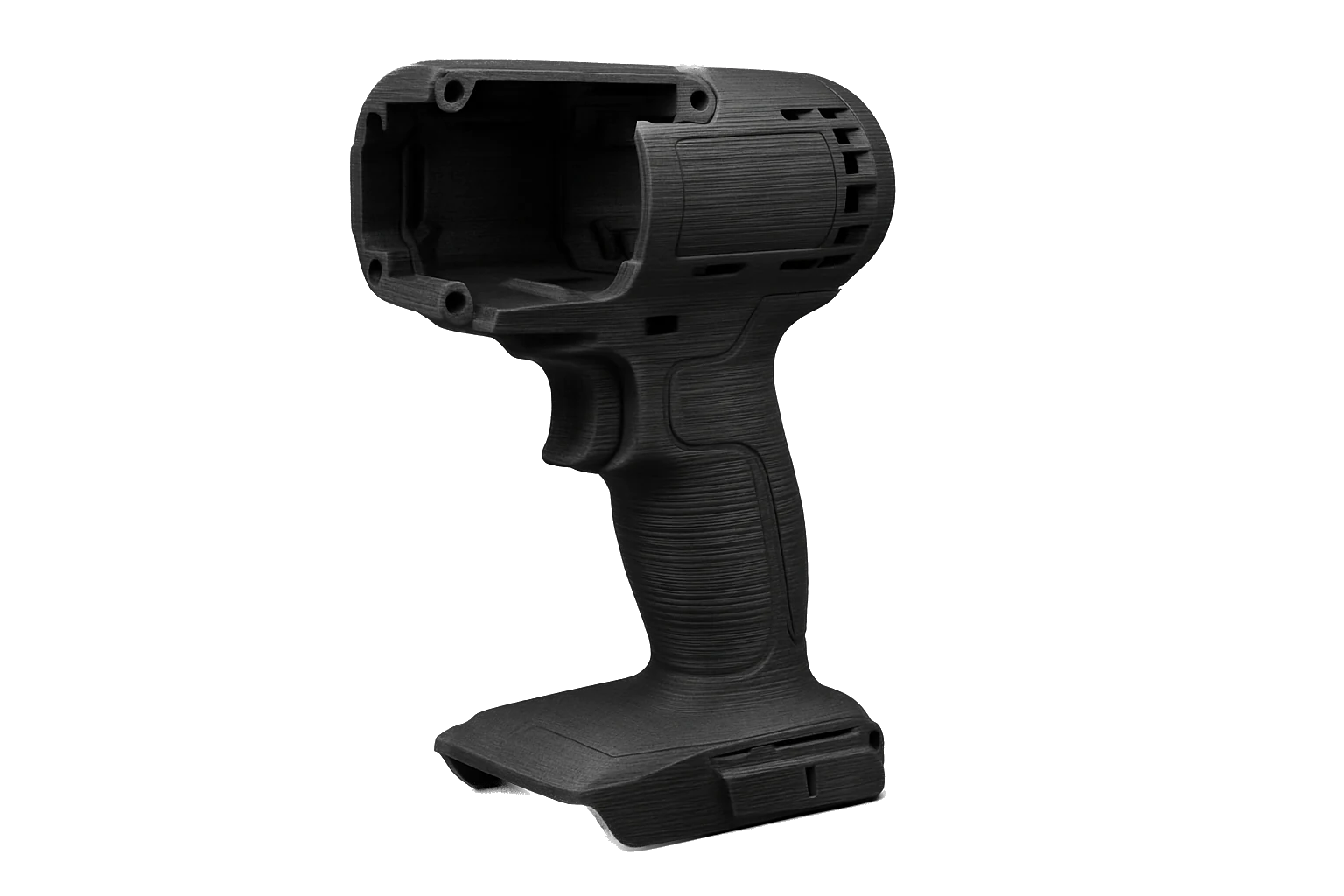
Interior and under-hood brackets, ducts, trim, and housings — PC-ABS holds its shape and takes abuse hotter and harder than plain ABS, where PLA would soften or crack.
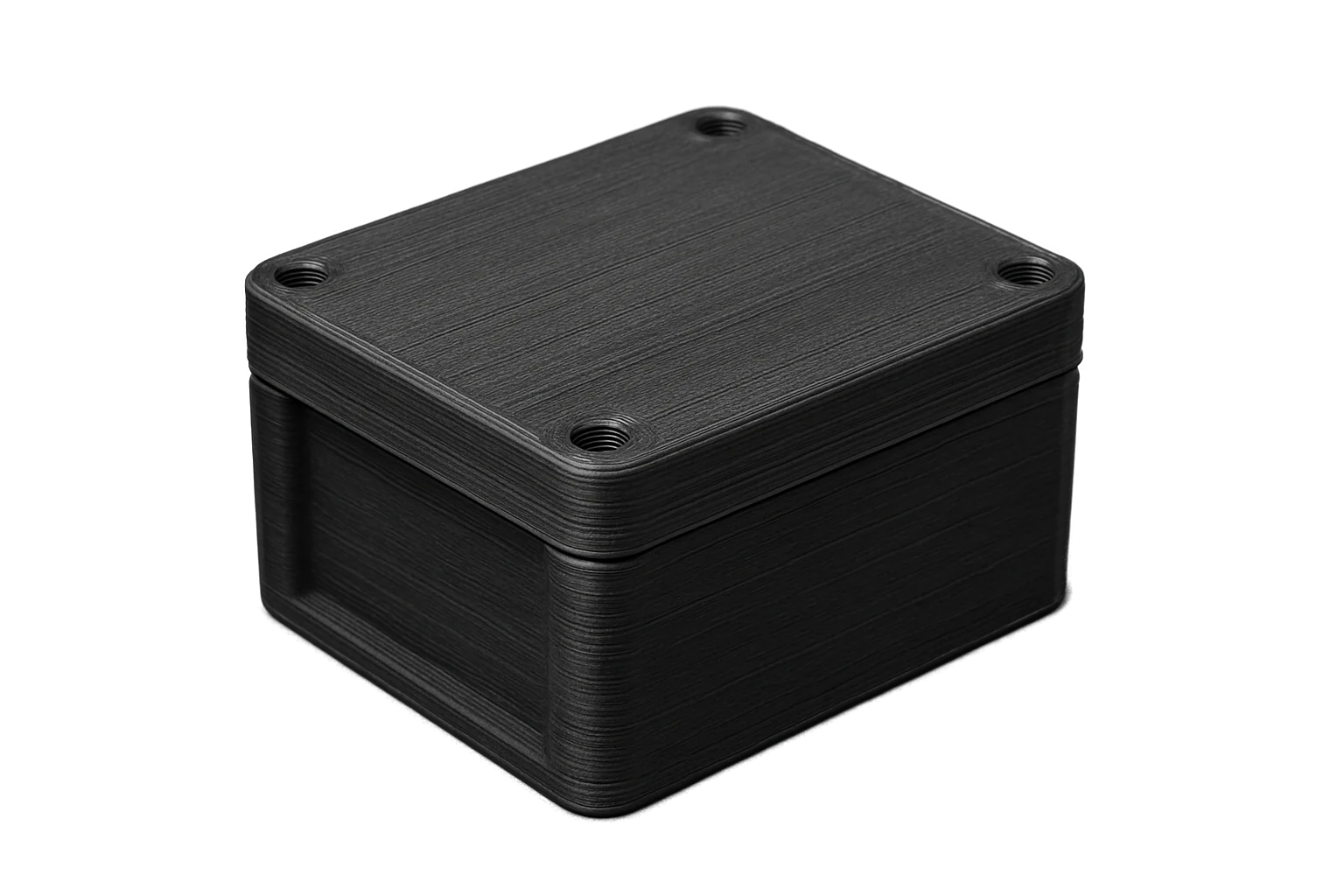
Instrument housings that shrug off knocks.
Rigid, durable boxes and cases for electronics and instrumentation.
PC-ABS is an electronics-grade enclosure material — stiff walls, clean snap-fits, and PC-boosted toughness to survive drops, heat, and daily handling.
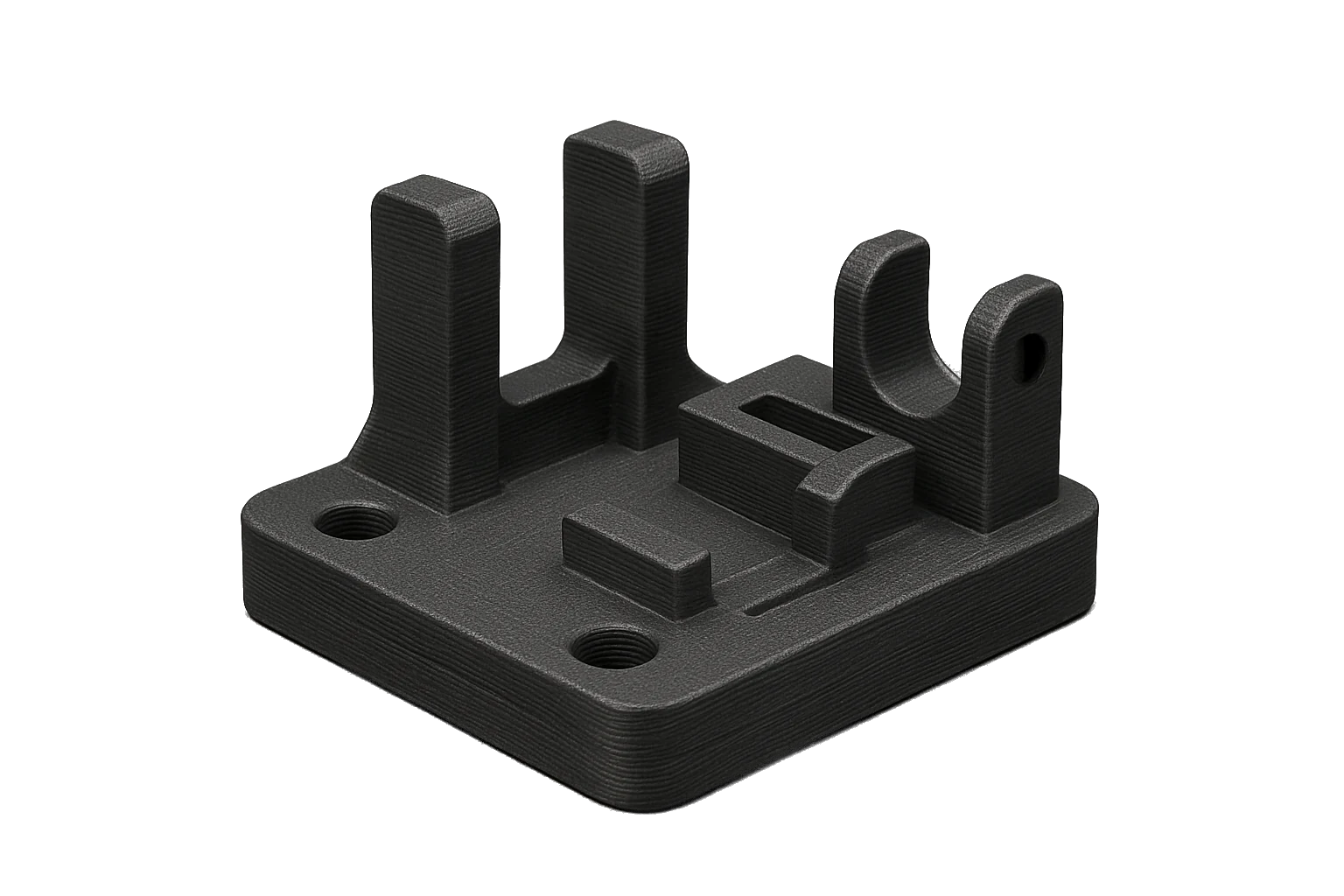
Structural parts, jigs, and fixtures that last.
Dimensionally stable, rigid tooling that stands up to repeated use.
Print the structural parts, fixtures, jigs, and assembly aids your line needs — PC-ABS keeps its shape through heat, clamping, and repeated cycles better than plain ABS.
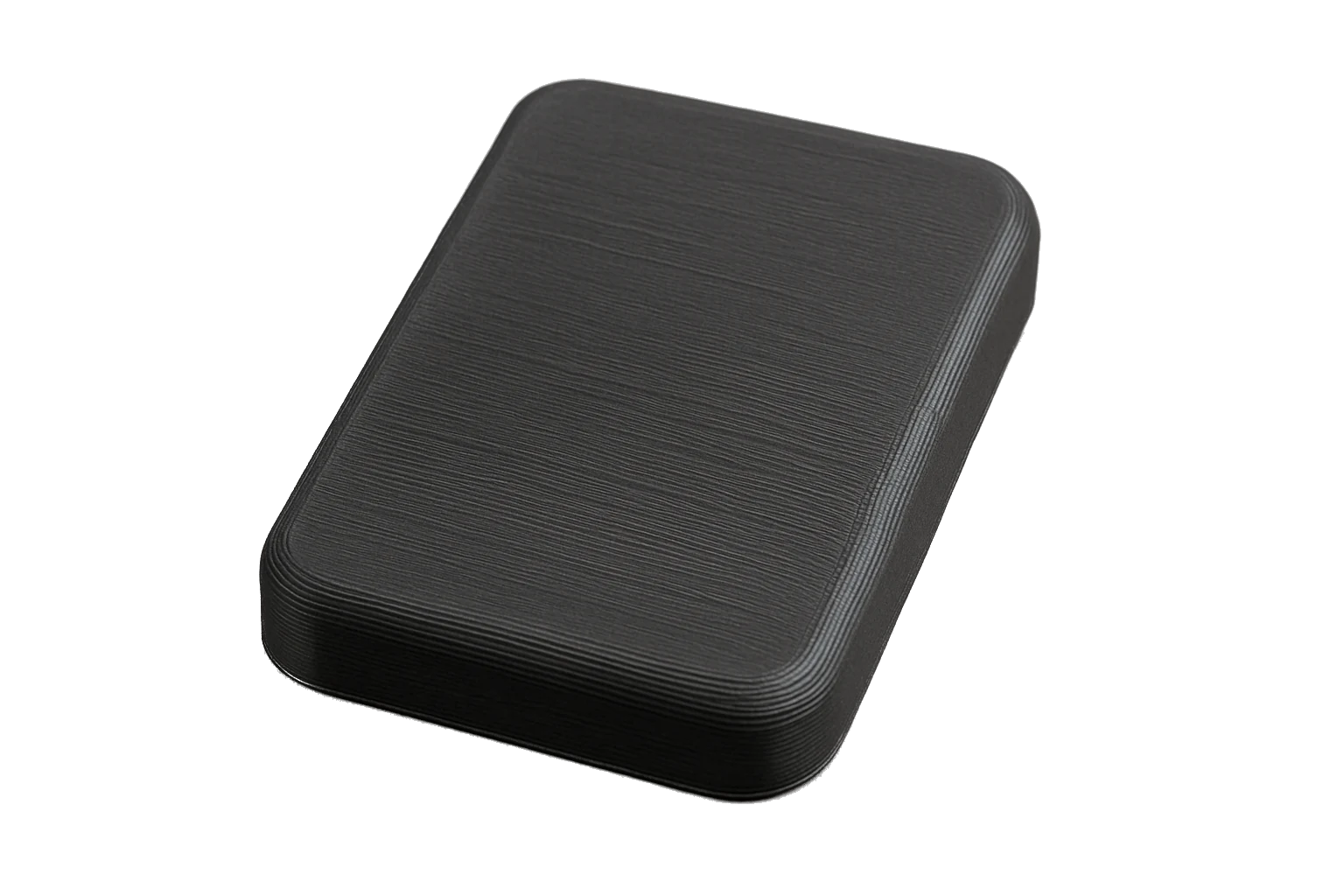
Acetone-smooth to a glossy, molded look.
Vapor-smoothing seals the surface and hides layer lines.
PC-ABS keeps ABS's signature trick: an acetone vapor bath melts the outer layer to a smooth, glossy, injection-molded-style finish — ideal for enclosures and presentation parts.
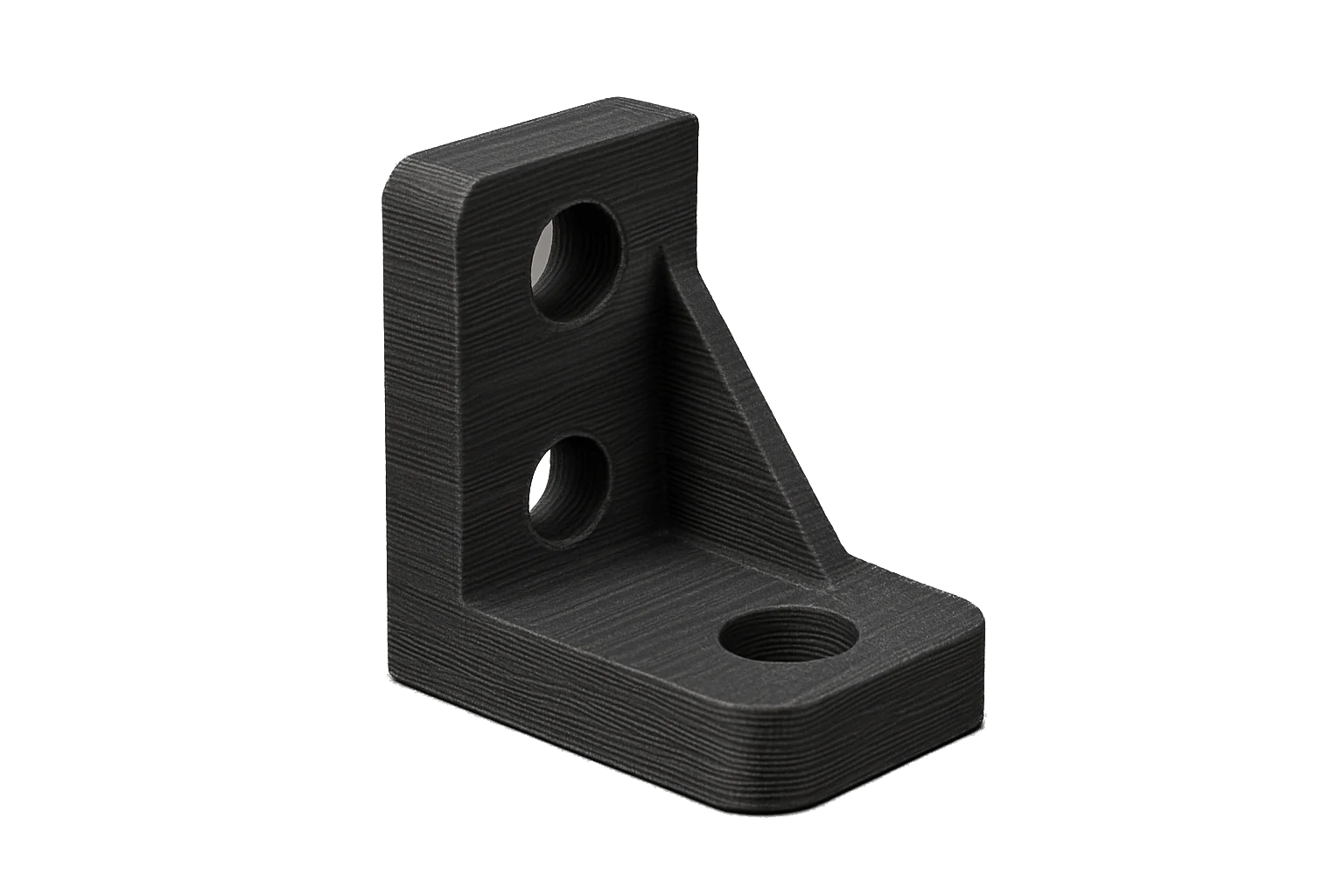
Natural: the clean base for smoothing and dye.
Unpigmented PC-ABS takes acetone and custom dye beautifully.
Our Natural PC-ABS is the go-to for a sealed, glossy finish after vapor smoothing — and a clean canvas if you want to dye parts to a custom shade. Prefer color out of the box? Ultra Blue is ready to run.
From prototype to a part that ships.
Tough enough for real-world, end-use components.
Power-tool bodies, equipment panels, and functional end-use parts — PC-ABS bridges prototyping and production with PC-boosted durability to go into service. Ask us about 3 kg spools, 2.85 mm, and case pricing.
PC-ABS vs. PC vs. ABS.
PC-ABS sits right between the two: more heat resistance and impact strength than plain ABS, but far easier to print than pure PC. Pick PC for the absolute maximum heat and strength, ABS for the easiest styrenic prints, and PC-ABS when you want most of PC’s performance without PC’s printing headaches.
| Rev1 PC-ABS | PC | ABS | |
|---|---|---|---|
| Heat resistance | High (~110 °C) | Very high (~130 °C+) | Medium (~100 °C) |
| Ease of printing | Needs enclosure | Hardest — very hot, warps | Needs enclosure, easier |
| Toughness | Rigid, high impact | Strongest, very tough | Rigid, impact-tough |
| Smoothing | Acetone vapor | Limited | Acetone vapor |
| Enclosure | Required | Required (hotter) | Recommended |
| Best for | Heat + impact, easier than PC | Max heat / strength | Easiest styrenic prints |
General material guidance; exact performance depends on part geometry, print settings, and grade. For maximum sustained temperatures or strength, step up to pure PC or PA (nylon); for the easiest prints, PLA or PETG.
Rev1 PC-ABS Alloy Technical Data
Mechanical & thermal properties
Typical values for engineering reference. Printed-part performance varies with wall count, infill, layer height, and orientation — treat these as material-level guidance, not a part spec.
| Property | Typical Value | Method |
|---|---|---|
| Tensile strength | ~50 MPa | ISO 527 |
| Elongation at break | ~25 % | ISO 527 |
| Flexural strength | ~75 MPa | ISO 178 |
| Flexural modulus | ~2,300 MPa | ISO 178 |
| Izod impact (notched) | ~25 kJ/m² | ISO 180 |
| Glass transition (Tg) | ~115 °C | DSC |
| Heat deflection (HDT, 0.45 MPa) | ~110 °C | ISO 75 |
| Shelf life (sealed, dry) | 12 months | — |
Specs, profiles, and a human to call.
Your trusted materials partner.

Every spool is checked for tight diameter tolerance and reliable, repeatable printing.
Call (248) 707-2950 and reach people who actually print and support these materials.
Case quantities and standing orders across the full color range.
FAQ
Rev1 PC-ABS Alloy — Common Questions
What is PC-ABS Alloy?
PC-ABS is a blend of polycarbonate (PC) and ABS. It combines PC’s heat resistance and strength with ABS’s easier printing and finish — the best-of-both engineering styrenic. You get more heat and impact resistance than plain ABS, but a far more printable material than pure PC.
How is PC-ABS better than plain ABS?
The polycarbonate content raises heat resistance (HDT ~110 °C vs ~100 °C) and adds meaningful impact strength and rigidity, while keeping ABS’s acetone vapor-smoothing and styrenic printing behavior. It’s the step up when plain ABS isn’t tough or heat-resistant enough.
Is PC-ABS easier to print than pure PC?
Yes — that’s the point of the alloy. Pure PC needs very high temperatures and warps aggressively. PC-ABS prints like a hot ABS: a 250–270 °C nozzle and a 100–110 °C bed in an enclosure, with none of PC’s extreme demands.
Do I need an enclosure to print PC-ABS?
Yes. Like ABS, PC-ABS is styrenic and warps on open printers when it cools unevenly or hits a draft. An enclosure plus a heated bed at 100–110 °C is required for clean, crack-free parts — it’s the single biggest factor in success.
What colors and diameters are available?
Three colors — Black, Natural, and Ultra Blue — in two diameters, 1.75 mm and 2.85 mm (the 2.85 mm size suits Ultimaker-class and older printers), on 1 kg and 3 kg spools. Pick your options in the buy-box, or ask us about case quantities.
Are the colors in stock?
All colors are currently made-to-order and ship in 1–3 weeks from our facility in Auburn Hills, Michigan. Order in the buy-box, or call us to confirm timing on a specific color, diameter, or bulk quantity.
Can I smooth PC-ABS to a glossy finish?
Yes — PC-ABS keeps ABS’s acetone vapor-smoothing. Controlled exposure to acetone vapor melts the outer surface slightly, leaving a glossy, sealed, injection-molded look. Natural smooths especially cleanly.
When should I choose PC, ASA, or PLA instead?
For maximum heat and strength, step up to pure PC or PA (nylon). For UV and outdoor durability, choose ASA. For the easiest prints on an open printer, use PLA or PETG. Reach for PC-ABS when you want heat and impact toughness with manageable printing.
Can Rev1 quote bulk or a specific color?
Yes. Tell us the color, diameter, and quantity and we confirm timing and quote case pricing with standing-order scheduling, usually within one business day. Call (248) 707-2950.