Bambu Lab PLA Aero Lightweight Self-Foaming PLA — Up to 50% Lighter
Lightweight Self-Foaming PLA — Up to 50% Lighter
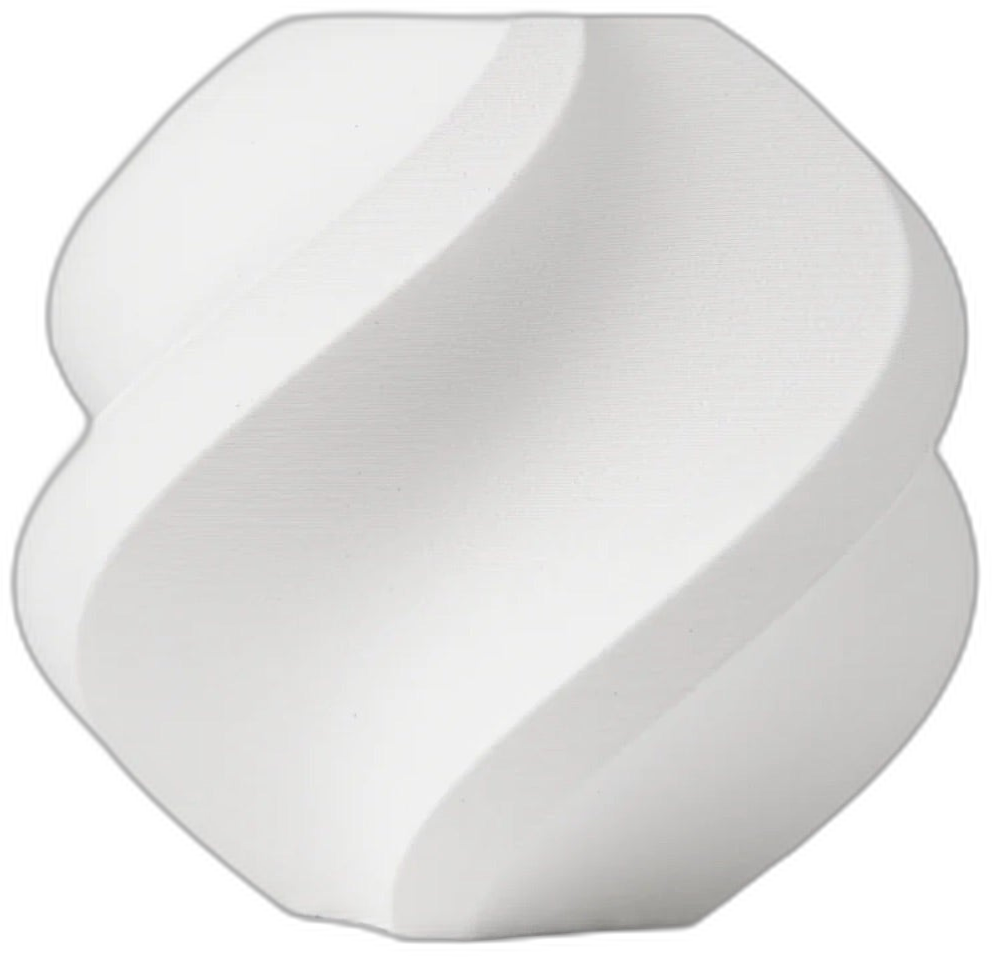
Bambu Lab PLA Aero is a lightweight, self-foaming PLA 3D printing filament. It foams at high temperature to create fine internal micro-holes, so finished prints weigh about half as much as the same model in PLA Basic — without going brittle. It is tougher and more impact-resistant than pre-foaming wood PLA, takes color beautifully with a matte surface, and ships with RFID so a Bambu AMS reads the right settings automatically. Full specifications →
In stock in the USA — ships from Rev1. Need help dialing in foaming density or choosing a filament for a build? Call (248) 707-2950.
Genuine Bambu Lab Filament, Supplied & Supported in the USA.
Rev1 Technologies supplies genuine Bambu Lab filament to makers, engineers and studios across the United States. Material selection help, print-settings support, Klarna financing, and US-based phone and video support are delivered from Auburn Hills, Michigan.


Half the weight, none of the fragility.
For anything that flies, glides or just needs to be light, weight is the enemy. The usual fix — lightweight or “wood” PLA that is pre-foamed in the spool — tends to be brittle and inconsistent. Bambu Lab PLA Aero takes a smarter route: it foams actively as it prints, expanding at high temperature to create fine internal micro-holes. The result is a print that weighs roughly half what the same model would in PLA Basic, yet stays tough and impact-resistant. Better still, you control the foaming: raise the temperature and trim the flow and the same filament prints lighter or denser on demand. Add a genuinely matte, easy-to-dye surface and embedded RFID that lets a Bambu AMS load the right settings automatically, and PLA Aero becomes the obvious choice for UAVs, RC models and any part where every gram counts. Here is what sets it apart.
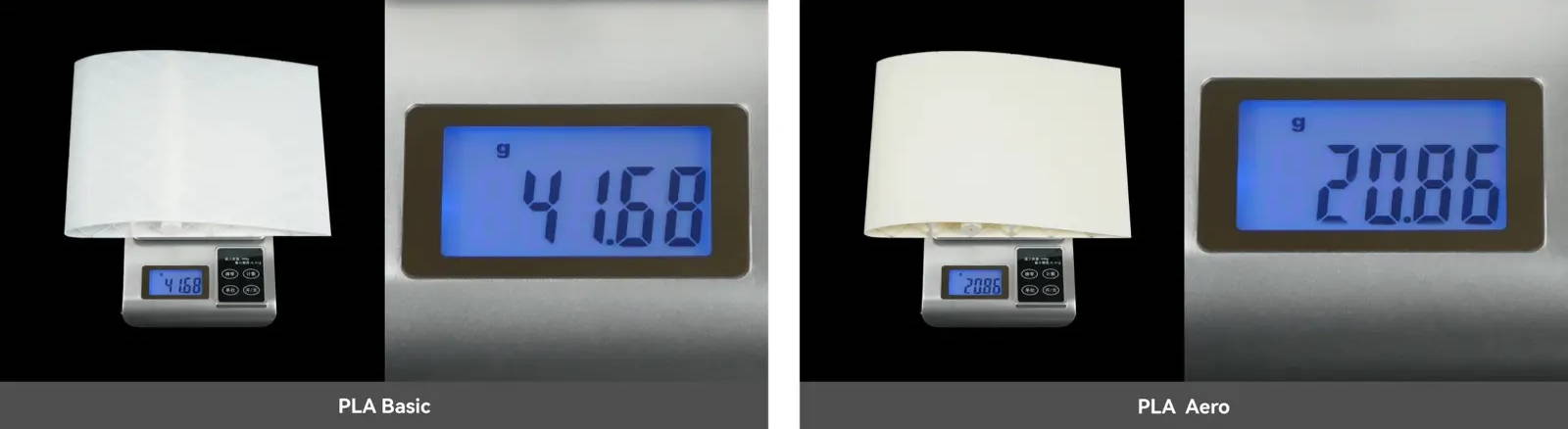
The same model prints at roughly half the weight of PLA Basic — in Bambu’s own test, 41.68 g dropped to 20.86 g — without sacrificing toughness.
Foams at high temperature during printing to create internal micro-holes — lighter and more consistent than pre-foamed wood PLA.
Print density runs 50–80% of normal PLA — raise temperature and lower flow rate to go lighter, dial back to go denser and stronger.
Tougher and more resistant to impact, collision and falling than pre-foaming wood PLA — built to survive hard landings.
A matte surface texture that takes dye far better than PLA Basic — ideal for custom-colored models and finished props.
Genuine Bambu Lab filament with US warehouse stock, RFID/AMS-ready spools, and print-settings help from Rev1.
The same part, half the weight.
Grams matter — PLA Aero gives them back.
In Bambu Lab’s own comparison, an identical model printed at 41.68 g in PLA Basic and just 20.86 g in PLA Aero — about half the weight from the same geometry.
Weight is the single biggest lever in anything that flies. Shaving grams off a wing, fuselage or drone frame means longer flight times, faster acceleration, gentler landings and less strain on motors and servos. PLA Aero delivers that reduction at the material level: because the filament foams as it prints, every wall and infill line is lighter than the equivalent in standard PLA, so a part comes out at roughly half the mass without redesigning it or hollowing it out by hand. The same advantage helps far beyond aviation — large display pieces, cosplay props and handheld models become easier to hold, hang and ship. And unlike simply dropping infill percentage, foaming keeps the part solid and continuous, so you lose weight without leaving the hollow, fragile shells that low infill produces.
Tune the weight from your slicer.
One filament, a range of densities.
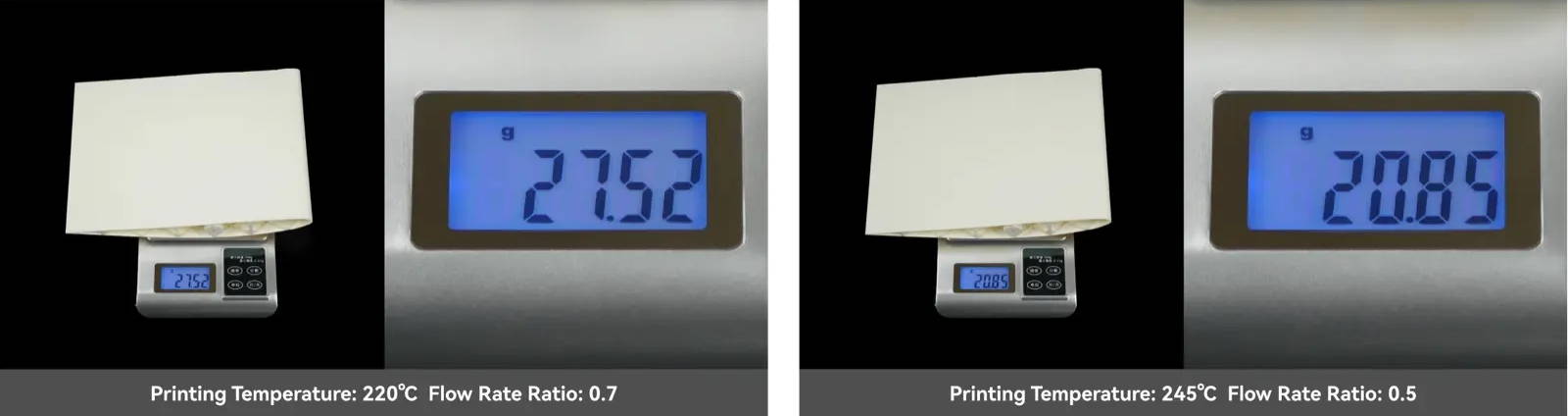
Achieve lower density by raising printing temperature and lowering flow rate. Bambu’s example: 220°C at 0.7 flow yields 27.52 g, while 245°C at 0.5 flow drops the same part to 20.85 g.
PLA Aero’s foaming is driven by heat, so temperature becomes a density dial. Hotter printing makes the material expand more, and pairing that with a reduced flow-rate ratio compensates for the extra volume each foamed strand occupies — the net effect is a lighter, lower-density part. Print cooler with more flow and the foam stays tighter, giving a denser, stronger result. That means a single spool covers a whole range: maximum lightness for a glider wing, more density and strength for a load-bearing bracket, all by adjusting two slicer values rather than swapping materials. Print density lands somewhere between 50% and 80% of normal PLA depending on how you tune it. Rev1 can share a tested starting profile so you hit your target weight on the first try instead of burning a spool calibrating.
Matte surface that actually takes color.
Finish it the way you want it.
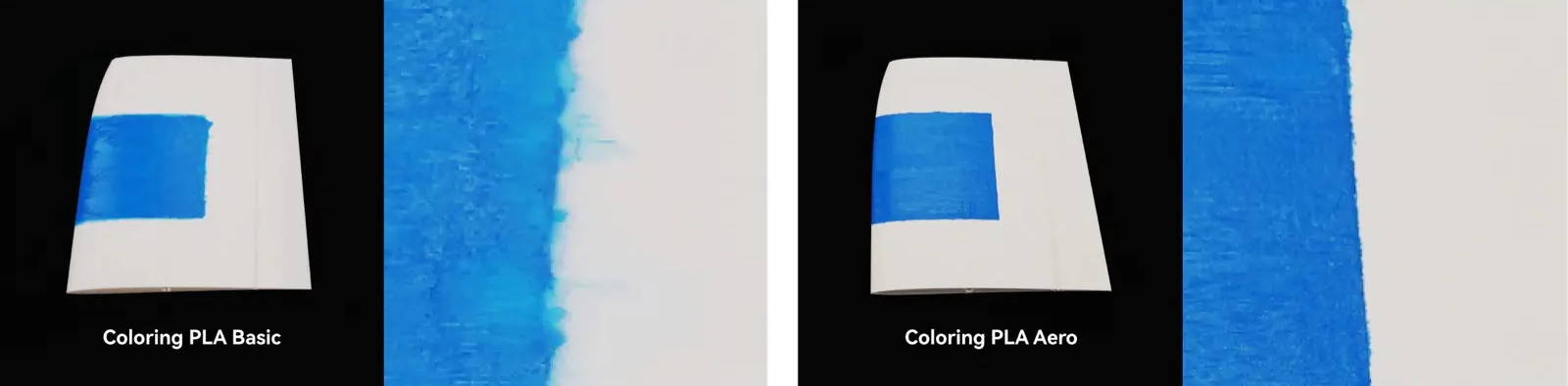
PLA Aero prints with a soft matte texture and, thanks to its foamed micro-porous surface, absorbs dye more deeply and evenly than PLA Basic — for richer, more uniform custom colors.
A glossy print fights you when you try to finish it: paint beads, dye sits on the surface, and layer lines catch the light. PLA Aero’s matte surface diffuses light so models read cleanly straight off the plate, and its slightly porous foamed skin draws dye in rather than letting it pool, which is why the dyed PLA Aero swatch reads darker and more even than the same dye on PLA Basic. For cosplay props, display models and any part you plan to color, that means less priming, fewer coats and a more professional result. White and Gray make ideal starting points — White for bright custom colors, Gray for a neutral base or a finished look on its own.
Load it. The printer knows the rest.
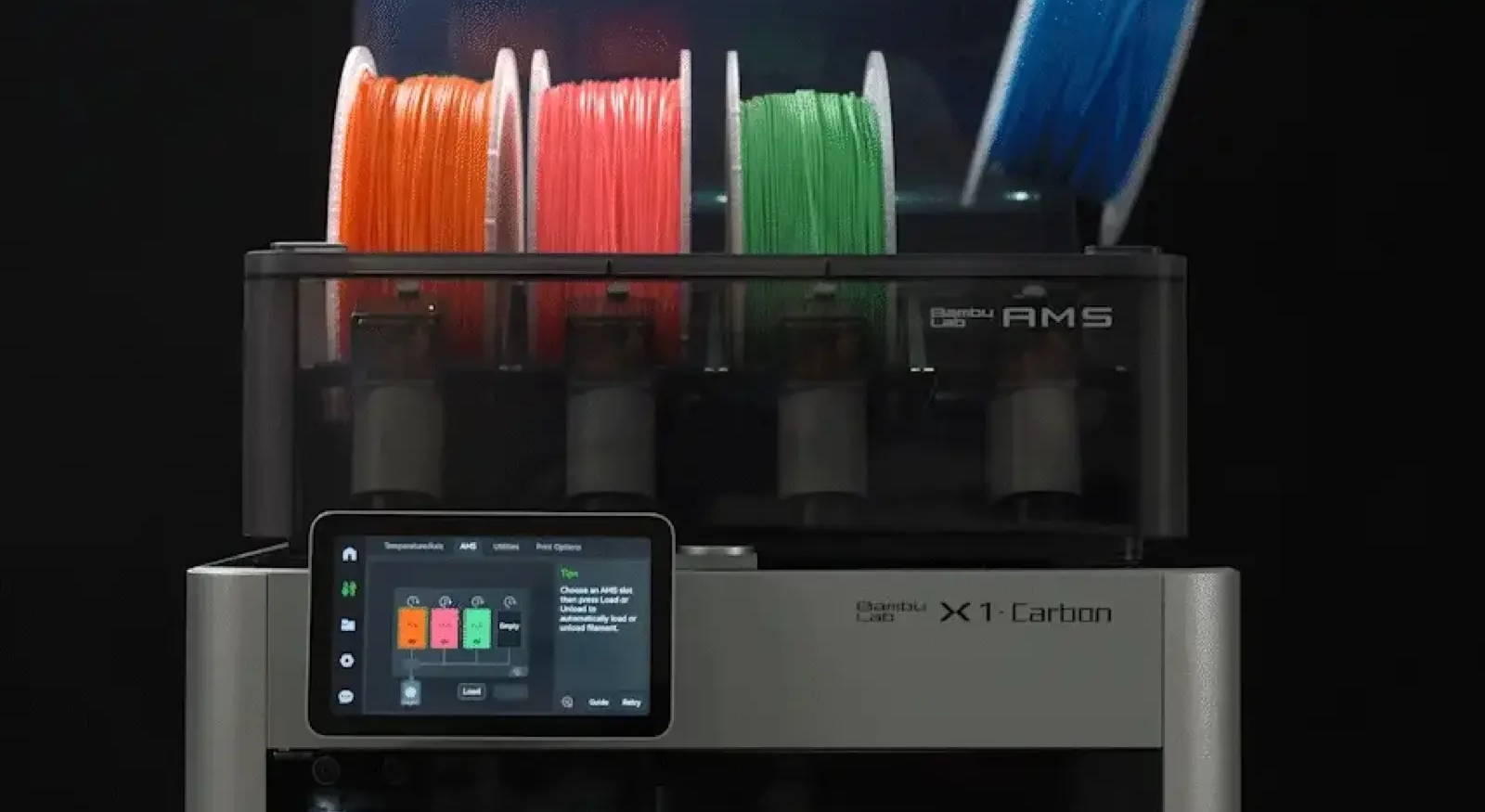
Zero-fuss setup with Bambu AMS.
Every PLA Aero spool carries an RFID tag with its print parameters baked in. Drop it into a Bambu AMS and the printer reads the material, color and recommended settings automatically.
Foaming materials reward correct settings, and PLA Aero removes the guesswork. Because all of its printing parameters are embedded in RFID, a Bambu AMS recognizes the spool the moment it is loaded — no manual profile selection, no mismatched temperatures, no wasted first layers. The AMS also keeps multiple spools sealed and fed, so PLA Aero slots straight into multi-material and multi-color jobs alongside your other filaments. For a shop running unattended prints, that automatic recognition is what keeps a specialty material as easy to use as a default one — load it and go. Rev1 supplies genuine, RFID-tagged Bambu Lab spools so this just works.
Clean, matte, finished-looking prints.
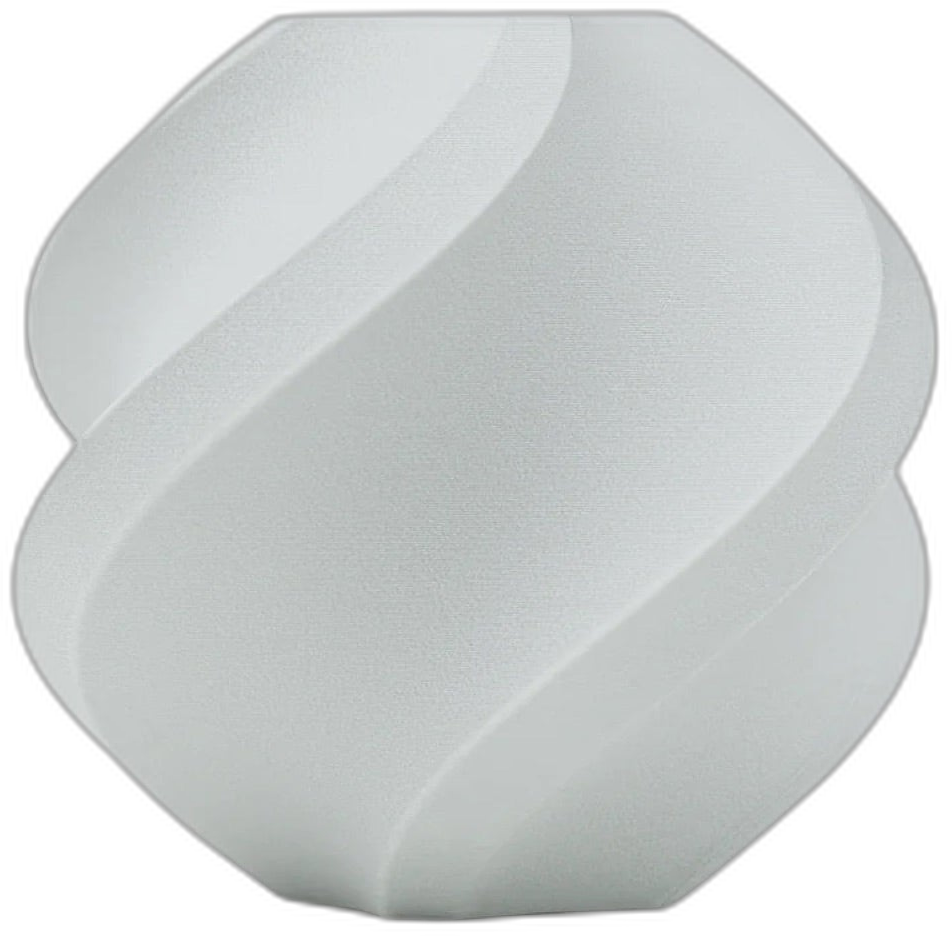
Lightweight doesn’t mean rough.
The foamed surface comes off the plate smooth and matte, hiding layer lines and giving models a finished, premium look in both White and Gray.
A common worry with foaming filaments is surface quality — that lightness comes at the cost of a rough, spongy finish. PLA Aero avoids that: the micro-foaming is internal, while the outer skin stays smooth and evenly matte, so vases, models and props look intentional rather than improvised. The matte finish also photographs well and accepts dye and paint cleanly, making it a strong choice for display pieces and customer-facing parts. Combined with PLA’s easy, low-odor printing and a 35–45°C bed, you get presentable parts without the warping, fumes or fuss of higher-temperature engineering materials — lightweight, good-looking and easy to run.
1 kg, RFID-tagged, ready to run.
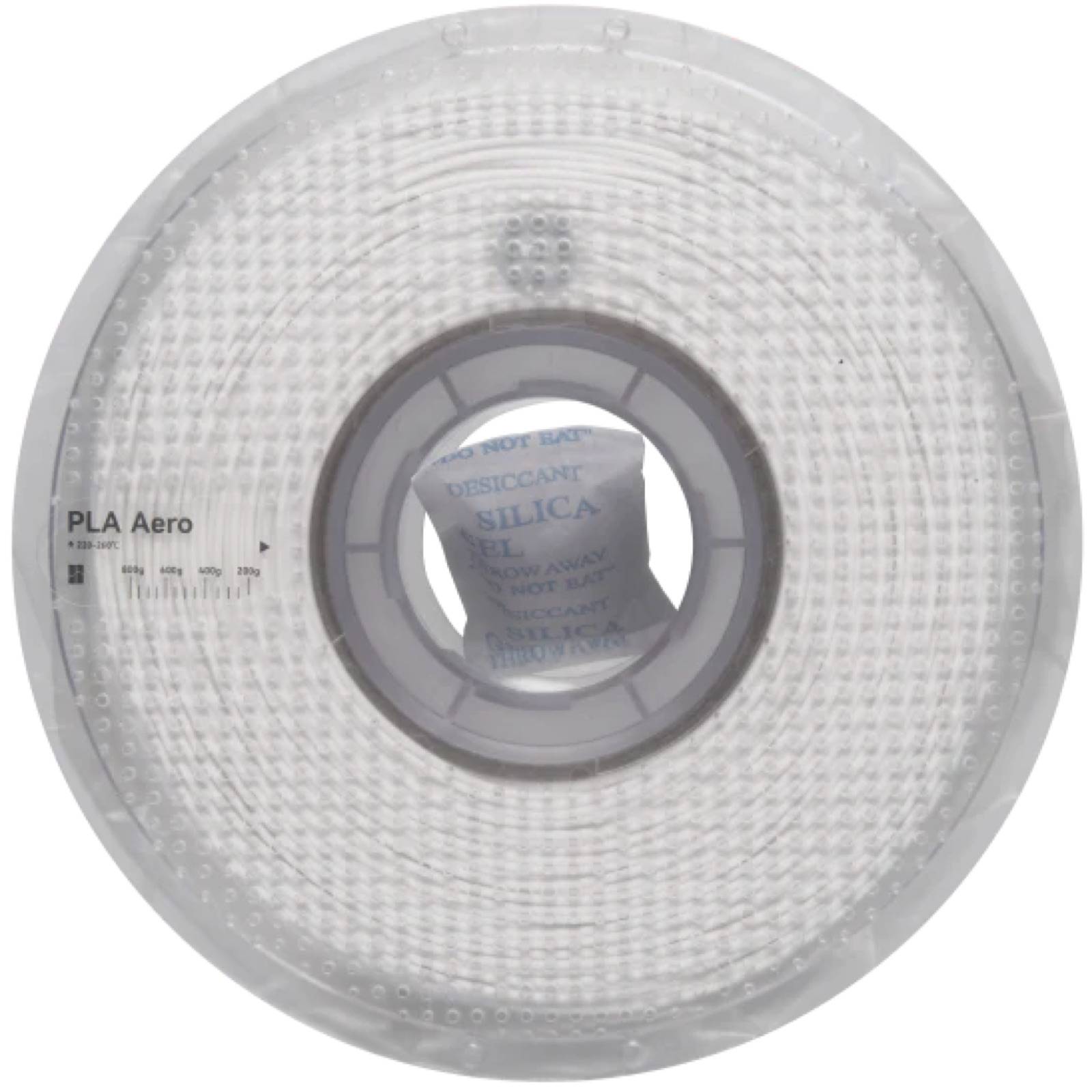
Keep it dry, keep it consistent.
PLA Aero ships as a 1 kg, 1.75 mm spool (about 340 m) with an RFID tag and desiccant. Like all foaming PLA, it prints best dry — store it sealed with desiccant below 20% RH.
Moisture is the enemy of consistent foaming: damp filament foams unevenly and can leave surface defects. PLA Aero ships sealed with desiccant, and if a spool has been open a while, dry it at 55°C for 8 hours in a filament dryer or oven before a critical print. Printing itself is straightforward PLA — a 220–260°C nozzle and a low 35–45°C bed, no enclosure required — with the one twist that you choose your temperature to set the foaming density. The spool and packaging are reusable, and the RFID tag means the AMS always knows what is loaded. Rev1 ships genuine spools from US stock so you get fresh, correctly-tagged filament every time.
Where shaving weight changes everything.
PLA Aero is the perfect choice for lightweight, energy-saving prints — anywhere a lighter part flies longer, moves faster or simply handles better. Because you can tune density, the same spool serves both featherweight aero parts and lighter-than-usual functional pieces.
Frames, canopies and housings that cut all-up weight for longer flight time, quicker response and less motor strain.
Wings, fuselages and control surfaces where low mass and impact resistance survive launches and hard landings alike.
Wind-tunnel and aerodynamic test models that need light, dimensionally consistent parts produced quickly.
Large wearable pieces and props that have to be light enough to carry all day — and matte, dyeable surfaces that finish beautifully.
Big show models and massing studies that ship cheaper and hang easier when they weigh half as much.
Brackets, housings and fixtures where trimming grams matters — tune density up for strength, down for weight.
How PLA Aero compares.
| Property | Bambu Lab PLA Aero | Standard PLA Basic | Typical Wood / LW-PLA |
|---|---|---|---|
| Foaming | Active, in-print (tunable) | None | Pre-foamed in spool |
| Print weight | ~50% of PLA Basic | Baseline (100%) | Lighter, but inconsistent |
| Density control | Yes — temp + flow | No | Limited |
| Toughness / impact | High (28.8 kJ/m²) | Moderate | Often brittle |
| RFID + AMS | Yes | Yes (Bambu) | Usually no |
| Approx. price (1 kg) | $44.99 | ~$20–25 | ~$35–50 |
PLA Aero figures are from Bambu Lab published data and test examples; the PLA Basic and wood/LW-PLA columns are typical category ranges that vary by brand. PLA Aero’s distinction is active, tunable in-print foaming that delivers ~50% lighter parts while staying tough — with RFID/AMS convenience that pre-foamed wood PLAs rarely match. Validate density and strength for your specific part.
Bambu Lab PLA Aero Technical Data
RESOURCES
Datasheets & Print Support
Everything you need to qualify, slice and print PLA Aero with confidence.
WHY REV1 TECH
Genuine Bambu Lab Filament. Additive Materials Specialists.
Rev1 Technologies is an additive-manufacturing supplier headquartered in Auburn Hills, MI, with hands-on expertise across FFF filaments and print workflows.
Rev1 Technologies serves makers, engineers and studios across the USA. We don’t just ship spools — we help you choose the right filament, dial in foaming density, and keep prints consistent on genuine, RFID-tagged Bambu Lab material.
PLA Aero questions.
How much lighter are PLA Aero prints?
About half the weight of the same model in PLA Basic. In Bambu Lab’s own test an identical part weighed 41.68 g in PLA Basic and 20.86 g in PLA Aero. Print density runs roughly 50–80% of standard PLA depending on how you tune it.
How does the foaming work?
PLA Aero foams actively at high temperature during printing, creating fine internal micro-holes that lower the part’s density. Unlike pre-foamed wood PLA, the foaming happens in your printer, which makes it more consistent and, importantly, adjustable.
How do I control the density and weight?
Temperature and flow rate are your dials. Raise the printing temperature and lower the flow-rate ratio for lighter, lower-density parts; reduce temperature and increase flow for denser, stronger parts. Bambu’s example: 220°C at 0.7 flow gave 27.52 g, while 245°C at 0.5 flow gave 20.85 g on the same model.
Is it strong, or does foaming make it fragile?
It stays tough. PLA Aero is more resistant to impact, collision and falling than pre-foaming wood PLA, with impact strength around 28.8 kJ/m² and tensile strength about 24 MPa. You can also print denser for load-bearing parts and lighter for pure weight savings.
What can I make with it?
It’s ideal for lightweight, energy-saving prints — UAVs and drones, RC planes and gliders, aerodynamic models, cosplay props, large display models, and any functional part where shaving grams matters.
What printers and AMS systems work with it?
PLA Aero is a 1.75 mm filament that prints on any printer reaching 220–260°C with a 35–45°C bed — no enclosure needed. Its embedded RFID is read automatically by the Bambu AMS, which loads the right material and settings for you.
What colors and sizes are available?
PLA Aero comes as a 1 kg, 1.75 mm spool (about 340 m) in White and Gray. White is the best base for dyeing custom colors; Gray gives a neutral finished look on its own.
How should I store and dry it?
Keep it sealed with desiccant below 20% relative humidity. Foaming filaments are sensitive to moisture, so if a spool has been open, dry it at 55°C for 8 hours before a critical print for the most consistent surface and density.
Can I use it on a printer that isn’t a Bambu Lab machine?
Yes. PLA Aero is a standard 1.75 mm filament and prints on any FDM machine that hits 220–260°C with a 35–45°C bed; an enclosure is not required. The RFID auto-detection is a convenience specific to the Bambu AMS — on other printers you simply enter the temperature and flow values manually, then tune them to set your target foaming density. Rev1 can provide a tested starting profile for the printer and slicer you run so you don’t have to calibrate the foaming from scratch.
Will the lighter parts still glue, sand and paint normally?
They do. Because PLA Aero keeps a smooth, solid outer skin over its foamed core, it sands, glues and bonds much like standard PLA, and its matte porous surface actually takes primer, paint and dye more readily. For RC and cosplay builds that means you can finish, seam and assemble parts with the same techniques you already use — just with far less weight in your hands at the end.
How does Rev1 support the purchase?
Rev1 ships genuine, RFID-tagged Bambu Lab filament from US stock, helps you choose the right material and foaming profile, and supports your print setup. Multi-spool and volume pricing and Klarna are available for larger orders.