Rev1 PA12-CF The Stiff, Lightweight Carbon-Fiber Engineering Nylon
The Stiff, Lightweight Carbon-Fiber Engineering Nylon
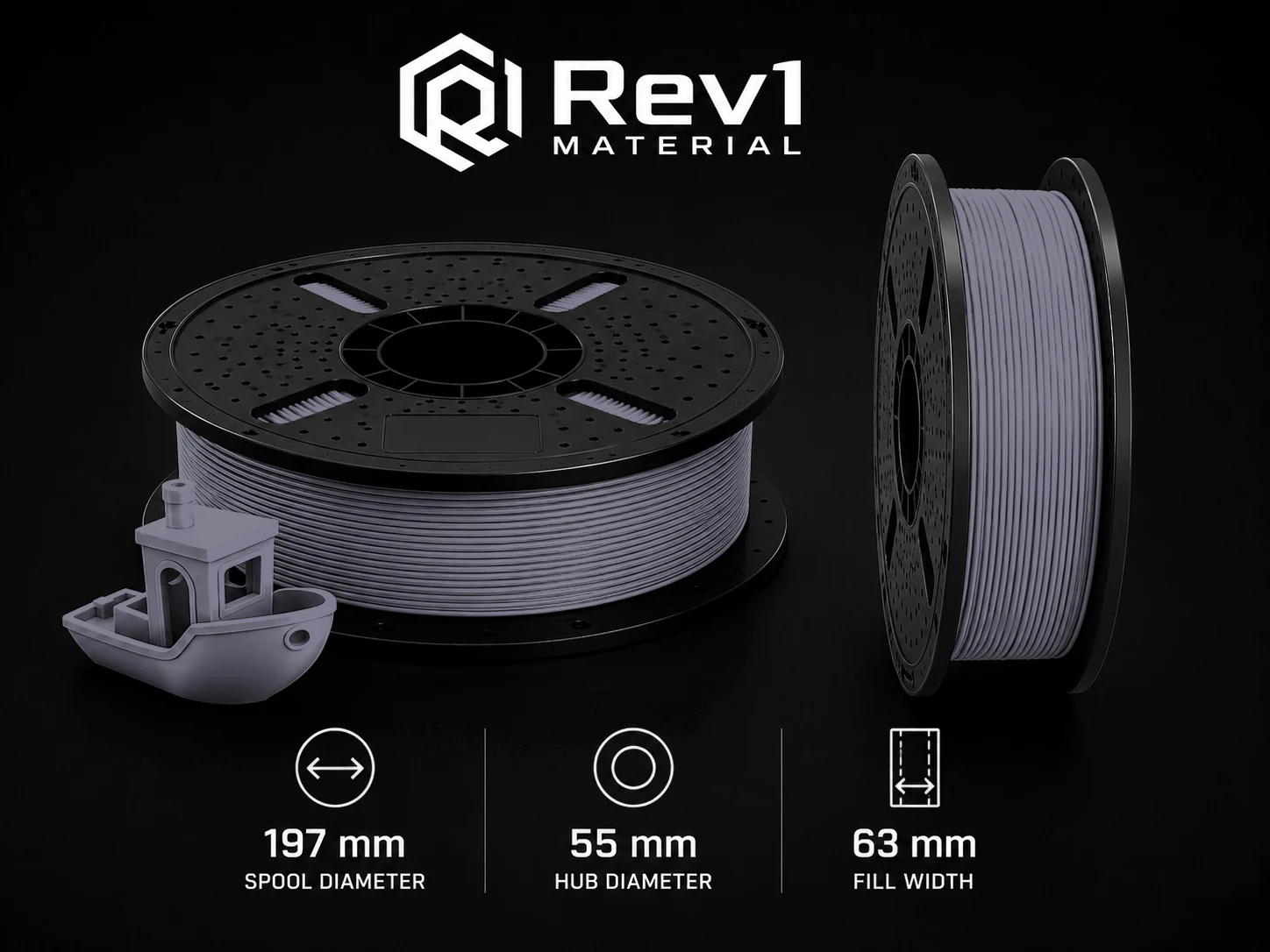
PA12-CF is PA12 nylon compounded with chopped carbon fiber — much stiffer and stronger than plain nylon, with an outstanding strength-to-weight ratio for parts that carry load without adding mass. The carbon fiber slashes shrinkage and warping for excellent dimensional stability, while the nylon base keeps its low moisture uptake, chemical, fuel, and oil resistance, toughness, and fatigue resistance. Ideal for structural brackets, jigs and fixtures, drone and RC frames, robotics, and lightweight functional end-use parts. Its premium matte-black carbon finish is abrasive — a hardened-steel nozzle is required. One color — Carbon Fiber (matte black), on 1 kg and 3 kg spools. Full specifications →
In-stock spools ship fast; 3 kg spools are made-to-order in 1–3 weeks from Michigan. Need a 3 kg spool or case pricing? Call (248) 707-2950.
Stiff, low-warp, vacuum-sealed, supported by humans.
Rev1 PA12-CF is precision-extruded 1.75 mm carbon-fiber-reinforced filament, wound evenly and vacuum-sealed with desiccant — its carbon fiber adds stiffness and holds parts dimensionally stable — then made-to-order and supported from Auburn Hills, Michigan.

When the part has to be stiff, light, and survive.
PLA is easy but soft and brittle; PETG is tough but flexes. Rev1 PA12-CF is PA12 nylon reinforced with chopped carbon fiber — much stiffer and stronger than plain nylon, with an outstanding strength-to-weight ratio for structural brackets, jigs and fixtures, drone and RC frames, and robotics that carry load without adding mass. The carbon fiber cuts shrinkage and warping for excellent dimensional stability, while the nylon base keeps its low moisture uptake, outstanding chemical, fuel, and oil resistance, toughness, and fatigue resistance. It prints hot in an enclosure like any engineering nylon — and because carbon fiber is abrasive, it needs a hardened-steel nozzle. Give it a dry spool and Rev1 PA12-CF makes rigid, lightweight, load-bearing parts in a premium Carbon Fiber matte-black finish.
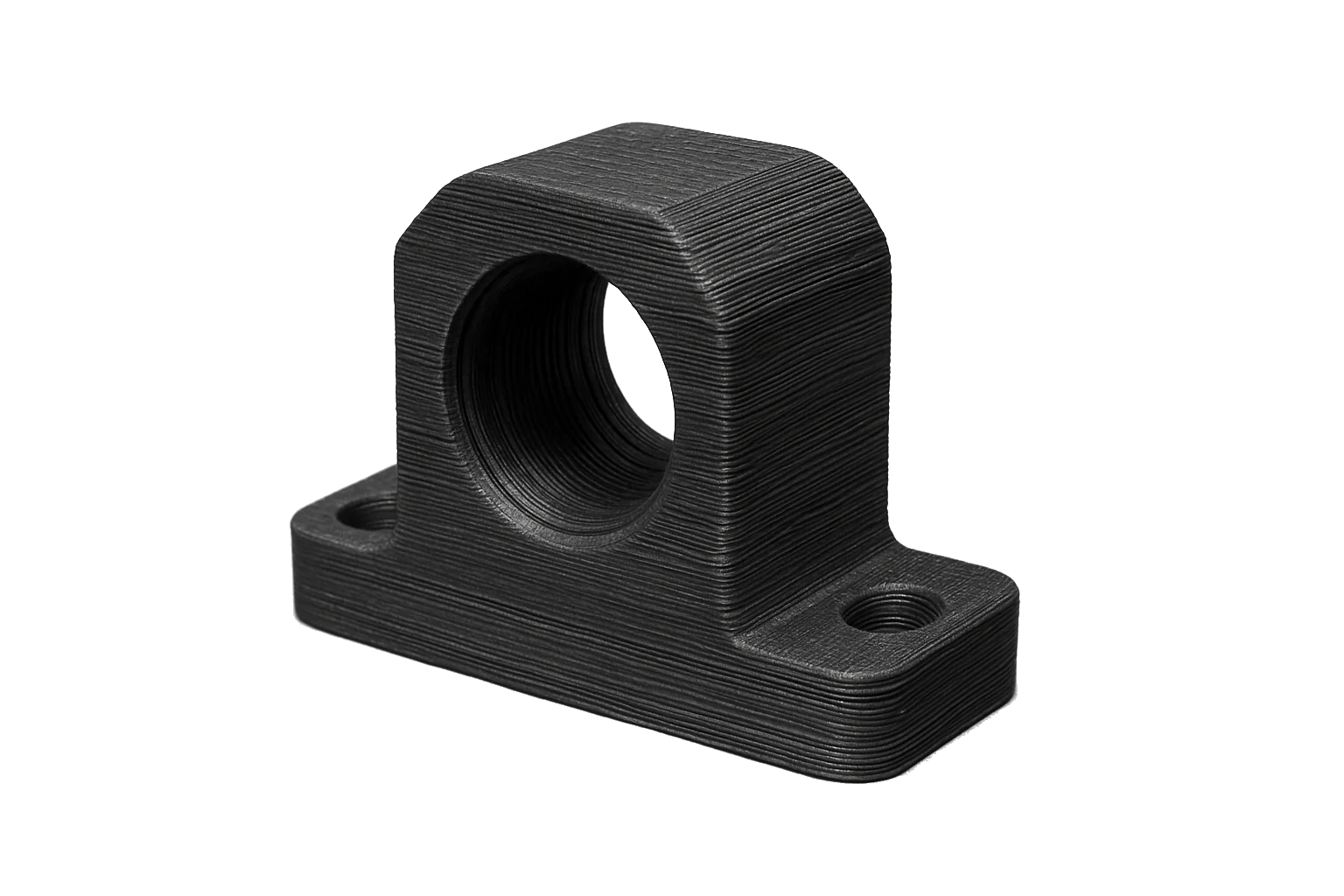
Even diameter and a clean wind for reliable runs.
Round, consistent 1.75 mm carbon-filled filament feeds smoothly so long, hot enclosed prints don’t fail.
Every Rev1 PA12-CF spool is wound evenly and held to a tight diameter, so it feeds without under-extrusion across a full 1 kg or 3 kg run. Vacuum-sealed with desiccant to arrive dry — and remember carbon fiber is abrasive, so run a hardened-steel nozzle.
Carbon fiber boosts rigidity and modulus far above plain PA12 for load-bearing structural parts.
High stiffness at low weight — ideal for drone and RC frames, robotics, and brackets.
Carbon fiber reduces shrinkage and warping for better dimensional stability than unfilled nylon.
One premium finish — Carbon Fiber (matte black) — on 1 kg and 3 kg spools.
Print settings for stiff, low-warp carbon nylon.
PA12-CF prints like an engineering nylon — it wants heat and an enclosure — but the carbon fiber makes it more dimensionally stable and lower-warping than unfilled nylon. The one non-negotiable: carbon fiber is abrasive, so a hardened-steel nozzle is required. A dry spool keeps layers bonded and parts strong.
Carbon fiber is abrasive — run a 0.4 mm+ hardened-steel nozzle; brass wears out fast.
Run hot for strong layer adhesion on stiff, load-bearing carbon-filled parts.
A warm bed plus glue or an adhesive sheet keeps the first layer stuck — PA12-CF warps little.
Like any nylon it absorbs moisture — a dry, sealed spool prints cleanest and strongest.
Recommended slicer settings
A solid starting profile for Rev1 PA12-CF on an enclosed FDM printer with a hardened-steel nozzle. Dry the filament if it’s been open a while, then tune cooling and chamber temperature for your machine.
| Setting | Recommended | Notes |
|---|---|---|
| Nozzle type | Hardened steel (required) | Carbon fiber is abrasive — a hardened-steel nozzle is mandatory; brass wears out quickly. |
| Nozzle temperature | 240–260 °C | Run hot enough for strong layer bonding on stiff, load-bearing carbon-filled parts. |
| Bed temperature | 60–80 °C | Glue stick or an adhesive sheet on glass/PEI for a strong first layer. |
| Chamber / enclosure | Warm, draft-free | An enclosure helps large parts — PA12-CF warps little but still benefits from even heat. |
| Print speed | 30–60 mm/s | Moderate speeds help interlayer strength. |
| Part cooling fan | 0–20 % | Keep cooling low — too much fan weakens layer bonding. |
| Retraction | 1–5 mm | Direct drive: ~1–2 mm. Tune to control stringing. |
| Nozzle size | 0.4 mm + hardened | Larger hardened nozzles add strength on functional parts and clear carbon fill. |
| Drying | 65–80 °C · 6–8 h | Recommended — dry the spool if it has been open a while for best strength. |
| Post-processing | Sand / anneal | Optional annealing can boost strength and dimensional stability. |
Stiff, lightweight parts that carry load.
The carbon-fiber nylon behind stiff, structural parts.
PA12-CF trades PLA’s easy printing for real engineering performance: high stiffness and strength-to-weight, low warp, plus the toughness, low friction, and standout chemical resistance of the nylon base. Made-to-order in one premium Carbon Fiber matte-black finish, on 1 kg and 3 kg spools, shipped from Michigan.
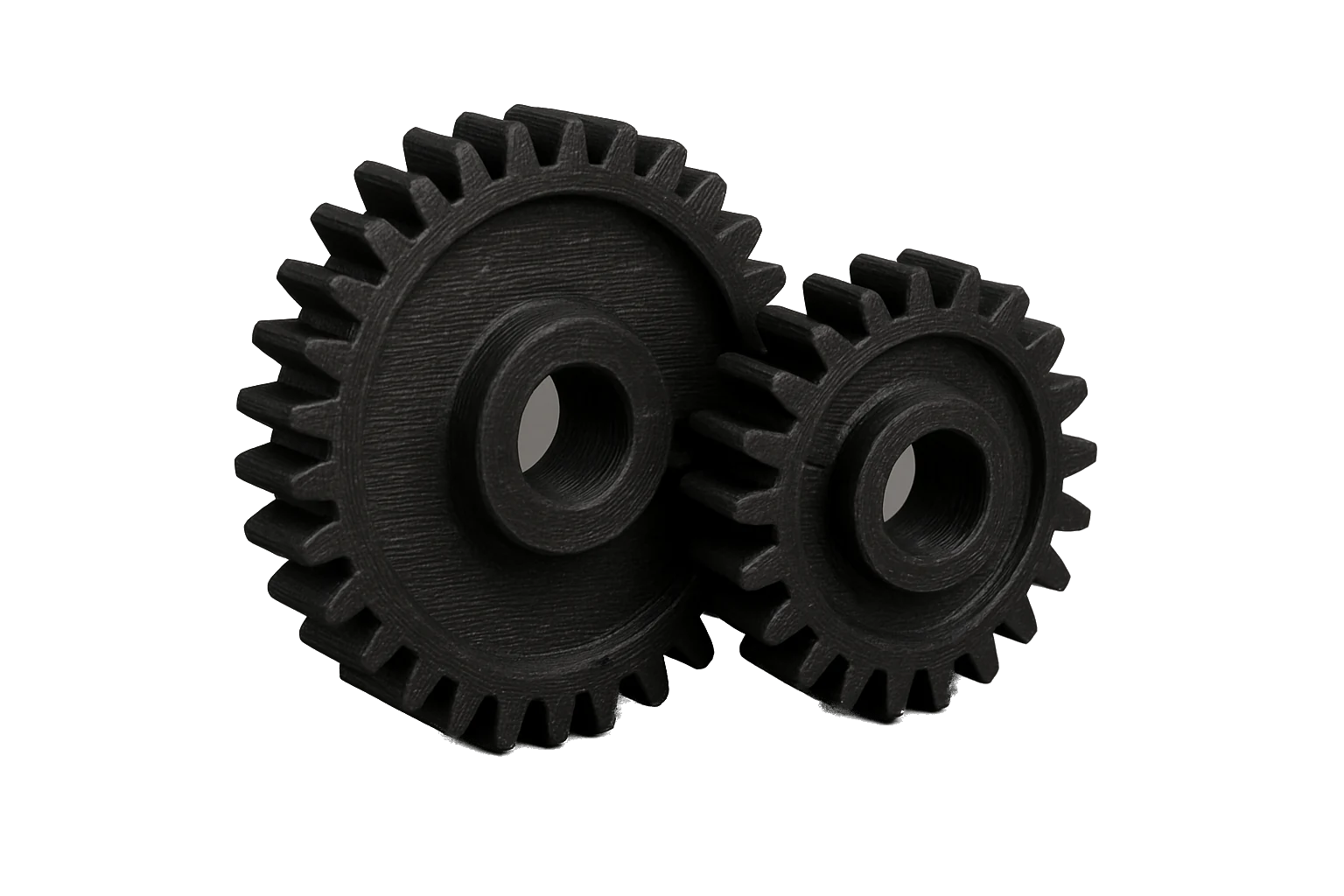
Gears that mesh, slide, and hold size.
Added carbon-fiber stiffness and fatigue resistance for parts that turn under load.
PA12-CF pairs nylon’s slippery, wear-resistant surface with carbon-fiber rigidity for gears, worm drives, and moving mechanisms — and the reinforced matrix keeps tooth geometry stable where plain nylon can deflect or swell.
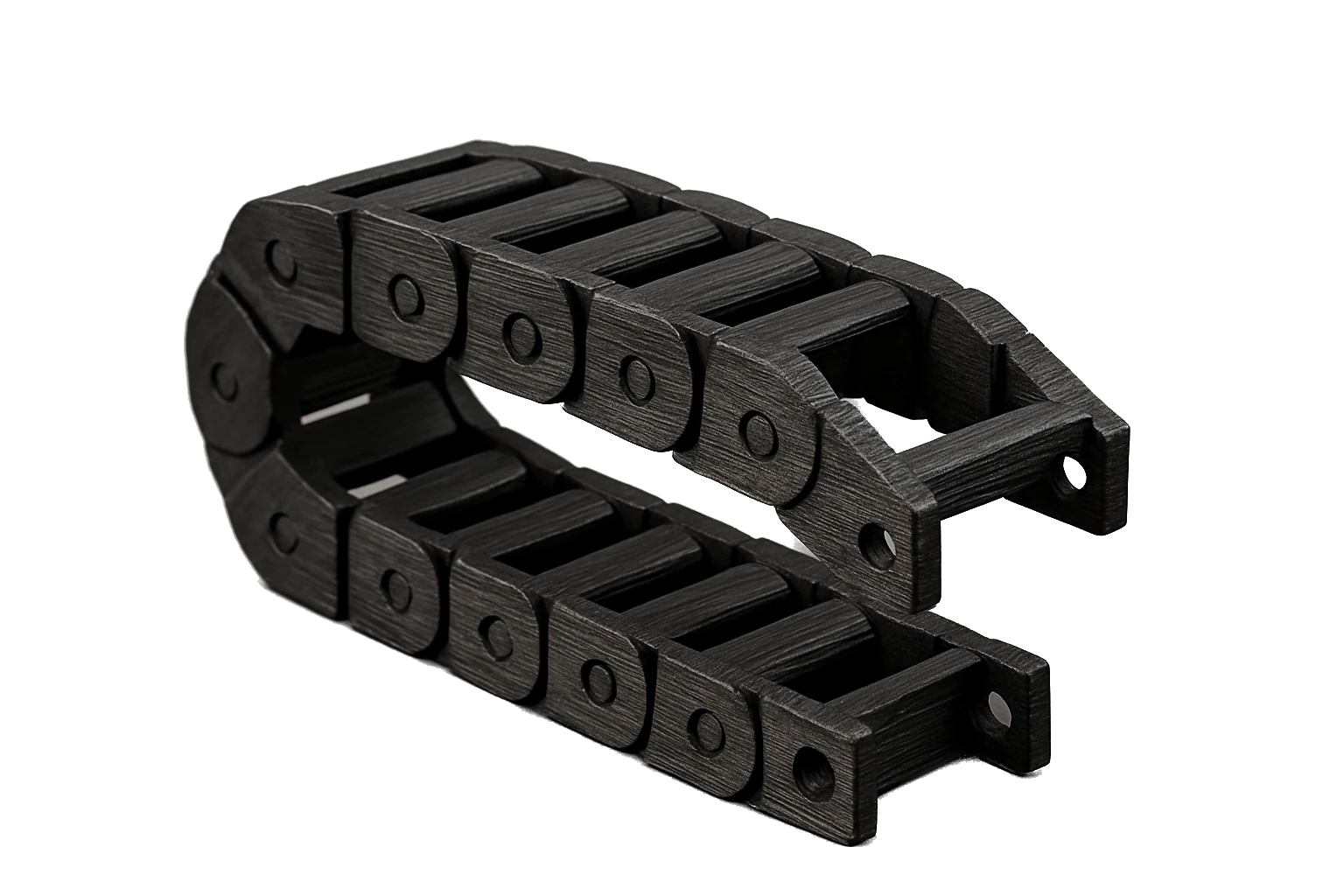
Drag chains that stay rigid without failing.
Stiff, fatigue-resistant carriers for moving cable runs.
Cable drag chains flex constantly under load — exactly the repeated-stress duty nylon is built for. PA12-CF adds carbon-fiber stiffness so carriers hold shape and resist sag through thousands of cycles.
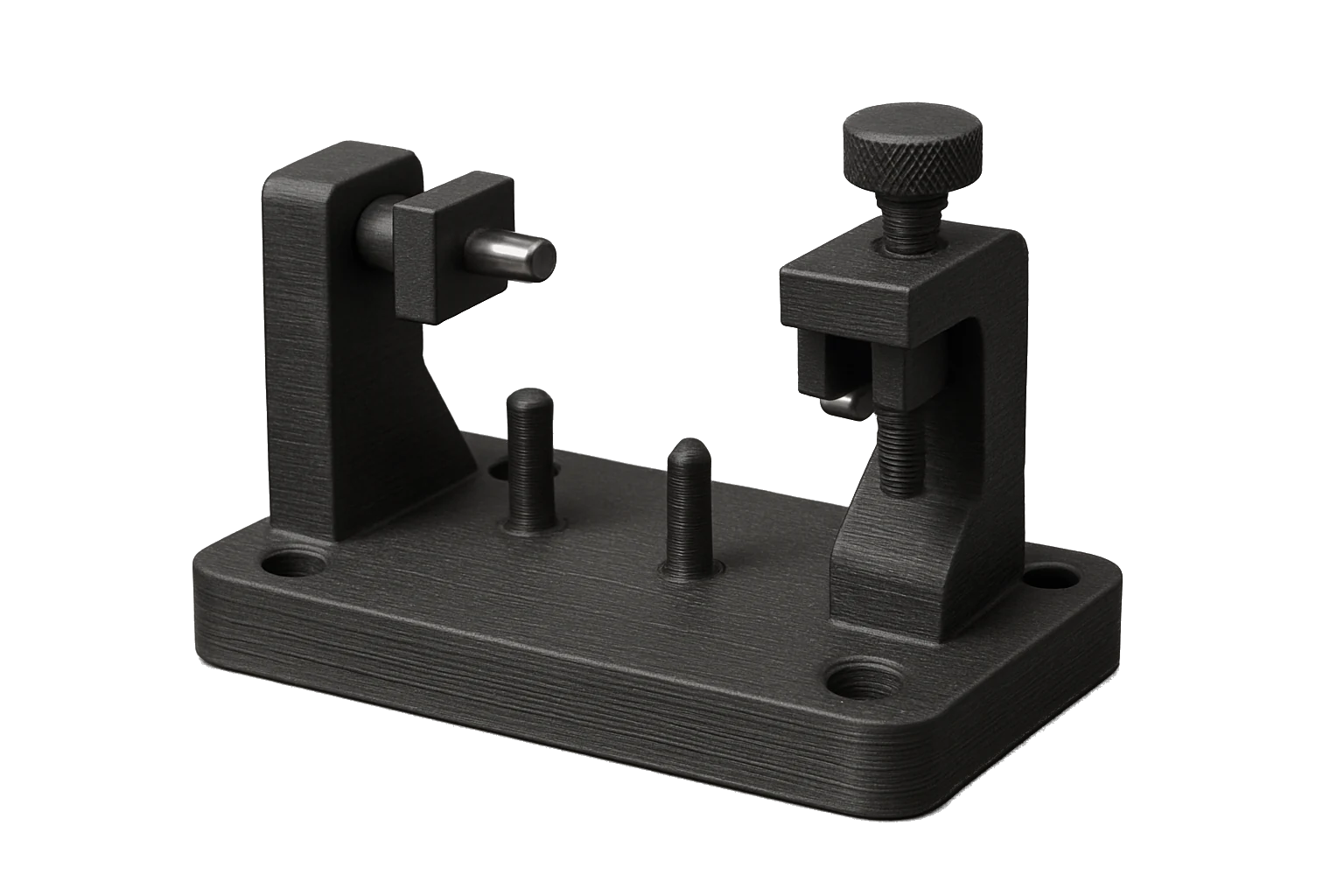
Shop-floor jigs and fixtures that hold tolerance.
Stiff, chemical-resistant tooling that stands up to repeated use.
Print the fixtures, jigs, and assembly aids your line needs — PA12-CF stays rigid and dimensionally stable through clamping, impacts, solvents, and abrasion, cycle after cycle, without flexing or swelling.
Bushings and bearings that run smooth.
A low-friction nylon surface stiffened with carbon fiber.
One of nylon’s superpowers: it slides. Bushings, bearing blocks, and slides in PA12-CF run smoothly and resist wear, while carbon fiber adds the rigidity to keep them dimensionally true under load.
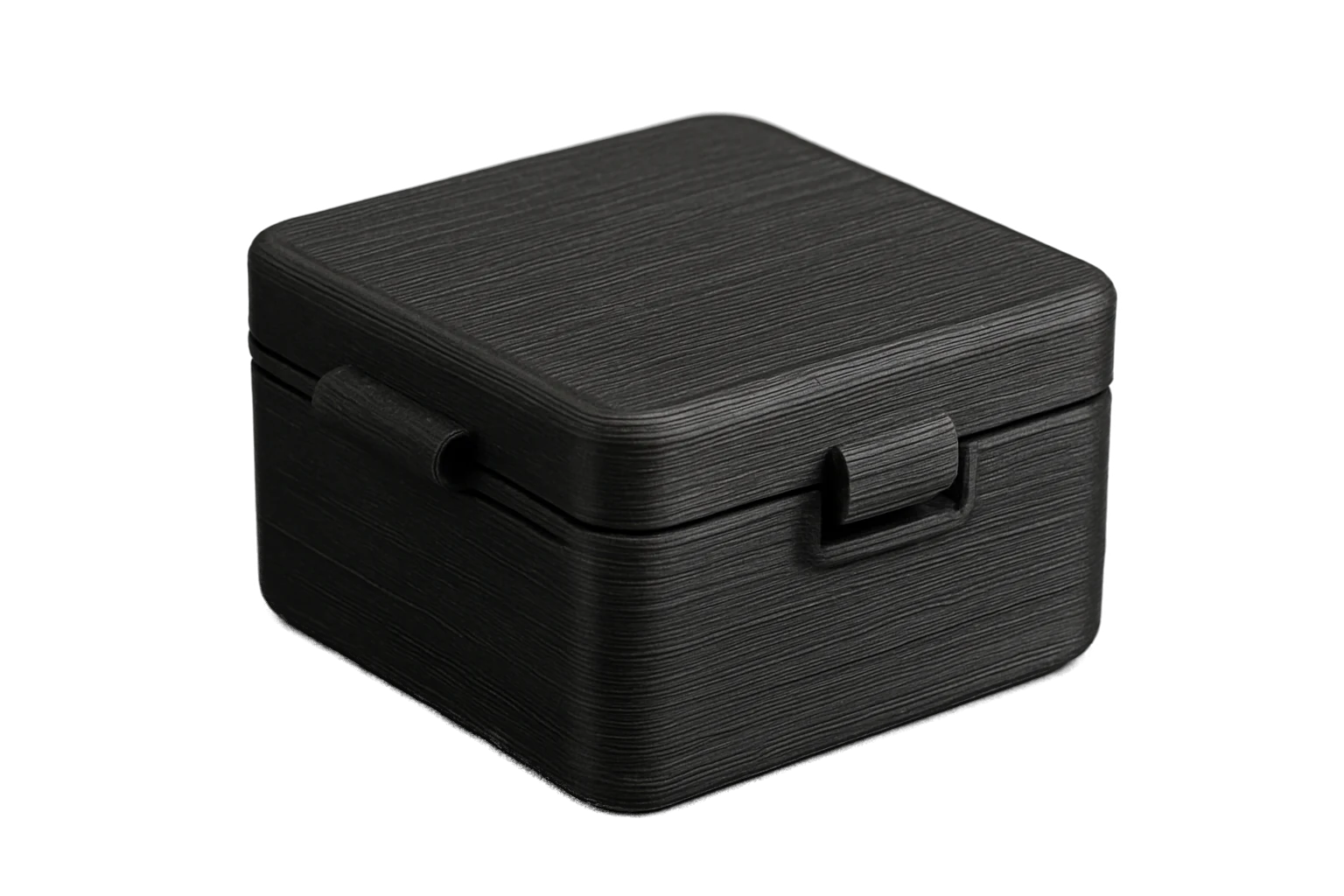
Rigid enclosures and snap-fits that hold shape.
Tough yet stiff — ideal for structural housings that click together.
PA12-CF’s toughness and fatigue resistance make it a strong pick for snap-fit enclosures, brackets, and clips — and the carbon fiber keeps thin walls rigid and flat instead of bowing. The premium matte-black finish looks the part on end-use hardware.
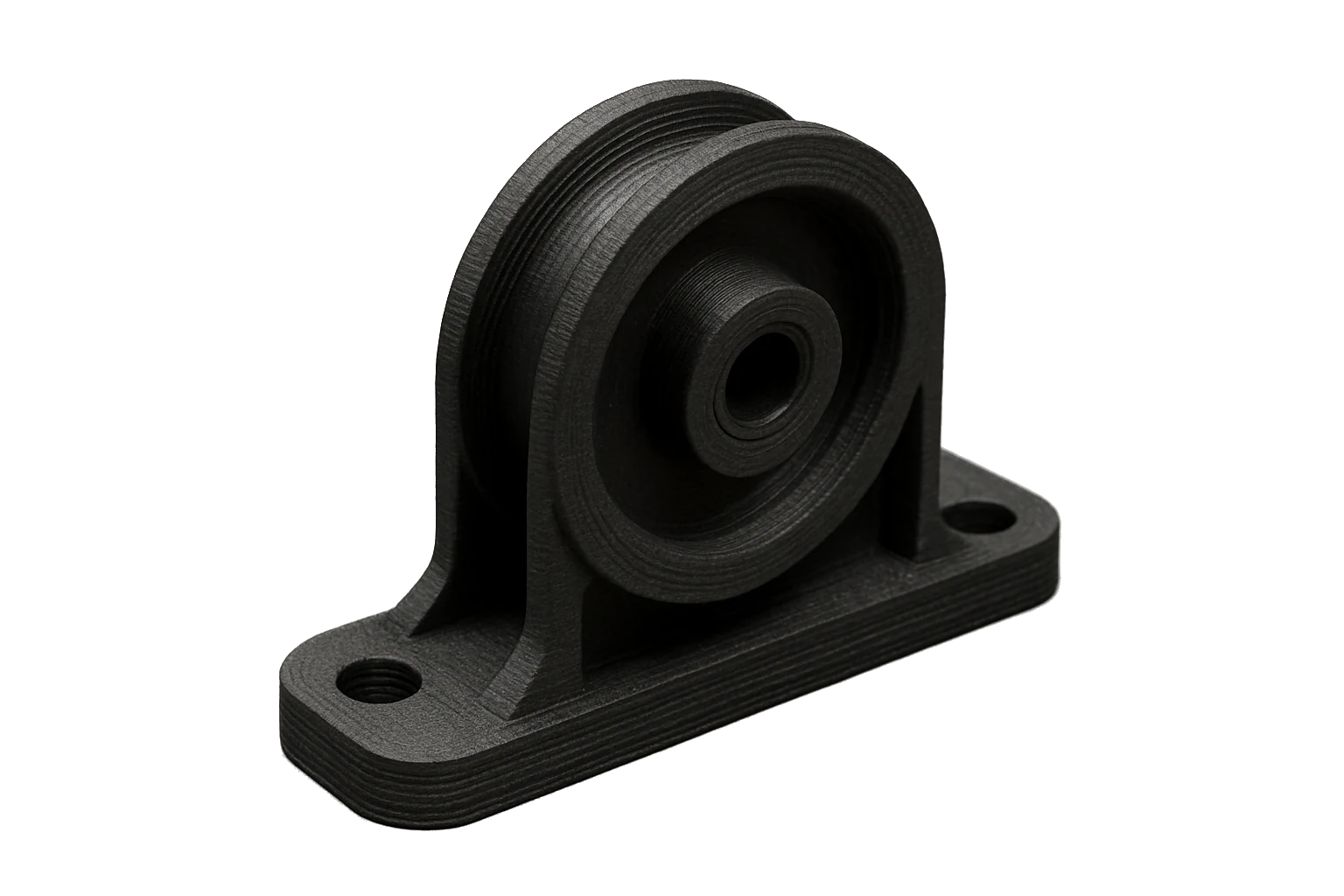
From prototype to a part that ships.
Stiff and light enough for real-world, load-bearing components.
Pulleys, brackets, drone frames, and functional end-use parts — PA12-CF bridges prototyping and production with the stiffness, strength-to-weight, chemical resistance, and dimensional stability to go into service. Ask us about 3 kg spools and case pricing.
PA12-CF vs. plain PA12 vs. PETG.
Pick by what the part has to survive. PA12-CF wins on stiffness, strength-to-weight, and dimensional stability; plain PA12 is tougher in raw ductility, easier to print, and cheaper; PETG is the easiest but least mechanical. PA12-CF is abrasive, so it needs a hardened-steel nozzle — and it costs more — in return for structural, lightweight performance.
| Rev1 PA12-CF | PA12 (Nylon) | PETG | |
|---|---|---|---|
| Stiffness / rigidity | Highest — carbon-fiber reinforced | Moderate — more flexible | Low — flexes |
| Strength-to-weight | Excellent | Good | Moderate |
| Dimensional stability | Highest — low warp & shrink | High — low moisture uptake | Good |
| Chemical / fuel resistance | Outstanding | Outstanding | Moderate |
| Ease of printing | Needs hardened nozzle, heat, enclosure | Moderate — more forgiving | Easy |
| Best for | Stiff / structural / lightweight | Tough / functional / chemical | Outdoor / everyday |
General material guidance; exact performance depends on part geometry, print settings, and grade. For lower cost and easier printing, consider plain PA12 or PA6; for maximum heat, consider PC; for UV and outdoor exposure, consider ASA.
Rev1 PA12-CF Carbon Fiber Nylon Technical Data
Mechanical & thermal properties
Typical values for engineering reference. Printed-part performance varies with wall count, infill, layer height, orientation, and moisture — treat these as material-level guidance, not a part spec.
| Property | Typical Value | Method |
|---|---|---|
| Tensile strength | ~65 MPa | ISO 527 |
| Elongation at break | ~6 % (stiffer than plain PA12) | ISO 527 |
| Flexural strength | ~95 MPa | ISO 178 |
| Flexural modulus | ~3,500 MPa (carbon-reinforced) | ISO 178 |
| Izod impact (notched) | ~5 kJ/m² | ISO 180 |
| Melting point (Tm) | ~178 °C | DSC |
| Heat deflection (HDT, 0.45 MPa) | ~95 °C (higher than plain PA12) | ISO 75 |
| Shelf life (sealed, dry) | 12 months | — |
Specs, profiles, and a human to call.
Your trusted materials partner.

Every spool is checked for tight diameter tolerance and reliable, repeatable printing.
Call (248) 707-2950 and reach people who actually print and support these materials.
Case quantities and standing orders on 1 kg and 3 kg spools.
FAQ
Rev1 PA12-CF Carbon Fiber Nylon — Common Questions
How is PA12-CF different from plain PA12?
PA12-CF is PA12 nylon compounded with chopped carbon fiber. The carbon reinforcement makes it much stiffer and stronger, with a far higher modulus and an excellent strength-to-weight ratio, and it cuts shrinkage and warping for better dimensional stability. It keeps everything good about the nylon base — low moisture uptake, chemical, fuel, and oil resistance, toughness, and fatigue resistance — but trades some of plain PA12’s ductility for rigidity. If you need stiff, lightweight, structural parts, PA12-CF is the upgrade.
Do I need a hardened-steel nozzle?
Yes — this is required. Carbon fiber is abrasive and will quickly wear out a standard brass nozzle, so run a 0.4 mm or larger hardened-steel (or equivalent wear-resistant) nozzle. It’s the one non-negotiable for printing any carbon-filled filament. Otherwise PA12-CF prints like an engineering nylon: hot end 240–260 °C, bed 60–80 °C, an enclosure, and low part cooling.
What is PA12-CF best used for?
It’s the stiff, lightweight workhorse for structural and load-bearing parts: brackets and mounts, jigs and fixtures, drone and RC frames, robotics links, gears, pulleys, and durable functional end-use parts. Its high strength-to-weight and low warp make it ideal wherever you need rigidity without added mass, and the nylon base still brings chemical, fuel, and oil resistance for exposed parts.
Do I need to dry PA12-CF, and do I need an enclosure?
Like any nylon, PA12-CF prints best dry — a dry spool (65–80 °C) keeps layers bonded and parts strong, especially if it’s been open a while. An enclosure is recommended: it prints hot (240–260 °C nozzle, 60–80 °C bed) and the carbon fiber keeps it low-warping, but a warm, draft-free chamber still helps large or flat parts. Keep part cooling low and use glue or an adhesive sheet for first-layer grip — and always with a hardened-steel nozzle.
PA12-CF vs plain PA12 vs PETG — which should I use?
Choose PA12-CF when you want maximum stiffness, strength-to-weight, and dimensional stability for structural, lightweight parts. Choose plain PA12 (or PA6) when you want a tougher, more ductile, easier-printing, lower-cost nylon and don’t need the extra rigidity. PETG is the easiest to print but the least mechanical — for simple everyday prints, PLA or PETG are better picks and carbon nylon is overkill.
When should I choose PC or plain nylon instead?
For the highest heat resistance, step up to PC (polycarbonate). For lower cost, easier printing, or maximum toughness and ductility, use plain PA12 or PA6. PA12-CF is the pick when stiffness, strength-to-weight, and low warp matter most — not when you need the absolute highest heat or a budget, easy-printing material.
What color and finish does PA12-CF come in?
One color — Carbon Fiber (matte black). The chopped carbon fiber gives it a premium matte-black carbon finish that looks the part on structural, end-use hardware. It ships on both 1 kg and 3 kg spools. Because it’s a single reinforced grade, there are no transparent, conductive, or other color options.
What sizes are available, how much, and how fast does it ship?
One color — Carbon Fiber (matte black) — on 1 kg and 3 kg spools at $54.99 per 1 kg spool. In-stock 1 kg spools ship fast; 3 kg spools are made-to-order and ship in 1–3 weeks from Michigan. Pick your spool size in the buy-box, or call (248) 707-2950 for case quantities.