CarbonX PP+CF15 • 3DXTECH • REV1 TECH
3DXTech CarbonX™ PP+CF15 CF-Reinforced Polypropylene for Chemical Environments
CF-Reinforced Polypropylene — 6,150 MPa Modulus · Chemical Resistant · 1.1 g/cc
3DXTech’s CarbonX PP+CF15 pairs polypropylene base resin with 15% chopped carbon fiber, delivering 6,150 MPa tensile modulus and the chemical resistance of PP in a single lightweight composite. Lowest density in the CarbonX line at 1.1 g/cc. Hardened steel nozzle required. Enclosure recommended. Made in Grand Rapids, Michigan.
Select Spool Size
750g in stock. Contact Rev1 to confirm availability.
WHY CarbonX PP+CF15
CF Stiffness. Chemical Resistance of PP. Lightest Density in the Line.
CarbonX™ PP+CF15 is 3DXTech’s 15% carbon fiber reinforced polypropylene — delivering 6,150 MPa tensile modulus in a chemical-resistant polyolefin matrix at just 1.1 g/cc. PP resists acids, bases, alcohols, and organic solvents that degrade ABS, PETG, and PC. The only CF-PP option with a verified TDS. Hardened steel nozzle ≥0.4mm required. Made in Grand Rapids, Michigan.
6,150 MPa Tensile Modulus
15% chopped carbon fiber reinforcement raises tensile modulus to 6,150 MPa — the highest in the CarbonX polyolefin class. Carbon fiber alignment during FFF extrusion maximizes in-layer stiffness for structural brackets, chemical fixtures, and fluid-contact components.
Chemical Resistance of PP
Polypropylene resists a wide range of chemicals including dilute acids, bases, alcohols, and organic solvents. PP+CF15 brings this chemical inertness to CF-stiffened structural parts — enabling fittings, brackets, and fixtures in contact with process fluids where PETG or ABS would degrade.
Lowest Density in CarbonX Line
At 1.1 g/cc, PP+CF15 is the lightest composite in the CarbonX family — lighter than PETG+CF (1.34 g/cc), ABS+CF (1.2 g/cc), and PC+CF (1.3 g/cc). Maximum stiffness-to-weight for aerospace, automotive, and lab applications where mass is a constraint.
Verified TDS — Only CF-PP with Data
3DXTech publishes a full Technical Data Sheet for CarbonX PP+CF15 with ISO-standard mechanical test results. The only CF-reinforced PP filament on the market with a verified, independently testable TDS — eliminating the guesswork of commodity generic PP composites.
PRINTING WITH CarbonX PP+CF15
PP+CF15 Is Powerful — But PP Demands Attention to Bed Adhesion
CarbonX PP+CF15 delivers CF-grade stiffness in a chemical-resistant polyolefin matrix. PP is a semi-crystalline polymer with excellent chemical resistance but notoriously low bed adhesion and tendency to warp — a PP-specific build surface (PP sheet, Magigoo Pro PP, or PP tape) is required for reliable results. Enclosure strongly recommended to manage dimensional stability. Hardened steel nozzle ≥0.4mm mandatory.
- Extruder Temp 265°C — single target from TDS; all-metal hot end required for temperatures above 260°C
- Bed Temp 85°C — PP-specific build surface required (PP sheet, Magigoo Pro PP, or PP-compatible adhesive)
- Bed Adhesion PP DOES NOT ADHERE to standard PEI, glass, or BuildTak. Use PP print sheet, Magigoo Pro PP, or Dimafix PP. This is the most critical print requirement for PP+CF15.
- Enclosure Recommended — PP is semi-crystalline and prone to warping on larger parts; enclosure significantly improves dimensional stability and layer adhesion
- Nozzle Hardened steel ≥0.4mm MANDATORY — carbon fiber is abrasive and will wear brass nozzles rapidly
- Layer Height 0.25mm or higher recommended for consistent CF fiber distribution and layer adhesion
- Drying 65°C / 4 hours before printing — PP absorbs minimal moisture vs. PETG/PA, but drying before printing ensures best results
THERMAL DATA
124°C HDT — Excellent Thermal Performance for a Polyolefin
Four thermal milestones defining CarbonX™ PP+CF15’s operating envelope — verified against 3DXTech CarbonX PP+CF15 TDS. PP is semi-crystalline (no Tg) — thermal performance characterized by melting point and HDT.
Heat deflection temperature under load — exceptional for a polyolefin. CF reinforcement dramatically raises PP’s HDT above unfilled PP (~100°C). Suitable for continuous service up to ~110°C under moderate load in chemical environments where PC or PETG would be chemically attacked.
PP is semi-crystalline — no glass transition temperature (Tg). Parts maintain dimensional integrity below the HDT (124°C); above melting point (~160°C) the crystalline structure dissolves. Thermal performance is characterized by HDT rather than Tg for semi-crystalline polymers.
Single target from TDS. All-metal hot end required — PTFE-lined hot ends are rated to ~240°C and not suitable. Higher processing temperature vs. PETG+CF (230–260°C) but lower than PC+CF (280–310°C). Enclosure recommended to prevent warping.
PP absorbs significantly less moisture than PETG or PA, but drying before printing is still recommended. 65°C for 4 hours eliminates any residual moisture contamination and helps ensure consistent extrusion quality session-to-session.
APPLICATIONS
Chemical-Resistant Brackets. Fluid-Contact Fixtures. Lab Equipment.
CarbonX™ PP+CF15 combines the chemical resistance of polypropylene with carbon fiber stiffness — enabling structural parts in contact with acids, bases, alcohols, and solvents that would degrade ABS, PETG, or PC. 6,150 MPa tensile modulus and 124°C HDT extend the performance envelope for polyolefin composites.
Chemical-Resistant Structural Brackets
Brackets and mounts for environments with chemical exposure — labs, chemical processing, water treatment. PP resists dilute acids, alkalis, alcohols, and organic solvents. CF reinforcement provides 6,150 MPa stiffness where unfilled PP would deflect under load.
Fluid-Contact Fittings & Flow Components
Fittings, manifolds, and flow components in contact with weak acids, cleaning agents, alcohols, and aqueous solutions. PP is widely used in industrial fluid handling for its chemical inertness. PP+CF15 adds structural rigidity for pressure-bearing or dimensionally critical components.
Lab Equipment & Sample Fixtures
Sample holders, fixture plates, and lab consumables requiring chemical inertness. PP is standard in laboratory plasticware for its compatibility with most reagents. CF reinforcement makes PP+CF15 a structural alternative to machined PP for custom lab fixtures at prototype volumes.
Hardened steel nozzle ≥0.4mm mandatory. PP-specific bed surface required. Enclosure strongly recommended. Consult 3DXTech CarbonX PP+CF15 TDS for complete mechanical data, chemical resistance tables, and test methodology.
SPECIFICATIONS
CarbonX™ PP+CF15 — Full Technical Data
Source: 3DXTech CarbonX PP+CF15 TDS. ISO-standard test specimens. 1.75mm black filament.
Material Properties
| Polymer | PP + 15% Chopped Carbon Fiber |
| Diameter | 1.75mm |
| Color | Black |
| Melting Point | ~160°C (semi-crystalline, no Tg) |
| HDT (0.45 MPa, ISO 75) | 124°C |
| Density | 1.1 g/cc (ISO 1183) |
| CF Loading | 15% chopped carbon fiber |
| Tensile Strength | 78 MPa (ISO 527) |
| Tensile Modulus | 6,150 MPa (ISO 527) |
| Tensile Elongation | 1.5% (ISO 527) |
| Flexural Strength | 68 MPa (ISO 178) |
| Flexural Modulus | 6,100 MPa (ISO 178) |
| Surface Resistance | >10⁸ Ω/sq (standard CF -- non-ESD) |
Print Parameters
| Extruder Temp | 265°C |
| Bed Temp | 85°C |
| Bed Surface | PP sheet, Magigoo Pro PP, or PP tape (required) |
| Enclosure | Recommended (manages PP warping) |
| Drying Protocol | 65°C / 4 hours |
| Nozzle | Hardened steel ≥0.4mm |
| Layer Height | 0.25mm or higher |
Availability
| 750g / 1.75mm | $78 (in stock) |
| 2kg / 1.75mm | Contact (special order, MOQ-10) |
| SKU | 3DXT-CX-PPCF15-175-750 |
| Origin | Grand Rapids, MI, USA |
| Chemical Resistance | Dilute acids, alkalis, alcohols, organic solvents |
SPOOL SELECTION
750g In Stock. Black. 1.75mm.
CarbonX™ PP+CF15 is available in 750g Black (1.75mm) at $78 from stock. 2kg spools available by special order (MOQ-10). Contact Rev1 for volume pricing.
- 1.75mm diameter — Black
- CF reinforcement — 15% chopped fiber
- Ships from stock
- 1.75mm diameter — Black
- MOQ-10 spools per brand policy
- Contact Rev1 for lead time
PRODUCT IMAGES
CarbonX™ PP+CF15 — Spool & Printed Part Views
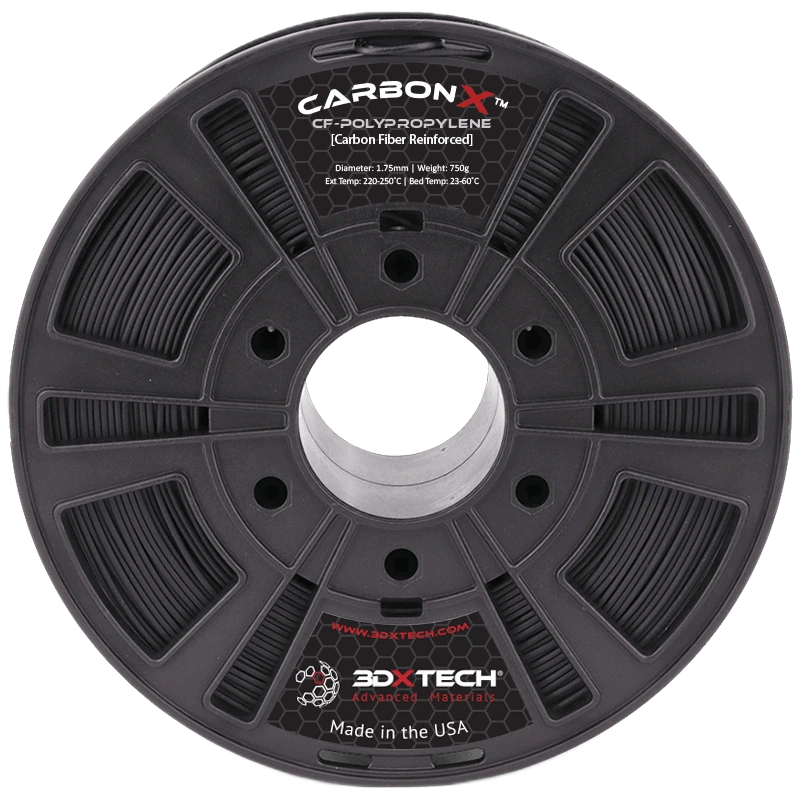
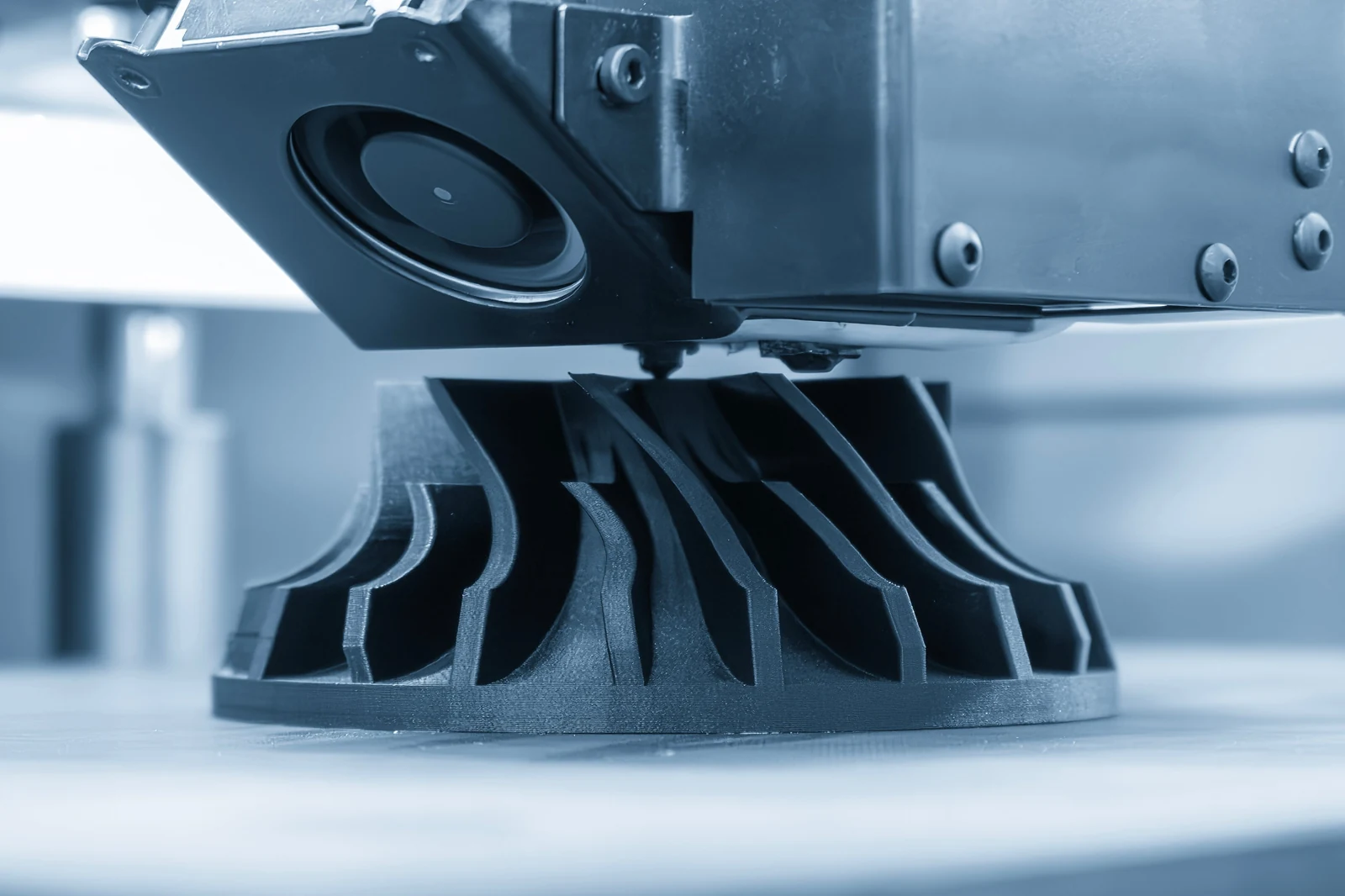
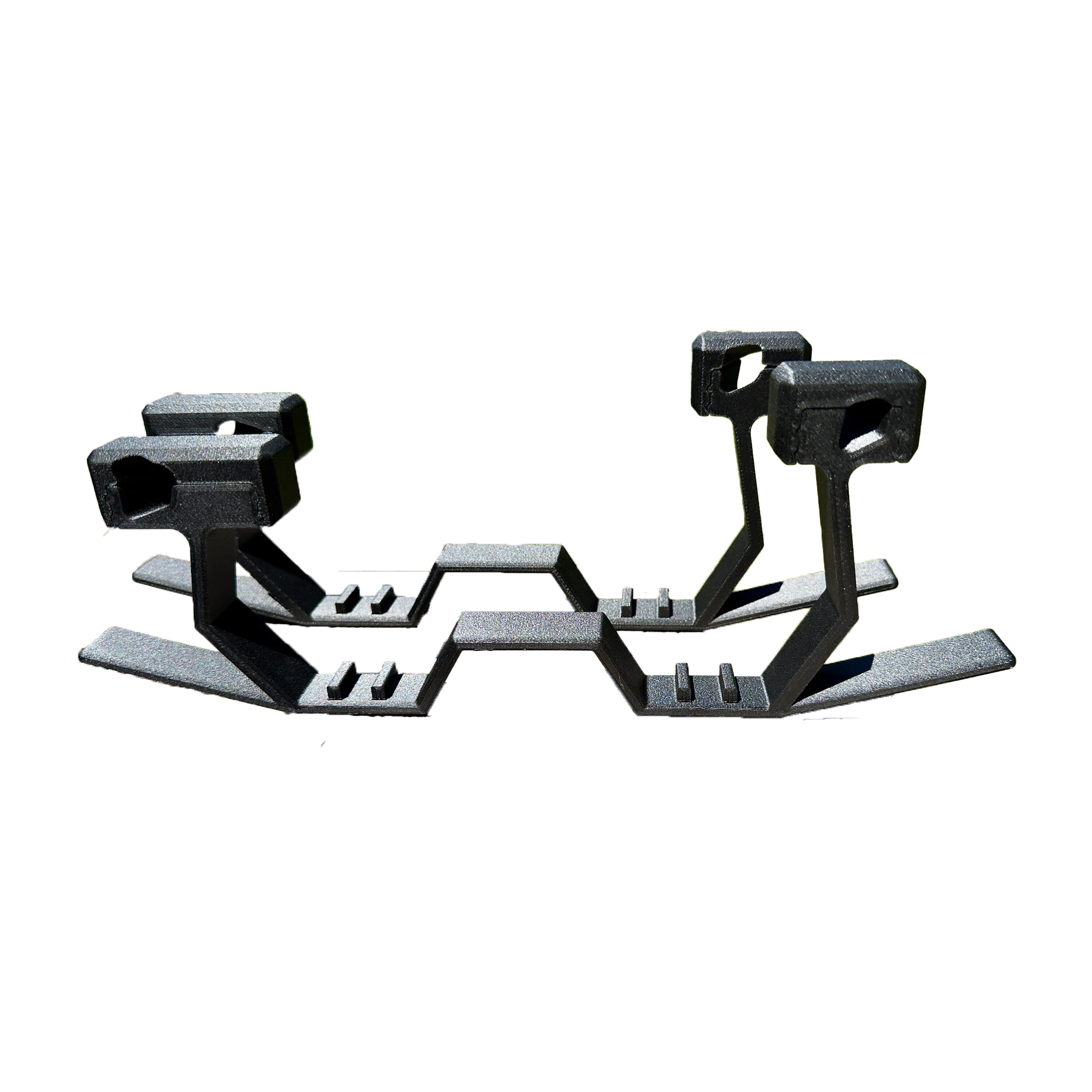
750g Black spool, 1.75mm. 15% CF reinforcement produces consistent black color throughout. Hardened steel nozzle required. PP-specific bed surface required.
WHERE IT WORKS
Where Chemical Resistance + CF Stiffness Is the Only Answer
When you need structural stiffness beyond unfilled PP and chemical resistance that rules out PETG, ABS, or PC — CarbonX PP+CF15 delivers 6,150 MPa modulus in a polyolefin matrix that withstands dilute acids, bases, alcohols, and organic solvents.
Chemical Process Industry Fixtures
Brackets, clamps, and fixtures in wet chemical environments. PP’s resistance to dilute acids, alkalis, and cleaning agents makes PP+CF15 the only CF composite suitable for environments where PETG, ABS, and PC would be chemically attacked. 6,150 MPa provides structural rigidity under load.
Automotive Fuel System Components
Fuel-contact prototypes, brackets, and clips where hydrocarbon resistance is required. PP is widely used in automotive fuel systems for its resistance to petrol and lubricants. CF reinforcement adds the stiffness needed for structural mounting applications.
Lab Equipment & Analytical Fixtures
Custom laboratory fixtures, sample holders, and flow cell components. PP is the standard lab plastic for reagent compatibility — PP+CF15 extends that chemical inertness into stiff structural parts that machined PP rods or injection-molded PP components cannot achieve at prototype volumes.
Fluid-Contact Fittings & Manifolds
Fittings, tees, and manifolds for aqueous process streams, cleaning agent lines, and solvent-containing flows. PP is the preferred polymer for industrial piping in chemical plants — PP+CF15 brings that chemistry to custom-geometry FFF-printed flow components.
Lightweight Structural Brackets (Weight-Critical)
At 1.1 g/cc, PP+CF15 is the lightest CF composite in the CarbonX line. For weight-critical aerospace prototypes, drone components, or UAV-mounted equipment brackets where chemical resistance is also required — no other FFF CF composite offers this combination.
Water Treatment & Wastewater Fixtures
Structural components for water treatment equipment, sampling fixtures, and sensor mounts in aqueous environments. PP resists chlorinated water, salt solutions, and pH-variable streams. CF reinforcement maintains dimensional stability in continuously wet environments.
MATERIAL CARE & PRINT TIPS
Bed Adhesion Is Everything With PP. Prepare Your Surface First.
PP is a semi-crystalline polyolefin with very low surface energy — the most common print failure is first-layer lift due to inadequate bed adhesion. A PP-compatible bed surface is non-negotiable. Follow this protocol for reliable PP+CF15 results.
Use a PP-Compatible Bed Surface
Standard PEI, glass, and BuildTak are incompatible with PP. Use a PP print sheet, Magigoo Pro PP adhesive, Dimafix PP, or PP packing tape on your build plate. This single step is the difference between successful PP+CF15 prints and recurring first-layer failures.
Print With Enclosure
Enclose your printer if possible. PP is semi-crystalline and contracts as it cools — draft-free, elevated ambient temperature inside the enclosure reduces warping and layer delamination on larger parts. Even a cardboard enclosure improves results.
Dry Before Printing
65°C for 4 hours before every print session. PP absorbs less moisture than PETG or PA, but drying is still recommended for consistent extrusion. Store unused filament in an airtight bag with desiccant between print sessions.
Store Sealed With Desiccant
Return unused filament to an airtight bag or container with fresh desiccant immediately after printing. Long-term storage in original sealed packaging with desiccant is acceptable. PP has better moisture stability than hygroscopic filaments but sealed storage is best practice.
HOW IT COMPARES
CarbonX™ PP+CF15 vs. Commonly Evaluated Alternatives
Buyers evaluating CarbonX PP+CF15 typically compare against CarbonX PETG+CF (easier printing, similar stiffness range), CarbonX ABS+CF (higher Tg, better adhesion), and generic unfilled PP (no stiffness, no TDS). PP+CF15 uniquely combines CF stiffness, PP chemical resistance, and the lightest density in the CarbonX line.
3DXTech / Rev1 Tech
3DXTech
3DXTech
Various
MATERIAL PERFORMANCE PROFILE
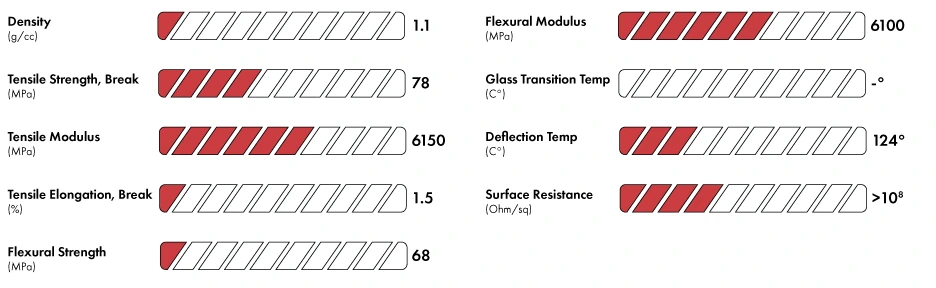
CarbonX™ PP+CF15 — Relative Property Scale
Nine-bar relative scale. Reference maximum: ThermaX PEEK at ~11,000 MPa tensile modulus = 100 bars. Values per ISO 527 / ISO 178 / ISO 75 / ISO 1183 on 3DXTech CarbonX PP+CF15 TDS.
ISO 9001:2015 Certified
Production under a certified quality management system. Lot traceability and process controls throughout filament fabrication at 3DXTech’s Grand Rapids facility.
Made in Grand Rapids, MI
Filament extruded and wound in-house at 3DXTech’s Michigan facility. Direct factory quality control — not overseas commodity production.
Verified TDS Available
Full processing parameters, mechanical properties, and test methodology published in the CarbonX PP+CF15 TDS. The only CF-PP filament with a publicly verifiable data sheet. Contact Rev1 for pre-sales technical support.
RESOURCES
Downloads & Technical Support
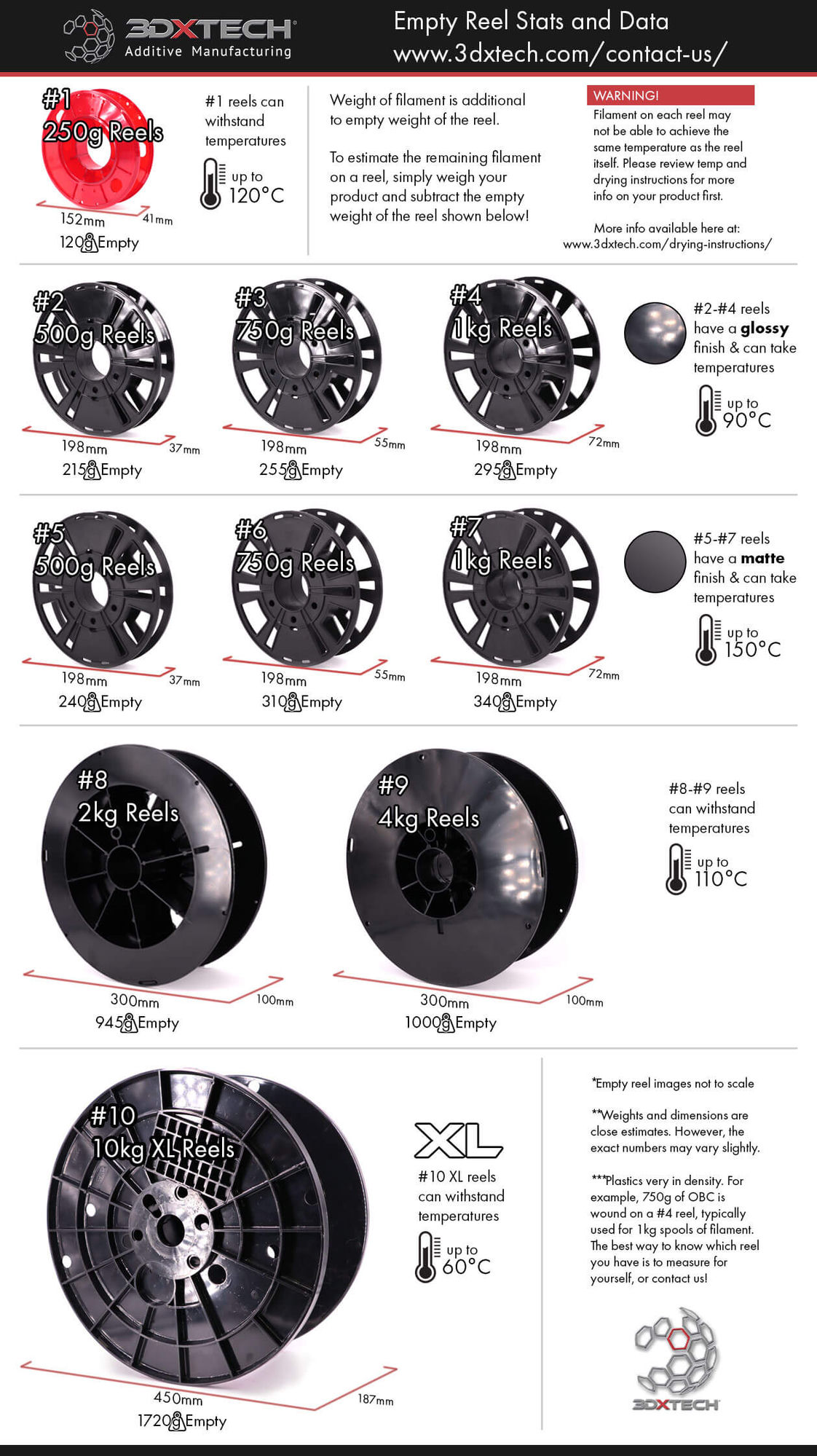
Everything you need to qualify and print CarbonX™ PP+CF15 with confidence. Processing parameters, reel dimensions, and technical support from Rev1.
WHY REV1 TECH
Authorized 3DXTech Reseller. Industrial AM Specialists.
Rev1 Technologies is an authorized 3DXTech reseller headquartered in Auburn Hills, MI, with direct technical expertise in high-performance FFF materials and the printers that run them. PP+CF15 requires careful bed adhesion setup — our team can walk you through PP-specific surface preparation, enclosure requirements, and printer profile configuration before you print.
Authorized Reseller
Every spool ships direct from the authorized channel. MAP pricing guaranteed. Single-channel license compliance — not a grey-market distributor.
PP Bed Adhesion Setup Support
PP bed adhesion is the number-one barrier to successful PP+CF15 prints. Our team can advise on PP print sheets, Magigoo Pro PP, and printer-specific setup. We’ve run PP-based filaments and can save you the frustration of trial-and-error on a difficult material.
Pre-Sales Technical Support
Questions about print settings, chemical resistance for your specific application, or qualifying PP+CF15 for your use case? Contact Rev1 before you order — that conversation is free.
FREQUENTLY ASKED
CarbonX™ PP+CF15 — Buyer & Engineer Questions Answered
What is CarbonX™ PP+CF15?
CarbonX™ PP+CF15 is 3DXTech’s 15% carbon fiber reinforced polypropylene filament. Available in Black (1.75mm, 750g at $78), it delivers 6,150 MPa tensile modulus and 78 MPa tensile strength in a chemical-resistant polyolefin matrix at 1.1 g/cc density — the lightest composite in the CarbonX line. Hardened steel nozzle ≥0.4mm mandatory. PP-specific bed surface required. Made in Grand Rapids, Michigan.
What mechanical properties does CarbonX PP+CF15 deliver?
CarbonX PP+CF15 delivers 78 MPa tensile strength, 6,150 MPa tensile modulus, 68 MPa flexural strength, and 6,100 MPa flexural modulus at 1.5% elongation. HDT is 124°C at 0.45 MPa (ISO 75). Melting point is ~160°C (semi-crystalline — no Tg). Density is 1.1 g/cc — the lowest in the CarbonX line. All values per ISO 527 / ISO 178 on 1.75mm black filament.
Why is PP so difficult to print and how do I solve it?
PP is a semi-crystalline polyolefin with very low surface energy — it simply does not adhere to standard PEI, glass, or BuildTak build surfaces. The solution is a PP-compatible bed surface: a PP print sheet, Magigoo Pro PP adhesive, Dimafix PP, or PP packing tape applied to your build plate. Enclosure is also strongly recommended to prevent warping as PP contracts during cooling. These two steps resolve the majority of PP print failures.
What is the chemical resistance of CarbonX PP+CF15?
Polypropylene resists a wide range of chemicals including dilute mineral acids (hydrochloric, sulfuric, phosphoric at low concentrations), alkalis, alcohols (methanol, ethanol, isopropanol), and many organic solvents. PP is incompatible with concentrated oxidizing acids and aromatic/chlorinated hydrocarbons. PP+CF15 inherits the full PP chemical resistance profile — consult the 3DXTech TDS and a PP chemical resistance chart for specific reagents before use.
What print settings does CarbonX PP+CF15 require?
Extruder: 265°C (all-metal hot end required). Bed: 85°C with PP-specific surface (PP sheet, Magigoo Pro PP, or PP tape — standard PEI and glass will not work). Enclosure: recommended. Nozzle: hardened steel ≥0.4mm. Layer height: 0.25mm or higher. Drying: 65°C for 4 hours before every print session. Higher print temp (265°C) requires an all-metal hot end — PTFE-lined hot ends are not rated for this temperature.
Does PP have a glass transition temperature (Tg)?
No — polypropylene is semi-crystalline, not amorphous, so it does not have a glass transition temperature. Thermal performance for PP is characterized by melting point (~160°C) and heat deflection temperature (HDT). CarbonX PP+CF15’s HDT is 124°C at 0.45 MPa — excellent for a polyolefin and significantly above unfilled PP (~100°C), thanks to CF reinforcement improving dimensional stability under load.
How does CarbonX PP+CF15 compare to CarbonX PETG+CF?
PP+CF15 has higher tensile modulus (6,150 MPa vs. 5,230 MPa), higher HDT (124°C vs. 77°C), lower density (1.1 g/cc vs. 1.34 g/cc), and superior chemical resistance. PETG+CF is significantly easier to print — no PP-specific bed surface required, no enclosure needed, lower print temp (230–260°C vs. 265°C), and lower cost ($50 vs. $78). Choose PP+CF15 when chemical resistance or minimum weight are the primary requirements; choose PETG+CF when printability and accessibility matter most.
Where is CarbonX PP+CF15 made?
CarbonX™ PP+CF15 is manufactured in-house by 3DXTech in Grand Rapids, Michigan, USA under ISO 9001:2015 certification. It is the only CF-PP filament on the market with a publicly verifiable Technical Data Sheet with ISO-standard mechanical test results. Rev1 Technologies is an authorized 3DXTech reseller based in Auburn Hills, MI.