3DXSTAT ESD-PA12 • 3DXTECH • REV1 TECH
3DXTech 3DXSTAT™ ESD-PA12 Tunable-Resistance ESD Nylon 12 — 10^3–10^7 Ω/sq · 158°C Tg · Made in USA
Tunable-Resistance ESD Nylon — 103–107 Ω/sq · 158°C Tg · Made in USA
3DXTech’s 3DXSTAT ESD-PA12 is the only ESD filament where you can dial in surface resistance from 10³ to 10⁷ Ω/sq by adjusting print temperature — higher extrusion temp yields lower resistance. PA12 base resin delivers outstanding chemical resistance to fuels, lubricants, and solvents, plus a 158°C glass transition for demanding aerospace, automotive, and semiconductor tooling. Made in Grand Rapids, Michigan.
750g in stock. Contact Rev1 to confirm availability.
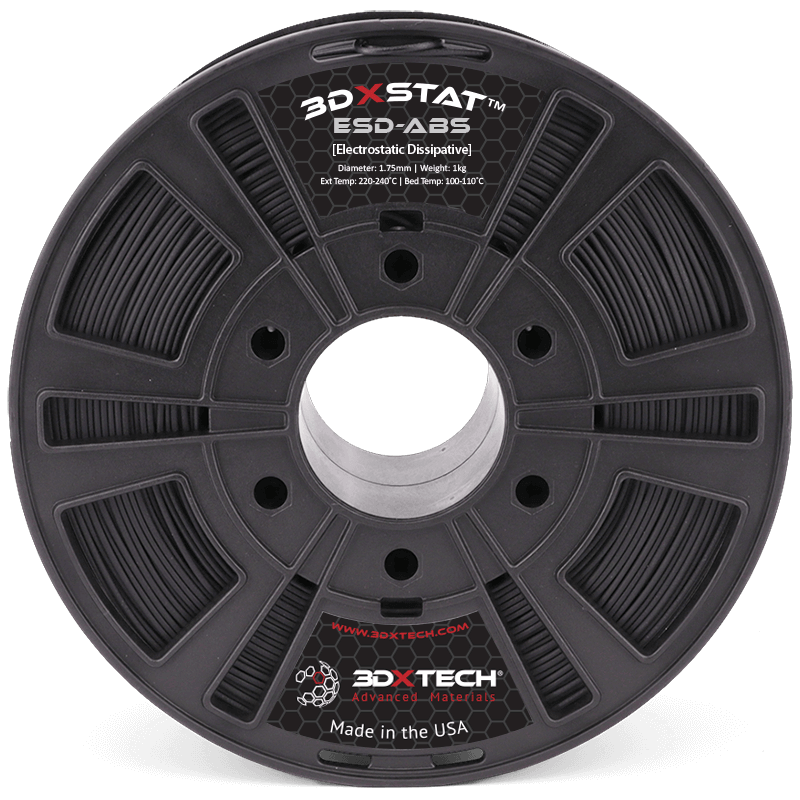
WHY 3DXSTAT ESD-PA12
Tunable 103–107 Ω/sq. PA12 Chemical Resistance. 158°C Tg.
3DXSTAT™ ESD-PA12 is 3DXTech’s advanced ESD Nylon 12 filament — the only ESD material where surface resistance is tunable across four decades (10³–10⁷ Ω/sq) by adjusting extrusion temperature. Higher print temp = lower resistance, giving engineers exact control over ESD dissipation without reformulation. PA12 base resin provides outstanding chemical resistance to fuels, lubricants, and solvents, plus a 158°C glass transition temperature exceeding ESD-PC. Hardened nozzle recommended. Made in Grand Rapids, Michigan.
Tunable Surface Resistance
Unique process-tunable ESD: adjust extrusion temperature between 265–285°C to shift surface resistance from 10⁷ down to 10³ Ω/sq. Higher temperature = lower resistance. Dial in precise ESD performance for your application without switching materials.
Chemical-Resistant PA12 Base
Nylon 12 (polyamide 12) base resin delivers exceptional resistance to fuels, hydraulic fluids, lubricants, and industrial solvents. PA12 retains mechanical properties in chemically harsh environments where PC or PETG ESD grades would degrade.
Highest Tg in the ESD Nylon Family
158°C glass transition temperature and 142°C HDT exceed ESD-PC (143°C Tg) and ESD-PETG (~82°C Tg). Reliable dimensional stability under motor heat, oven proximity, and elevated-temperature semiconductor process environments.
Made in USA
Extruded and wound in-house at 3DXTech’s Grand Rapids, MI facility under ISO 9001:2015 certification. Consistent ESD additive loading for repeatable tunable resistance performance across lots. Black color — standard for ESD-identified components.
PRINTING WITH 3DXSTAT ESD-PA12
ESD-PA12 — Print Temp Controls Resistance. Dry Before Every Session.
3DXSTAT ESD-PA12 prints at 265–285°C — within reach of most industrial FFF platforms. The key parameter is extrusion temperature: higher temp pushes surface resistance toward 10³ Ω/sq; lower temp yields 10⁷ Ω/sq. PA12 is hygroscopic — dry at 80°C for 4 hours before every session. Chamber recommended for warp control on larger parts.
- Extruder Temp 265–285°C — all-metal hot end required; higher temp shifts SR toward 10³ Ω/sq (lower resistance), lower temp toward 10⁷ Ω/sq (higher resistance)
- Bed Temp 90–110°C — PEI or garolite build surface preferred; nylon adhesion benefits from a warm, clean surface
- Chamber Temp Recommended — nylon warping control; enclosed chamber improves layer adhesion and reduces delamination on larger geometries
- Nozzle Hardened steel ≥0.4mm recommended — ESD additive loading can accelerate brass nozzle wear over extended print runs
- Drying 80°C / 4 hr minimum before every print session — PA12 is hygroscopic; do not skip
- ⚠ Moisture Warning PA12 absorbs moisture from ambient air rapidly. Wet filament causes splay, bubbling, strand breakage, and inconsistent surface resistance — audible popping during extrusion is the key sign. Dry at 80°C / 4 hr before every session and print from a sealed dry-box for best results.
- ⚠ Tunable SR Note Surface resistance is process-dependent. Verify measured SR on finished printed parts using ASTM D257 methodology — anisotropic FFF microstructure affects resistance. Calibrate temp vs. SR on your specific platform before committing to production parts.
THERMAL DATA
158°C Tg — Highest in the ESD Nylon Family
Four thermal milestones defining 3DXSTAT™ ESD-PA12’s operating envelope. With a 158°C glass transition and 142°C HDT, ESD-PA12 outperforms ESD-PC and every ESD-PETG grade for sustained elevated-temperature service.
Glass transition temperature of the PA12 matrix — highest in the 3DXSTAT ESD family. ESD tooling, fixtures, and end-use parts remain dimensionally stable in environments approaching 130°C continuous service. Exceeds ESD-PC by 15°C.
HDT at 0.45 MPa per ISO 75. Parts maintain structural integrity under moderate load up to 142°C — suitable for ESD fixtures near motors, conveyors, reflow oven loading zones, and elevated-temperature semiconductor process environments.
Estimated continuous-use service temperature for load-bearing ESD applications. Significantly above ESD-PC and all ESD-PETG grades. Suitable for industrial environments where other ESD materials are marginal.
Required before every session. PA12 is hygroscopic — moisture causes splay, bubbling, reduced mechanical properties, and inconsistent ESD performance. Drying at 80°C for 4 hours is the minimum; higher temperatures risk annealing the spool.
ESD PROPERTIES & CHEMICAL RESISTANCE
103–107 Ω/sq Tunable — Plus PA12 Chemical Resistance
3DXSTAT™ ESD-PA12 delivers surface resistance tunable across four decades (10³–10⁷ Ω/sq) via print temperature adjustment — a capability unique in the ESD filament market. The PA12 base resin adds chemical resistance to fuels, lubricants, and solvents that polycarbonate and PETG ESD grades cannot match. Ideal for aerospace maintenance tooling, automotive assembly, and chemical-exposed ESD environments.
Surface resistance per ASTM D257. Tunable via print temperature — verify measured SR on finished printed parts; anisotropic FFF microstructure affects resistance. PA12 is resistant to fuels, lubricants, and many solvents; consult a chemical resistance guide for specific media. Not suitable for applications requiring electrical insulation.
SPECIFICATIONS
3DXSTAT™ ESD-PA12 — Full Technical Data
Source: 3DXTech 3DXSTAT ESD-PA12 TDS. ISO-standard test specimens. 1.75mm black filament.
Material Properties
| Polymer | Polyamide 12 (PA12) + ESD additives |
| Diameter | 1.75mm |
| Color | Black |
| Glass Transition (Tg) | 158°C |
| HDT (0.45 MPa, ISO 75) | 142°C |
| Continuous Use Temp | ~130°C (est.) |
| Surface Resistance | 10³–10⁷ Ω/sq (tunable via print temp) |
| ESD Standard | ASTM D257 |
| Tensile Strength | 68 MPa (ISO 527) |
| Tensile Modulus | 6,900 MPa (ISO 527) |
| Flexural Strength | 81 MPa (ISO 178) |
| Flexural Modulus | 6,700 MPa (ISO 178) |
| Elongation at Break | 3.8% (ISO 527) |
| Density | 1.14 g/cm³ (ISO 1183) |
Print Parameters
| Extruder Temp | 265–285°C |
| Bed Temp | 90–110°C |
| Chamber Temp | Recommended (nylon warp control) |
| Drying Protocol | 80°C / 4 hr minimum |
| Nozzle | Hardened steel ≥0.4mm recommended |
| Hot End Requirement | All-metal required (265–285°C) |
| SR Tuning | Higher temp → lower SR (toward 10³); lower temp → higher SR (toward 10⁷) |
Availability
| Spool Sizes (Available) | 750g (in stock) |
| 750g Price | $125 |
| Lead Time | Varies — contact Rev1 to confirm |
| Quality Standard | ISO 9001:2015 Certified |
| Origin | Grand Rapids, MI, USA |
SPOOL SELECTION
750g Available. Black. 1.75mm.
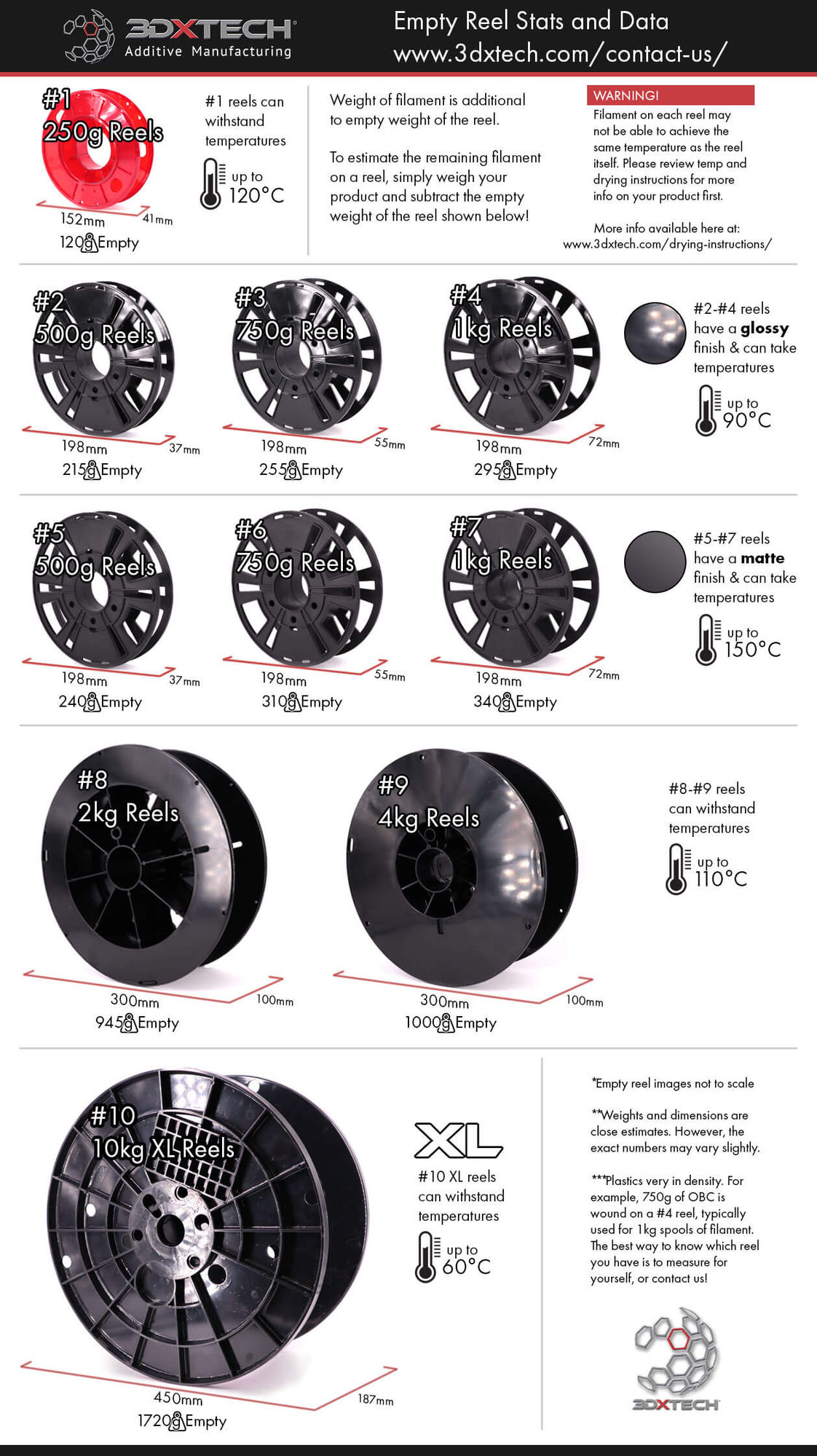
3DXSTAT™ ESD-PA12 is available in a single spool size: 750g Black (1.75mm). Consistent ESD additive loading ensures repeatable tunable resistance performance across the spool.
- 1.75mm diameter — Black
- Tunable SR 10³–10⁷ Ω/sq via print temp
- Ships from stock
PRINT QUALITY
Industrial-Grade PA12 Output With Dialed-In ESD
3DXSTAT™ ESD-PA12 produces dense, chemical-resistant parts with tunable ESD performance. Black color is standard for ESD-identified components in electronics manufacturing and aerospace maintenance environments.
COMPATIBLE PLATFORMS
Requires an Industrial-Grade 3D Printer With Chamber
3DXSTAT ESD-PA12 prints at 265–285°C — within reach of industrial FFF platforms. A heated enclosure is recommended for nylon warp control on larger parts. Hardened nozzle recommended. All-metal hot end required.
CreatBot F160-PEEK
Purpose-built high-performance platform with dual all-metal hot ends and integrated chamber heating. Validated for demanding engineering materials including ESD grades — Rev1’s top recommendation for ESD-PA12 and PEEK applications.
Rev1 RecommendedCreatBot PEEK-300
300mm build volume, 420°C hot end rating, 200°C heated chamber. Production-oriented platform for ESD-PA12 at larger part geometries requiring consistent nylon warp control.
Rev1 RecommendedCreatBot F430
Quad-nozzle large-format industrial printer with multi-material capability. Supports ESD-PA12 plus support materials for complex geometries and dual-extrusion workflows requiring ESD-safe nylon.
Rev1 RecommendedAny Open-Platform Printer
Minimum: 285°C hot end • 110°C heated bed • enclosure recommended • hardened steel nozzle ≥0.4mm • all-metal hot end required.
WHERE IT WORKS
Where Tunable ESD and Chemical Resistance Intersect
When you need ESD protection in a chemically exposed, high-temperature environment — and you need to set the exact resistance level for your application — 3DXSTAT ESD-PA12 is the answer. No other ESD filament provides this combination.
Aerospace Maintenance Tooling
Fuel system maintenance fixtures, hydraulic line handlers, and avionics bay tooling requiring ESD protection in environments with fuel and lubricant exposure. PA12 chemical resistance is critical in MRO applications where PC or PETG would degrade.
Automotive Assembly & EV Fixtures
Battery module handling fixtures, EV powertrain assembly tooling, and ESD-safe jigs for high-voltage component assembly. Tunable SR allows dialing in the specific resistance level required by automotive ESD specifications.
Semiconductor Process Fixtures
Wafer handling equipment, process chamber staging fixtures, and ESD carriers for elevated-temperature semiconductor environments. 158°C Tg enables use in process areas where ESD-PC and ESD-PETG would be marginal.
ESD Trays in Chemical Environments
Custom ESD trays and carriers for PCB and component handling in environments with solvent cleaning, flux exposure, or chemical wash steps. PA12 resistance to cleaning agents prevents ESD tray degradation over production lifetime.
Industrial Inspection & Test Equipment
Test fixtures, probe holders, and gauging tools requiring ESD-safe surfaces with tunable resistance levels. High modulus (6,900 MPa tensile) provides dimensional stability needed in precision inspection applications.
Defense & MilSpec ESD Components
ESD-safe components for defense electronics assembly and depot maintenance where chemical exposure and wide operating temperatures are standard. Tunable SR supports compliance with various defense ESD specifications at the appropriate resistance level.
MATERIAL CARE
PA12 Is Hygroscopic. A Proper Protocol Eliminates Print Failures.
ESD-PA12 requires consistent drying before printing at 265–285°C. Nylon 12 absorbs moisture from ambient air faster than PC. Wet filament produces splay, strand breaks, and — critically — inconsistent surface resistance. Follow this protocol every session.
Dry Before Every Session
80°C minimum / 4 hours minimum. No exceptions — even a sealed spool from stock benefits from a fresh drying cycle. Wet nylon ruins ESD consistency, not just surface finish.
Print From the Dryer
For best results, print directly from a heated dry-box or inline dryer system. PA12 re-absorbs ambient humidity during extended print runs — a dry-box eliminates this variable.
Store Sealed With Desiccant
Return unused filament to an airtight bag or container with fresh desiccant immediately after printing. Long-term storage in original sealed packaging is acceptable; replace desiccant if opened.
Recognize Wet Filament Symptoms
Popping or crackling during extrusion, rough surface texture, strand breaks, and visible bubbling in the melt are signs of moisture contamination. Re-dry at 80°C / 4 hr and restart.
HOW IT COMPARES
3DXSTAT™ ESD-PA12 vs. Commonly Evaluated Alternatives
Buyers evaluating 3DXSTAT ESD-PA12 typically compare against ESD-PC for a stiffer option, ESD-PETG for an easier-printing lower-Tg alternative, and Markforged ESD Onyx for a closed-platform comparison.
3DXTech / Rev1 Tech
3DXTech
Generic / Various
Markforged
3DXTECH QUALITY
Manufactured in Michigan. Certified to ISO 9001:2015.
Every spool of 3DXSTAT™ ESD-PA12 is produced in-house at 3DXTech’s Grand Rapids, MI facility under ISO 9001:2015 certification. ESD additives compounded with PA12 resin for consistent lot-to-lot tunable resistance performance, with full lot traceability throughout filament fabrication.
ISO 9001:2015 Certified
Production under a certified quality management system. Lot traceability and process controls throughout filament fabrication ensure consistent ESD additive loading across every spool.
Made in Grand Rapids, MI
Filament extruded and wound in-house at 3DXTech’s Michigan facility. Direct factory quality control — not overseas commodity production. Consistent diameter and ESD loading across lots.
Technical Data Sheet Available
Full processing parameters, mechanical properties, electrical resistance data, tunable SR methodology, and drying instructions published in the 3DXSTAT ESD-PA12 TDS. Available for download below.
RESOURCES
Downloads & Technical Support
Everything you need to qualify and print 3DXSTAT™ ESD-PA12 with confidence. Tunable resistance methodology, drying protocol, and technical support from Rev1.
WHY REV1 TECH
Authorized 3DXTech Reseller. Industrial AM Specialists.
Rev1 Technologies is an authorized 3DXTech reseller headquartered in Auburn Hills, MI, with direct technical expertise in high-performance FFF materials and the printers that run them.
Authorized Reseller
Every spool ships direct from the authorized channel. MAP pricing guaranteed. Single-channel license compliance — not a grey-market distributor.
Platform Expertise
If you need guidance on which platform to match with 3DXSTAT ESD-PA12, or how to calibrate print temperature for your target surface resistance, our team has run them.
Pre-Sales Technical Support
Questions about tunable SR calibration, printer selection, or qualifying ESD-PA12 for aerospace or semiconductor applications? Contact Rev1 before you order — that conversation is free.
FREQUENTLY ASKED
3DXSTAT™ ESD-PA12 — Buyer & Engineer Questions Answered
What is 3DXSTAT™ ESD-PA12?
3DXSTAT™ ESD-PA12 is 3DXTech’s advanced ESD Nylon 12 (polyamide 12) filament with a unique tunable surface resistance: by adjusting extrusion temperature between 265–285°C, engineers can dial in surface resistance from 10⁷ down to 10³ Ω/sq. Available in Black (1.75mm, 750g). Made in Grand Rapids, MI under ISO 9001:2015 certification.
How does tunable surface resistance work in ESD-PA12?
3DXSTAT ESD-PA12’s ESD additive system responds to extrusion temperature: higher print temperature (toward 285°C) produces lower surface resistance (toward 10³ Ω/sq), while lower print temperature (toward 265°C) yields higher surface resistance (toward 10⁷ Ω/sq). This allows engineers to target a specific ESD dissipation level for their application by calibrating print temp on their platform. Always verify measured SR on finished parts using ASTM D257 methodology, as FFF microstructure affects resistance.
Why does ESD-PA12 need to be dried before printing?
PA12 (Nylon 12) is hygroscopic — it absorbs moisture from ambient air. Wet filament causes splay, audible popping during extrusion, strand breaks, surface defects, and reduced mechanical properties. Critically, moisture also affects ESD performance consistency. Dry at 80°C for a minimum of 4 hours before every print session, and print from a sealed dry-box for best results. Do not skip drying even with a freshly opened spool.
What temperatures does 3DXSTAT™ ESD-PA12 require?
3DXSTAT™ ESD-PA12 requires an extruder temperature of 265–285°C (all-metal hot end required), a bed temperature of 90–110°C, and a heated enclosure is recommended for warp control on larger parts. Dry at 80°C for 4 hours minimum before every session. Hardened steel nozzle recommended to minimize wear over extended print runs.
What is the chemical resistance of ESD-PA12?
PA12 (Nylon 12) offers outstanding resistance to fuels, hydraulic fluids, lubricants, and many industrial solvents — significantly better than ESD-PC or ESD-PETG. This makes ESD-PA12 the preferred choice for aerospace MRO tooling, automotive assembly fixtures, and electronics handling environments where cleaning agents or process fluids are present. Consult a Nylon 12 chemical resistance guide for specific media compatibility.
What applications use 3DXSTAT™ ESD-PA12?
3DXSTAT ESD-PA12 is used for aerospace maintenance tooling (fuel and hydraulic system fixtures), automotive EV assembly fixtures, semiconductor process fixtures requiring ESD at elevated temperatures, ESD trays in chemically exposed environments, industrial inspection and test fixtures, and defense electronics MRO tooling. Any application combining ESD requirements with chemical exposure or temperatures exceeding 130°C is an ideal fit.
How does ESD-PA12 compare to ESD-PC and ESD-PETG?
ESD-PA12 has a higher Tg (158°C vs. 143°C for ESD-PC; ~82°C for ESD-PETG), tunable surface resistance vs. the fixed SR of ESD-PC and ESD-PETG, and far superior chemical resistance to fuels and lubricants. ESD-PC has higher flexural stiffness and a slightly lower print temp, making it easier on some platforms. ESD-PETG is easier to print (no chamber, lower temp, no hardened nozzle) but is limited to ~80°C service. ESD-PA12 fills the gap: chemical resistance + high Tg + tunable ESD in one material.
What spool sizes are available and what is in stock?
3DXSTAT™ ESD-PA12 is available in one spool size: 750g Black ($125), which ships from stock. All filament is 1.75mm diameter. Contact Rev1 to confirm current availability before ordering for time-sensitive applications.