3DXTech 3DXSTAT ESD-Flex TPU Static-Dissipative Flexible TPU — Built for Electronics, USA-Made
Static-Dissipative Flexible TPU — Built for Electronics, USA-Made
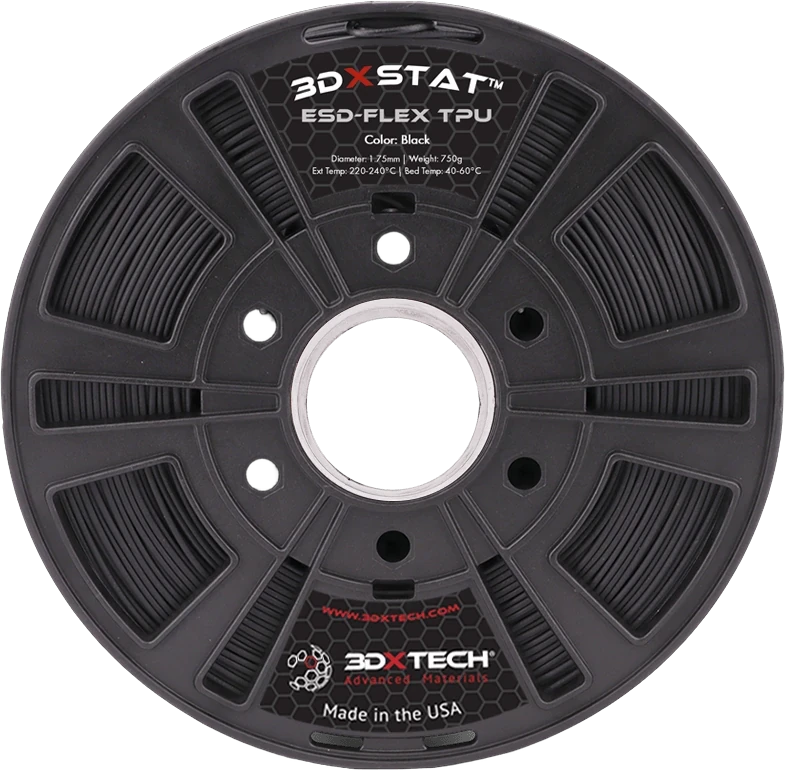
A USA-made flexible TPU elastomer engineered to be ESD-safe — formulated for a target surface resistance of 10²–10³ Ω/sq so it safely dissipates static around sensitive electronics. Shore 90A softness with >300% elongation, excellent layer bonding, and outstanding fatigue resistance make it the pick for flexible, static-controlled parts. Full specifications →
Made in the USA — ships from Rev1. Need 2.85 mm or bulk pricing? Call (248) 707-2950.
USA-made ESD-safe flexible TPU, with a real datasheet behind it.
3DXTech compounds 3DXSTAT ESD-Flex TPU in Grand Rapids, Michigan at its 68,000 sq ft facility, with a published ESD and material datasheet — no mystery filament. Rev1 Technologies is your authorized 3DXTech reseller and US support partner, Auburn Hills, Michigan.


Flexible parts that dissipate static — not just prototypes.
3DXSTAT ESD-Flex TPU is a thermoplastic polyurethane elastomer formulated to combine genuine flexibility with a controlled, static-dissipative surface. With a target surface resistance of 10²–10³ Ω/sq it protects sensitive electronics from electrostatic discharge, while a soft Shore 90A durometer and >300% elongation let it bend, grip, seal, and absorb shock. 3DXTech compounds it in the USA into consistent, printable filament for flexible, end-use, static-controlled components.
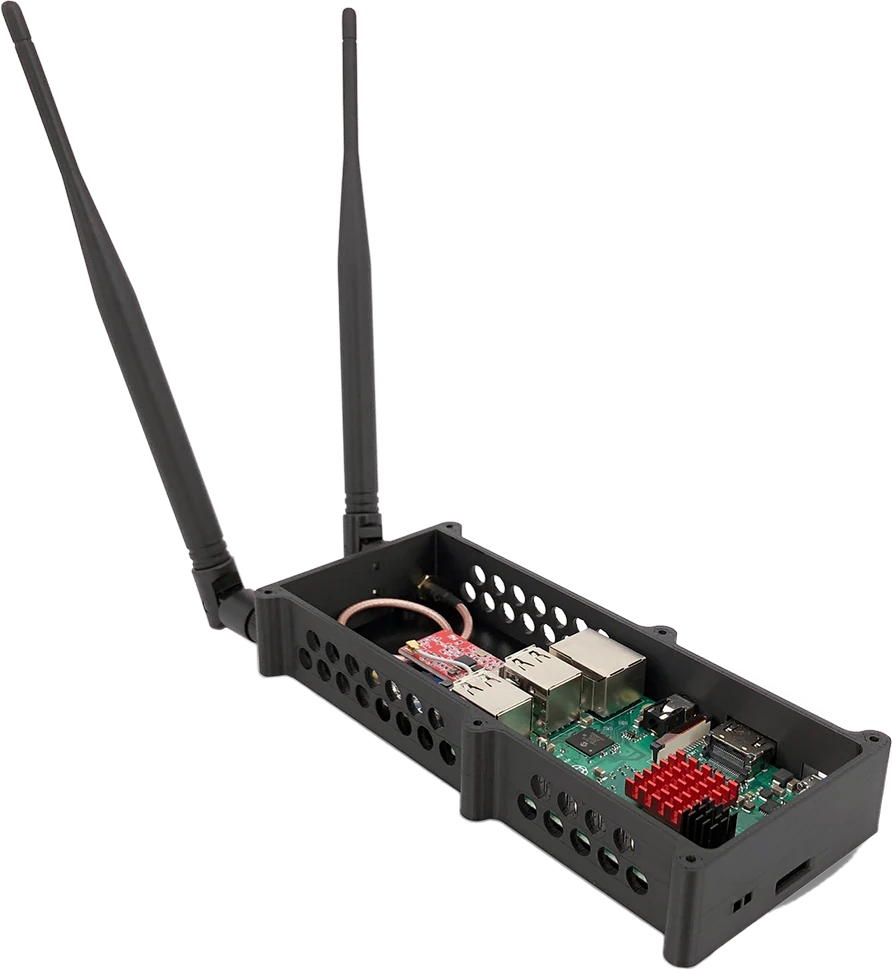
ESD protection and flexibility in one material.
Static-dissipative housings, fixtures, and handling parts that flex.
Standard flexible TPUs are insulators — they build up and hold a static charge that can damage the very electronics you are printing parts for. ESD-Flex TPU is formulated so the printed surface bleeds that charge away safely, making it ideal for enclosures, brackets, and handling components that live around circuit boards, sensors, and other static-sensitive hardware. You get the toughness and give of a TPU with the electrical safety of an ESD-grade material.
Static control, softness, and fatigue resistance.
The numbers below are from the published 3DXTech technical data sheet (TDS Rev 1.1), tested on printed ISO specimens.
Target static-dissipative range (ASTM D257) — safely bleeds off charge around sensitive electronics.
Soft, flexible durometer (ISO 868) — bends, grips, and seals while staying tough.
Stretches well past 3× its length (ISO 527) before failure — forgiving and durable.
Tensile strength at yield (ISO 527) — holds together under repeated flex and pull.
Low wear under the ISO 4649-A abrasion test — outstanding fatigue and abrasion resistance.
Low moisture pickup and flexibility retained even at low temperatures for reliable, consistent prints.
A direct-drive extruder and a steady, moderate pace.
These are 3DXTech's recommended print settings. Flexible TPU feeds best through a direct-drive extruder; keep speeds moderate and part cooling low for clean, well-bonded walls.
Prints at a standard hotend temperature — no high-temp hotend or all-metal upgrade required.
A lightly heated bed with a suitable adhesive gives reliable first-layer grip for flexible parts.
A direct-drive extruder feeds soft TPU far more reliably than a long Bowden path.
Moderate speeds prevent skipping and give the elastomer time to bond cleanly, layer to layer.
Minimal part-cooling fan preserves layer adhesion — strong, well-fused flexible walls.
Dry the filament at 65°C for about 4 hours and keep it dry for the best surface and consistency.
Built for flexible, static-controlled electronics parts.
Because it is soft, tough, and static-dissipative, ESD-Flex TPU lands in electronics manufacturing and any workflow where a flexible part has to live near static-sensitive hardware.
Black — the standard for ESD-safe materials.
3DXSTAT ESD-Flex TPU ships in a single color: black, the conventional finish for static-dissipative filaments, whose conductive additive package is inherently dark. It is available in 1.75 mm and 2.85 mm on a 750 g reel; choose your diameter in the buy-box, or ask us about bulk and standing-order pricing.
ESD-Flex TPU vs. ESD-safe rigid vs. standard flexible TPU.
Approximate positioning to help you pick the right static-safe or flexible grade — confirm exact figures against each technical data sheet.
| ESD-Flex TPU (90A) | ESD-Safe Rigid (e.g. ESD-PETG) | Standard TPU | |
|---|---|---|---|
| Flexibility | High (Shore 90A) | Rigid | High |
| Static control | ESD-safe (10²–10³ Ω/sq) | ESD-safe | None (insulator) |
| Elongation | >300% | Low | Very high |
| Printer needs | Direct-drive, standard hotend | Standard hotend | Direct-drive, standard hotend |
| Print temp | 220–240°C | 240–260°C | 220–240°C |
| Best for | Flexible, static-safe electronics parts | Rigid ESD-safe housings & fixtures | Flexible parts, no static requirement |
Qualitative comparison among flexible and ESD-safe filament types; confirm exact properties against each TDS. Prices vary by diameter and date.
3DXTech 3DXSTAT ESD-Flex TPU Technical Data
Check the reel fits your printer.
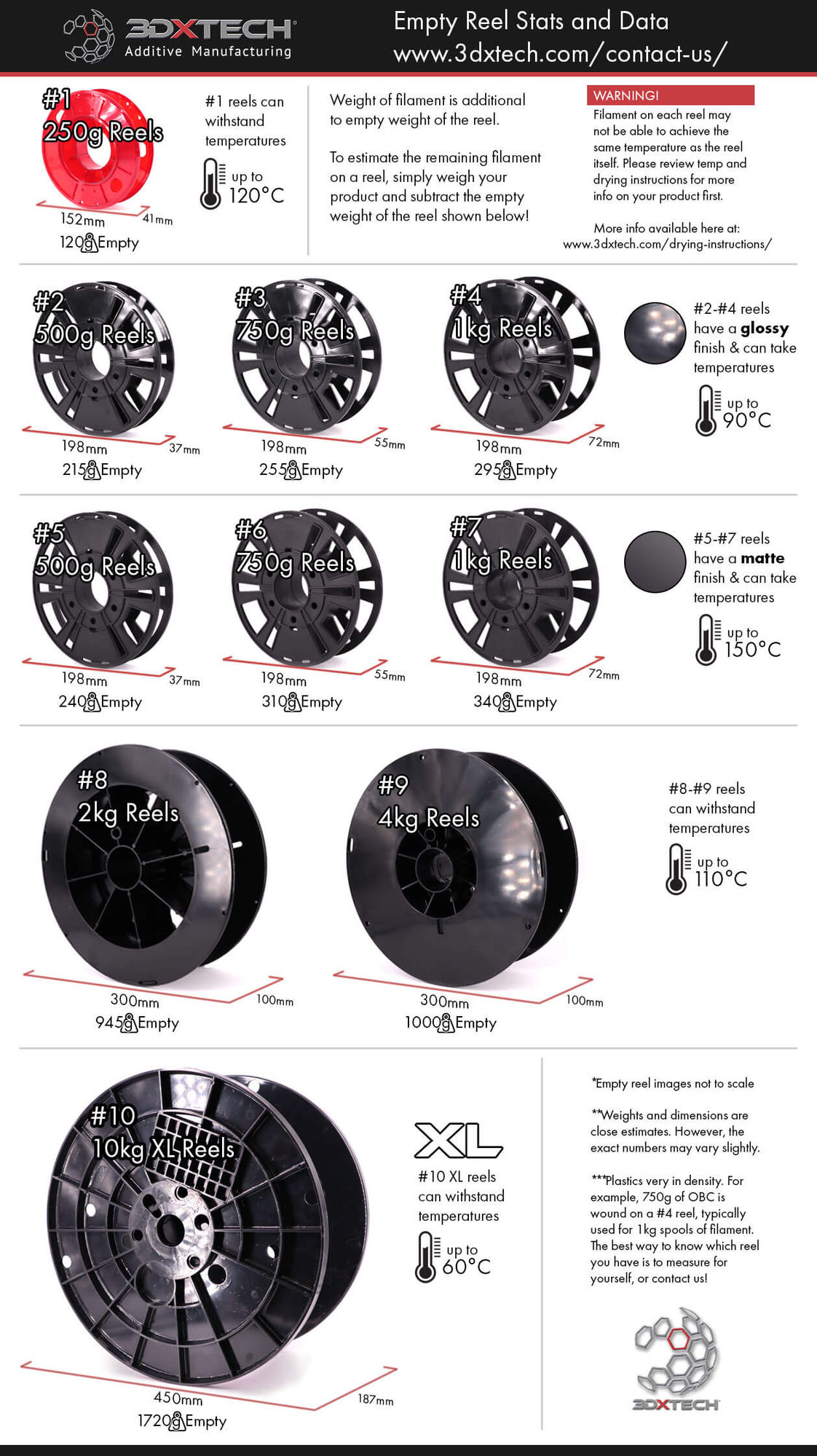
Standard spool dimensions — confirm it fits your AMS or dry box.
3DXTech ships ESD-Flex TPU on consistent, standard reels.
Before you buy, check the outer diameter, width, and center bore against your printer's spool holder, automated material system, or drybox. Open the full 3DXTech reel infographic for the exact dimensions of the 750 g spool.
View reel dimensions →RESOURCES
Datasheet & Print Support
Everything you need to qualify and print 3DXSTAT ESD-Flex TPU.
WHY REV1 TECH
Authorized 3DXTech Reseller. Engineering-Materials Specialists.
Rev1 Technologies is an authorized 3DXTech reseller in Auburn Hills, MI, supplying genuine USA-made engineering filament with real print support.
We help you pick the right engineering polymer, dial in the profile, and keep production running.
FAQ
3DXTech 3DXSTAT ESD-Flex TPU — Common Questions
What does ESD-safe mean for this filament?
ESD-Flex TPU is compounded to a target surface resistance of 10²–10³ Ω/sq (ASTM D257), so the printed part safely dissipates static electricity instead of holding a charge. That protects sensitive electronics from electrostatic discharge when they touch or sit inside the part.
How flexible is it?
It is a soft Shore 90A TPU with more than 300% elongation at break, so parts bend, stretch, grip, and absorb shock while staying tough and resisting fatigue.
Do I need a special printer?
No high-temp hardware is required — it prints at a standard 220–240°C with a 40–60°C bed and no heated chamber. A direct-drive extruder is strongly recommended, as flexible TPU can buckle in a long Bowden path.
Do I have to dry it?
Drying is recommended. Although ESD-Flex TPU has low moisture absorption, drying at 65°C for about 4 hours and keeping it in a dry box gives the most consistent surface finish and layer bonding.
What is it good for?
Flexible, static-controlled parts: ESD-safe electronics enclosures and covers, anti-static handling trays and fixtures, gaskets and seals, soft grips, and protective boots for sensitive components.
Why is it only available in black?
The conductive additive package that makes the material static-dissipative is inherently dark, so ESD-safe filaments are supplied in black. It ships in 1.75 mm and 2.85 mm on a 750 g reel.
How is it different from standard TPU?
Standard TPU is an electrical insulator that builds up and holds static charge. ESD-Flex TPU offers similar flexibility but is formulated to bleed that charge away safely — essential anywhere the part contacts static-sensitive electronics.
Is it made in the USA?
Yes — 3DXTech manufactures 3DXSTAT ESD-Flex TPU at its 68,000 sq ft facility in Grand Rapids, Michigan, with published data and lot traceability.
What diameters and reel size are available?
ESD-Flex TPU comes in 1.75 mm and 2.85 mm, both on a 750 g reel, in black. Pick your diameter in the buy-box, or contact Rev1 for bulk and standing-order pricing.