3DXTech PC (3DXMAX PC) High-Heat, High-Impact Polycarbonate — SABIC Lexan Base, 147°C Tg
High-Heat, High-Impact Polycarbonate — SABIC Lexan Base, 147°C Tg
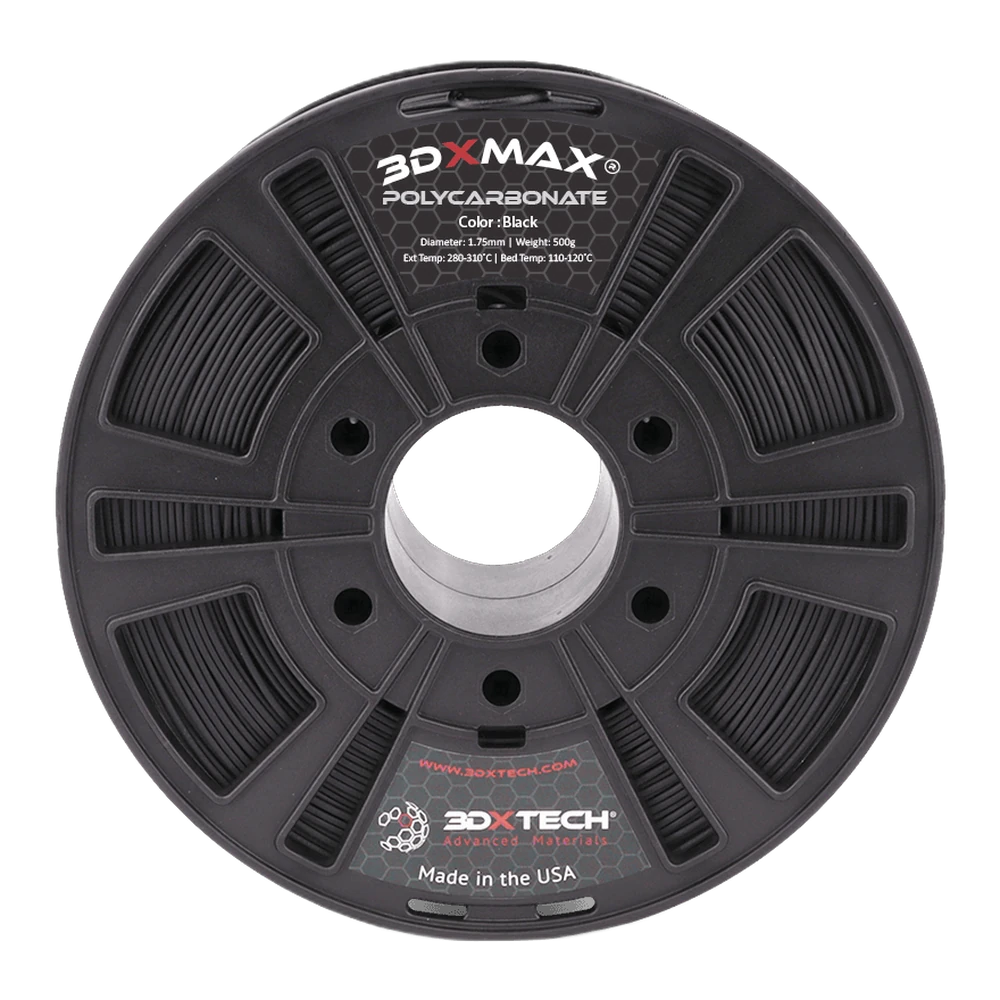
3DXMAX® PC is a premium high-heat polycarbonate filament compounded from genuine SABIC Lexan™ resin in 3DXTech's 68,000 sq-ft Grand Rapids, Michigan facility. Polycarbonate delivers some of the best strength-to-heat performance in filament 3D printing — a 147°C glass transition, high impact toughness, and excellent dimensional stability — for functional prototypes and end-use parts that have to survive real load and real temperature. It prints on any FDM/FFF machine with a high-temperature hotend and a heated bed. Full specifications →
Made in the USA — ships from Rev1. Need 2 kg reels, 2.85 mm, or bulk / standing-order pricing? Call (248) 707-2950.
USA-made polycarbonate, with a published datasheet behind it.
3DXTech compounds 3DXMAX PC from genuine SABIC Lexan™ resin in Grand Rapids, Michigan, with published print and material data — no mystery filament. Rev1 Technologies is your authorized 3DXTech reseller and US support partner, Auburn Hills, Michigan.

When the part has to take heat and impact — print it in polycarbonate.
Polycarbonate (PC) is one of the toughest, most heat-resistant thermoplastics you can run on an FDM printer. 3DXMAX PC is compounded in the USA from genuine SABIC Lexan™ resin for exactly the parts that would deform, soften, or shatter in PLA, PETG, or ABS — structural brackets, high-temperature fixtures, impact-loaded housings, and functional prototypes that need to behave like the final engineering plastic. With a 147°C glass transition and high impact strength, it is the step up you reach for when everyday filaments run out of headroom.
Strength and heat resistance from a real engineering resin.
SABIC Lexan™ polycarbonate, compounded specifically for 3D printing.
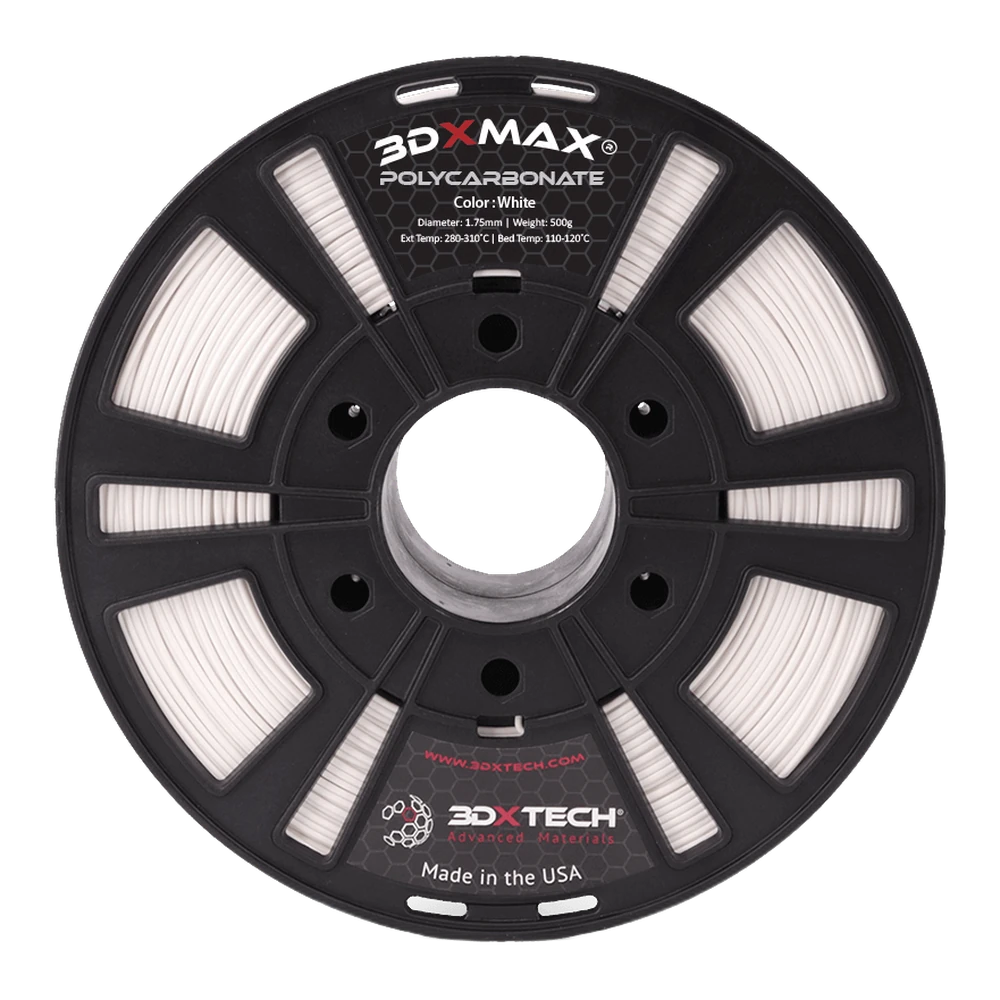
3DXMAX PC is not a commodity blend — it is compounded from genuine SABIC Lexan™ polycarbonate, the same resin family trusted across automotive, aerospace, and industrial parts. That pedigree shows up on the print bed: high tensile and flexural strength, excellent toughness, and a glass transition well above where ABS and PETG give up. It ships in Black and White on 1.75 mm, 500 g reels, and prints on any machine with a high-temperature hotend and a heated bed.
Real engineering properties, from a published property chart.
These are 3DXTech's published values for 3DXMAX PC — the numbers that separate a true engineering polymer from an everyday filament.
Parts stay stiff and stable far above where PLA, PETG, or ABS start to soften — true high-heat capability.
Deflection temperature that keeps load-bearing parts holding their shape in hot environments.
Strength at break — strong, durable parts that survive real mechanical load.
High stiffness under load, so printed parts stay rigid and dimensionally accurate.
Strong in bending, backed by a 2200 MPa flexural modulus — resists flexing under stress.
Efficient, predictable material usage with the toughness polycarbonate is known for.
A high-temperature material — the right hardware makes it straightforward.
3DXTech's recommended starting conditions. PC prints hot: plan on a hotend that reaches 300°C+, a hot bed, and a heated chamber or enclosure to control warping on larger parts. Dry the reel before printing — polycarbonate is hygroscopic.
A high-temperature hotend is required — an all-metal hotend that comfortably reaches 300°C or more.
A hot bed with a suitable adhesive gives reliable first-layer grip and helps control warp.
An enclosure or heated chamber keeps large PC parts from warping and cracking as they cool.
Unfilled PC is non-abrasive, so a standard brass nozzle is fine — no hardened nozzle needed.
Polycarbonate is hygroscopic; dry the reel at 120°C for 4+ hours for the strongest, cleanest prints.
No special layer-height concerns — run your normal quality profile once temperatures are dialed in.
Functional prototypes and end-use parts that take heat and load.
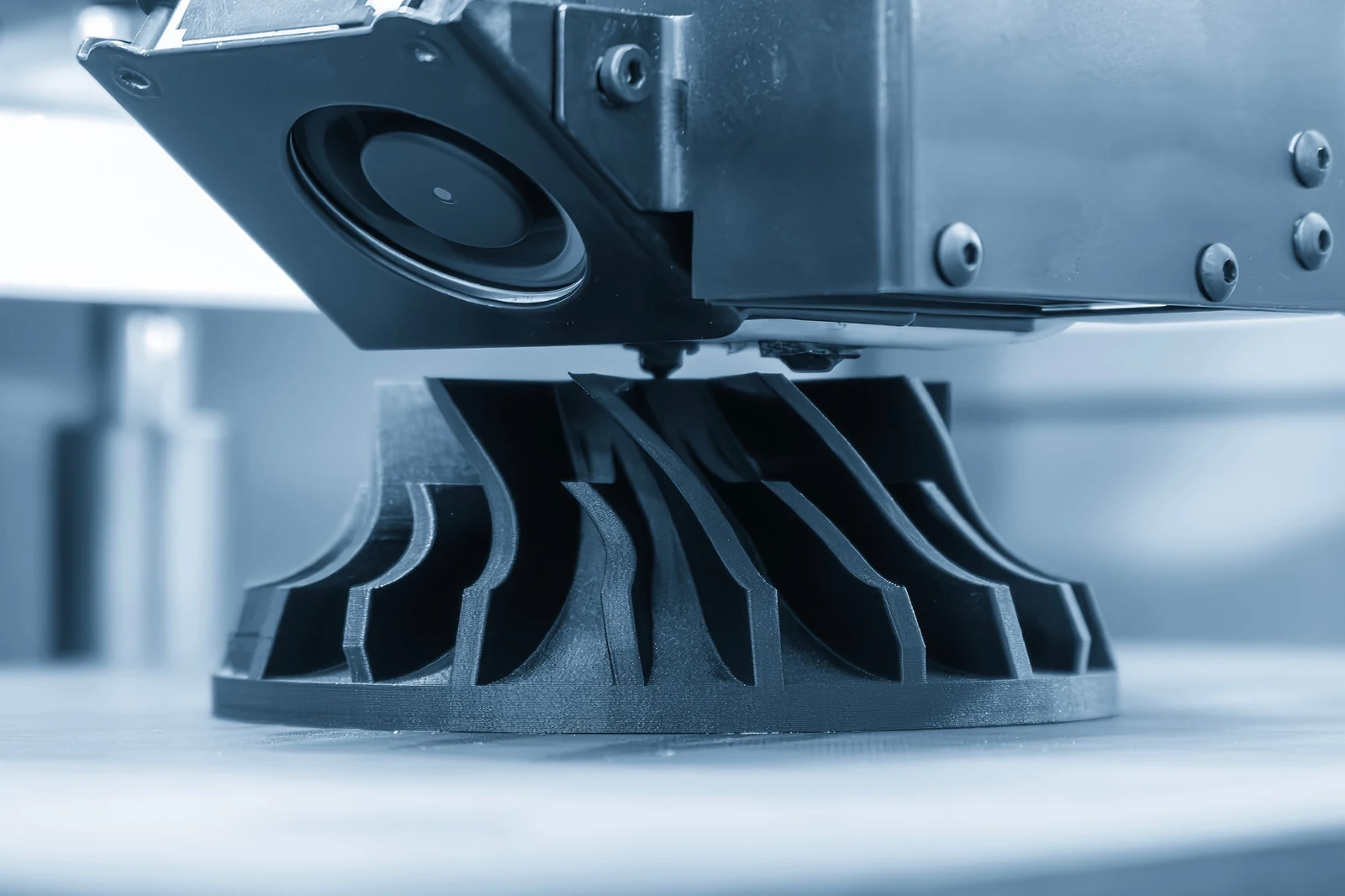
Production-quality parts with excellent surface finish.
Print functional prototypes and end-use components with fine detail and clean surfaces.
3DXMAX PC prints functional prototypes and production parts with very fine detail and excellent surface quality — the combination of stiffness, impact strength, and heat resistance that engineering applications demand. It is well suited to aerospace, automotive, and industrial work where strength, heat resistance, and reliability are hard requirements, not nice-to-haves.
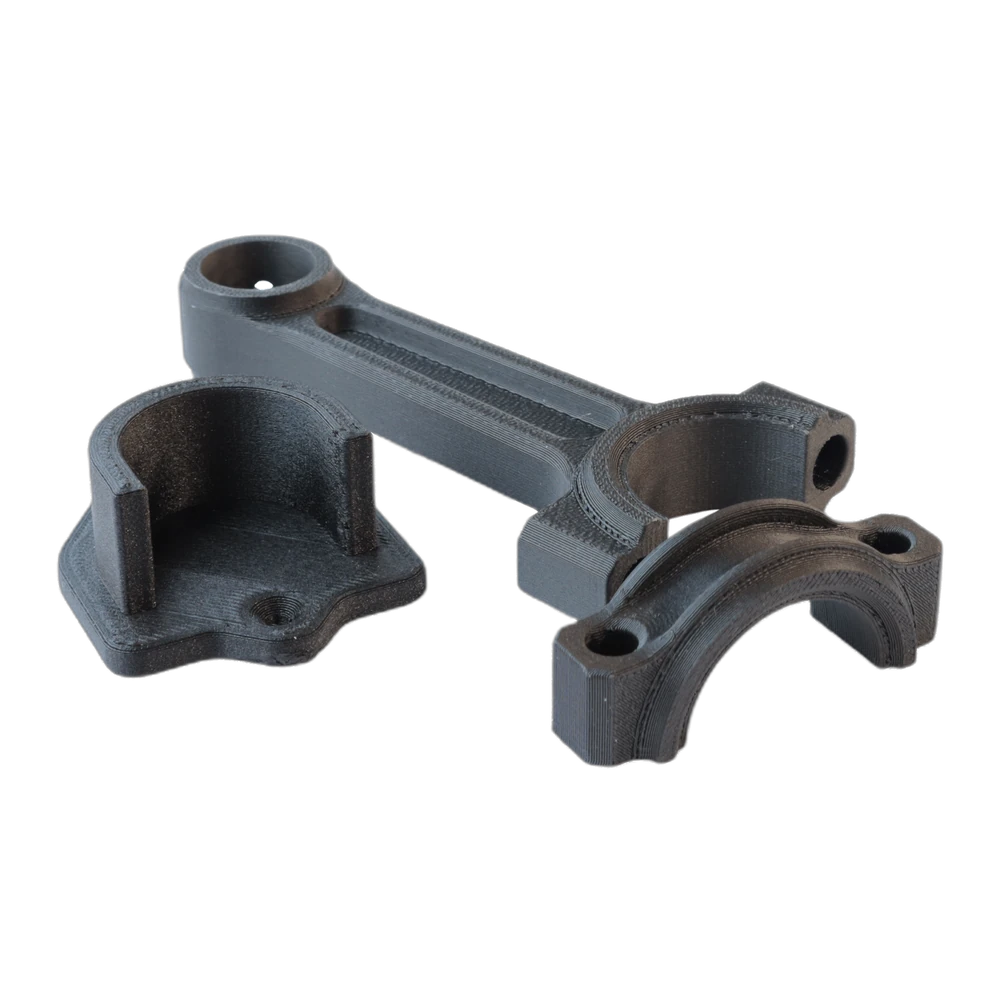
Brackets, fixtures, housings, and structural components.
The polymer of choice when the part has to carry load and stay stable under heat.
Because it combines high impact strength with a 147°C glass transition, PC is the natural pick for structural and load-bearing hardware — mounting brackets, jigs and fixtures, machine guards, lighting and enclosure housings, and under-hood or near-motor parts that see elevated temperatures. Where ABS would soften and PETG would creep, polycarbonate holds its shape and its strength.
Check the reel fits your printer.
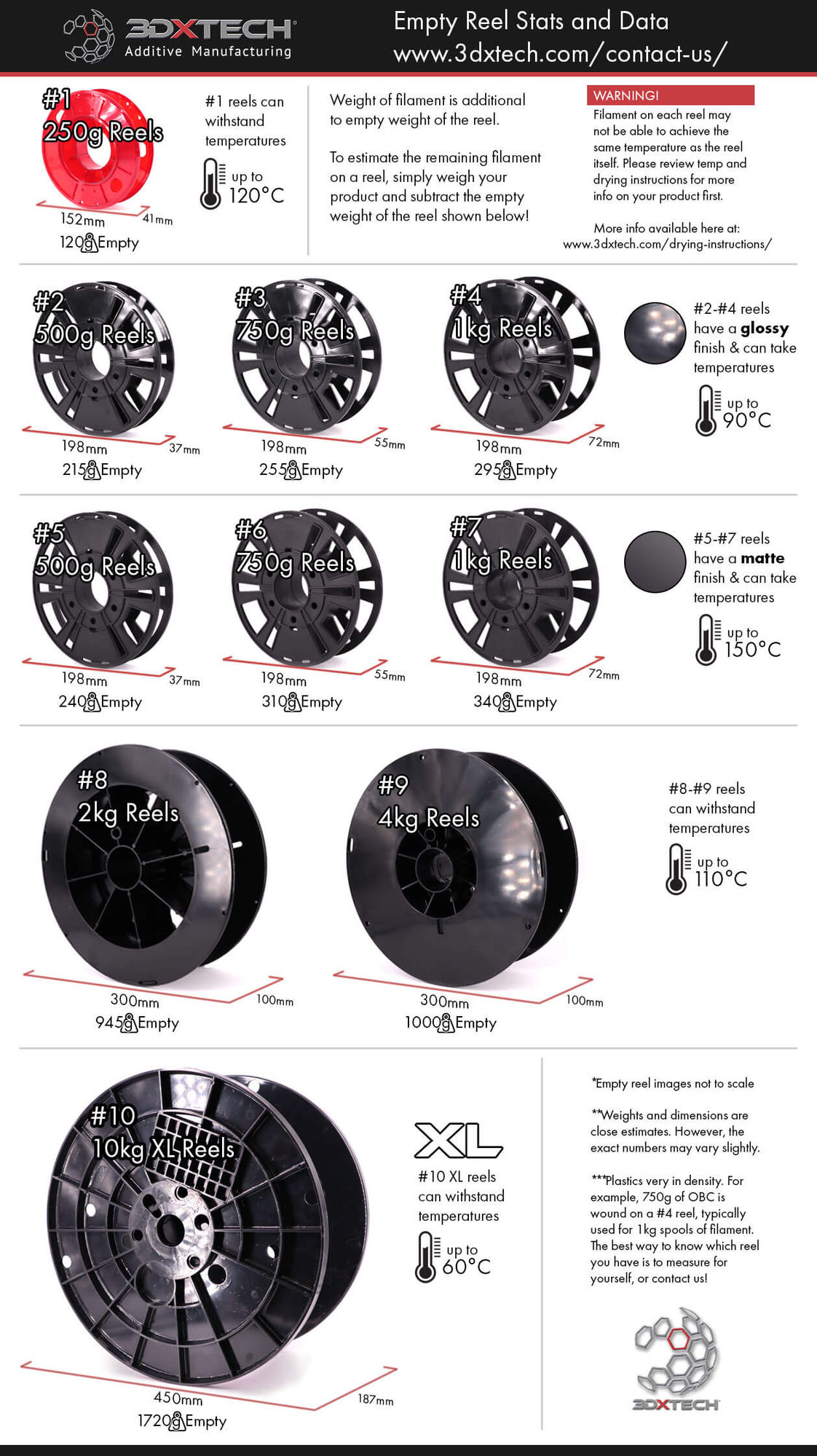
Standard spool dimensions — confirm it fits your AMS or dry box.
3DXTech ships PC on consistent, standard reels.
Before you buy, check the outer diameter, width, and center bore against your printer's spool holder, automated material system, or drybox. The 500 g reel fits within the size requirements of popular automated material systems. Open the full 3DXTech reel infographic for exact dimensions.
View reel dimensions →PC vs. ABS vs. PETG — when to step up to polycarbonate.
Approximate positioning among the common general-purpose and engineering filaments — confirm exact figures against each technical data sheet.
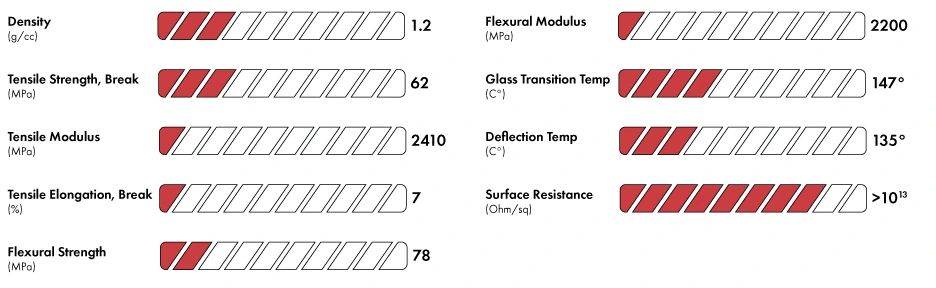
3DXTech's published property chart.
The quick-reference numbers, straight from the manufacturer — click the chart to enlarge it.
3DXTech publishes a property chart for 3DXMAX PC so you can size it up fast. It's small on the page — click it to read the full-size version — and the same figures are in the readable specifications table below, with the complete mechanical and thermal data.
| 3DXTech PC | ABS | PETG | |
|---|---|---|---|
| Heat resistance (Tg) | Highest (147°C) | Moderate (~105°C) | Lower (~80°C) |
| Impact strength | Excellent | Good | Good |
| Stiffness / strength | High | Moderate | Moderate |
| Ease of printing | Advanced (hot) | Moderate | Easy |
| Printer needs | 300°C+ hotend, hot bed, enclosure | Heated bed + enclosure recommended | Heated bed |
| Nozzle | Standard brass | Standard brass | Standard brass |
| Best for | High-heat, high-impact structural parts | Durable everyday parts | Tough, chemical-resistant parts |
Qualitative comparison among common filaments; PC is the premium, higher-cost engineering step-up. Confirm exact properties against each TDS. Prices vary by reel size and date.
3DXTech PC (3DXMAX PC) Technical Data
RESOURCES
Datasheet & Print Support
Everything you need to qualify and print 3DXMAX PC.
WHY REV1 TECH
Authorized 3DXTech Reseller. Engineering-Materials Specialists.
Rev1 Technologies is an authorized 3DXTech reseller in Auburn Hills, MI, supplying genuine USA-made filament with real print support.
We help you pick the right polymer, dial in the profile, and keep production running.
FAQ
3DXTech PC — Common Questions
What makes polycarbonate different from ABS or PETG?
Polycarbonate is a true high-performance engineering polymer. It has a much higher glass transition (147°C vs. roughly 105°C for ABS and 80°C for PETG), higher impact strength, and greater stiffness. When a part needs to survive real heat and real mechanical load, PC has headroom that ABS and PETG don't — but it prints hotter and needs better hardware.
Do I need a special printer to run PC?
Yes — polycarbonate is a high-temperature material. You need a high-temperature (all-metal) hotend that reaches 300°C+, a heated bed at 110–120°C, and ideally a heated chamber or enclosure to control warping on larger parts. A standard brass nozzle is fine because unfilled PC is non-abrasive. If you're not sure your machine qualifies, ask us before you order.
Does 3DXMAX PC need to be dried?
Yes. Polycarbonate is hygroscopic — it absorbs moisture from the air, which causes bubbling, stringing, and weaker parts. Dry the reel at 120°C for 4 or more hours before printing, and keep it in a dry box during long prints for the best surface quality and strength.
Do I need a hardened nozzle?
No. Unlike carbon- or glass-fiber reinforced filaments, unfilled 3DXMAX PC is non-abrasive, so a standard 0.4 mm brass nozzle prints it without accelerated wear. You do need the high-temperature hotend, but not a hardened nozzle.
What is 3DXMAX PC made from?
It is compounded from genuine SABIC Lexan™ polycarbonate resin — a trusted engineering-grade PC used across automotive, aerospace, and industrial applications — and manufactured in 3DXTech's ISO 9001:2015 certified facility in Grand Rapids, Michigan.
What colors and sizes are available?
3DXMAX PC ships in Black and White on 1.75 mm, 500 g reels. Need 2 kg reels, 2.85 mm diameter, or bulk quantities? Just ask — call (248) 707-2950 and we'll quote it.
What kinds of parts is PC best for?
Structural and load-bearing hardware, high-temperature fixtures and tooling, impact-loaded housings and enclosures, automotive and aerospace components, and functional prototypes that need to behave like the final engineering plastic. It's the step up you reach for when everyday filaments run out of thermal or mechanical headroom.
Is it made in the USA?
Yes — 3DXTech manufactures and compounds 3DXMAX PC in its 68,000 sq-ft facility in Grand Rapids, Michigan, with published data and lot traceability under an ISO 9001:2015 quality system.
How does 3DXMAX PC compare to carbon-fiber PC (PC+CF)?
Unfilled 3DXMAX PC gives you polycarbonate's high heat resistance and excellent impact toughness with a smooth surface finish and a standard brass nozzle. Carbon-fiber-reinforced PC (such as CarbonX™ PC+CF) trades some of that impact ductility for much higher stiffness and dimensional stability, but it is abrasive and requires a hardened nozzle. If you want maximum toughness and easy printing, choose unfilled PC; if you need maximum rigidity, ask us about the carbon-filled grade. Not sure which fits — call (248) 707-2950.