HeyGears UltraCraft Reflex Commercial-Grade Resin Quality on a Desktop
TrueUV COB light engine, a 6K mono screen, and an industrial ±2µm ball-screw Z-axis — a desktop resin printer tuned for injection-mold-like surface quality.
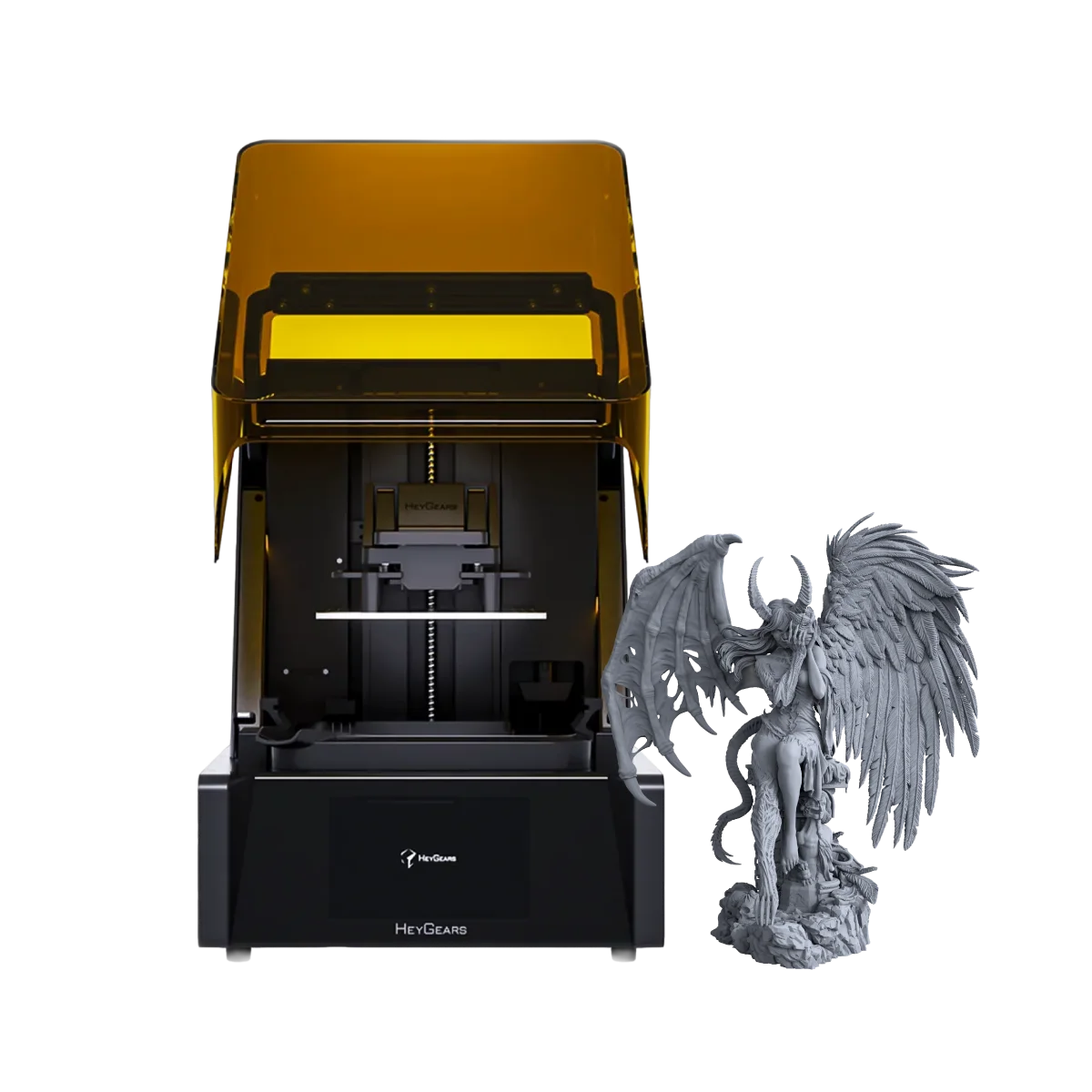
HeyGears’ flagship desktop resin system pairs a TrueUV COB light engine with a 6K mono screen and an industrial ball-screw Z-axis — tuned for injection-mold-like surface quality. The light source cures across 385–405 nm with ≥94% uniformity, while WDR fusion+, 3D anti-aliasing and PICK recognition work together for parts that look molded, not printed. Built for design studios, engineering teams and production labs. Full specifications →
Authorized HeyGears reseller in the USA — Rev1 confirms the right resin set and configuration for your application. Questions? Call (248) 707-2950.
An Authorized HeyGears Reseller in the USA.
Rev1 Technologies is an authorized HeyGears reseller serving design studios and manufacturers across the United States. Application consultation, genuine OEM hardware and resin, Klarna EasyPay financing, and US-based phone and video support are delivered from Auburn Hills, Michigan.


Surfaces that look molded, not printed.
Most desktop resin printers can hit a resolution number on a spec sheet; far fewer deliver the clean, even surfaces a client or an engineering review will actually accept. The UltraCraft Reflex is built around that finish. A TrueUV COB light engine with a freeform lens spreads cure energy evenly — ≥94% uniformity across the whole 6K screen — so a part at the corner matches one printed dead center. On top of the hardware, HeyGears’ algorithm stack does the work an experienced operator used to do by eye: WDR fusion+ balances exposure layer by layer, 3D anti-aliasing smooths stepping, and PICK recognition tells supports apart from the model so each is handled correctly. The result is commercial-grade surface quality straight off the platform, on a machine that fits on an ordinary workbench and starts at well under a thousand dollars.
A chip-on-board UV source with a freeform lens cures across 385–405 nm at ≥94% uniformity for even, repeatable results edge to edge.
A 5760 × 3600 mono LCD at a 33µm native pixel resolves fine features cleanly across the full build area.
WDR fusion+, 3D anti-aliasing and PICK recognition work together for injection-mold-like surfaces without hand-tuning.
An industrial ground ball-screw holds ±2µm repeatability, so layers stack consistently print after print.
A release film rated to ≥45,000 print layers, with monitoring, keeps a consumable from becoming a surprise failure.
Authorized HeyGears reseller with US warehouse stock, genuine OEM resin, application review and ongoing support.
A TrueUV COB source, even corner to corner.
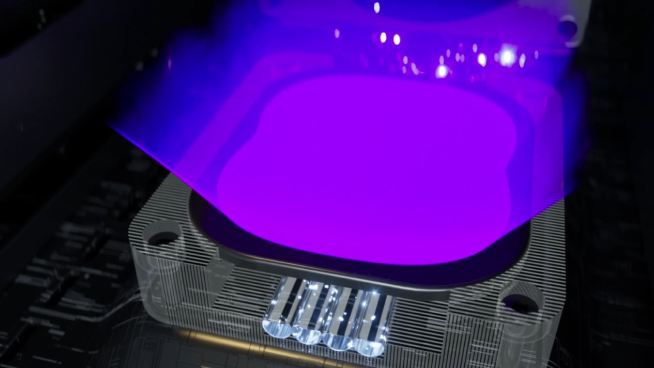
Even cure energy is what makes parts match.
The TrueUV chip-on-board source pairs with a freeform lens to spread light across 385–405 nm at ≥94% uniformity, so every region of the plate cures to the same energy.
On most LCD printers light intensity falls off toward the edges of the screen, so identical features cure differently depending on where they sit — a problem you only catch after a failed batch. The Reflex’s TrueUV COB engine and freeform lens are engineered for flatness: holding intensity within roughly six percent of peak across the whole build area means a tray packed corner to corner produces parts with consistent dimensions and finish wherever they land. For dental, jewelry and engineering work where a full plate has to hit tolerance, that uniformity is the difference between a usable batch and a re-print. It also compounds downstream: when every part on the plate cures to the same energy, wash and post-cure behave predictably too, so the finish you sign off on in a test print is the finish you keep getting in production rather than a result that drifts from one corner of the plate to the other.
WDR fusion+ balances every layer.
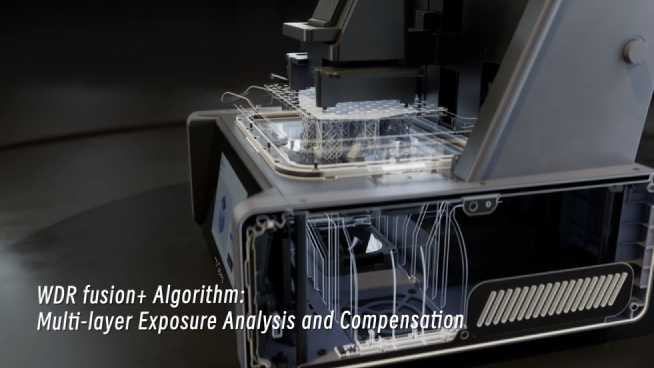
Compensated exposure, layer by layer.
WDR fusion+ analyzes the geometry of each layer and compensates exposure accordingly, so thin features and bulk regions both cure correctly within the same print.
A flat, single exposure per layer is always a compromise: enough energy to cure a solid cross-section can flood and blur fine detail, while enough to keep detail crisp can leave thick areas under-cured. WDR fusion+ reads the wide dynamic range of feature sizes across a layer and tailors exposure so each region gets what it needs. The payoff is parts that hold both sharp surface detail and solid internal structure — the kind of even, predictable result that lets a studio quote repeatable work rather than babysitting each print.
3D anti-aliasing for a molded finish.
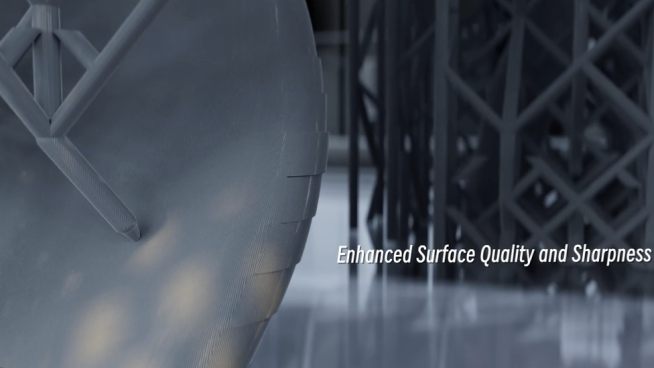
Smooths stepping without softening detail.
3D anti-aliasing blends pixel edges in three dimensions, reducing the visible stepping on curved and angled surfaces while keeping sharp features crisp.
Voxel-based printing leaves a characteristic staircase on anything that isn’t axis-aligned. The Reflex’s 3D anti-aliasing softens those transitions where they should be smooth — curves, slopes, organic surfaces — without rounding off the edges and text that need to stay sharp. For display models, consumer-product prototypes and dental and jewelry work, it removes a layer of hand-finishing: parts come off the platform looking molded, so you spend less time sanding and more time delivering.
Real-time peeling-force management.
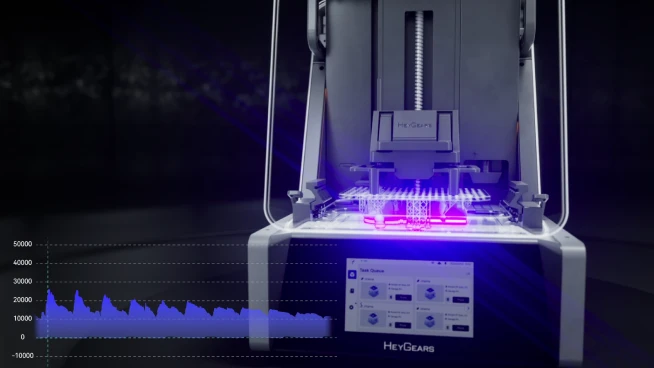
Lower peel forces protect fine features.
The Reflex monitors peeling force in real time and adapts the separation motion, reducing the stress that tears delicate features or pulls parts off supports.
Every layer in LCD printing ends with a peel — the cured layer separating from the release film — and that moment is where many resin failures happen. Too aggressive a peel snaps thin walls, lifts parts off their supports, or stresses the screen. By sensing peel force as it happens and tuning the lift-and-settle motion to suit the layer, the Reflex keeps separation gentle where it matters, improving success rates on tall, slender and high-detail geometries and extending the life of the release film and screen. For a studio, fewer mid-print failures means more of the plate completes on the first attempt, which is where the real cost of resin printing lives — not in the price of the resin, but in the hours and material lost to a job that peels a part off its supports halfway through.
PICK knows the model from its supports.
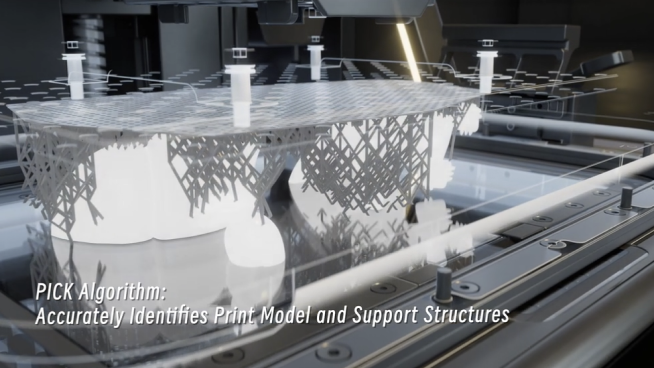
Recognition that drives smarter printing.
The PICK algorithm distinguishes model from support structures, so each is exposed and handled appropriately — backed by auto-zeroing leveling, automatic resin refill and a heated tray.
Treating a part and its scaffolding identically wastes the opportunity to optimize each: supports need to be strong enough to hold and easy to remove, while the model surface needs to stay pristine. PICK recognition separates the two so the Reflex can manage them independently for cleaner surfaces and reliable supports. Around it, auto-zeroing leveling plants the first layer without manual setup, automatic resin refill keeps long jobs fed, the heated tray holds viscosity steady, and release-film monitoring watches the consumable — together turning a hands-on machine into a far more hands-off one.
From display models to functional prototypes.
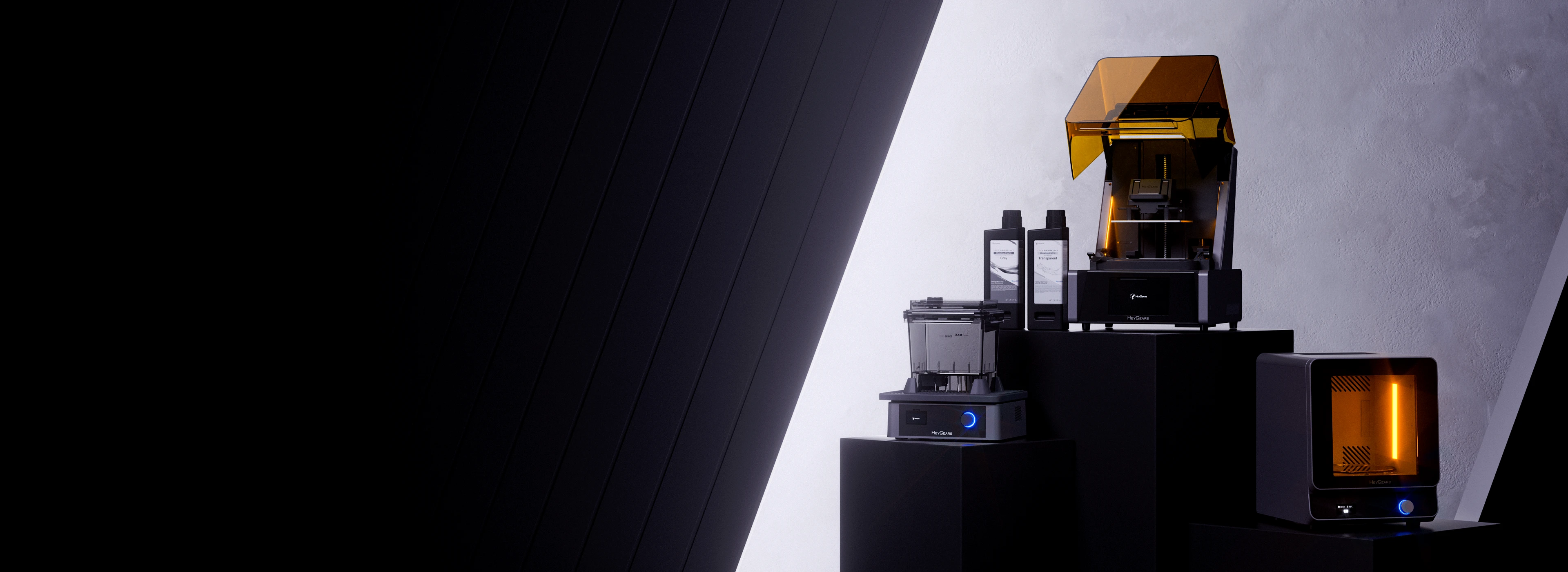
Detail and dependability from the same printer.
Because the Reflex pairs a high-uniformity TrueUV engine with a deep algorithm stack and an open resin range, the same machine produces crisp miniatures and display models, dental and jewelry work, and functional engineering prototypes that need accuracy and a clean surface. Design studios use it to take a concept from file to client-ready part without outsourcing, while engineering teams rely on its repeatability for fit-and-function checks. That versatility lets a small studio consolidate onto one dependable machine instead of running a separate detail printer and workhorse, and the algorithm stack means the quality bar stays the same whether you are printing a one-off concept model or a repeat production batch. Rev1 helps qualify the right resin set for your application before you commit, so the first part and the hundredth look the same.
Enhanced material performance, plate-wide.
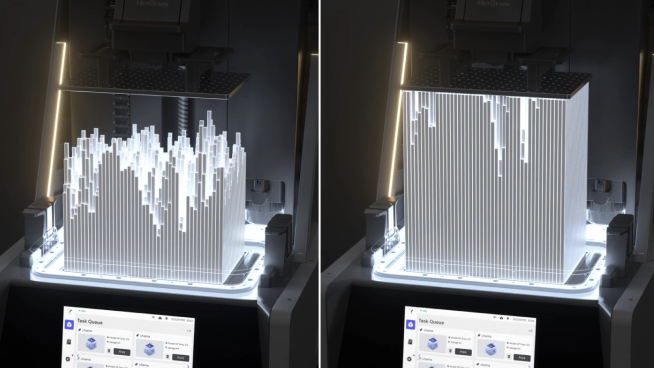
Every part on the plate behaves the same.
Uniform light, compensated exposure and tuned peel motion combine so parts across a full plate cure and finish consistently — not just the ones near the center.
Throughput in resin printing comes from packing a plate and trusting every part on it, which only works if the machine treats the edges like the middle. The Reflex’s hardware and algorithms are aimed squarely at that consistency: even cure energy, per-layer exposure compensation and adaptive peel mean a plate of identical parts comes out identical, and a mixed plate of detail and functional pieces each gets what it needs. For a studio running production batches, that predictability is what turns a capable printer into a dependable one — you can quote a lead time and a finish with confidence, because the machine is built to deliver the same result every time rather than its best result some of the time.
Fine detail that survives off the platform.
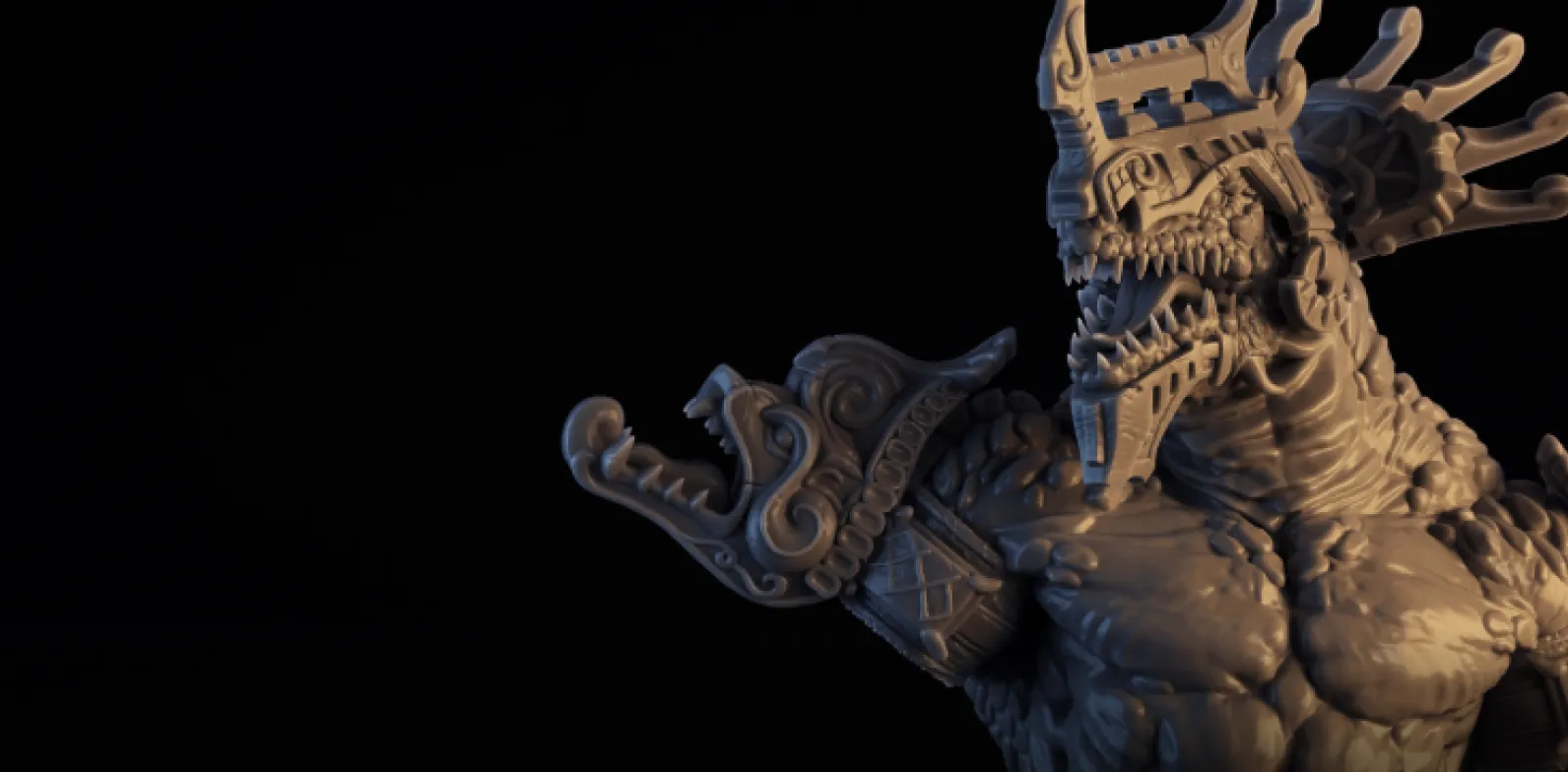
Crisp features, clean surfaces, real strength.
A 33µm native pixel and the TrueUV engine resolve fine detail cleanly, and the Reflex stays open to HeyGears UltraPrint and third-party resins for the right property in every job.
Sharp scale-mail, thin filigree and crisp lettering only matter if they survive the print and the wash — which is where the Reflex’s even cure, anti-aliasing and gentle peel pay off together. The machine handles high-clarity, tough, flexible and high-detail chemistries, with HeyGears’ matched profiles so each resin’s exposure and motion are already dialed in, and open-material support for jobs that demand a specific certification or property. Rev1 helps you qualify and tune any resin before you put it into production. In practice most studios standardize on a small core set — a tough engineering resin, a high-detail model resin and a specialty such as clear or castable — and lean on the matched profiles so switching between them is routine rather than a re-tuning session. Because the hardware and algorithms carry the surface quality, the result stays consistent no matter which profile you load.
How the UltraCraft Reflex compares.
| Capability | UltraCraft Reflex | Formlabs Form 4 | Phrozen Sonic Mighty Revo | Anycubic Photon M7 Pro |
|---|---|---|---|---|
| Light engine | TrueUV COB · 385–405 nm | 405 nm LFS (SLA) | 405 nm LED-LCD | 405 nm LED-LCD |
| Light uniformity | ≥94% | Laser-based | Not specified | Not specified |
| Surface algorithms | WDR fusion+ / 3D AA / PICK | Proprietary | Anti-aliasing | Anti-aliasing |
| Z-axis | Ball-screw · ±2µm | Industrial | Dual linear | Dual linear |
| Approx. street price | $979 | ~$2,500+ | ~$1,900+ | ~$1,700+ |
Comparison sourced from published manufacturer data at build time. Street prices are approximate; validate specifications against your part geometry, resin and finish requirements before purchase. The UltraCraft Reflex’s distinction is a high-uniformity TrueUV engine paired with a deep surface-algorithm stack at a price well below the comparable commercial-grade resin systems from the established premium brands.
UltraCraft Reflex Technical Data
RESOURCES
Downloads & Technical Support
Everything you need to qualify and run your UltraCraft Reflex with confidence.
WHY REV1 TECH
Authorized HeyGears Reseller. Resin Workflow Specialists.
Rev1 Technologies is an authorized HeyGears reseller, headquartered in Auburn Hills, MI, with hands-on expertise in resin production workflows.
Rev1 Technologies is an authorized HeyGears reseller serving studios and manufacturers across the USA. We don’t just ship boxes — we help you choose resins, set up the workflow, and support your team so the UltraCraft Reflex produces in-spec parts from day one.
UltraCraft Reflex questions.
What is a TrueUV COB light engine and why does it matter?
It is a chip-on-board UV source paired with a freeform lens that spreads cure energy evenly across the screen — ≥94% uniformity over the whole build area. Even light means parts cure the same wherever they sit on the plate, so a full tray of parts comes out consistent rather than only the ones near the center.
What do WDR fusion+, 3D anti-aliasing and PICK actually do?
They are HeyGears’ surface-quality algorithms. WDR fusion+ compensates exposure layer by layer so fine and bulk features both cure correctly; 3D anti-aliasing smooths the stepping on curves without softening sharp edges; and PICK recognition distinguishes the model from its supports so each is handled appropriately. Together they deliver injection-mold-like surfaces with less hand-finishing.
What is the build volume and resolution?
The build volume is 192 × 121 × 220 mm on a 6K mono screen (5760 × 3600) with a 33µm native XY pixel, ±16µm accuracy and 30µm minimum layer thickness. The Z-axis is an industrial ground ball screw with ±2µm repeatability.
How much maintenance does it need?
Less than a typical desktop resin printer. Auto-zeroing leveling removes manual setup, automatic resin refill and a heated tray keep long jobs consistent, and release-film monitoring watches the main consumable — which is rated to ≥45,000 print layers. Real-time peeling-force management also reduces the stress that shortens screen and film life.
Which resins can I run?
The Reflex runs HeyGears UltraPrint resins with matched profiles — high-clarity, tough, flexible and high-detail chemistries — and supports open third-party materials. Rev1 can help you qualify a specific resin and tune its profile before production.
How is the Reflex different from the Reflex RS and Reflex Turbo?
The standard Reflex centers on the TrueUV COB engine and HeyGears’ surface-quality algorithm stack for molded-look finishes. The Reflex RS emphasizes an 8K screen with DMA motion, while the Reflex Turbo focuses on a 385 nm true-UV engine with full set-and-forget automation. Rev1 can help you pick the right tier for your detail, throughput and budget targets.
What software and connectivity does it use?
It includes HeyGears Blueprint, which handles model prep, auto-supports and validated resin profiles. Jobs send over USB, Wi-Fi or Ethernet. The printer draws 350 W on 100–240 V, measures 400 × 420 × 572 mm and weighs 25 kg — a standard bench and outlet.
How does Rev1 support the purchase?
As an authorized HeyGears reseller, Rev1 reviews your application, recommends resins, validates the workflow, ships genuine OEM hardware from a US warehouse, and provides ongoing US-based phone and video support for the life of the printer. Klarna EasyPay (Pay-in-4) is available.