CreatBot PEEK-300 Large-Format Dual-Extrusion PEEK Printing
Large-Format Dual-Extrusion PEEK Printing
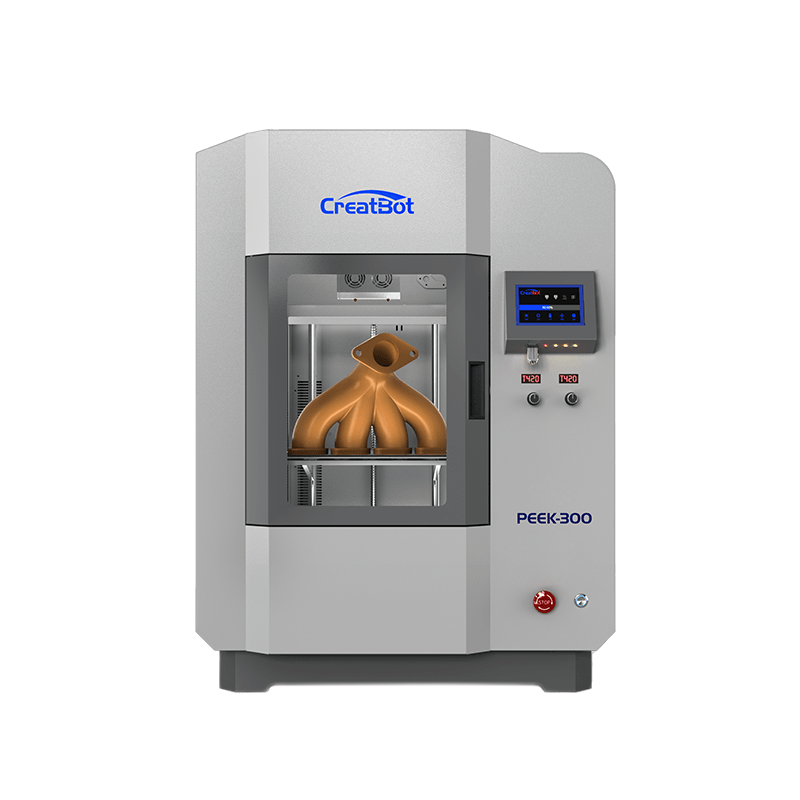
A 300 × 300 × 400 mm ultra-high-temperature FFF system built for production PEEK, PEKK and PEI — pairing a 480°C water-cooled dual extruder, a 200°C heated bed and an in-machine Direct Annealing System so functional parts reach their published strength without a separate furnace. Full specifications →
Rev1 validates application fit, material requirements, and facility readiness before purchase. Only authorized CreatBot service provider in the USA — questions? Call (248) 707-2950.
The Only Approved CreatBot Service Provider in the USA.
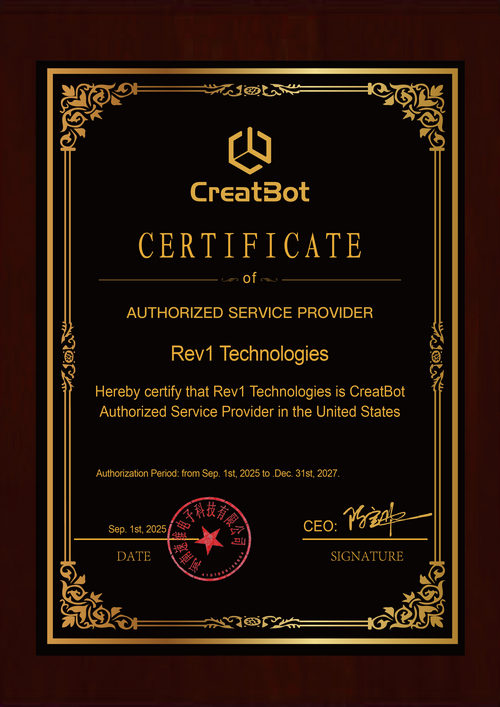
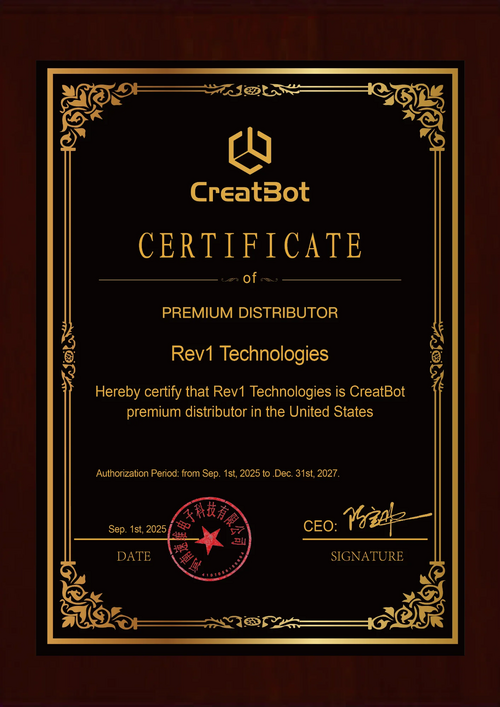
Rev1 Technologies is the sole CreatBot Authorized Service Provider in the United States and a certified CreatBot Premium Distributor. Phone and video support, application consultation, parts, and engineering guidance are delivered from Auburn Hills, Michigan.
Production-scale PEEK, not a desktop experiment.
The PEEK-300 is CreatBot’s large-format answer for shops that have outgrown a single-extruder high-temp printer and need real build volume for functional PEEK, PEKK and PEI parts. It pairs a 300 × 300 × 400 mm build envelope with a smart auto-rising dual extruder rated to 480°C, a 200°C heated PEI bed, a 120°C hot-air chamber, and an in-machine Direct Annealing System. The hard part of ultra-high-temperature printing was never melting the polymer — it is anchoring a tall part to the bed, managing thermal gradients across a big build, and relieving residual stress so the finished component reaches the mechanical strength PEEK is specified for. The PEEK-300 is engineered around those three problems, at a build size most PEEK machines in its price class cannot touch.
A genuinely large envelope for batch production and big functional parts — 240 × 300 × 400 mm when both nozzles are in play.
A water-cooled dual extruder reaches the melt point of every common engineering polymer below 500°C, including carbon- and glass-filled PEEK.
A 200°C aluminum platform with PEI coating locks tall, high-stress PEEK geometries down through hours of printing.
An actively heated, fully enclosed cavity holds the build warm and even so the first layer and the last share a similar thermal history.
The DAS anneals the part in situ during and after the print — controllable in real time, with no separate furnace step.
Independent auto-rising nozzles enable true dual-material and soluble-support workflows while the idle nozzle lifts clear to avoid collisions.
A 480°C water-cooled dual extruder built for abrasive polymers.
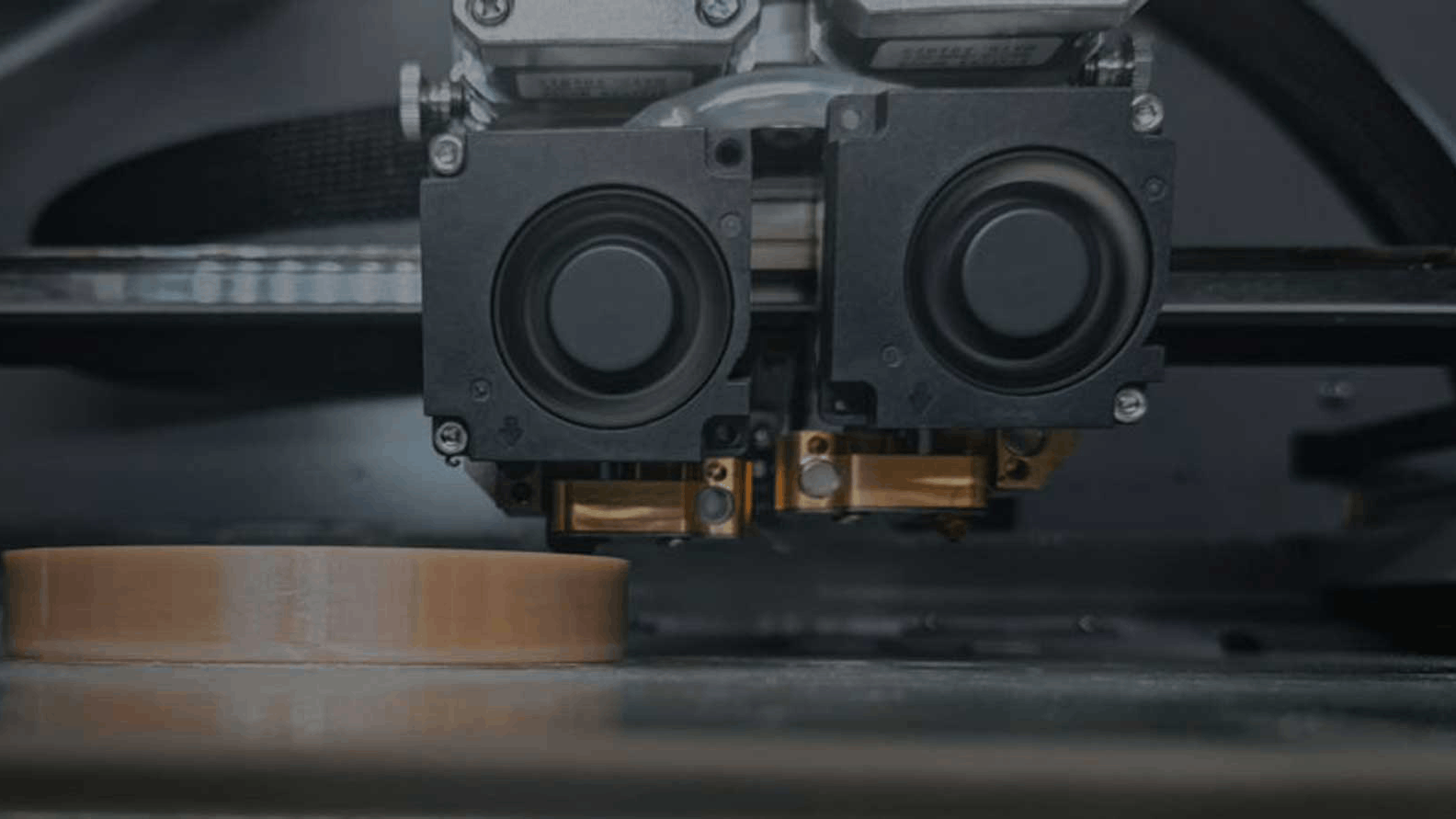
Two independent nozzles, water-cooled to survive the chamber.
The PEEK-300 runs a smart auto-rising dual extruder: the idle nozzle lifts clear of the part so the active one prints collision-free, enabling clean dual-material and soluble-support builds in high-temperature polymers.
Rated to 480°C, the hot ends melt essentially every engineering filament below 500°C — including the carbon- and glass-reinforced PEEK grades that chew through ordinary nozzles. A circulating water-cooling loop keeps the cold side of each extruder stable even with a hot chamber and a 200°C bed radiating underneath, so feeding stays consistent across long production runs. Because both nozzles are driven independently, a single PEEK-300 can print a structural PEEK body in one material and a sacrificial or contrasting second material in the same build, instead of compromising on a single-extruder workflow.
Anneal the part as it prints — no separate furnace.
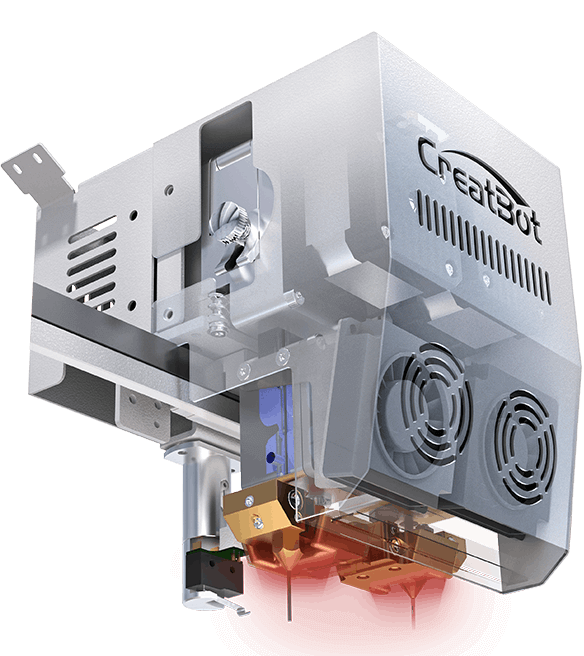
Controllable annealing, integrated into the build.
CreatBot’s Direct Annealing System (DAS) applies a controllable 0–400°C heat treatment to the part in real time, relieving internal stress and driving crystallization without ever taking the part off the machine.
Semi-crystalline polymers like PEEK and PEKK only reach their published strength when they crystallize properly and shed residual stress. Pulling a finished part off the bed and re-soaking it in a separate oven invites exactly the warping the build just avoided — the part relaxes unevenly as it is handled and reheated. The DAS keeps that thermal treatment in the machine: annealing is instant and adjustable during printing, so each layer is conditioned as it is laid down and the completed part comes off ready for use. For functional PEEK components that have to survive heat, chemicals and mechanical load, that controlled in-situ anneal is the difference between a part that looks finished and one that performs to spec.
A hot-air chamber and a 200°C bed, working together.
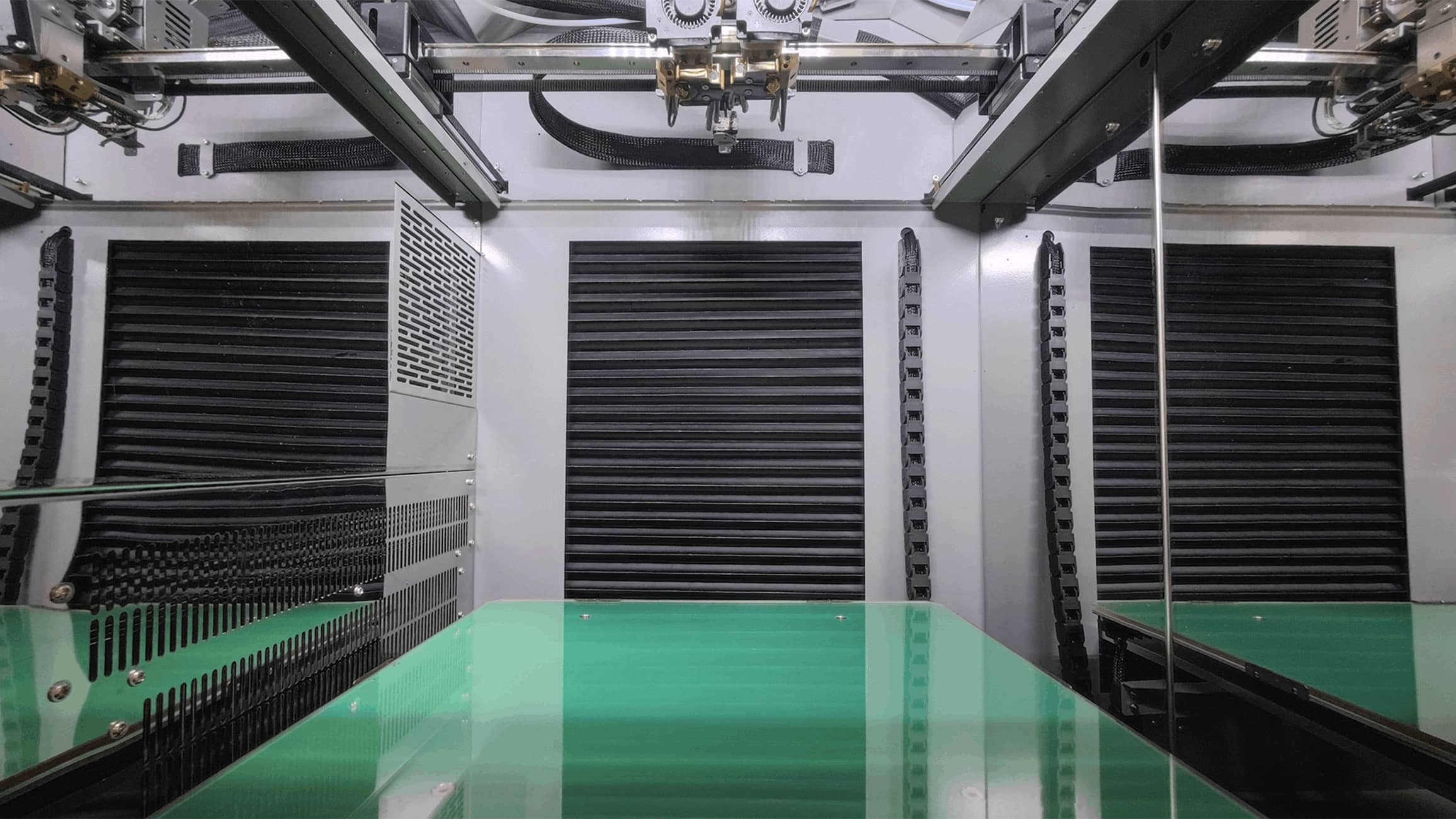
Even heat across a big build, anchored at the bed.
A fully enclosed 120°C hot-air chamber keeps the whole cavity warm while a 200°C PEI-coated aluminum bed plants the first layers — the combination that prevents cracking and delamination across a large part.
On a 300 × 300 × 400 mm envelope, thermal gradients are the enemy: if one corner of a tall PEEK part cools faster than another, the geometry distorts and layers separate. The PEEK-300 attacks that with a driven hot-air chamber that circulates warm air through the cavity, triple heat isolation that holds the temperature steady while protecting the electronics, and a high-temperature 200°C bed that keeps the base locked down for the hours a big PEEK build takes. Air-pump cooling draws cool air from outside the enclosure rather than dumping heat inside, so the machine maintains a stable, repeatable thermal environment from the first layer to the last. That repeatability is what turns a one-off prototype into a production process: when every build sees the same thermal history, parts come out dimensionally consistent batch after batch, and a qualified print profile stays qualified instead of drifting with the ambient conditions of the shop floor.
Large, load-bearing PEEK parts in one piece.
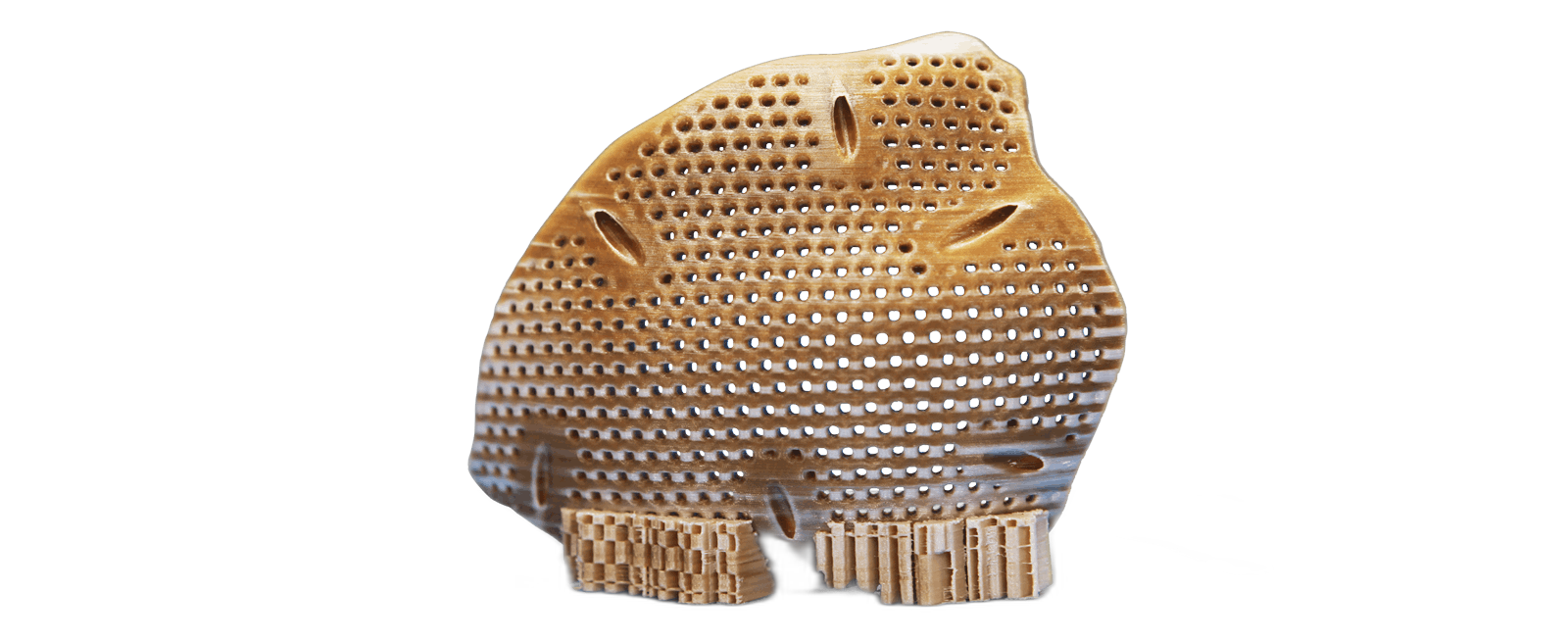
Parts most PEEK printers have to split into pieces.
The PEEK-300’s 400 mm of Z height and 300 mm footprint let a shop print large brackets, ducting, lattice structures, tooling and metal-replacement components as single, continuous PEEK parts — no bonding, no joints to fail under heat or load. For aerospace, energy and industrial work, printing a part whole instead of in sections removes the weakest point in the finished component and collapses multi-step assembly into a single build. That capability, at a sub-$15K entry price, is the reason a production shop chooses the PEEK-300 over a smaller-format high-temp machine.
From PLA up to PEEK and PEKK on one platform.
A high-temp machine earns its place by the range of jobs it can run between PEEK builds. Because the PEEK-300 pairs a 480°C dual extruder with a 200°C bed and an actively heated chamber, the same machine that proves out an ultra-performance PEEK production part can run everyday engineering polymers the rest of the week — no second printer, no fragile recalibration ritual for the easy materials. Filament is standard 1.75 mm through a 0.4 mm nozzle, with 0.3–1.0 mm nozzles optional for fine detail or high-flow throughput.
PEEK, PEEK-CF, PEEK-GF and PEKK — the metal-replacement and high-temperature grades most printers cannot reach.
PEI / ULTEM, PPSU, UltraPA, UltraPA-CF and UltraPA-GF for chemical-resistant, flame-retardant and structural parts.
PC, Nylon, PVDF, PETG, ABS, ASA, carbon-fiber blends and PLA for jigs, fixtures, enclosures and prototypes.
Biocompatible PEEK for surgical and device work.
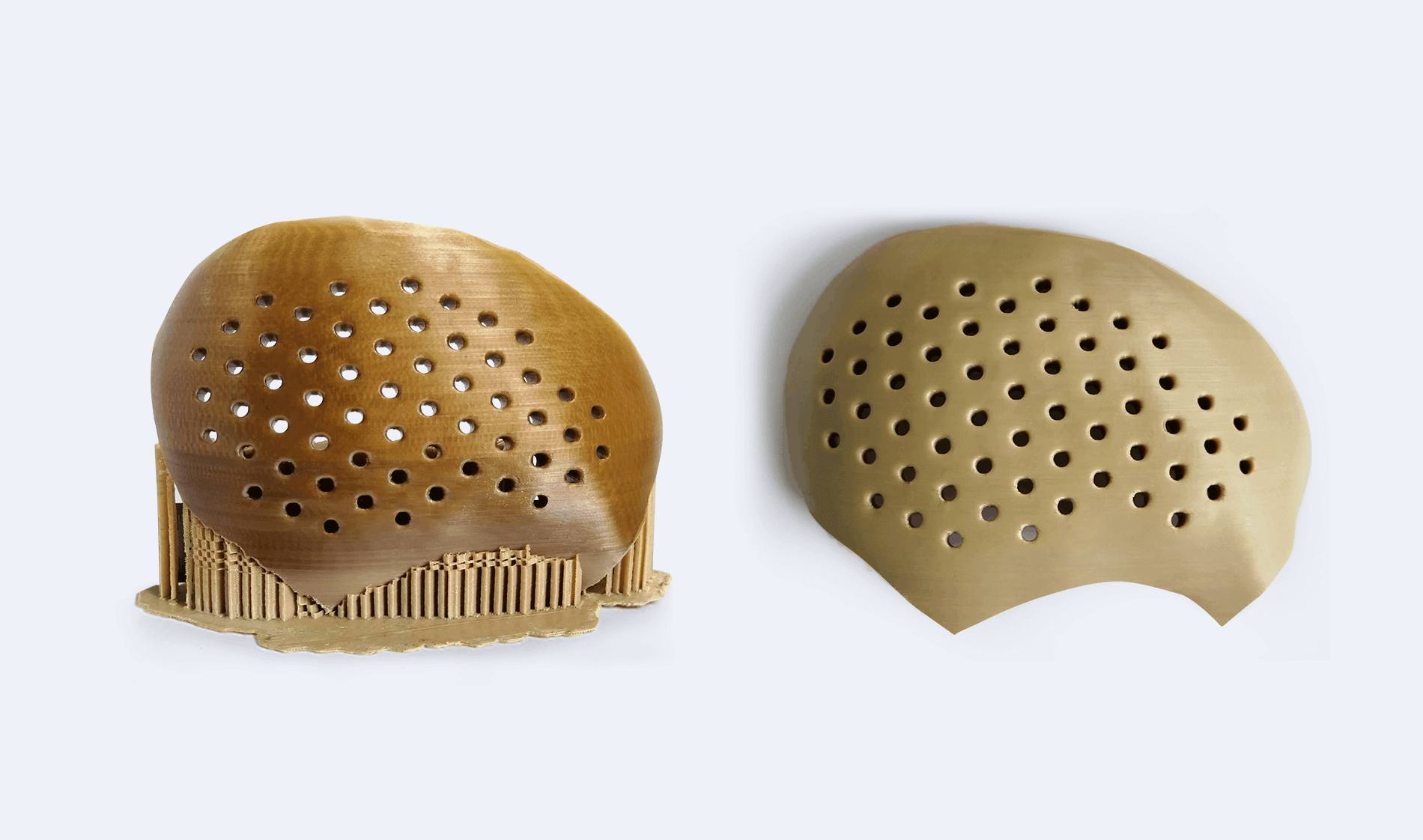
Patient-specific parts in a medical-grade polymer.
PEEK is radiolucent, sterilizable and biocompatible, which is why it has become the polymer of choice for cranial and orthopedic implant tooling, surgical guides and device components.
The PEEK-300’s controlled thermal environment and in-situ annealing are what make medical PEEK practical: implant and surgical-tooling geometries are thin, perforated and unforgiving of internal stress, so they demand the even heat history and stress relief the machine is built to deliver. Combined with the large build volume, a hospital or device manufacturer can produce patient-specific PEEK parts in-house and iterate on a design in days instead of outsourcing every revision. Rev1 helps qualify the workflow and material grade for your regulatory and clinical requirements before you commit.
Metal-replacement parts that survive heat and load.
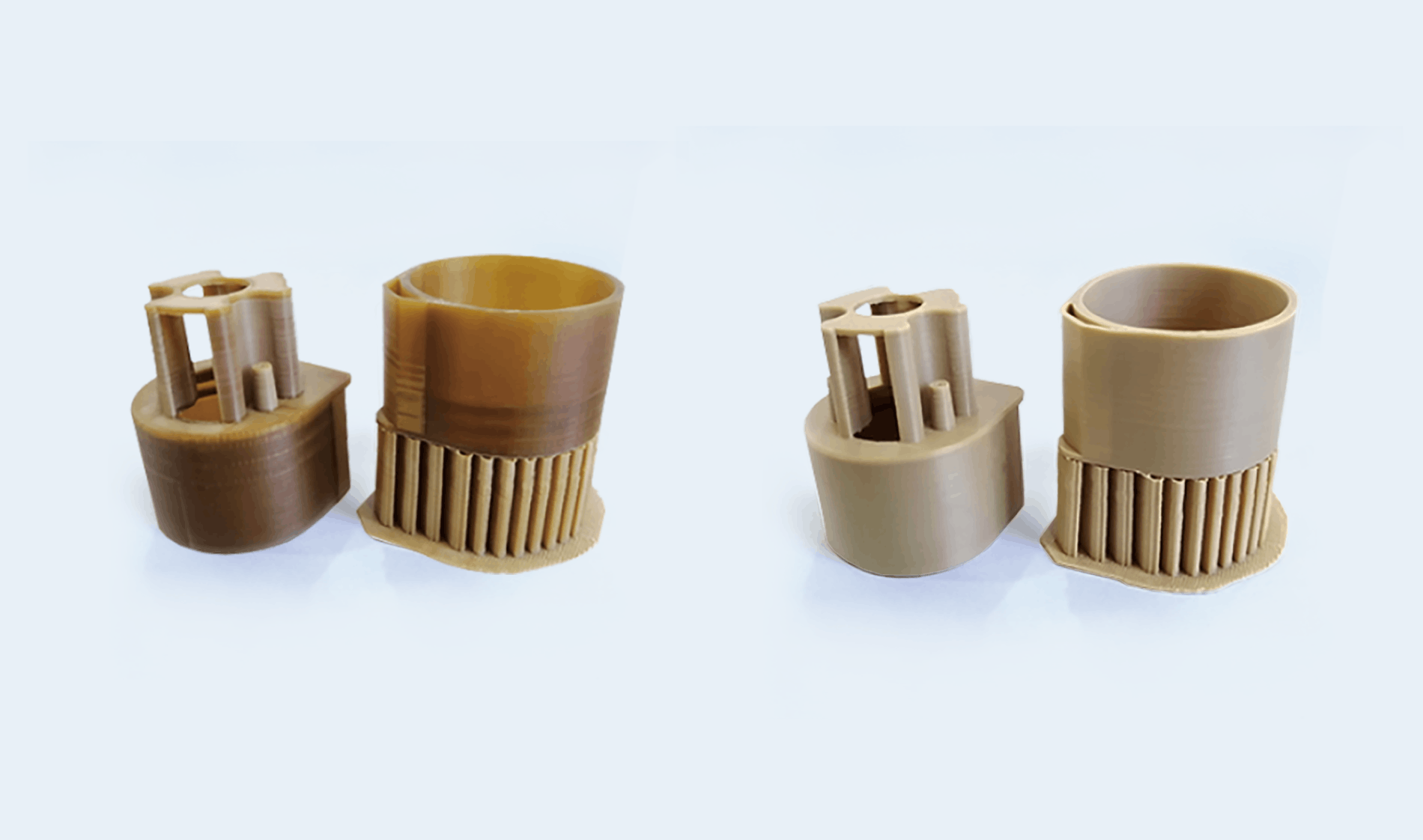
Lightweight, chemical-resistant, structurally sound.
PEEK and fiber-reinforced PEEK replace machined metal in brackets, bushings, insulators, connectors and fixtures — cutting weight while holding up to temperature, chemicals and fatigue.
For aerospace, automotive, energy and semiconductor work, the appeal of PEEK is a high strength-to-weight ratio with resistance to the heat and chemistry that defeats commodity plastics. But those properties only appear when the part is printed in a controlled thermal environment and properly annealed — otherwise the polymer freezes amorphous and fails under load. The PEEK-300 is purpose-built to deliver that, and the carbon- and glass-filled grades it supports push stiffness and dimensional stability further still. Printing functional metal-replacement parts in-house lets engineering teams move work off the CNC queue and iterate fixtures and end-use components on their own schedule. The economics compound at scale: a single PEEK bracket that once required a machined billet, fixturing and finishing can come off the PEEK-300 as a near-net-shape part overnight, and design changes cost a new slice rather than new tooling.
How the PEEK-300 compares among high-temp printers.
| Capability | CreatBot PEEK-300 | INTAMSYS FUNMAT PRO 410 | Apium P220 | Roboze One+400 |
|---|---|---|---|---|
| Build volume | 300×300×400 mm | 305×305×406 mm | 205×155×150 mm | 300×300×300 mm |
| Extruder | Dual, water-cooled | Dual | Single | Single |
| Nozzle temperature | 480°C | 500°C | 540°C | 500°C |
| Heated bed | 200°C | 160°C | 160°C | 160°C |
| In-machine annealing (DAS) | Yes | No | Adaptive heating | No |
| Approx. street price | $13,999 | ~$30,000 | ~$30,000+ | ~$25,000+ |
Comparison sourced from published manufacturer data at build time. Street prices are approximate; validate specifications against your part geometry, material and facility before purchase. The PEEK-300 pairs a dual extruder and in-machine annealing with a large build volume at a fraction of the entry price of comparable high-temperature systems.
CreatBot PEEK-300 Technical Data
RESOURCES
Downloads & Technical Support
Everything you need to qualify and run your CreatBot PEEK-300 with confidence.
WHY REV1 TECH
Authorized CreatBot Reseller. Industrial AM Specialists.
Rev1 Technologies is the sole Authorized CreatBot Service Provider in the United States, headquartered in Auburn Hills, MI, with direct technical expertise in industrial 3D printing.


Rev1 Technologies is an authorized CreatBot reseller serving manufacturers across the USA. We don’t just ship boxes — we deploy, calibrate, train, and support your team so your PEEK-300 produces at full capability from day one.
Large-format PEEK printing questions.
What makes the PEEK-300 different from the PEEK-250?
The PEEK-300 is the large-format, dual-extruder member of the family. It offers a 300 × 300 × 400 mm build volume (240 × 300 × 400 mm in dual mode) and two independent water-cooled nozzles, where the PEEK-250 is a single-extruder machine with a smaller envelope. Choose the PEEK-300 when you need bigger parts, batch throughput, or genuine dual-material and soluble-support workflows in high-temperature polymers.
How does the Direct Annealing System (DAS) work?
The DAS applies a controllable 0–400°C heat treatment to the part in the machine, during and after printing. It relieves internal stress and improves crystallization in situ, so you don’t move the finished part to a separate furnace — which would risk the warping the build just avoided. For functional PEEK and PEKK parts, that in-machine anneal is what lets the part reach its published mechanical strength.
Can the PEEK-300 print carbon- and glass-fiber materials?
Yes. PEEK-CF, PEEK-GF, UltraPA-CF and UltraPA-GF are all supported, along with PEKK, PEI/ULTEM and PPSU. The 480°C dual extruder is built to handle the high melt temperatures and the abrasion that reinforced filaments cause.
What is the maximum chamber temperature?
The PEEK-300 uses an actively heated hot-air chamber rated to 120°C, working together with a 200°C heated PEI bed and the 480°C nozzles. The chamber circulates warm air to keep heat even across the large build, while the high-temperature bed anchors tall parts and the DAS handles in-situ stress relief.
Does it support dual-material and soluble supports?
Yes. The smart auto-rising dual extruder lets you print two materials in one build — for example a structural PEEK body with a contrasting or sacrificial second material. The idle nozzle automatically lifts clear of the part so it doesn’t collide with or scar the print.
What are the facility requirements?
The machine measures 720 × 700 × 941.5 mm and weighs 110 kg net (145 kg crated). It runs on 200–240 V with a rated power of 4600 W. Rev1 reviews ventilation, clearance and electrical readiness with you before delivery so the machine is production-ready on arrival.
How does the PEEK-300 compare to a $30,000 high-temp printer?
Systems like the INTAMSYS FUNMAT PRO 410, Apium P220 and Roboze One+400 reach similar nozzle temperatures but typically cost two to three times as much, and most pair it with a 160°C bed and no in-machine annealing. The PEEK-300 brings a large 300 × 300 × 400 mm build volume, dual water-cooled extruders, a 200°C bed and the DAS at a $13,999 entry price. Rev1 can arrange a side-by-side review against your shortlist.
Which industries use the PEEK-300?
Aerospace, medical and dental, energy, automotive and semiconductor manufacturers use it for metal-replacement brackets, sterilizable surgical tooling and implant-grade parts, chemical-resistant fixtures, electrical insulators and end-use housings — anywhere a part has to survive heat, chemicals or load that defeats commodity plastics.
What slicer and software does the PEEK-300 use?
The PEEK-300 works with CreatBot’s own CreatWare as well as Cura, Simplify3D and Slic3r, and accepts STL, OBJ, AMF and G-code files on Windows and macOS. Rev1 helps you dial in high-temperature print profiles for PEEK, PEKK and PEI so you start from validated parameters instead of trial and error.
How does Rev1 support the purchase?
Rev1 reviews your application, confirms machine fit, plans material workflows, and quotes the system with configuration, shipping, training and support — then provides ongoing US-based service for the life of the machine, as the only authorized CreatBot service provider in the country.